A Guide to St. Louis Metro Farmers Markets by Town
Revised August 10, 2026

Where are the farmers markets in the St. Louis metro?
Nearly every St. Louis-area town has a farmers market. Year-round, head to Soulard near downtown; suburban markets like Kirkwood (most of the year), Ferguson, Wildwood, St. Charles, Lake St. Louis, and SOL Food in Maplewood mostly run Saturday or weekday mornings from roughly April through October. On the Illinois side, try O’Fallon’s Vine Street Market, Edwardsville, Alton, and Belleville. Markets are seasonal, so check the current schedule, go early for the best produce, and bring small bills.
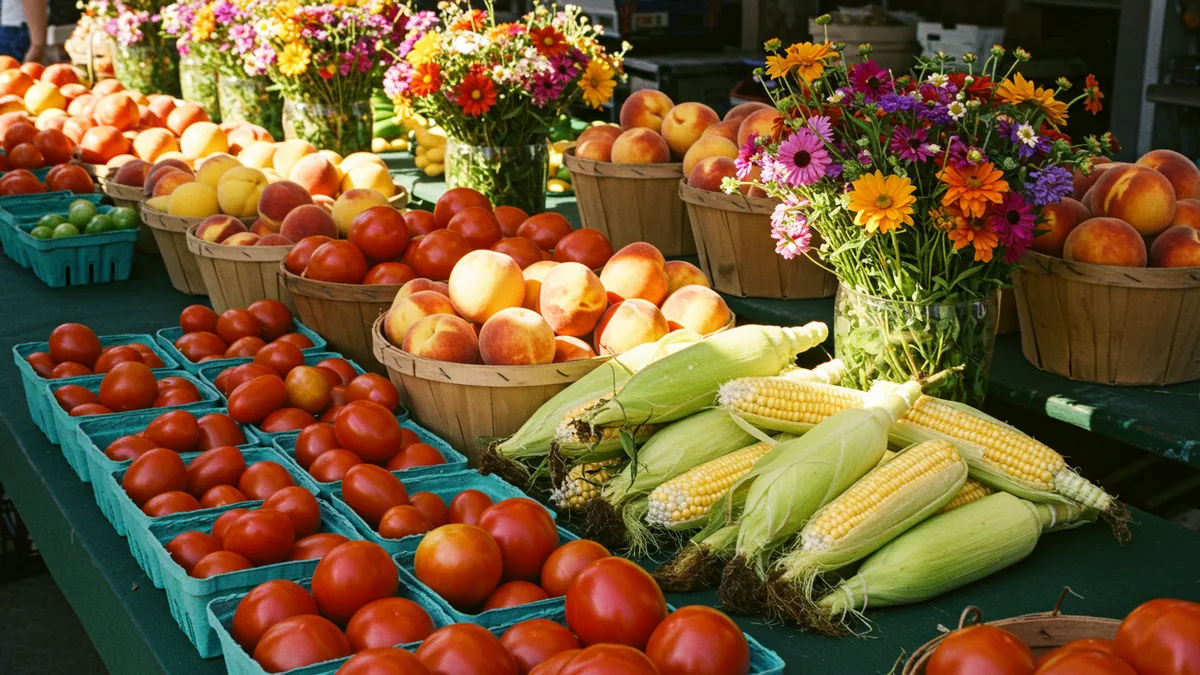
Keep reading ↓There is a particular kind of Saturday morning that makes summer in the St. Louis area feel worth it. You are up a little earlier than you wanted to be, there is coffee in a paper cup, and you are walking past a folding table piled with tomatoes still warm from someone’s field that morning. A grower hands you a peach. Somewhere a band is tuning up. This is farmers market season, and the good news is that you do not have to drive into the city to find it. From Kirkwood to Edwardsville, nearly every town in the metro has its own market, each with its own personality.
There’s a real payoff to shopping this way beyond the freshness. Your money stays with a neighbor instead of a distant supply chain, the produce was usually picked within a day so it lasts longer in your fridge, and you get to actually talk to the person who grew it — which is how you end up trying a vegetable you’d never have picked up under fluorescent lights. For families, it’s a cheap, screen-free Saturday outing; for cooks, it’s the best way to let the season decide dinner. Once you find your regular market, it tends to become a weekly habit rather than a chore. The vendors start to recognize you, they set aside the thing you always buy, and a routine grocery errand quietly turns into the best part of the weekend.
Here is a by-town guide to where you can find fresh local produce across the suburbs and the Illinois Metro-East. Markets are seasonal and schedules shift year to year, so always check the current schedule before you go.
Mid-County and South County, Missouri
Kirkwood. The Kirkwood Farmers’ Market on East Argonne is one of the oldest in the region and runs most of the year, with peak local-grower season in the warmer months. Unlike weekend-only markets, it keeps daily hours, which makes it an easy weekday stop. Saturday mornings are busiest, so arrive early if you want first pick of the produce.
Maplewood. The market formerly sponsored by Schlafly now runs as the SOL Food Farmers Market on Sutton Boulevard in downtown Maplewood. It is a producer-only, vendor-owned market on Wednesday evenings during the growing season, which means the people behind the tables actually grew or made what they are selling. Expect pastured meats and eggs, mushrooms, honey, preserves, and seasonal produce.
North County, Missouri
Ferguson. The Ferguson Farmers Market at the Plaza at 501 on South Florissant is a Saturday-morning staple that serves the whole North County area, including nearby Florissant. Produce here is often picked within a day of the market. One standout: Ferguson participates in SNAP and Double Up Food Bucks, a program that matches what you spend with your EBT card on fruits and vegetables, dollar for dollar up to a limit. It is a quiet way to stretch a grocery budget while eating better. Check the current schedule for token details.
West County and Far West, Missouri
Wildwood. The Wildwood Farmers Market on Plaza Drive opens later in the spring, usually around late May, and runs Saturday mornings through early fall. It pairs fresh produce, eggs, and meats with handmade soaps, honey, and crafts.
Lake St. Louis. The Lake Saint Louis Farmers & Artists Market at The Meadows shopping center runs Saturday mornings across a long season, rain or shine, and leans into both local growers and local artisans. Vendors are drawn from within roughly 100 miles, so what you buy is genuinely regional.
St. Charles. The Saint Charles Market on Historic Main Street is one of the longer-running seasons in the metro, stretching well into late fall on Saturday mornings. With farmers, bakers, crafters, and artisans together on a brick-lined street, it doubles as a morning out.
Wildly off-topic — 40,000 Illinois-side businesses, mapped, and not a tomato among them.
Illinois Metro-East
O’Fallon, Illinois. Note the state — there is an O’Fallon in Missouri too. The Vine Street Market at O’Fallon Station has become one of the most popular markets in the Metro-East, with 60-plus vendors at peak, live music, and food trucks. It focuses on food grown or made within about 100 miles and runs roughly May through October.
Edwardsville. The Land of Goshen Community Market is a beloved Saturday-morning fixture. For the 2026 season it temporarily moved to City Park while its usual downtown home is rebuilt as a new park, so confirm the current location before you go. It is large, lively, and worth the drive.
Alton. The Alton Farmers’ & Artisans’ Market, organized by Alton Main Street, runs Saturday mornings near the downtown historic district from late spring into mid-fall. Expect locally grown fruits and vegetables alongside handmade crafts, specialty foods, and even pet goods.
Belleville. Belleville’s Old Town area hosts a long-running market with both outdoor and indoor space, and several vendors accept SNAP, EBT, WIC, and the Farmers Market Nutrition Program. Hours and exact dates shift, so check the city’s current schedule.
City and inner-ring markets worth the trip
This guide leans toward the suburbs, but a few close-in markets are too good to leave off — especially if you want something running outside the peak summer window.
Soulard. The Soulard Farmers Market, just south of downtown, is the region’s oldest and the one to know when every suburban market is closed for the season: it’s open year-round, Wednesday through Saturday. It’s a bustling, historic public market with produce, meats, cheeses, spices, flowers, and prepared food under one roof — as much an experience as a grocery run. Go early on a Saturday for the fullest stalls and the best people-watching, and bring a rolling cart if you plan to stock up.
Tower Grove. The Tower Grove Farmers Market, held in the park, is one of the metro’s largest and most popular. It’s producer-focused (the people selling grew or made it), with Saturday hours spring through fall plus a weekday market in the height of summer, live music, and a family-friendly crowd. It doubles as a morning in the park, so bring a blanket, grab breakfast from a stall, and let the kids run around while you take your time shopping the stalls.
University City. The U. City Farmers Market fits the by-town frame on the inner-suburb side, running multiple days a week deep into the fall with a strong lineup of local growers — a handy mid-week option when you miss the Saturday markets. It has a loyal neighborhood following and a good mix of produce, prepared food, and local makers.
Richmond Heights. The Boulevard Market brings a Sunday option to mid-county, which is a nice fit if your Saturday mornings are already spoken for by soccer and swim lessons.
What’s in season, roughly by month
Part of the fun of shopping local is eating with the calendar. Here’s the rough St. Louis rhythm so you know what to look for:
- April–May: asparagus, spinach, lettuces, radishes, green onions, strawberries, and the first herbs and bedding plants. This is when the suburban markets open.
- June: strawberries give way to cherries and the first zucchini and cucumbers; peas and green beans arrive.
- July–August: the peak. Sweet corn, tomatoes still warm from the field, peaches, blackberries, melons, peppers, and eggplant. If a market has a busy week, this is it — go early.
- September–October: apples, winter squash, pumpkins, greens, sweet potatoes, and the last tomatoes. Cooler mornings, smaller crowds, great color.
- November–March: most suburban markets close, but Soulard and a few winter markets carry root vegetables, greens, eggs, meats, honey, and preserves right through the cold months.
It’s not just produce
A good market is a whole local pantry. Alongside the fruit and vegetables you’ll typically find pastured eggs and meats, local honey, artisan bread and pastries, cheese, mushrooms, jams and pickles, cut flowers, coffee, and prepared foods for breakfast on the spot. Many markets also host craft and artisan vendors — soaps, candles, pottery, pet treats — which makes a Saturday stroll double as gift shopping. Producer-only markets like SOL Food and Tower Grove are especially good if you care that the person behind the table actually raised or made what they’re selling.
How to shop a farmers market like you mean it
- Go early. The best tomatoes, berries, and sweet corn sell out fast. The first hour is where the good stuff lives.
- Bring cash and small bills. Many smaller vendors are cash-first, and breaking a twenty for a three-dollar bunch of radishes is nobody’s favorite moment.
- Bring your own bags. Reusable totes save you from juggling an armload of peaches across a gravel lot.
- Ask the growers. They will tell you what was picked yesterday, what is at its peak this week, and how to cook the weird-looking green thing you have never tried. A two-minute conversation with a grower will teach you more than an hour of recipe scrolling.
- Use SNAP and Double Up Food Bucks where offered. Markets like Ferguson and several Metro-East markets accept EBT and may match your produce dollars. Ask at the information table.
- Expect a spring-to-fall season. Most markets run roughly April or May through October. A few keep winter or year-round hours, but the peak produce window is summer into early fall.
Frequently asked questions
When does farmers market season start in the St. Louis area?
Most metro markets open between early April and late May and run through October, with a handful stretching into November. A few, like Kirkwood, keep hours much of the year. Always confirm opening day on the market’s current schedule, since dates move.
Which farmers markets accept SNAP or Double Up Food Bucks?
The Ferguson Farmers Market participates in SNAP and Double Up Food Bucks, which matches your EBT spending on fruits and vegetables up to a limit. Several Metro-East markets, including Belleville, accept SNAP, EBT, WIC, and the Farmers Market Nutrition Program. Ask at the market’s information table for current details.
What time should I arrive for the best selection?
Aim for the first hour. Popular items like sweet corn, berries, heirloom tomatoes, and fresh-cut flowers often sell out early, especially on busy Saturdays.
Is there a difference between O’Fallon, Missouri and O’Fallon, Illinois markets?
Yes — they are two different towns in two different states. This guide highlights the Vine Street Market in O’Fallon, Illinois. If you are searching online, include the state so you do not drive the wrong direction across the river.
Do I need cash, or can I use a card?
Bring some cash, ideally small bills. Many larger markets have card and token systems at an information booth, but plenty of individual growers still prefer cash, and small bills keep the line moving.
Are farmers markets more expensive than the grocery store?
Sometimes, sometimes not. Specialty items like pastured meat, artisan bread, and cut flowers can cost more than a big-box store, but in-season staples — sweet corn, tomatoes, zucchini, greens — are often competitive or cheaper at peak, and far fresher. Shopping what’s in season, buying in bulk when something is at its cheapest, and using SNAP or Double Up Food Bucks where offered all stretch the dollar further.
Can I bring my kids and my dog?
Kids, yes — markets are a great, low-pressure outing, and many have music, samples, or activities. Dogs depend on the market: some welcome leashed, well-behaved dogs, while others (especially those with lots of open food) don’t allow them. Check the individual market’s rules before you bring the pup.
Which market is best for a first-timer?
For sheer variety and a can’t-miss experience, start with Soulard (year-round) or Tower Grove in peak season. If you want something closer to home, pick the market in your own town from the list above — the beauty of the metro is that a good one is usually just a few minutes away.
When the markets are closed for the season, the same shopping instinct moves indoors — this is how to shop a health food store in St. Louis without paying for the label.
Turn it into a day out — after the market, try one of these easy family-friendly hiking trails around St. Louis.
Hunting for the season’s first sweet corn? Browse the St Louis Near Me directory to find local food, farms, and shops across the metro.
If you run a farm stand, bakery, or food business, listing it is how more neighbors find your table. We’ll see you Saturday morning, coffee in hand.

Written by a dedicated team of St. Louis locals who live, work, and play right here in the St. Louis metro. Founder Lane Forman and team are committed to building the region’s most trusted directory by verifying listings and connecting local businesses with loyal customers across Missouri and Illinois.