Best Ethiopian Food in St Louis: A Local's Guide to Injera & More
Revised August 10, 2026
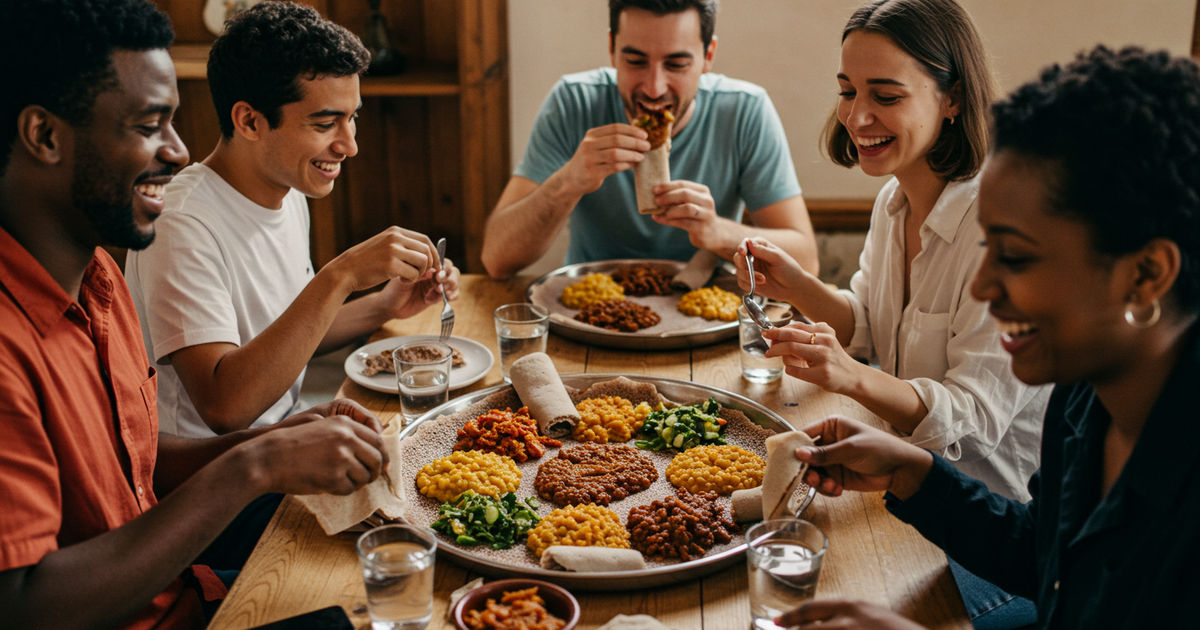
Where is the best Ethiopian food in St. Louis?
St. Louis has a small but excellent Ethiopian scene, all on two corridors. On South Grand: Meskerem (the anchor, open since 2007) and Eat Today (newer, Ethiopian and Eritrean, gluten-free teff injera). On Olive Boulevard in University City: Mosob (Eritrean and Ethiopian, with a traditional coffee ceremony). Order a beyaynetu (vegetarian combo platter) to sample everything on injera, or doro wat (spicy chicken stew) for the national dish. Only three are confirmed open — a first-mover’s dream.
Keep reading ↓Ethiopian food might be the most rewarding meal in St. Louis that you haven’t tried yet. Picture a single large platter arriving at the table, draped in soft, tangy injera bread and topped with colorful mounds of slow-simmered stews — no plates, no forks, just your hands, torn bread, and a shared feast. It’s communal, deeply flavorful, and genuinely unlike anything else in town.
Here’s the honest part: St. Louis has a small Ethiopian scene — just three confirmed restaurants in the whole metro — and it’s seen real turnover in recent years. But those three are excellent, welcoming to newcomers, and among the best-value meals in the city. What the scene lacks in quantity it more than makes up for in warmth and depth.
Because the cuisine is unfamiliar to many St. Louisans, this guide goes deeper than a simple list: where to eat, yes, but also what injera is, how to decode the dishes, why Ethiopian food is a paradise for vegetarians, how to eat it with your hands, and what the traditional coffee ceremony is all about. Come curious and a little hungry.
📌 Adventurous eater? Keep this — and share it.
Bookmark this guide and send it to the friend who’s always up for trying something new, the group looking for a hands-on shared dinner, or the vegetarian who hasn’t discovered how good Ethiopian food is for them.
Every share points one more curious person to a platter worth the drive. That’s the whole idea.
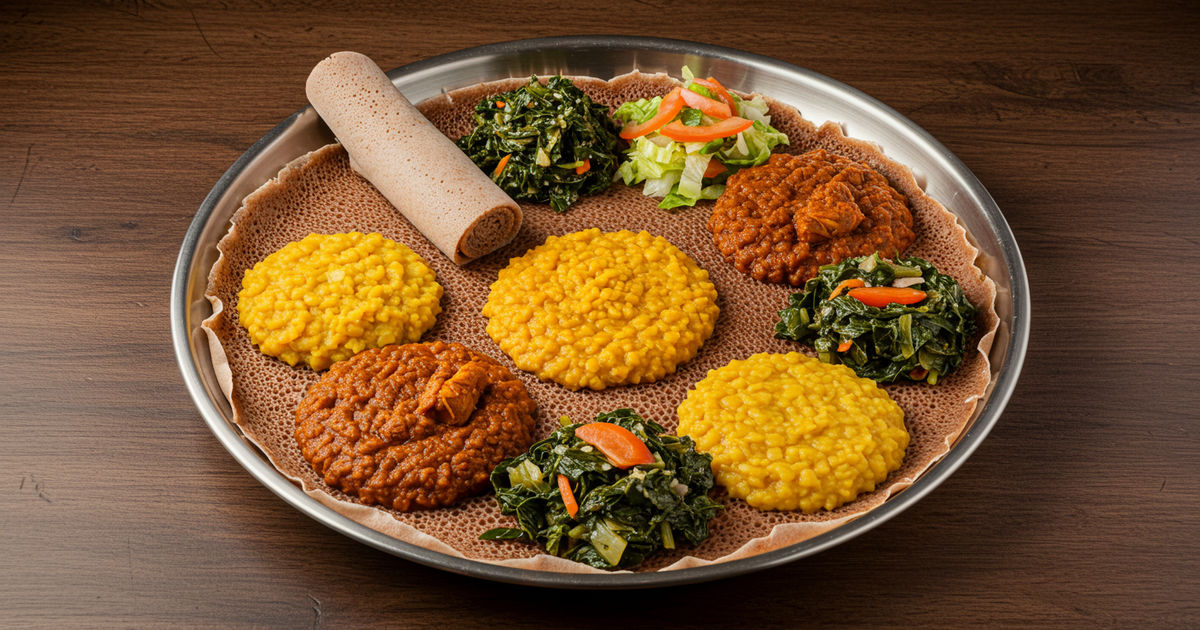
Where to Eat Ethiopian in St. Louis
The whole scene lives on two corridors: South Grand and Olive Boulevard. Meskerem ($$) on South Grand is the anchor — open since 2007 and the restaurant that introduced many St. Louisans to doro wat, tibs, kitfo, and shareable veggie combos on injera. A few doors down, Eat Today ($$) is the newest arrival, serving both Ethiopian and Eritrean dishes with 100% teff (gluten-free) injera and scratch-made vegetarian combos from owners who came from Addis Ababa. And in University City on Olive, Mosob ($$) does Eritrean and Ethiopian cooking — signatures like zigni (spicy beef stew) and alicha (mild turmeric stew) — and offers a traditional coffee ceremony. Three rooms, all worth your time.
What Is Injera? The Foundation of the Meal
Injera is the soul of Ethiopian dining — a large, spongy, slightly sour fermented flatbread that serves as plate, utensil, and side dish all at once. It’s traditionally made from teff, the world’s tiniest grain, native to the Ethiopian highlands and naturally gluten-free. The batter ferments for a few days, which gives injera its signature tang (a little like sourdough) and its bubbly, absorbent texture. At the table, stews are ladled directly onto a big round of injera; you tear off pieces from the edge and use them to scoop up each bite. The bread underneath, soaked in all those juices, is the prize you fight over at the end. Understanding injera is understanding the whole meal.
The Dishes: A Beginner’s Decoder
Ethiopian menus can look unfamiliar, so here’s a quick decoder for the classics. Doro wat is the celebratory national dish — a rich, spicy chicken stew with caramelized onions, the fiery berbere spice blend, and a hard-boiled egg. Tibs are sautéed cubes of beef or lamb with onions, garlic, and rosemary — a great gateway dish. Kitfo is Ethiopia’s answer to steak tartare: minced raw (or lightly warmed) beef seasoned with mitmita spice and spiced butter. Shiro is a smooth, comforting chickpea-flour puree, and misir wat is a warming red-lentil stew. Can’t decide? Order a beyaynetu — the vegetarian combo platter that samples a bit of everything on one shared round of injera. It’s the perfect first Ethiopian meal.
A Vegetarian & Vegan Haven
Here’s something many St. Louisans don’t realize: Ethiopian food is one of the best cuisines in the world for vegetarians and vegans. The reason is rooted in faith — the Ethiopian Orthodox Church observes one of the strictest fasting calendars of any Christian tradition, with well over a hundred days a year (including most Wednesdays and Fridays) when observers eat completely vegan: no meat, dairy, or eggs. Out of that tradition comes the beyaynetu, or “fasting platter” — a generous sampler of lentils, split peas, collard greens, cabbage, and salads on injera, available year-round and reliably plant-based. It’s hearty, varied, and satisfying enough that dedicated carnivores order it happily. If you’ve got vegetarians and meat-eaters at the same table, an Ethiopian restaurant is one of the easiest places to make everyone happy.
How Ethiopian Food Is Eaten
Half the joy of Ethiopian food is how you eat it. Meals are served family-style on one communal platter and eaten by hand — no utensils — using torn pieces of injera to pinch and scoop the stews. Tradition holds that you eat with your right hand only, and start from the section of the platter closest to you rather than reaching across. There’s also a beautiful gesture called gursha: hand-feeding a bite of injera-wrapped food to a companion as a sign of friendship and respect, often offered first to a guest or elder. It feels unusual the first time, then quickly becomes the warmest part of the meal. Don’t worry — if you’d prefer a fork, every restaurant will happily bring one. But try it the traditional way at least once.
Unrelated, and we know it — but getting found in Chesterfield starts here.
The Coffee Ceremony
Ethiopia is the birthplace of coffee, and the traditional coffee ceremony (bunna) is a ritual worth experiencing. Green beans are roasted over a flame right in front of you, ground by hand, and brewed in a clay pot called a jebena, then poured in three named rounds — abol (the first and strongest), tona (the second), and bereka (the third, which carries a blessing). It’s a slow, generous, hospitable rite that can take an hour or more, often accompanied by popcorn or incense. In St. Louis, Mosob offers a coffee-ceremony experience — a genuinely special way to end an Ethiopian meal, and a window into the culture behind the food.
Berbere, Niter Kibbeh & the Flavor of Ethiopia
What makes Ethiopian food taste the way it does comes down to two building blocks. Berbere is the deep-red spice blend at the heart of the cuisine — a complex mix of dried chilies, fenugreek, ginger, cardamom, nigella, and more — that gives dishes like doro wat their warmth and gentle heat. Niter kibbeh is a spiced clarified butter, simmered with fenugreek, cardamom, and other aromatics, that carries flavor through most of the stews. Together they create that layered, savory, slightly-spicy depth that’s unmistakably Ethiopian. And a note for the spice-shy: Ethiopian food is flavorful but not necessarily fiery — the milder alicha stews (turmeric-based, gently spiced) and the many vegetable dishes are a gentle place to start, while the berbere-forward wats bring more heat.
Great for Groups & First-Timers
Ethiopian food is one of the best group meals in St. Louis, precisely because it’s designed for sharing. A single big platter feeds the table, everyone digs in together, and the communal, hands-on style breaks the ice fast — it’s a memorable choice for a birthday, a date, or introducing friends to something new. For first-timers, the move is simple: order a combination platter (a mix of meat and vegetable dishes, or a fully vegetarian beyaynetu) so everyone can taste a little of everything and discover their favorites. It’s hard to go wrong, the staff at these family-run rooms are patient and welcoming, and the whole experience — the injera, the shared plate, the coffee ceremony to finish — adds up to one of the most distinctive meals the metro offers.
Why the Scene Is Small — and Why That’s Changing
An honest word on the state of things. St. Louis has lost several Ethiopian and Eritrean spots in recent years — Ye, Red Sea, and others have closed, and one University City storefront alone has cycled through several names before settling as Mosob. That churn is real, and it’s why we’re careful to list only the three confirmed, currently-open restaurants above. But the flip side is encouraging: Eat Today is a fresh, ambitious new arrival, Meskerem remains a rock-solid anchor after nearly two decades, and a growing appetite for global food in St. Louis gives this cuisine room to grow. If you love it, the best thing you can do is show up — these family-run rooms thrive on regulars.
Run an Ethiopian, Eritrean, or East African restaurant? Be the name they find first.
Every month, about 210 people around St. Louis search “Ethiopian food St. Louis” on their phones — and here’s the remarkable part: almost nobody is competing to be found for it online. That’s a wide-open door. Get in on the ground floor of a growing local directory and become one of the very first spots locals — and AI assistants like ChatGPT — surface when someone’s curious about Ethiopian food. It works because a focused local directory shows up where the big apps don’t, and being easy to find is what turns a search into a full dining room.
And it’s simple: get your profile, add your photos, get seen by more hungry customers — easy, right? Even if you already have a Google listing, this is a second net catching the people Google misses. Even if you’re not a “tech person,” it takes minutes. Even if you’re a small family kitchen with no ad budget — that’s exactly who a local directory levels the field for.
Claim your spot and be the name they find first — or start with a free visibility audit to see how findable you are today.
Ethiopian food is a small but genuinely special corner of the St. Louis dining scene — communal, deeply flavorful, and one of the friendliest cuisines around for vegetarians and the curious alike. For the bigger picture, see our guide to the best restaurants in St. Louis — then round up a few friends and go share a platter. The best Ethiopian food in this metro isn’t about polish — it’s about a family kitchen, a big round of injera, and a table where everyone eats from the same plate, with their hands, together.
Frequently Asked Questions
How to eat Ethiopian food for beginners?
Wash your hands, then eat with your right hand only — no utensils needed. Tear off a small piece of the injera flatbread, use it to pinch and scoop up a bite of stew or meat, and pop the whole thing in your mouth. Meals are shared from one communal platter, so start from the section closest to you. If you’d rather use a fork, just ask — every St. Louis Ethiopian spot will happily provide one.
What is the most popular Ethiopian dish?
Doro wat is widely considered Ethiopia’s national dish and its most iconic — a rich, spicy chicken stew slow-cooked with caramelized onions and the berbere spice blend, traditionally served with a hard-boiled egg. Other favorites include tibs (sautéed beef or lamb), kitfo (spiced minced beef), and shiro (a creamy chickpea puree). For a taste of everything, order a beyaynetu combo platter.
Is Ethiopian food healthy?
Generally, yes. Ethiopian cuisine is built around lentils, split peas, vegetables, and lean stews, with injera made from nutrient-dense teff. The many vegetarian and vegan dishes (thanks to the Orthodox fasting tradition) are naturally high in fiber and plant protein and low in processed ingredients. Some meat stews and spiced butter add richness, but a veggie-forward Ethiopian meal is a genuinely wholesome, balanced choice.
Which hand do you eat Ethiopian food with?
Traditionally, you eat Ethiopian food with your right hand only — the left is considered unclean for eating. You tear injera with your right hand and use it to scoop the stews. It’s also customary to wash your hands before and after the meal, since everyone eats by hand from a shared platter. If this feels unfamiliar, don’t stress — restaurants are welcoming and a fork is always available.
How is Ethiopian food traditionally eaten?
Ethiopian food is traditionally eaten communally — a single large platter lined with injera and topped with several stews is placed in the middle of the table, and everyone shares it by hand, no individual plates. A gesture called gursha, hand-feeding a bite to a companion, is a sign of friendship and respect. The shared, hands-on style is central to the culture: Ethiopian food is meant to be eaten together, not alone.

Written by a dedicated team of St. Louis locals who live, work, and play right here in the St. Louis metro. Founder Lane Forman and team are committed to building the region’s most trusted directory by verifying listings and connecting local businesses with loyal customers across Missouri and Illinois.