Fruit Baskets in St. Louis: A Gift That Actually Lasts
Revised October 19, 2026
What fruits last longest in a basket?
Whole citrus and firm apples last longest. Oranges, grapefruit, tangerines and lemons have thick peels and make little ethylene, so they hold up at room temperature for days and much longer cold. Crisp apples and hard pears come next. A whole pineapple buys a few days. Berries, cut fruit and ripe bananas go first.
Keep reading ↓The basket showed up on a Tuesday, wrapped in so much cellophane that it crackled when the neighbor set it down on the porch. Pears, a pineapple, green grapes, two bananas already freckled. By Friday the bananas were black. The grapes had gone soft at the stems, and the pears, rock-hard on arrival, all ripened on the same afternoon, so half of them ended up in the compost.
Nobody did anything wrong, exactly. The fruit just wasn’t picked for the trip.
A fruit basket is a strange gift if you stop and think about it. It’s alive. It keeps ripening after you hand it over, and some fruit pushes its neighbors along faster than they’d go on their own. Put the wrong pair in the same basket and you’ve set a timer. Put the right ones together, stage the ripeness, and a basket can feed a household for a week or more.
This guide is about that second kind of basket: what to pick, how to pack it, and when to buy from a shop instead of building it at your own kitchen table in St. Louis. If snacks, cheese or wine are what you had in mind, our guide to what to put inside a St. Louis gift basket covers that ground. This one stays with the fruit.
What fruits last longest in a basket?
Whole citrus and firm apples last longest. Oranges, grapefruit, tangerines and lemons have thick peels and make little ethylene, so they hold up at room temperature for days and much longer cold. Crisp apples and hard pears come next. A whole pineapple buys a few days. Berries, cut fruit and ripe bananas go first.
Citrus is the backbone for a reason. A thick peel is packaging that nature already designed, and oranges don’t keep ripening once they’re picked, so what you buy is pretty much what they’ll get. A bag of mandarins at the bottom of a basket is almost boring.
Boring is good here.
Apples are the other anchor. Choose firm, heavy ones with no soft spots, and lean toward varieties known for their crunch rather than the mealy kind that goes soft in a week. Apples also keep in the fridge for weeks, so the recipient can stash the extras and forget about them without any guilt.
Then there’s the middle tier: pears, kiwis, mangoes, peaches and plums. They’re great, but they’re on a clock. Buy them firm and they’ll ripen on the counter over several days, which is exactly what you want if you stage them right. More on that in a minute.
And the short-lived stuff? Berries, cherries, grapes that have fallen off the stem, anything cut. They’re lovely on a party tray that gets eaten that afternoon. In a basket meant to last, they’re the first thing to go wrong, and once they start to leak they drag everything around them down too.
Which fruits give off ethylene, and which ones does it hurt?
Apples, pears, bananas, avocados and stone fruit like peaches and plums all give off ethylene, the gas that tells fruit to ripen. Sensitive fruit parked nearby speeds up, softens or spots. Kiwis and watermelon react strongly. Bananas play both roles, making ethylene and reacting to it. Citrus and grapes make very little.
Think of ethylene as a whisper passed down a row. One ripe apple starts it, the pear beside it hears, and suddenly the whole basket is running on the same schedule. It’s the same trick behind the old advice to ripen an avocado in a paper bag with a banana. Handy in your own kitchen. Less handy in a gift that’s supposed to last.
The producers
Apples give off ethylene steadily, and a bruised apple gives off more. Pears, peaches, plums, nectarines, apricots, mangoes, avocados and bananas all ramp up as they ripen. None of that makes them bad basket fruit. It just means they need a little spacing, a firm start and a recipient who knows what’s coming.
The sensitive ones
Kiwis are the classic victim. Park a firm kiwi next to a couple of apples and it softens far faster than it would alone. Watermelon turns mealy. Bananas brown and freckle. And if you’re tempted to tuck a head of lettuce or some fresh herbs in for a cook, keep them in a separate bag, because leafy greens yellow quickly around ripening fruit.
The neutral ground
Citrus and grapes barely play this game. They make little ethylene and shrug off most of what’s around them, which is why an orange-heavy basket is the forgiving choice. Pineapple doesn’t get any sweeter after harvest either; it only softens. Use those as buffers between the producers and anything touchy.
How do you stage ripeness so it doesn’t all go at once?
Buy a mix of ripeness on purpose. Put one or two pieces in the basket that are ready to eat today, a few that will be ready in two or three days, and the long keepers for later in the week. Staggered fruit gets eaten. Fruit that ripens all together gets thrown out.
Here’s how that looks on the counter. Two ripe pears on top, ready now. Two hard ones underneath, with a little card that says “give these three or four days.” A couple of firm peaches if it’s summer. Apples and oranges as the base, fine for days on the counter and much longer in the fridge.
Pears are the trickiest. They ripen from the inside out, so by the time the skin feels soft the middle is often mush. The old test is to press gently at the neck, right below the stem. If it gives a little, it’s ready. Put that on the card, because most people have never heard it and it’s the difference between a perfect pear and a brown one.
Bananas get their own warning. They go from green to spotted in what feels like an afternoon, and they hurry along everything near them. If you really want them in there, choose green-tipped ones and set them at the edge in a small bag, well away from any kiwis. Honestly? For a basket meant to last, leaving them out is often kinder.
Stone fruit is seasonal, and it’s worth building around when it’s good. A handful of summer peaches in a St. Louis basket feels like a real gift. Buy them firm, and remind the recipient to let them soften on the counter before chilling them, since hard, unripe peaches that go straight into the cold can turn dry and mealy.
Rather eat your fruit cold and swirled? Here’s frozen yogurt in St. Louis
Where should the fruit go once the basket arrives?
Split it up. Citrus, apples, grapes and any berries do better cold, while bananas, avocados, unripe pears and hard stone fruit should stay on the counter until they soften. A basket is a delivery vehicle, not a storage plan, so most of the fruit should come out of it within a day or so.
Nobody likes being told to unpack a gift. But the cellophane that makes a basket look finished also traps moisture and ethylene together, which is roughly the opposite of what fruit wants. Pull the wrap off. Let the air move.
There’s a simple rule you can write right on the gift card: ripe goes in the fridge, unripe stays out. Once a pear or peach softens, the cold slows it down and buys a few more days. Bananas are the exception. Their peels darken in the fridge, even though the fruit inside is usually fine.
Grapes and berries should go cold right away, unwashed, and get rinsed only when someone’s about to eat them, since washing ahead invites mold. Citrus is happy either way, though it keeps noticeably longer chilled.
How do you build and arrange a fruit basket yourself?
Start with a sturdy, shallow basket, line it, and build from the bottom up: heaviest, sturdiest fruit on the floor, lighter and softer fruit on top. Fill the gaps so nothing rolls. A home-built basket takes maybe an hour, and you get to choose every single piece of fruit in it.
The basket and the base
Pick something wider than it is deep. Tall baskets crush the bottom layer. A lined wooden crate, a wide wicker tray, even a nice enamel colander will work. Line it with a cloth napkin or tissue, then pad the floor with crinkle paper or a folded towel so the first layer sits level instead of tipping into the middle.
Building the layers
Heaviest goes first. Grapefruit, big apples, a pineapple standing in the back corner for height. Then oranges and pears, each turned so its best side faces out. Soft or small fruit rides on top, where nothing can land on it. Grape bunches go in last, tucked into the gaps and draped a little over the rim, which looks generous and stops things from sliding.
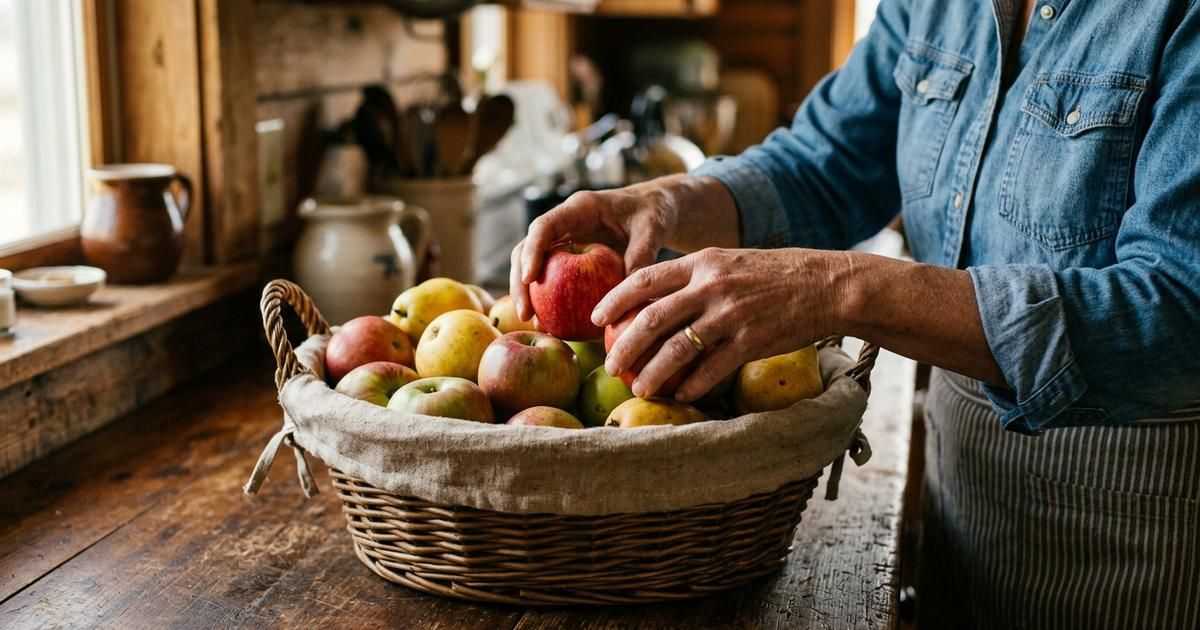
Stems up on the pears. Spread the colors around instead of clumping them, so nobody’s staring at a wall of green on one side and orange on the other. A few clean leaves or a sprig of rosemary, if you’ve got one, makes the whole thing look deliberate.
Wrapping and the card
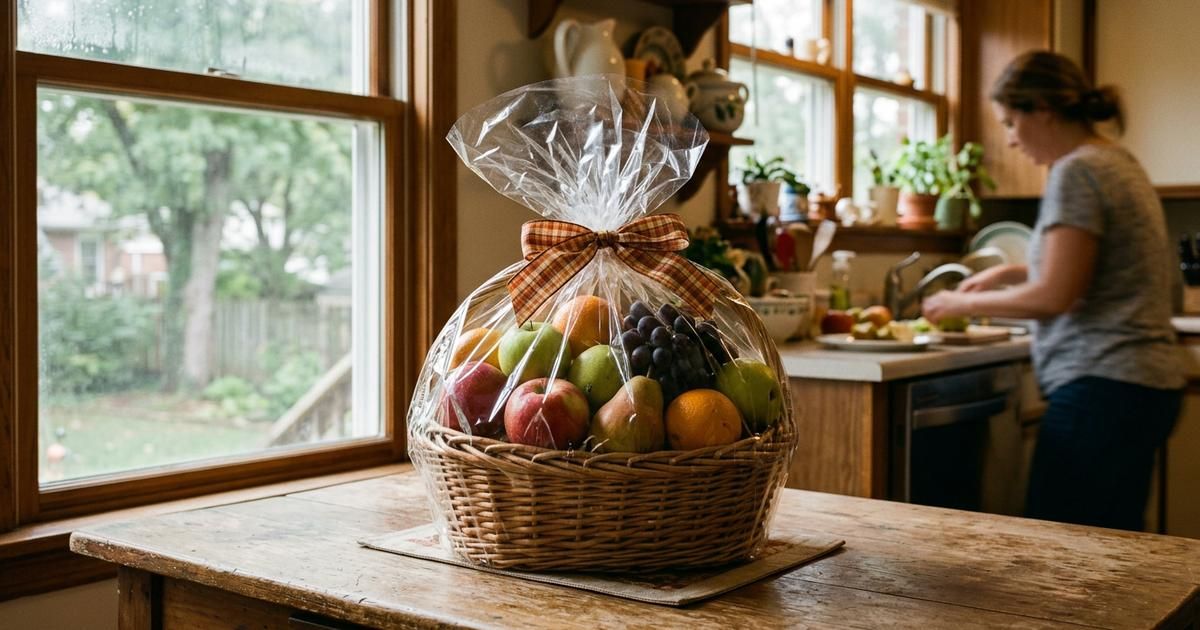
Clear wrap is optional. If the basket is riding across town in a car, a loose wrap tied at the top keeps the oranges from escaping. If you’re handing it over in person, skip it and let people see the fruit. Then write the card: what’s ripe now, what needs a few days, what goes in the fridge. That note does more work than any bow.
Should you buy from a shop or build it yourself?
Build it yourself when you can deliver it by hand and want control over every piece. Buy from a shop when the basket has to travel, arrive on a specific day, or land somewhere you can’t easily reach. A good shop’s real value is sourcing, timing and delivery, not just the fruit.
Building wins on freshness, provided you shop carefully. You can squeeze the pears, check the grapes for soft stems and pass on the bruised apple. It’s personal, too. Fruit that somebody picked out by hand reads differently than a basket that turned up in a box.
Shops win on logistics. A shop that does this every day knows which fruit survives a delivery van in August and which doesn’t, and many will build around a dietary need if you ask. Where does the fruit come from? How far ahead is the basket made? Can they skip the bananas and add more citrus? What happens if something arrives bruised?
Shortlist two or three shops worth calling. Tell each one what you want and when you need it, then listen to what they’re actually prepared to do. The gap between the two is the signal. A shop that says “we can swap the bananas for tangerines, no problem” is telling you something good about how it works.
What should you ask about delivery?
Ask when the basket is built, not only when it ships. Local same-day or next-day delivery keeps fruit freshest, and a basket that sits in a hot car or on a sunny porch loses days of shelf life fast. Confirm someone will be home, and time the drop around the weather.
St. Louis summers are rough on fruit. A basket left on a porch in July can start softening before anyone gets home, and the grapes and berries go first. Winter brings its own trouble, since a hard freeze can damage citrus and bananas right through the wrap. Either way the fix is identical: schedule it for when somebody’s there.
For an office, ask for a morning drop and give the front desk a heads-up. For a home, hand the shop a phone number for the recipient if you have one, so the driver can check before leaving it. Feels fussy. It’s also the thing that saves the basket.
Which occasions call for a fruit basket?
Sympathy, get-well, new baby, thank-you and holiday gifts all fit, because fruit feeds a busy household without anyone having to cook. For hospitals, call ahead: some units restrict fresh food or flowers, and a patient’s diet may be limited. When in doubt, send the basket to the house instead.
A sympathy basket does quiet work. The kitchen fills with casseroles in the first days after a loss, and fruit is what people can grab between phone calls without heating anything up. Lean on long keepers here, like citrus, apples and a few pears, because the family won’t have the attention to spare for bananas. Weighing fruit against flowers? Our guide to sending flowers in St. Louis for sympathy and gifts walks through that choice.
Get-well is where you slow down. Hospitals don’t all follow the same rules, and even inside one building a unit may treat fresh fruit, flowers or outside food differently. Call the nurses’ station or the main desk before you send anything. Ask about diet too. Someone on a restricted diet may not be able to eat half of what’s in the basket, so the kinder move is often a delivery to the house for the day they get home.
Holidays and thank-yous are easy. Citrus peaks in the winter months, it keeps, and a crate of bright oranges on a gray December afternoon looks a lot like sunshine. For a household with a new baby, think low effort: easy-peel mandarins, washed apples, nothing that needs a knife or a cutting board.
Ready to send one? Browse fruit basket shops across the St. Louis metro on St Louis Near Me Directory, ask how far ahead they build, and lean on citrus.
If you’re the shop, being the one people and AI name first is the game, and a basket that still looks good on day five is how you earn it, so list your fruit basket shop.
Frequently asked questions
What is the best fruit to put in a fruit basket?
Citrus and firm apples, as the base. Oranges, mandarins and grapefruit keep for days at room temperature and longer chilled, and crisp apples hold up for weeks in the fridge. Add a few pears or seasonal stone fruit, bought firm, for variety. Keep bananas, berries and anything cut to a minimum if the basket needs to last.
How to make a nice fruit basket?
Pick a wide, shallow basket and line it. Put the heaviest fruit on the bottom and the softest on top, turn every piece so its best side shows, and spread the colors around. Fill the gaps with grape bunches or crinkle paper so nothing rolls, then add a card saying which fruit is ripe now and which needs a few days.
Should you refrigerate a fruit basket?
Not the whole basket. Unpack it within a day or so. Citrus, apples, grapes and berries go in the fridge, while bananas, avocados and unripe pears or peaches stay on the counter until they soften. Once those ripen, the fridge slows them down. Take the cellophane off right away so moisture and ethylene can escape.
What two fruits should not be stored together?
Apples and bananas are the classic pair to keep apart, since apples give off ethylene gas that makes bananas brown and soften faster. Apples and kiwis are another poor match. The broader rule is to keep strong ethylene producers like apples, pears and avocados away from sensitive fruit, unless you actually want that fruit to ripen quickly.
Does anyone deliver fruit?
Yes. Many fruit basket shops, florists and gift shops around St. Louis deliver locally, often with same-day or next-day options, and some grocers deliver too. Call two or three and ask how far ahead the basket is built, which fruit is good this season, and whether someone needs to be home to receive it.
How to make a gift basket look more expensive?
Go for abundance and order. Use fewer kinds of fruit in larger quantity, choose flawless pieces, and build height with a pineapple or tall pears at the back. A good lining, a natural basket or wooden crate, a few fresh leaves and a handwritten card do more than a pile of ribbon or thick cellophane ever will.
What types of fruit should be avoided when making a fruit basket?
Skip anything that bruises, leaks or ripens too fast to travel well. Berries, cut fruit, very ripe bananas and soft peaches are the usual problems, and loose grapes fall off the stem. For an older or recovering person, avoid fruit that needs serious knife work. And check allergies and dietary limits first, especially for a hospital stay.
How to arrange fruit in a basket?
Build it in layers from the bottom up. Heavy, sturdy fruit like grapefruit, apples and a pineapple goes on the floor and toward the back. Oranges and pears come next, facing out. Soft or small fruit sits on top, and grape bunches fill the gaps, draped slightly over the rim so the basket looks full.

Written by a dedicated team of St. Louis locals who live, work, and play right here in the St. Louis metro. Founder Lane Forman and team are committed to building the region’s most trusted directory by verifying listings and connecting local businesses with loyal customers across Missouri and Illinois.