St. Louis Small Business Marketing: The Playbook That Actually Works
Revised August 29, 2026

How do I market my small business in St. Louis?
Focus on getting found where local customers already look, then earn their trust. Five fundamentals do the heavy lifting: a complete Google Business Profile, a steady flow of recent reviews, consistent listings, visibility in AI answers (about 45% of consumers now use AI for local recommendations, up from 6% a year earlier), and a little genuinely helpful local content. Done consistently, those beat any expensive scattershot campaign — and most are free.
Keep reading ↓Imagine you run a small business somewhere in the St. Louis metro — a salon in Kirkwood, an HVAC company in Florissant, a bakery in the Metro East. You know you should be “doing marketing,” but every direction you turn, someone’s selling you something: ads, social media, a fancy website, SEO packages. It’s overwhelming, it’s expensive, and it’s hard to tell what actually brings customers versus what just drains your budget while you’re busy running the place.
Here’s the good news: effective small-business marketing in 2026 is shorter and cheaper than the noise suggests. For a local business, a handful of fundamentals — done consistently — beat any expensive, scattershot campaign. This is the honest St. Louis playbook: the five moves that actually work, what to skip, and how to make sure both Google and the new wave of AI assistants send customers your way.
How Do You Market a Small Business in 2026?
The short answer: get found where local customers are already looking, then give them a reason to choose and trust you. For a local business, that means winning the “near me” moment — the search or the AI question someone types when they need exactly what you offer. Almost everything that matters ladders up to that. You don’t need to be on every platform or run a big ad budget; you need to be the obvious, trustworthy answer when a nearby person is ready to buy.
Concretely, that comes down to five fundamentals working together: a complete Google Business Profile, a steady flow of reviews, consistent listings, visibility in AI answers, and a bit of genuinely helpful local content. Nail those, and you’ll out-market competitors spending far more. Here’s each one.
Move 1: Own Your Google Business Profile
If you do only one thing, do this. Your Google Business Profile is the single most important marketing asset a local business has — it’s what surfaces in the map pack and Google Search when someone looks for what you offer nearby. And it’s free. Claim it, fill in every field (hours, services, categories, a real description, photos), and keep it current. A complete, active profile routinely beats a half-empty one from a bigger competitor. Post updates, add new photos, and answer questions — the activity itself is a signal. Most St. Louis small businesses leave this half-done, which is exactly why owning it is such an easy edge.
Move 2: Make Reviews a Habit, Not an Afterthought
Reviews are the closest thing to word-of-mouth at scale, and they do double duty: they sway the human deciding between you and the next option, and they’re a genuine ranking and trust signal for Google and AI. The businesses that win at reviews aren’t lucky — they simply ask, every time, as a routine part of the job. Build a simple habit: a friendly ask at the end of a good interaction, a follow-up text or email with a direct link, and a prompt, professional response to every review that comes in, good or bad. Recent, steady reviews matter more than a pile of old ones, so the goal is a slow, constant trickle, not a one-time push.
Move 3: Keep Your Listings Consistent
Your business name, address, and phone number should be identical everywhere they appear online — your website, Google, the major review sites, and a strong local directory. Consistency sounds boring, but it’s a real local-ranking factor: matching information tells Google (and AI tools) that your business is legitimate and verifiable, while mismatched details quietly erode trust and can suppress you in results. You don’t need hundreds of listings — you need the right handful, kept perfectly consistent. Fix any old addresses or disconnected numbers floating around the web; that cleanup alone often moves the needle.
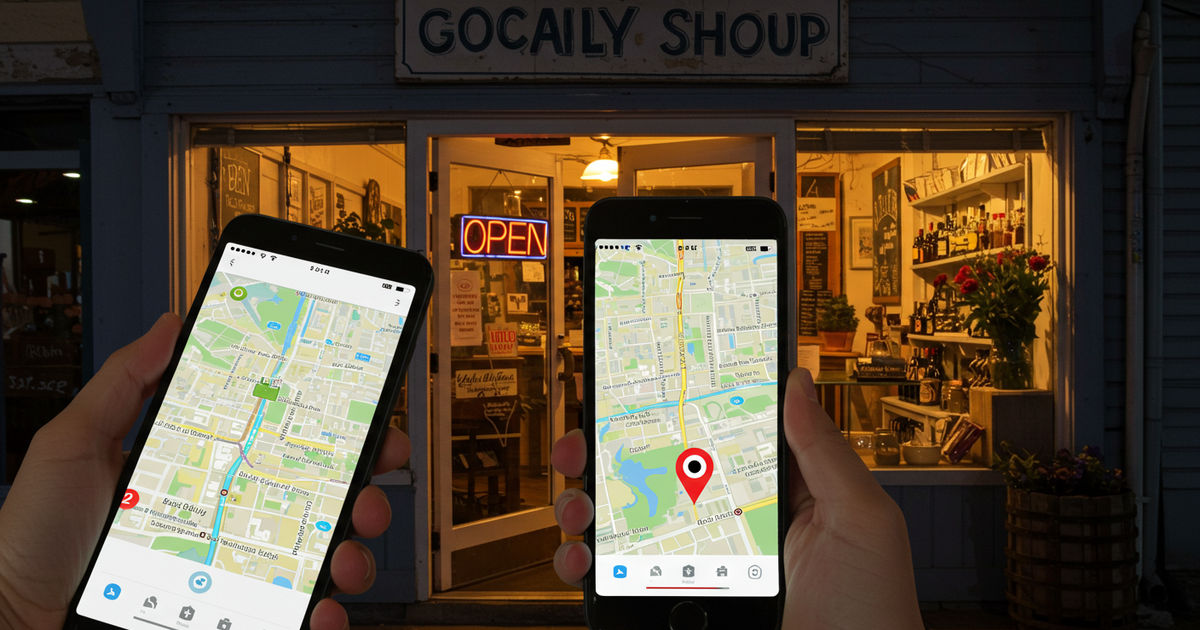
Move 4: Get Found by AI, Not Just Google
This is the newest fundamental, and the one most St. Louis businesses are missing. Search now opens with AI — Google’s AI Overviews, plus a fast-growing habit of asking ChatGPT or Copilot directly. BrightLocal’s 2026 research found about 45% of consumers now use AI tools for local recommendations, up from just 6% a year earlier — the third most-used discovery channel. The reassuring part: getting recommended by AI rests on the same foundations as everything above. AI assistants name businesses with a complete, consistent presence, real reviews, and citations across trusted local sources. Do the first three moves well, make sure you’re listed in a solid local directory, and you’re feeding the AI exactly what it needs to include you in the answer.
Move 5: Publish a Little Genuinely Helpful Local Content
You don’t need to be a blogger — you need a few pages that answer the real questions your customers ask, written for your actual St. Louis area. A plumber might answer “why do old south-city homes get sewer backups?”; a bakery might post its holiday-order guide. Content like this does three things: it earns trust with the human reading it, it helps you rank for specific local searches, and it gives AI assistants something quotable to cite. A little, done well and kept accurate, beats a content mill. Quality and local specificity win — a handful of pages that genuinely help a St. Louis customer will do more for you than a hundred generic posts that could have been written about any city in the country.
Market to the Whole Metro, Not Just “St. Louis”
Here’s a mistake that quietly costs local businesses customers: optimizing only for “St. Louis” when your customers search by their own town. This is a real, sprawling region — the city, St. Louis County, St. Charles, Jefferson County, and the Illinois Metro East — and someone in O’Fallon or Belleville often searches “near me” or types their specific suburb, not the metro name. A business that only says “St. Louis” can be invisible three towns over where its actual customers live. So name the specific communities you serve on your profile, your listings, and your content. If you cover Kirkwood, Webster Groves, and south county, say so; if you cross the river into the Metro East, say that too. Matching how people in your service area actually search is one of the cheapest ways to pick up business your competitors are leaving on the table.
Completely off-topic: Imperial’s restaurant list, for whenever hunger wins.
How Long Until Marketing Works?
Set honest expectations so you don’t quit right before it pays off. Some moves work almost immediately — a complete, active Google Business Profile can start surfacing you in local results within days to weeks, and a review request habit shows results as soon as customers respond. Others compound: consistent listings, content, and AI visibility build over roughly three to six months into durable, lasting visibility. That’s the opposite of ads, which vanish the day you stop paying. The takeaway is patience with the compounding pieces and consistency across all of them — the businesses that win locally are the ones still doing the fundamentals in month five, long after the shortcut-chasers have given up.
What Should You Skip?
Just as important as what to do is what to ignore. Skip the pressure to be on every social platform — pick the one or two your customers actually use and do those well. Be very cautious with broad Google Ads before your fundamentals are solid; it’s the fastest way to spend real money for little return, and it stops working the moment you stop paying. And run from anyone selling “500 directory submissions,” guaranteed first-page rankings, or thousands of backlinks — that’s noise that can actively hurt you. For 99.4% of Missouri businesses, which are small businesses (SBA), the budget is better spent on the five fundamentals than on any shiny tactic that promises overnight results.
Where to Start This Week
If the five moves feel like a lot, don’t try to do them all at once — sequence them. This week: claim and fully complete your Google Business Profile, and fix any inconsistent name, address, or phone info you find floating around the web. Next: set up a simple, repeatable way to ask for reviews after every good job, and start responding to the ones you have. Then: get listed in a strong local directory to lock in a consistent citation and feed AI discovery, and write one genuinely useful page answering a real customer question. That’s a month of small, mostly-free steps that together rebuild your local visibility from the ground up. You don’t need a big budget or an agency to begin — you need to start with the foundation and stay consistent, and the results follow. Pick one move, do it today, and you’re already ahead of most of your competition — who are still waiting for the perfect big campaign that never comes.
Want an easy win on three of these five moves at once? A complete listing on the St Louis Near Me Directory feeds consistent local data, adds a trusted citation, and helps AI assistants find and recommend you — one of the highest-return, lowest-cost moves a St. Louis business can make.
Ready to get found? Listing your business puts you in front of the customers — and the AI tools — already searching for what you do across the metro.
More for St. Louis Businesses
- Outside the metro? The statewide Missouri small-business marketing guide
- Why typical SEO & Google Ads fail for St. Louis businesses
- How St. Louis businesses can actually use AI in 2026
- Are business directories still worth it?
- The 7 best services to offer for maximum profit
- How to get your business found across search, social, and AI
Frequently Asked Questions
What is the number one rule of marketing for a local business?
Be the obvious, trustworthy answer when a nearby customer is ready to buy. Everything else — profile, reviews, listings, content — serves that one goal of winning the “near me” moment. Chasing reach on platforms your customers don’t use, or running ads before your fundamentals are solid, breaks that rule and wastes money.
How much should a small business spend on marketing?
Less than most owners fear, because the highest-return moves — your Google Business Profile, reviews, consistent listings — are mostly free and cost time, not dollars. If you hire help, done-for-you local marketing runs roughly $300 to $2,000 a month industry-wide, but insist on tracking tied to leads and avoid anyone promising overnight results. Spend on fundamentals before flashy tactics.
What is the biggest marketing mistake small businesses make?
Chasing shiny tactics while neglecting the boring fundamentals. Owners pour money into ads or spread themselves thin across every social platform while their Google Business Profile sits half-empty and reviews go unasked. The businesses that win locally aren’t the ones spending the most — they’re the ones doing the unglamorous basics consistently while everyone else chases the next trend.
Does my small business need to worry about AI search?
Yes. About 45% of consumers now use AI tools like ChatGPT for local recommendations, up from just 6% a year earlier (BrightLocal, 2026). If AI doesn’t know your business exists, you’re invisible to a large slice of the market. The fix is the same foundation good marketing already needs: a complete, consistent presence, real reviews, and listings in trusted local directories.
Do I need a website, or is Google Business Profile enough?
A complete Google Business Profile is the non-negotiable foundation, and for very small businesses it can carry a lot of the load. But a simple website still helps — it gives you a home base you control, a place for helpful local content, and another consistent citation. Start with the profile and reviews; add a lean website when you can, rather than the other way around. The order matters: nail the free foundation first, then build outward as time and budget allow.
What is the 40-40-20 rule in marketing?
An old direct-response rule: 40% of the result comes from who you reach, 40% from the offer, and only 20% from the creative. It still holds locally. Most owners spend their time on the 20% — the design — and almost none on sharpening the offer.
What are the key trends for small businesses in 2026?
The one that actually changes behavior: BrightLocal’s 2026 research found roughly 45% of consumers now use AI tools for local recommendations, up sharply year over year. Those tools read your profile and listings rather than your website design, which shifts where the work belongs.
What is the most effective way to market a small business?
Pick the channel where someone is already looking for what you sell, and be the most complete, most current answer there. For local businesses that is maps and directory presence before anything else — it is cheap, it compounds, and it feeds the AI answers too.
What are some good books on marketing for small businesses?
Two that owners actually finish: Donald Miller’s Building a StoryBrand, for making the message about the customer rather than the company, and Seth Godin’s This Is Marketing, for choosing who you are for. Both are short. Neither will help if the profile is still wrong.

Written by a dedicated team of St. Louis locals who live, work, and play right here in the St. Louis metro. Founder Lane Forman and team are committed to building the region’s most trusted directory by verifying listings and connecting local businesses with loyal customers across Missouri and Illinois.