St. Louis Says Name the House. Google Says Hide It.
Revised October 29, 2026
How does a home-based business get more customers in St. Louis?
A home-based business in St. Louis gets more customers when two sets of rules line up: the City’s Home Occupation Waiver for the house, and a Google Business Profile set up as a service-area business with the home address hidden. Google lets a service-area business add up to 20 service areas, and it does not accept P.O. boxes at remote locations as an address. Reviews, real photos and every service written out in plain words carry it from there.
Keep reading ↓A $50 application on the City of St. Louis permit site starts by asking for the street address of the house. Google’s rules ask a plumber working out of that same house to take the address off the map.
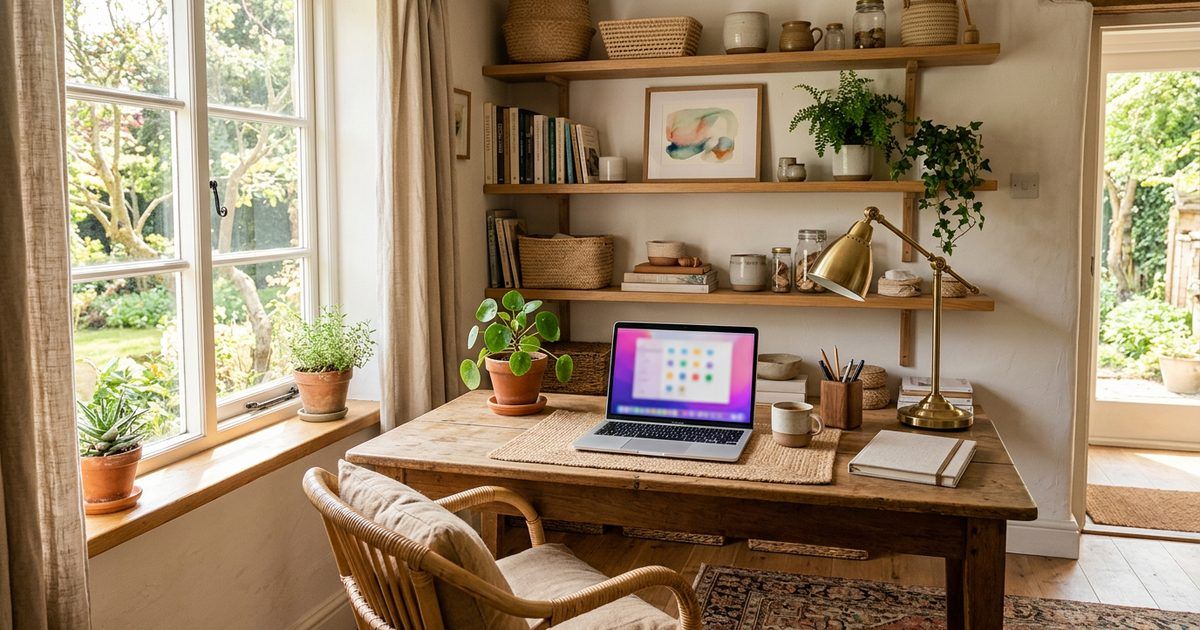
The van sits in the driveway with the ladder still strapped on top. Invoices wait in a stack beside the coffee maker. The office is a chair at the kitchen table and a phone that buzzes against the wood while dinner is still on the stove. To the people who wrote the zoning code, that chair is a land use.
The City’s Home Occupation Waiver form offers Plumbing, Electrical Contractor, General Contracting and Lawn Care/Landscaping right in its business-type menu, next to Dog Walking and Personal Chef. Then, a few lines away, it says home office use for general construction, electrical, painting, plumbing or landscaping contractors shall require a Conditional Use permit and may be allowed subject to Section 26.80.010 of the Revised Code. Listed, and then sent down a separate road.
Home cooking for resale, home daycares, and recording and film studios go down it too, along with any home occupation that is not specifically prohibited but cannot comply entirely with the requirements.
Then Google writes its own rule about the very same plumber. Its Business Profile guidelines say a service-area business should hide its business address from customers, and the example it picks is this one: “if you’re a plumber and run your business from your residential address, clear the address from your Business Profile.”
So the City wants the house named on the paperwork, and Google wants the house gone from the map. One kitchen table, two rulebooks, pointing opposite ways. Neither one was written for the person who works a day shift and takes the side calls at night.
How does a home-based business get more customers in St. Louis?
A home-based business in St. Louis gets more customers when two sets of rules line up: the City’s Home Occupation Waiver for the house, and a Google Business Profile set up as a service-area business with the home address hidden. Google lets a service-area business add up to 20 service areas, and it does not accept P.O. boxes at remote locations as an address. Reviews, real photos and every service written out in plain words carry it from there.
What each rulebook asks for, line by line
The City’s side is an online application at stlcitypermits.com, filled out on a laptop wedged between the invoices and the coffee maker. The waiver application costs $50.00. Paying by card adds a 2.55% processing fee with a $1.55 minimum, an e-check adds a flat $1.50, and the City does not receive any of those add-ons. Step 1 is finding the house in the Assessor’s database. Step 4 has the applicant affirm being a full-time resident of the premises, and unless the owner of the building applies personally, the City requires a notarized letter of authorization from the owner of record. When the address won’t come up in the lookup, the form points to the Zoning Dept at 314-622-3666.
For the contractor trades, the waiver is only the first door. The Zoning Section holds the conditional use hearing and makes a recommendation to the Board of Public Service, which issues the final decision. Hearings run on Zoom, Thursdays at 8:30 a.m., and the City notes that dates are subject to change. Questions go to the Conditional Use Secretary at the same number, (314) 622-3666.
Google’s side is a toggle. In a Business Profile, the path runs Edit profile, then Location; next to Business location, the Edit icon opens a switch labeled Show business address to customers. The service area takes the address’s place, set by cities, postal codes or other areas, up to 20 of them, and Google recommends keeping the whole area within 2 hours driving time. A mailbox rented across town won’t stand in for the house: Google says P.O. boxes or mailboxes located at remote locations aren’t acceptable.
For a crew working out of a South City kitchen, that list can read Soulard, Tower Grove South, Bevo Mill, The Hill. The neighborhoods go on the map. The front porch with the kids’ bikes on it stays off.
So when the City wants the house on the form and Google wants it off the map, where does a stranger find the business that lives in between?
The rules that decide who gets a pin
Google’s first test is a door. “To qualify for a Business Profile, a business must make in-person contact with customers during its stated hours.” A business that drives to its customers passes. The baker who hands a box across a porch rail passes. The seller who ships every order from a spare bedroom and never meets a buyer does not: Google’s own list of ineligible businesses names brands, organizations, artists and other online-only businesses.
And some work can’t live at home at all: the City lists doctor and dentist offices, repair shops, restaurants, mortuaries and private clubs among the uses prohibited as home occupations, where an application will not be accepted.
Where the first strangers come from
The first customers almost never come from a map. They come from a text after dinner, a neighbor asking who fixed the leak two doors down, a name passed along in a parking lot after church. That kind of trust shows up already earned.
The stranger is harder. A stranger searches, scrolls a column of pins and gold stars, and taps a name that was on the screen. Google says its local results are mainly based on relevance, distance and popularity, and that there’s no way to request or pay for a better local ranking. What a home business can control is the plain stuff: every service written out in words a customer would type, real photos of real work, and a reply under each review, typed with one thumb in the van between jobs.
This guide zooms in on the home-based crowd from our bigger walkthrough on putting a St. Louis side hustle in front of customers online. The pattern holds across both: the rules were drawn for a building with a sign over the door, and the work happening at the kitchen table has to find its own way around them.

When Google won’t list the business at all
The online-only seller hits the wall first. Candles cooling on the counter, labels printed, shipping boxes stacked by the back door, and no pin, because nobody ever walks up to buy one. For that seller, and for anyone who would rather not stake everything on one company’s eligibility rules, a second home on the web matters. We cover the paperwork side of that in getting a Google Business Profile without a registered business.
A Google profile also lives on Google’s terms. Its guidelines can change, and a profile that trips them can be suspended. A listing somewhere else keeps the same photos, the same reviews and the same phone number in front of customers no matter what any single platform decides next.
A listing that works like the website nobody had time to build
Most people running a business from home never built a website, and the ones who did built it in a weekend and haven’t touched it since. A good listing does the job anyway. Photos, hours, reviews, the website link and the phone, all on one structured page a stranger can land on at 11 p.m.
On St Louis Near Me Directory, a Gold listing needs no public address: a PO box, a service area or none at all. That one line is the answer to both rulebooks at once. The house stays private, and the business still has a front door online. A Gold listing can show up in as many as 10 business categories across up to 40 locations the owner chooses, which the plan counts as up to 400 keyword combinations. The contractor who does plumbing, drain cleaning and water heaters doesn’t have to pick one.
The page is schema-optimized so search engines understand the business, and it carries a high-authority backlink pointing at the website the owner already has, plus a personal QR code for the van door and the business cards. For more on running without a storefront entirely, read how St. Louis businesses reach customers without a storefront.
Two services, one kitchen table? Google asks for the fewest categories it takes. See how.
The slow work that still pays off
The free work is real work, and it still counts. A complete service-area profile, if the business meets customers in person. A review from every happy customer, asked for at the moment they say they loved the job. A helpful answer in the neighborhood group when someone asks who does this kind of work. None of it sends a bill.
Google says positive reviews and helpful replies can help a business stand out, and that photos and videos show customers what a business offers. The before-and-after of a clean drain, a finished deck, a tray of cupcakes still warm under the lights: that is the kind of picture a stranger trusts. If the business drives to its customers, our guide to mobile business marketing in St. Louis goes deeper on service areas.
Will AI assistants recommend a home-based business?
More people are asking them. BrightLocal’s Local Consumer Review Survey found use of ChatGPT and other AI tools for local recommendations rose from 6% to 45% in a year, making it the third most popular source of business recommendations. That is one survey, and plain search still matters most. But the question typed on a couch late at night, who does gutter cleaning near me, increasingly goes to an assistant.
An assistant can only name what it can read. A clear, structured page with the services, the neighborhoods and the reviews spelled out gives it something to quote. A buried post and a half-finished website give it very little. A listing page can be indexed and cited by AI on its own, with no storefront behind it.
Running a business from home doesn’t mean putting your home on the map. Start with a service-area profile and real reviews, and if you’re just getting going, read how a St. Louis side hustle gets noticed online.
If you’re the plumber with the van in the driveway, the baker at the kitchen table or the bookkeeper in the spare room, the Gold plan on St Louis Near Me Directory gives you a listing with no public address required, up to 10 categories and 40 locations, and a page that works like a website, so you get more customers without exposing your house. It’s $357 a year, about $29.75 a month paid annually, with a 7-day trial and no charge until it ends. Want to see who AI names for your trade first? Run the AI visibility check, or list your business today.
Frequently asked questions
Can I have a Google Business Profile if I work from home?
Yes, if you meet customers in person, at your place or theirs. Google says a business must make in-person contact with customers during its stated hours to qualify. Set it up as a service-area business and hide the home address. A purely online business that never meets customers isn’t eligible.
Does Google allow WFH?
Google’s test is in-person contact with customers, and its own example is a plumber who runs the business from a residential address and clears that address from the profile. And Google says P.O. boxes or mailboxes located at remote locations aren’t acceptable.
How do I stop my address from showing up on Google?
Set the profile up as a service-area business and clear the street address. Then add the areas you serve by city or postal code, up to 20 of them, keeping the whole area within about 2 hours of driving. Customers see the neighborhoods you cover, not your front door.
Do I need an LLC for a Google Business Profile?
Google’s eligibility test is about how you meet customers: a business must make in-person contact with customers during its stated hours. City rules are a separate question. In the City of St. Louis, working from home runs through the Home Occupation Waiver, and some trades, including contractors with a home office, need a Conditional Use permit.
How do I market my small business for free?
Start with a complete service-area profile if you qualify, a review request after every job, a reply under every review, and helpful answers in neighborhood groups. Google says there’s no way to pay for a better local ranking, so this free work is the work that counts on the map.
Do I need a website for my small business?
Not to start. A structured listing can carry your photos, hours, reviews, website link and phone on one page. A Gold listing on St Louis Near Me Directory works that way with no public address required, and a website can come later.
What are some alternatives to Google My Business?
Other maps, local directories and social pages all list businesses, and spreading across several means one platform’s rules can’t erase you. For a home business Google won’t accept, St Louis Near Me Directory offers a full listing with up to 10 categories and no public address required.
The City wants the house on the form. Google wants it off the map. The work at the kitchen table still deserves its next customer. Refuse to be invisible.

Written by a dedicated team of St. Louis locals who live, work, and play right here in the St. Louis metro. Founder Lane Forman and team are committed to building the region’s most trusted directory by verifying listings and connecting local businesses with loyal customers across Missouri and Illinois.