How Long Eyelash Extensions Really Last, and What Shortens Them
Revised September 1, 2026
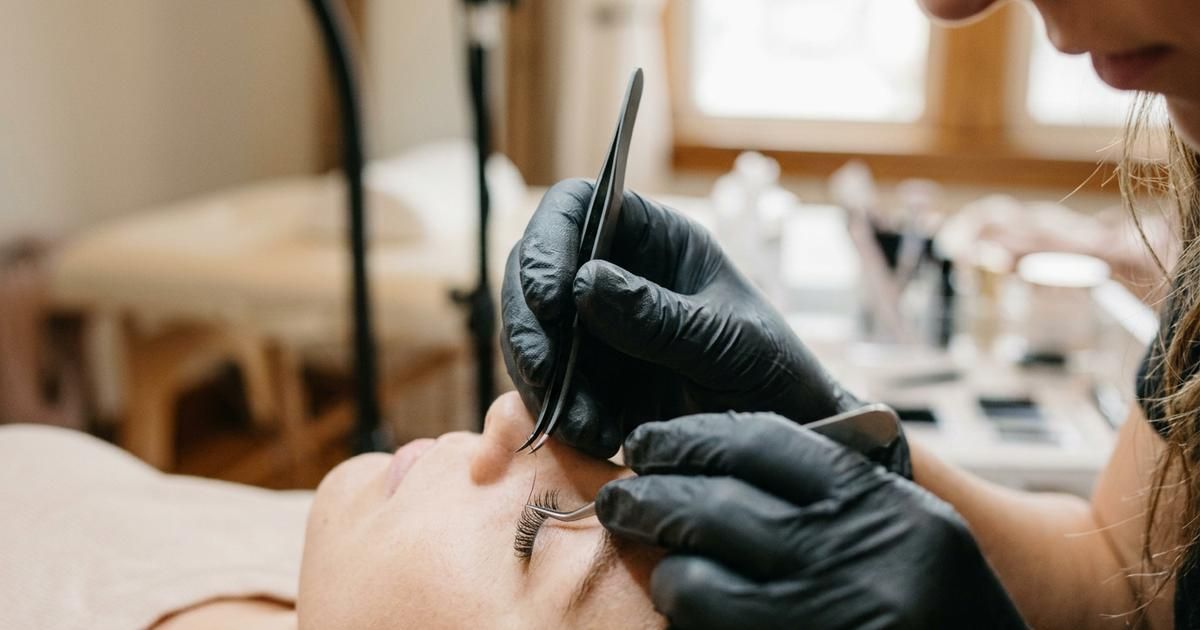
How long do lash extensions last before a fill?
Most sets need a fill every two to three weeks. You shed roughly two to five natural lashes a day, and each one takes its extension with it, so by week three about 20 to 30 percent of the set is gone. The full set itself lasts four to six weeks.
Keep reading ↓Imagine you booked a full set three weeks before your sister’s wedding in Webster Groves. The first ten days were perfect. You woke up already finished, skipped mascara entirely, and got out the door faster than you had in years. Then someone sends you a photo from the rehearsal dinner and you spot it: the outer corner of your left eye has thinned out, and the right one has not.
Imagine the same three weeks playing out somewhere else in the metro. A nurse in Creve Coeur who is finished doing mascara at five in the morning. A senior in O’Fallon with portraits on Saturday. Someone in Chesterfield packing for a cruise. A mother of the bride in Kirkwood counting backward from a date that will not move. Different lives, one identical worry underneath all of them.
How long does this really last, when do you have to go back, and how much of it is up to you? That last part is where the useful information hides. There is a clock you do not control, a schedule you can plan around, and a short list of daily habits that decide which end of the range you land on.
How long do lash extensions last before a fill?
Most sets need a fill every two to three weeks. You shed roughly two to five natural lashes a day, and each one takes its extension with it, so by week three about 20 to 30 percent of the set is gone. The full set itself lasts four to six weeks.
Notice that those are two different numbers, and mixing them up causes most of the disappointment in this whole subject. Four to six weeks is how long extensions stay on your face in some form. Two to three weeks is how long they stay looking like the set you paid for. Nobody is being dishonest when they quote you six weeks. They are answering a different question than the one you meant to ask.
So plan around the shorter number. If you want lashes that look consistently full, treat this as a standing appointment every two to three weeks rather than a one-time purchase you revisit whenever things start looking rough. The people who stay happy with extensions are almost always the ones who booked the next fill before they left the first appointment.
Why does the lash growth cycle decide everything?
Because an extension is attached to a single natural lash, and that natural lash is on its own schedule. It grows, it rests, and eventually it falls out, which is completely normal and happens whether or not there is anything glued to it. When it goes, your extension goes with it. Nothing failed. That is the system working exactly as designed.
You lose roughly two to five natural lashes every day. Under normal conditions you never notice, because new lashes are coming in behind them at a similar pace and the ones you lose are scattered across both eyes. Add extensions and that same ordinary shedding suddenly becomes visible, because now every lash that leaves takes a longer, darker one along with it.
This also explains why the shedding feels so lopsided. Your lashes are not synchronized with each other. A cluster of them at one outer corner can happen to reach the end of their cycle in the same week, which is exactly why one eye can look noticeably thinner than the other by day sixteen. It is not a bad application. It is arithmetic.
What each week actually looks like
Weeks one and two are the honeymoon. The set looks full, the line is even, and this is the version you photographed and sent to three people before you had even left the parking lot. Almost nothing about this stretch depends on you yet.
Weeks two to three are where the math starts showing. Roughly 20 to 30 percent of the extensions have shed by this point through normal turnover alone. Most people cannot name what changed. They just feel like their lashes look slightly less awake than they did last Tuesday.
Weeks three to four bring visible gaps. The line goes patchy, individual extensions start sitting at odd angles as the natural lash underneath grows out and carries them along, and you begin noticing all of it in the car mirror at stoplights.
By four to six weeks, most of the original set has shed. What is left is a scattered handful of survivors. This is the point where people either book a fill, book a full set again because they waited too long for a fill to make sense, or quietly decide to grow the whole thing out.
What does a realistic fill schedule look like?
Every two to three weeks, more or less permanently, for as long as you want to keep them. A fill replaces the extensions that shed since your last visit and tidies up the ones that grew out at a strange angle. It is a shorter appointment than a full set, because most of the work is already sitting on your face.
Two weeks and three weeks are genuinely different experiences, and it is worth understanding why. At two weeks a fill is a top-up. At three weeks you are closer to a rebuild, and depending on how much has shed you may be told that a fresh full set makes more sense. If you routinely stretch past three weeks, you are not saving money. You are paying full-set prices at longer intervals.
Your own interval is personal, and you will find it quickly. Some people hold a set beautifully for three weeks. Others need to be back in two. After two or three cycles you will know which one you are, and that number is far more useful to you than any average printed on a website, including this one.
Booking around a date that will not move
Work backward, and do not schedule the appointment for the day before. A fresh set or fill benefits from a few days to settle in, and the buffer gives you a window to go back if something is not sitting right. Somewhere in the four to seven days ahead of the event is the range most people land on.
If the event falls more than three weeks after your last appointment, plan for two visits rather than one. Trying to make a single set stretch across a full month and an important photograph is how people end up disappointed by something that was working perfectly well.
What actually shortens your retention?
Three things, mostly, and all three belong to you: oil, friction, and skipped cleaning. This is the part of the topic that gets glossed over, and it is the only part you genuinely control. Two people can walk out of identical appointments and have completely different results four weeks later based on nothing but daily habits.
Oil is the biggest one
Oil breaks down lash adhesive, and it makes no difference whether that oil came out of a bottle or out of your own skin. Oil-based cleansers, rich creams that migrate up from your cheeks overnight, makeup removers and naturally oily skin all push the bond in the same direction. Read the ingredients on anything that touches your face near the eye.
Naturally oily skin is not a character flaw and it does not disqualify you from wearing extensions. It does mean your realistic interval might be two weeks instead of three, and that is a much better thing to know before you book than after.
Friction, and the way you sleep
Rubbing your eyes is the fastest way to strip a set. So is sleeping face-down, which spends seven or eight hours a night pressing and dragging your lashes against a pillowcase. If you are a committed stomach sleeper, this is probably the single largest variable in your retention, and it is also the hardest one on this list to change.
Watch for the accidental friction too. Towels after a shower, pulling a shirt off over your head, propping your face on your hand at a desk. None of it feels like rubbing your eyes. All of it counts against you.
Cleaning them is not optional
Skipping daily cleaning shortens retention, which catches out people who assume the safest approach is to leave them alone completely. Oil, makeup and everyday debris build up along the lash line, and that buildup sits directly on the bond you are trying to protect. A clean lash line holds better than a dirty one. Ask your tech what to use, then actually use it.
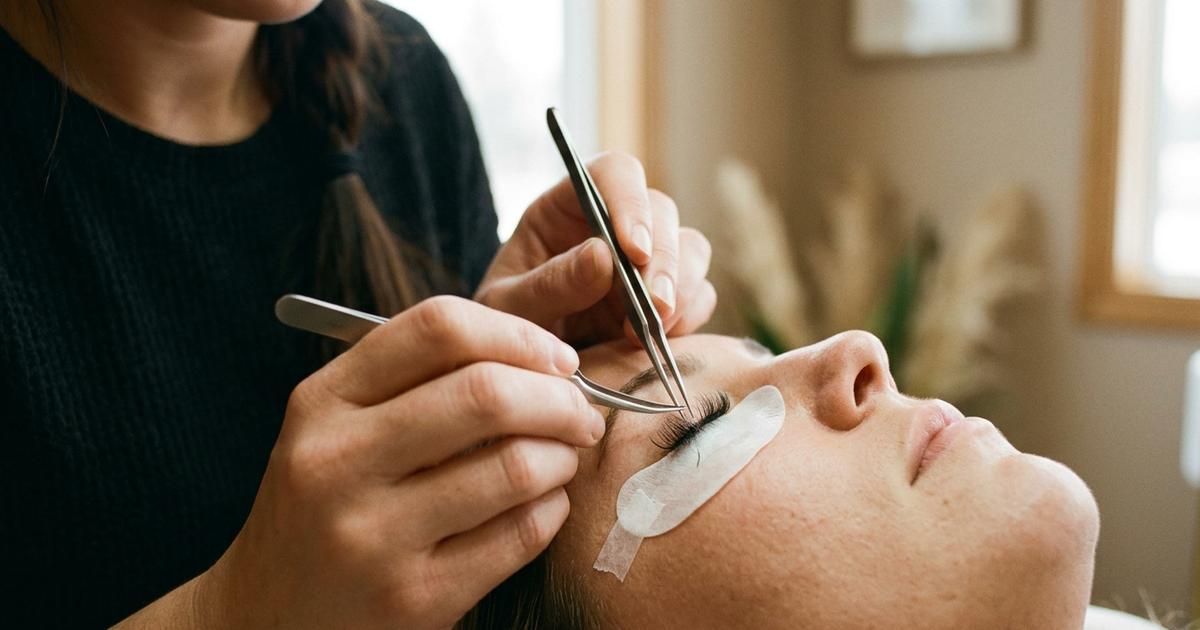
Why do so many people report shorter retention than the averages?
Because an average describes a population and you are one person. Reported real-world experience varies widely, and plenty of wearers say their sets never come close to the four to six week figure. That gap is real, and it is worth taking seriously before you spend money on the assumption that you will turn out to be average.
Several things sit inside that variation at once. Your natural shedding rate, your skin, how you sleep, what you put on your face, the environment you work in and the application itself all pull in different directions. There is no single lever to pull, which is why two people can follow identical aftercare and still land in different places.
In practice, treat the first cycle as a test rather than a verdict. Track how the set actually holds for you, tell your tech what happened and when, then adjust from there. The second set is usually better than the first, mostly because by then somebody has real information to work with instead of a guess.
Fresh lashes deserve somewhere to go. The Kaslik Mediterranean menu is a decent excuse.
How much should a full set of lash extensions cost?
There is a real range, and it is set locally, so the honest answer is to gather two or three quotes near you rather than trust a figure printed in an article. What is more useful is knowing what moves that number, because once you can see the drivers you can tell an expensive quote apart from an overpriced one.
Classic, hybrid, or volume
The style you choose is the largest single driver. A classic set places one extension on one natural lash. A volume set builds a fan of several lighter extensions for each natural lash, which is far more work per lash and takes considerably longer. Hybrid sits between the two. More density means more time, and more time means a higher price. That relationship holds everywhere.
Time in the chair
Almost all of this is priced from time. A full set is a long appointment, and the length depends on the style you picked, on how many natural lashes there are to work with, and on how much care the application takes. When two quotes come back different, appointment length is usually the reason, and it is a completely fair question to ask outright.
The number nobody quotes you
The real cost is not the full set. It is the fills. A set you maintain every two to three weeks becomes a recurring line in your budget for as long as you keep it, and across a year the fills add up to considerably more than the first appointment did. Ask what a fill costs and how long you can go between them before you commit to anything.
Are eyelash extensions worth it?
That depends on which cost you are weighing, and money is only one of them. The daily trade is genuine: you stop doing eye makeup, you look put together the moment you open your eyes, and you get minutes back every single morning. For anyone who wears eye makeup daily, those minutes add up faster than the invoice does.
The cost on the other side of the ledger is commitment. Extensions are a maintenance relationship, not a purchase. Every two to three weeks, indefinitely, plus daily cleaning and a standing rule against rubbing your eyes. If your schedule cannot absorb an appointment that often, the honest answer is probably no, and there is nothing wrong with landing there.
One more thing worth saying plainly. If you are the kind of person who will pick at them the moment they start to shed, extensions are going to frustrate you. The picking habit does more damage than the extensions ever would on their own.
Do fake lashes damage real lashes?
Applied properly, an extension sits on one natural lash and leaves when that lash sheds on its own schedule, which it was going to do anyway. The trouble people report tends to trace back to force rather than to the extension itself: rubbing, tugging at a lash that is halfway out, or peeling a set off at home. If your eyes are sore, red or itchy, stop and see a professional. This is general information rather than medical advice.
Two practical safeguards are worth knowing. Ask how many natural lashes each extension is being attached to, because an extension bridged across several lashes pulls on all of them as they try to shed at different times. And when a set reaches the end, have it removed properly instead of helping it along yourself at eleven at night.
Where do you find a lash tech near you?
Compare more than one, and ask all of them the same questions. How long is the appointment, what exactly is included in a fill, how long between fills, and what aftercare do they recommend for your skin? The answers tell you more about the quality of the work than any photo gallery ever will.
And if you happen to be on the other side of the chair, a lash tech building a book of clients in the metro, being listed where people are already searching is how new clients find you. Most of them are looking by neighborhood long before they are looking by name.
Compare a few lash techs before you book the first one. You can browse eyelash services across the metro on St Louis Near Me Directory, then ask each one the same questions about appointment length, fill intervals and aftercare. Whoever you pick, book the next fill before you leave the first appointment.
Frequently asked questions
Do fake lashes damage real lashes?
Applied properly, each extension sits on a single natural lash and sheds when that lash sheds, which it was going to do anyway at a rate of roughly two to five a day. Most reported trouble traces back to force instead: rubbing, pulling at a lash that is halfway out, or removing a set at home. Have them taken off professionally, and if your eyes are irritated, stop and see a professional. This is general information, not medical advice.
Are eyelash extensions worth it?
It comes down to whether you can live with the schedule. The payoff is daily: no eye makeup, no morning routine around your eyes, and you look finished the moment you wake up. The cost is a fill every two to three weeks for as long as you keep them, plus daily cleaning and a firm habit of not rubbing your eyes. People who wear eye makeup every day usually find that trade easy. People who cannot commit to an appointment twice a month usually do not.
What are the downsides to lash extensions?
Upkeep is the main one. Normal shedding costs you roughly 20 to 30 percent of the set by week three, so the look you loved on day two needs a fill by week three to stay that way. Then there are the aftercare rules: no oil near the eyes, no rubbing, no sleeping face-down, and cleaning them daily. There is also honest variability, since some wearers report far shorter retention than the usual four to six week figure.
How much should a full set of lash extensions cost?
Pricing is set locally, so gather two or three quotes near you instead of trusting a figure in an article. What drives the range is consistent everywhere: classic, hybrid or volume style, how long the appointment takes, and how many natural lashes there are to work with. Volume takes the longest and costs the most. Ask about fill pricing in the same conversation, because a fill every two to three weeks is the larger number over a year.
Are lash extensions painful?
It should not hurt. You lie down with your eyes closed while extensions are applied to individual lashes, and most people describe the appointment as long rather than uncomfortable. Plenty of people fall asleep in the chair. Stinging, burning or soreness during or afterward is not something to sit through quietly, so tell your tech immediately and see a professional if it continues. This is general information rather than medical advice.
Can I use mascara on my lash extensions?
Generally no, and the reason is practical rather than fussy. Mascara has to come off again, removal usually means rubbing at the lash line and often an oil-based product, and both of those work directly against your adhesive. Extensions are meant to replace the mascara step, not to sit underneath it. If you feel like you need mascara three weeks in, that is usually a signal that you are due a fill rather than a new product.
How long should a full set of lash extensions take?
Longer than most people expect, and the length depends heavily on the style. A classic set places one extension on one natural lash. A volume set builds a fan of several lighter extensions for each natural lash, so it takes considerably more time in the chair. Ask for the expected appointment length when you book so you can plan the rest of your day around it, and treat an unusually quick full set as a question worth asking about.
What happens if you stop getting fills?
Nothing dramatic. The set thins out gradually rather than coming off all at once, because each extension leaves only when the natural lash holding it sheds. Expect visible gaps somewhere in weeks three to four, and by four to six weeks most of the original set is gone. If you want them off sooner than that, have them removed properly rather than pulling at them yourself.
More St. Louis guides
- What hair salon services cost in St. Louis
- Nail salons in St. Louis
- Personal care near me: beauty and wellness services

Written by a dedicated team of St. Louis locals who live, work, and play right here in the St. Louis metro. Founder Lane Forman and team are committed to building the region’s most trusted directory by verifying listings and connecting local businesses with loyal customers across Missouri and Illinois.