Custom Cabinets in St. Louis: How to Choose a Cabinet Maker (Costs)
Revised August 29, 2026
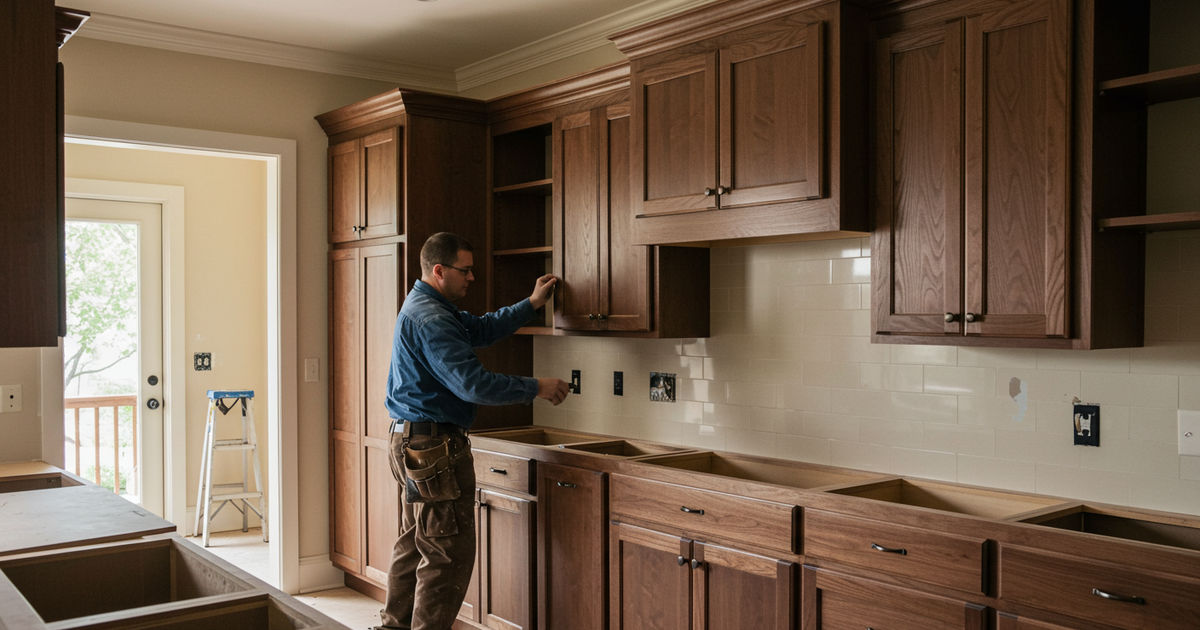
Is it cheaper to buy cabinets or have them built?
Buying pre-made stock cabinets is almost always cheaper up front than having them custom built, because stock is mass-produced in standard sizes while custom is built to your exact kitchen. But custom fits perfectly, uses better materials, and lasts far longer — often 40+ years versus 10 to 15 for stock. Stock wins on price today; custom wins on fit and longevity. Semi-custom often lands in the sweet spot.
Keep reading ↓Picture yourself in your kitchen in Ballwin or Tower Grove South, coffee going cold, doing the mental math on a remodel. The cabinets are the thing your eye keeps landing on — the dated doors, the drawer that never quite closes, the layout that fights you every time you cook. You’ve started pricing it out and discovered a bewildering range: one company talks about $8,000, another about $30,000, and you genuinely can’t tell whether you’re comparing the same thing or getting played.
Cabinets are almost always the single biggest line item in a kitchen remodel, which makes the cabinet decision the one most worth getting right. This guide breaks down what cabinets really cost — stock, semi-custom, and fully custom — whether it’s cheaper to buy or build, what a $10,000 budget realistically covers, which cabinet styles are aging poorly, and how to choose a St. Louis cabinet maker who’ll deliver quality that lasts.
Is It Cheaper to Buy Cabinets or Have Them Built?
Straight answer: buying pre-made (stock) cabinets is almost always cheaper up front than having them custom built. Stock cabinets are mass-produced in standard sizes and cost the least; custom cabinets are built to your exact kitchen and specifications, which costs more in both materials and skilled labor. But “cheaper” isn’t the whole story. Custom cabinets fit your space perfectly (no filler strips or awkward gaps), use higher-grade materials, and last far longer — often 40 years or more versus 10 to 15 years for stock. So stock wins on price today; custom wins on fit, quality, and longevity. For many kitchens, semi-custom lands in the sweet spot: more size and style options than stock, better quality, without the full custom price tag.
What Is the Average Cost for Custom Kitchen Cabinets?
Cabinets are usually priced per linear foot (a measure of the run of cabinetry along your walls), installed. In 2026, the rough tiers are: stock at about $100 to $300 per linear foot, semi-custom at about $150 to $650 per linear foot, and fully custom at about $500 to $1,200+ per linear foot. Translated to a whole kitchen: stock or basic semi-custom often runs $8,000 to $15,000, a mid-range semi-custom kitchen with finished interiors, soft-close hardware, and professional installation nationally averages $16,000 to $22,000, and fully custom cabinets run roughly $18,000 to $30,000 for an average-sized kitchen. Where you land depends on your kitchen’s size, the materials, and how custom you go — which is exactly why an itemized, per-linear-foot quote is the only way to compare bids honestly.
Will Home Depot Make Custom Cabinets?
Sort of — but read the fine print. Home Depot (and Lowe’s) primarily sell stock and semi-custom cabinet lines from major manufacturers, plus design and installation services. What they call “custom” is usually semi-custom: you choose from set door styles, finishes, and modular sizes with some configuration options, but it’s not a true one-off built from scratch to your exact specifications. That’s perfectly fine for many kitchens and often a good value. But if you have an unusual layout, want a specific wood or finish they don’t offer, or need cabinetry built around odd angles and old-house quirks, a genuine local custom cabinet maker is what you’re actually after — the big box just isn’t set up for it.
Can Lowe’s Make Custom Cabinets?
The same answer applies to Lowe’s: they offer stock and semi-custom cabinet lines with design and installation, not true built-from-scratch custom cabinetry. For a straightforward kitchen with standard dimensions, their semi-custom options can be a reasonable, convenient choice with a corporate warranty. For anything requiring real customization — exact sizing, unique materials, built-ins for a tricky St. Louis old-house kitchen — you’ll want an independent cabinet maker or a cabinetry-focused contractor. As with tile and windows, remember that the store isn’t the installer: ask who actually builds and installs, whether they’re insured, and what the warranty covers before you sign.
Is $10,000 Enough for a Kitchen Remodel?
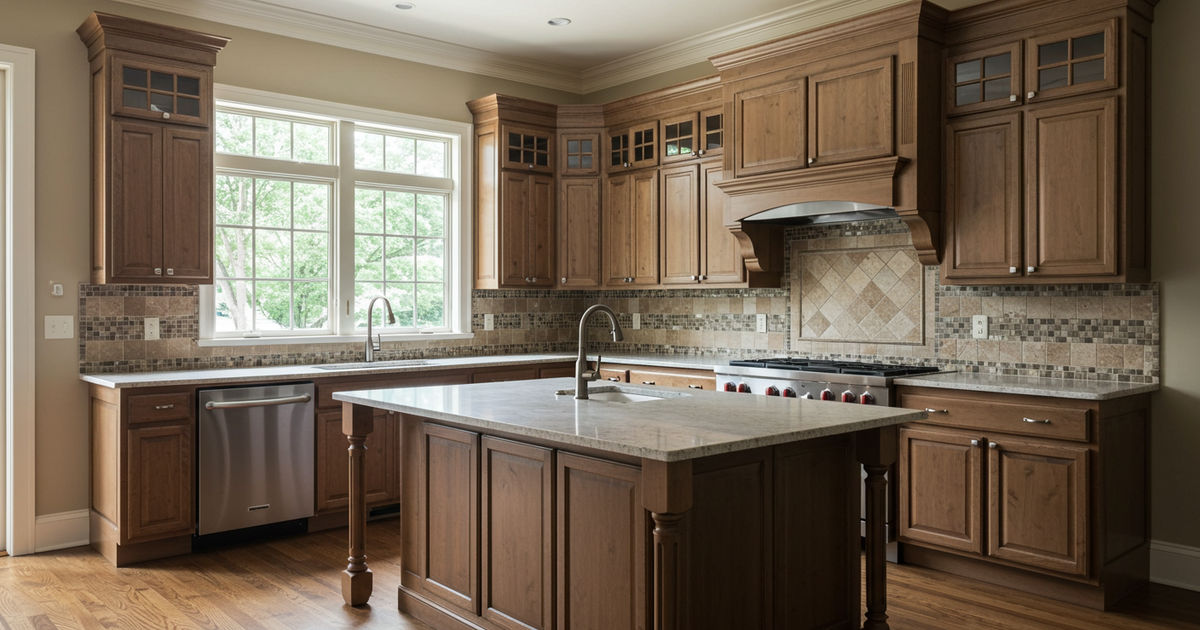
Honestly? $10,000 is a tight but workable budget for a modest kitchen refresh — not a full gut renovation. Since cabinets alone can consume most or all of $10,000 at the stock-to-semi-custom level, a budget that size usually means making smart choices: keeping your existing layout (moving plumbing and gas is expensive), choosing stock or semi-custom cabinets, or even refacing rather than replacing cabinets if the boxes are sound. Add in countertops, a backsplash, hardware, and labor, and $10,000 goes quickly. It can absolutely produce a big visual improvement — new cabinet fronts, counters, and paint transform a room — but a full custom kitchen with new appliances and a reworked layout typically runs well beyond it. A good cabinet maker or remodeler will tell you honestly what your budget can and can’t stretch to, and help you spend it where it shows most.
What Cabinet Color Is Outdated?
Since cabinets are a long-term investment, style longevity matters — especially if resale is on your mind. Trends shift, but a few looks are widely considered to be fading: very dark, heavy cherry and orange-toned wood finishes from the early 2000s, honey oak in its dated golden form, and starkly all-white kitchens are giving way to warmer, more natural palettes. What’s aging well: warm neutrals, soft greens and muted blues, natural wood tones, and two-tone kitchens. That said, chasing the trend of the moment is its own trap — a color that’s “in” this year can date just as fast. The safest long-term bet is usually a timeless neutral on the main cabinets with color and personality added through paint, hardware, and accents you can change cheaply later. A good cabinet maker can talk through what holds up in both style and resale value.
Total tangent — Fenton’s dinner options are better than you think.
Stock, Semi-Custom, or Custom: How to Decide
The three tiers aren’t just price points — they’re different products, and matching the tier to your kitchen saves both money and regret. Stock cabinets come in fixed sizes and a limited set of styles; they’re the budget choice, install fast, and make sense for a rental, a flip, a basic kitchen, or a tight budget — just expect a lifespan around 10 to 15 years and some filler gaps where standard sizes don’t quite fit. Semi-custom cabinets start from standard boxes but offer far more sizes, door styles, finishes, and modifications, and better construction — they last roughly 20 to 30 years and suit most homeowners doing a real, lasting kitchen. Fully custom cabinets are built from scratch to your exact space and taste, in whatever materials and configuration you want; they cost the most and take the longest, but they fit perfectly, use the best materials, and can last 40 years or more. If you’re staying in the home long-term and have an awkward or period kitchen, the step up to semi-custom or custom usually pays you back in fit, durability, and daily satisfaction. If you’re on a budget or won’t be there long, stock does the job.
How to Choose a St. Louis Cabinet Maker
Whether you go custom, semi-custom, or a hybrid, the maker matters. Look for someone licensed and insured with a real portfolio of finished kitchens you can view, strong verifiable reviews, clear communication about materials (solid wood vs plywood vs particleboard, dovetail joints, soft-close hardware), and a detailed written quote and timeline. Ask about the construction quality, not just the door style — the box, the joinery, and the hardware are what determine whether cabinets last 15 years or 40. And be wary of the usual red flags: no insurance, no portfolio, a bid far below the rest, large cash-up-front demands, and vague answers about materials or timeline. Custom cabinetry is a months-long relationship, so hire someone whose work and communication you trust.
Questions to Ask Before You Hire
Before committing, ask: Can I see kitchens you’ve built or installed? Are you licensed and insured? What materials do you use for the boxes, doors, and drawers — and why? Is this stock, semi-custom, or fully custom? What’s the itemized cost per linear foot and the total? What’s the timeline, and what could delay it? What warranty covers the cabinets and the installation? Do you handle removal and disposal of the old cabinets? A quality cabinet maker answers all of this in detail and welcomes the scrutiny — because their materials and craftsmanship are their selling point. Vague answers about what’s inside the boxes are a sign to keep looking.
St. Louis-Specific: Old-House Kitchens and Built-Ins
St. Louis’s beloved older homes make cabinetry especially local. Our century-old brick homes, bungalows, and four-families often have kitchens with non-standard dimensions, plaster walls that aren’t plumb, quirky nooks, and charming but awkward footprints — exactly the situations where stock cabinets leave gaps and a skilled custom or semi-custom maker earns their fee by building to fit. Many owners of historic St. Louis homes also want cabinetry that respects the period character of the house, from Shaker doors to furniture-style built-ins, which is a job for a craftsman rather than a modular kit. If you own one of these homes, prioritize a cabinet maker experienced with older construction and creative built-ins. Browse established local cabinet makers and see their finished work before you commit — the right one turns an awkward old kitchen into the best room in the house.
Ready to find and compare local cabinet makers? Browse St. Louis cabinet contractors on the St. Louis cabinet contractors map, or explore every trade across the metro on the home services coverage map — so you can shortlist makers whose finished kitchens you can actually go see.
Build or install cabinets? Homeowners planning kitchens are searching for a maker they can trust. Listing your business puts your craftsmanship in front of them.
More St. Louis Home-Services Guides
- How to find a good handyman
- How to choose an electrician in St. Louis
- How to choose a roofing contractor in St. Louis
Frequently Asked Questions
What is the average cost for custom kitchen cabinets?
Fully custom cabinets run about $500 to $1,200+ per linear foot installed, or roughly $18,000 to $30,000 for an average-sized kitchen. By comparison, stock runs about $100 to $300 per linear foot ($8,000 to $15,000 for a kitchen) and semi-custom about $150 to $650 per linear foot, with a mid-range semi-custom kitchen averaging $16,000 to $22,000 nationally. Always get an itemized per-linear-foot quote.
Will Home Depot make custom cabinets?
Home Depot primarily sells stock and semi-custom cabinet lines plus design and installation. What they call “custom” is usually semi-custom — set door styles, finishes, and modular sizes with some configuration, not a true one-off built to your exact specs. That’s fine for many kitchens, but for unusual layouts, specific materials, or old-house quirks, a genuine local custom cabinet maker is what you actually need.
Is $10,000 enough for a kitchen remodel?
It’s a tight but workable budget for a modest refresh, not a full gut renovation. Cabinets alone can consume most of $10,000 at the stock-to-semi-custom level, so it usually means keeping your existing layout, choosing stock or semi-custom cabinets, or refacing rather than replacing. It can deliver a big visual improvement, but a full custom kitchen with new appliances and a reworked layout typically costs well beyond it.
What cabinet color is outdated?
Widely considered to be fading: very dark or orange-toned cherry finishes from the early 2000s, dated golden honey oak, and starkly all-white kitchens. Warmer, more natural palettes — warm neutrals, soft greens and muted blues, natural wood, and two-tone kitchens — are aging better. But chasing any single trend is risky; a timeless neutral on the cabinets with color added through paint and hardware is the safest long-term bet.
What is the average cost of cabinets for a 12x12 kitchen?
In 2026 the tiers run roughly $100 to $300 per linear foot for stock and $150 to $650 for semi-custom. Translated to a whole kitchen, stock or basic semi-custom often lands at $8,000 to $15,000, which is where most 12x12 kitchens fall.
What is the most affordable way to buy kitchen cabinets?
Stock cabinets in standard sizes, ordered to fit the layout you already have. Cost climbs when the room forces custom widths or when you move plumbing. Refacing is cheaper still if the boxes are sound — it is the doors and fronts people actually see.
What makes a kitchen look cheap?
Filler strips and awkward gaps where stock sizes did not quite fit, visible hinge hardware, and thin doors that flex. Custom avoids the gaps because it is built to the room — which is most of what you are paying the premium for.

Written by a dedicated team of St. Louis locals who live, work, and play right here in the St. Louis metro. Founder Lane Forman and team are committed to building the region’s most trusted directory by verifying listings and connecting local businesses with loyal customers across Missouri and Illinois.