How to Choose a Tile Installer in St. Louis (Cost Guide)
Revised August 29, 2026
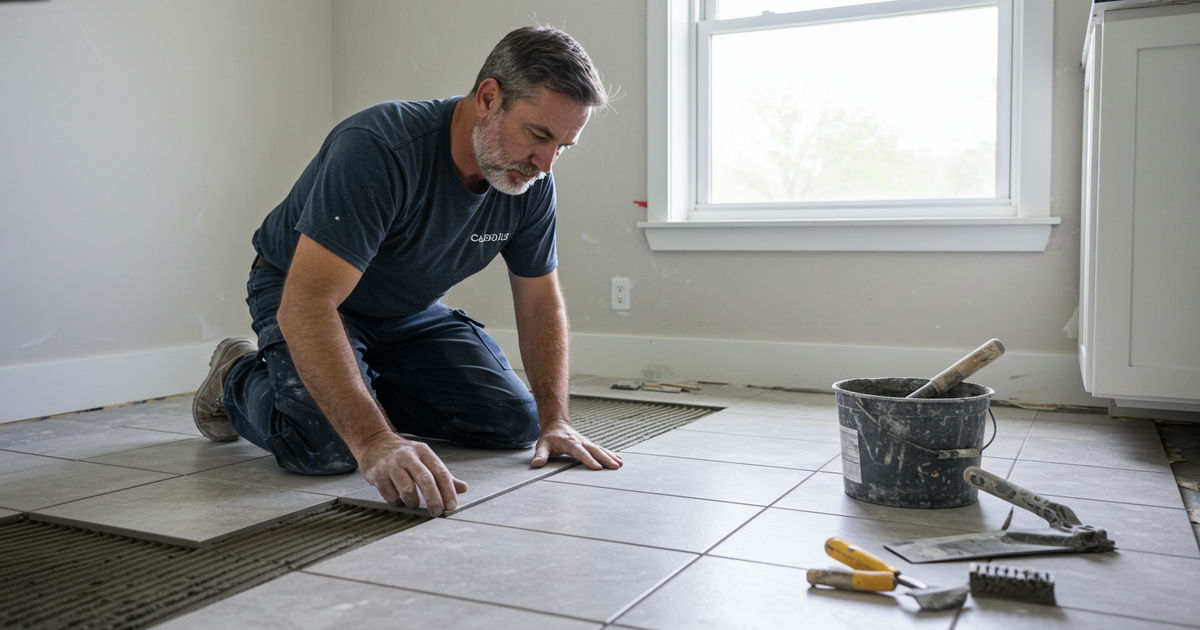
How much should I expect to pay for tile installation?
Tile labor typically runs about $8 to $15 per square foot in 2026, with the full range spanning roughly $5 to $22 depending on tile type, pattern, and region — and that’s labor only, on top of the tile itself. Simple large-format ceramic is at the low end; mosaics, stone, and complex patterns add 15 to 25 percent. Hourly, most independent setters charge $65 to $90.
Keep reading ↓Imagine standing in your half-finished Kirkwood bathroom or Maplewood kitchen, a box of beautiful porcelain tile stacked in the corner, realizing that the gorgeous end result you pictured lives or dies entirely on the hands that set it. Tile is one of those trades where the material can be flawless and the job still turns out badly — crooked lines, lippage you catch with a bare toe, grout that cracks in a month, a shower that leaks behind the wall where you can’t see it. A great tile job quietly lasts for decades. A bad one announces itself every single day.
So choosing the right tile installer matters more than almost any finish decision in a remodel. This guide covers what tile installation should cost — per square foot and per day — what the trade is called, how to spot genuine skill (including a clever test you can ask about), the common mistakes that ruin jobs, and how to hire a setter in St. Louis whose work you’ll be glad to look at for years.
How Much Should You Expect to Pay for Tile Installation?
For a direct answer: tile labor typically runs about $8 to $15 per square foot in 2026, with the full range spanning roughly $5 to $22 per square foot depending on tile type, pattern complexity, and your region — and that’s labor only, on top of the cost of the tile itself. Standard 12×12 or 12×24 ceramic floor tile in a simple layout sits at the lower end; small mosaics, natural stone, and complex patterns like herringbone or diagonal push toward the top, often adding 15 to 25 percent to labor. If a setter charges by the hour instead, expect roughly $50 to $120 per hour, with most independent setters in the $65 to $90 range. As always, the figure that matters is a written, itemized quote for your specific room, tile, and layout — not a national average.
What Is a Person That Installs Tiles Called?
The tradesperson who installs tile is called a tile setter, tile installer, or simply a tiler — all three mean the same thing. You may also see the term tile contractor for a company that handles the full job, including surface prep, waterproofing, setting, and grouting. Tile setting is a genuine skilled craft: a good setter understands substrate prep, waterproofing (especially in showers), proper thinset and trowel technique, layout planning, and how to keep long runs perfectly straight and level. When you’re hiring, you want someone who does tile as a specialty, not a general handyman who tiles occasionally — the difference shows up in the corners, the cuts, and the grout lines.
How Much Should You Pay a Tiler Per Day?
Some setters, especially for smaller or hard-to-measure jobs, quote by the day rather than the square foot. Working from typical hourly rates, a full day of skilled tile work generally lands somewhere around $500 to $700 for one experienced setter, more if there’s a helper or the work is especially intricate. That said, day rates can be tricky for you as the buyer: a slower setter costs you more days, so a per-square-foot or per-job quote often protects you better because it ties the price to the finished result rather than the clock. If a tiler quotes by the day, ask roughly how many days your job should take and what happens if it runs long — a confident pro will give you a straight answer.
How Much Does Lowe’s Charge to Install Tile?
Big-box stores like Lowe’s and Home Depot offer tile installation through third-party contractors, and their pricing is generally in the same per-square-foot ballpark as hiring independently — sometimes a bit higher once you add their service fees, and with less flexibility on the crew you get. The trade-off is convenience and a corporate warranty versus the personal accountability, sharper pricing, and craftsmanship you often get from a well-reviewed independent setter. Many St. Louis homeowners find that a skilled local tiler with a strong portfolio gives a better result for the money — but if you go the big-box route, still ask who the actual installer is, whether they’re insured, and what the warranty covers. The store is not the one on their knees setting your tile.
What Is the 3-4-5 Rule for Tiling?
Here’s a quick way to gauge whether a setter actually knows layout: ask them about the 3-4-5 rule. It’s a simple geometry trick for confirming a perfectly square (90-degree) corner before any tile goes down. You measure 3 units along one line, 4 units along the perpendicular line, and if the diagonal between those two points is exactly 5 units, the corner is truly square (it’s the 3-4-5 right triangle from geometry class). Skilled setters use this to establish accurate reference lines so the whole floor or wall stays straight and even — because in a room that’s slightly out of square (which describes most older St. Louis homes), tiling off the wall instead of a squared layout line is exactly how you end up with tapering grout lines and a job that looks “off” without anyone knowing why. A tiler who lights up at this question is one who plans layouts properly.
Common Tiling Mistakes to Avoid
Knowing what goes wrong helps you spot a setter who’ll get it right. The classic mistakes: skipping or rushing surface prep (tile is only as good as what’s under it), inadequate waterproofing in showers and wet areas (the leaks you can’t see are the expensive ones), poor layout planning that leaves ugly sliver cuts at the most visible edges, the wrong trowel or too little thinset causing hollow spots and loose tiles, uneven tiles (lippage) from rushing, wrong or badly mixed grout, and not using spacers or expansion joints so the finished surface has no room to move. Nearly all of these come down to prep, patience, and experience — which is precisely why the cheapest, fastest bid so often becomes the most expensive one after the redo.
Total tangent — here’s where to eat in Godfrey.
Porcelain, Ceramic, or Stone: Matching Tile to the Room
A good setter will also steer you toward the right tile for where it’s going, and understanding the basics helps you weigh their advice. Porcelain is denser, harder, and more water-resistant than standard ceramic, making it the workhorse for floors, high-traffic areas, and wet zones — it costs a bit more and is a little harder to cut, which is partly why skilled labor matters. Ceramic is easier on the budget and perfect for walls and lower-traffic floors. Natural stone (marble, travertine, slate) is beautiful but porous, so it needs sealing and more careful maintenance — not ideal for a busy mudroom. Glass and mosaic tiles shine as accents and backsplashes but demand extra skill to set cleanly. The takeaway isn’t that one tile is best — it’s that a setter who asks how a room will be used before recommending a tile is one who’s thinking about how the job holds up, not just how it photographs on day one.
Red Flags When Hiring a Tile Installer
Watch for warning signs before you commit. Be cautious of no portfolio or references, no insurance, a bid far below the others, vagueness about surface prep and waterproofing, unwillingness to put scope and price in writing, large cash-up-front demands, and anyone who talks only about how fast they’ll be done rather than how well. A setter who can’t show you finished bathrooms and floors they’ve done, or who waves off your questions about the substrate and shower waterproofing, is telling you where they’ll cut corners. Good tilers are proud of their work and happy to show it — their portfolio is their best sales pitch.
Questions to Ask Before You Hire
Before you hire, ask: Can I see photos of showers and floors you’ve tiled? Are you insured? How will you prep the surface, and how will you waterproof the wet areas? Is the quote per square foot or per job, and what’s included — prep, setting, grouting, sealing? How do you handle layout in a room that’s out of square? What tile types do you specialize in? Do you offer any warranty on the workmanship? A skilled tile setter answers these with specifics and enthusiasm. If the answers are thin — especially on prep and waterproofing — keep looking, because those invisible steps are exactly where a beautiful tile job is won or lost.
St. Louis-Specific: Old-House Floors, Basements, and Bathrooms
Tiling in St. Louis comes with local quirks worth hiring for. Our stock of century-old homes means floors and walls that are rarely perfectly flat or square, so a setter who knows how to level a subfloor and plan layout around an out-of-square room is worth their rate. Our humid summers and finished basements put a premium on proper waterproofing and the right materials for below-grade and moisture-prone spaces — the wrong approach invites mold and loose tile. And bathroom and shower work, where a hidden leak can rot a floor or ceiling, is where cutting corners hurts most. A local tile setter who’s worked on older St. Louis homes brings exactly the judgment these jobs demand. Browse experienced local tile pros before you commit, and you’ll shortlist setters whose finished work you can actually go see.
Ready to find and compare local tile installers? Browse St. Louis tile contractors on the St. Louis tile contractor map, or explore every trade across the metro on the home services coverage map — so you can shortlist skilled setters with portfolios you can actually see.
Are you a tile setter or contractor? Homeowners planning kitchens and baths are looking for you. Listing your business puts your work in front of St. Louisans ready to hire.
More St. Louis Home-Services Guides
- How to get your St. Louis carpets actually clean
- How to find a good handyman
- How to choose an electrician in St. Louis
Frequently Asked Questions
What is a person that installs tiles called?
They’re called a tile setter, tile installer, or tiler — all the same thing — and a company handling the full job is a tile contractor. Tile setting is a skilled craft involving substrate prep, waterproofing, proper thinset technique, and layout planning. Hire someone who does tile as a specialty rather than a general handyman who tiles occasionally; the difference shows in the cuts, corners, and grout lines.
What is the 3-4-5 rule for tiling?
It’s a geometry trick to confirm a truly square (90-degree) corner before setting tile: measure 3 units along one line and 4 along the perpendicular line, and if the diagonal between those points is exactly 5 units, the corner is square. Skilled setters use it to establish accurate reference lines so the floor or wall stays straight — essential in older St. Louis homes that are rarely perfectly square.
What are common tiling mistakes to avoid?
The big ones: skipping surface prep, inadequate waterproofing in showers, poor layout that leaves ugly sliver cuts, the wrong trowel or too little thinset causing hollow spots, uneven tiles (lippage) from rushing, wrong or badly mixed grout, and no spacers or expansion joints. Nearly all trace back to prep, patience, and experience — which is why the cheapest, fastest bid so often becomes the most expensive redo.
How much should I pay a tiler per day?
A full day of skilled tile work generally lands around $500 to $700 for one experienced setter, more with a helper or intricate work. Day rates can favor a slower worker, though, so a per-square-foot or per-job quote often protects you better by tying price to the finished result. If a tiler quotes daily, ask how many days your job should take and what happens if it runs long.
How much would it cost to tile a 10x10 bathroom?
A 10x10 floor is 100 square feet, so at $8 to $15 per square foot in labor that is roughly $800 to $1,500 before materials. Bathrooms usually land at the higher end — more cuts, more edges, and often mosaic or stone in the wet areas.
How much does it cost to tile a 1500 sq ft home?
At $8 to $15 per square foot for labor, 1,500 square feet runs about $12,000 to $22,500 before you buy a single tile. Material is a separate budget and swings enormously — which is why whole-house tile is usually phased room by room.
What is the average labor cost to install tile?
Tile labor typically runs about $8 to $15 per square foot in 2026. Standard 12x12 or 12x24 ceramic in a simple layout sits at the lower end; small mosaics, natural stone and complex patterns push toward the top. By the hour it is roughly $50 to $120.
How much would it cost to tile a 10x10 bathroom?
A 10x10 floor is 100 square feet, so at $8 to $15 per square foot in labor that is roughly $800 to $1,500 before materials. Bathrooms usually land at the higher end — more cuts, more edges, and often mosaic or stone in the wet areas.
How much does it cost to tile a 1500 sq ft home?
At $8 to $15 per square foot for labor, 1,500 square feet is about $12,000 to $22,500 before a single tile is bought. Material is a separate budget that swings enormously, which is why whole-house tile usually gets phased room by room.
How much does it cost to install 1000 square feet of tile in a bathroom?
A thousand square feet of bathroom tile is a very large job — at $8 to $15 per square foot in labor, roughly $8,000 to $15,000 before material. Bathrooms carry more cuts and edges per foot than open floors, so expect the upper half of that band.

Written by a dedicated team of St. Louis locals who live, work, and play right here in the St. Louis metro. Founder Lane Forman and team are committed to building the region’s most trusted directory by verifying listings and connecting local businesses with loyal customers across Missouri and Illinois.