How to Hire a Concrete Contractor in St. Louis (Cost Guide)
Revised August 29, 2026
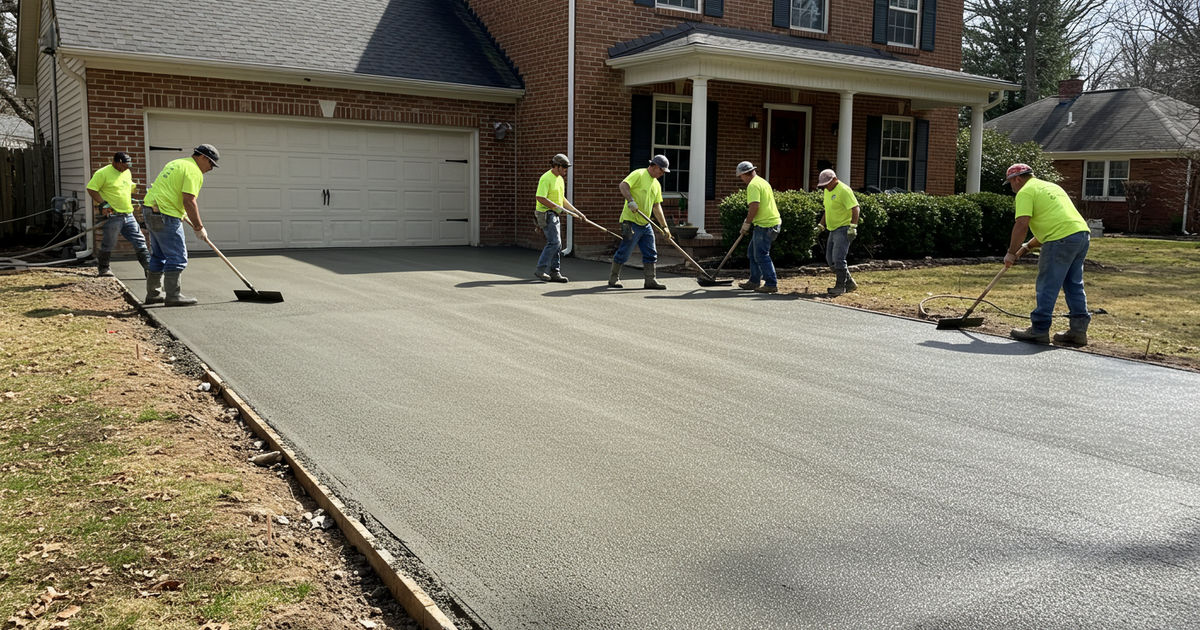
How to find a good concrete contractor?
Hire a licensed and insured concrete contractor with a real portfolio of finished local work, strong recent reviews, and a clear written estimate — and be skeptical of any bid dramatically cheaper than the rest. Concrete is unforgiving once cured, so ask to see driveways or patios they’ve poured nearby and get scope, thickness, reinforcement, prep, and price in writing. Compare two or three detailed bids.
Keep reading ↓Picture a Saturday morning in Florissant or Oakville, coffee in hand, staring at the driveway that’s become a jigsaw of cracks and heaved slabs after another St. Louis winter. Or maybe you’re dreaming of a patio out back for summer cookouts, and you’ve just gotten three quotes that range from “that seems fair” to “are they pouring gold?” Concrete is one of those jobs where the finished product looks simple — it’s just a gray slab, right? — but the difference between a good pour and a bad one shows up a year or two later, when one is still flat and solid and the other is spiderwebbed with cracks.
Hiring the right concrete contractor is what separates those two outcomes. This guide walks through how to find a good one, what concrete actually costs per square foot in St. Louis, what the trade is even called, the classic negotiation mistakes to avoid, and the red flags that should send you looking elsewhere — so your driveway or patio outlasts the next decade of freeze-thaw.
How Do You Find a Good Concrete Contractor?
The short answer: hire a licensed and insured contractor with a real portfolio of finished local work, strong recent reviews, and a clear written estimate — and be skeptical of anyone whose bid is dramatically cheaper than the rest. Concrete is unforgiving; once it’s poured and cured, fixing a bad job usually means tearing it out and starting over, so experience and craftsmanship matter enormously. Ask to see driveways or patios they’ve poured in the area, read reviews that mention how the work held up over time (not just how friendly the crew was), confirm they carry insurance, and get everything — scope, thickness, reinforcement, prep, and price — in writing. Two or three detailed bids for the identical scope will quickly show you who’s serious and who’s guessing.
What Does Concrete Cost in St. Louis?
Pricing is usually by the square foot, and it varies with the type of project. In the St. Louis area, a plain concrete driveway runs about $7 to $13 per square foot for standard, un-reinforced concrete — roughly $4,700 to $6,400 for a 500-square-foot driveway. A basic concrete patio runs about $4 to $8 per square foot, while decorative or stamped concrete with color, patterns, and borders jumps to $15 to $30 per square foot. If an old slab has to come out first, budget another $2 to $6 per square foot for demolition and disposal. And don’t forget permits — the City of St. Louis requires a permit for a new driveway, with a fee around $110, and many municipalities in the metro have their own requirements. A trustworthy contractor builds prep, reinforcement, thickness, and permits into the quote rather than surprising you later.
What Is a Concrete Contractor Called?
You’ll hear a few names, and they’re worth knowing so you hire the right specialist. The tradesperson who places and finishes concrete is often called a concrete finisher or cement mason; a company that manages the whole job — forming, pouring, finishing, and cleanup — is a concrete contractor or flatwork contractor (“flatwork” means horizontal surfaces like driveways, patios, and sidewalks, as opposed to foundations or structural work). For a driveway or patio you want a residential flatwork contractor with a strong finishing reputation. For structural work — foundations, retaining walls, basement repair — you want someone who specializes there instead. Matching the specialty to the job is half of hiring well.
What Is the Difference Between Cement and Concrete?
People use the words interchangeably, but they’re not the same — and a contractor who explains the difference clearly is usually one who knows their craft. Cement is an ingredient: a fine powder (typically Portland cement) that acts as the binder. Concrete is the finished building material — a mix of cement, water, and aggregates like sand and gravel that cures into the hard, durable surface you actually walk and park on. So your driveway isn’t “cement,” it’s concrete; cement is just the glue inside it. It sounds like trivia, but the mix design — the ratio of cement to aggregate to water, and any additives for our freeze-thaw climate — is exactly the kind of detail that separates a slab that lasts from one that flakes and cracks early.
What Not to Tell a Contractor
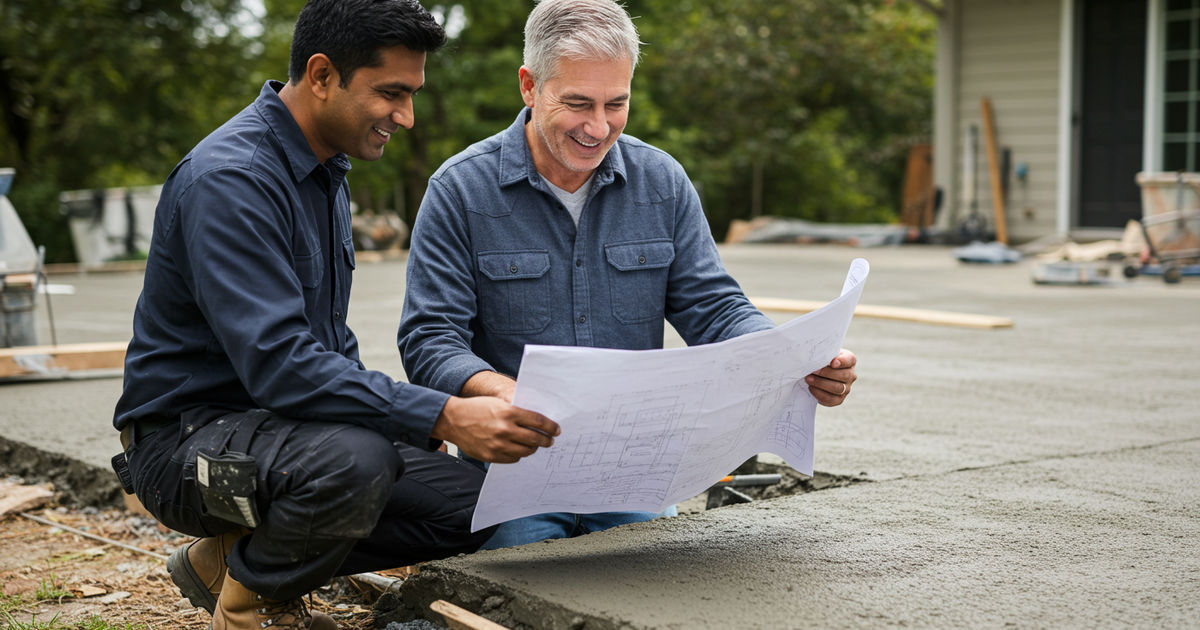
Being a smart buyer isn’t about being adversarial — it’s about not handing away your leverage. A few things are better kept close: don’t lead with your absolute maximum budget (“I can go up to $12,000” often becomes the price); don’t signal that you’re in a desperate hurry or that theirs is the only bid you’re getting; and don’t tell them exactly what the other guy quoted before you’ve heard their honest number. It’s also wise not to reveal that you have no idea what the work should cost — which, having read the pricing above, you no longer don’t. What you should share is your scope, your timeline flexibility, and that you’re comparing a few detailed bids. That framing invites a fair, competitive price without inviting anyone to pad it.
What Is Poor Man’s Concrete?
“Poor man’s concrete” is a budget alternative you’ll sometimes hear about — usually a soil-cement or dry-pour mix, where Portland cement is blended with on-site soil or gravel and compacted, or where dry concrete mix is poured and left to draw moisture from the ground. It’s cheaper up front and can work for a rustic shed pad, a footpath, or a temporary surface. But for a driveway or patio you’ll actually rely on, it’s generally a false economy: it’s weaker, less predictable, and far more prone to cracking and crumbling under our freeze-thaw cycles and vehicle weight. If a contractor proposes something like this to hit a low number, ask pointed questions about longevity and whether it’s truly appropriate for the load — because the money you save now often comes back as a full tear-out later.
Repair or Replace? When Cracked Concrete Can Be Saved
Before you pay for a full tear-out, it’s worth knowing that not every crack means replacement. Hairline surface cracks are normal as concrete cures and rarely a structural problem. Minor cracks and small settled sections can sometimes be sealed, patched, or lifted back into place with slabjacking (also called mudjacking) for far less than a new pour. But when a slab is badly heaved, deeply cracked across large areas, crumbling, or pooling water, repair becomes a losing game and replacement is the honest call. A trustworthy contractor will tell you which camp your driveway or patio is in — and a good one won’t push a $6,000 replacement when a $600 repair would genuinely do. If someone insists on tear-out without even considering repair, get a second opinion before committing.
Total tangent — if you’re suddenly hungry, here’s every place to eat in Bridgeton.
Red Flags When Hiring a Concrete Contractor
Certain signs should give you pause. Be cautious of a bid dramatically lower than the others (often thin slabs, no reinforcement, or skipped prep you can’t see until it fails), no license or insurance, no written contract, large cash-only upfront demands, high-pressure “we’re in your neighborhood today” door-knockers, no local portfolio or references, and vagueness about slab thickness, base prep, or curing. Concrete work has a lot of quality hidden below the surface — the gravel base, the compaction, the rebar or mesh, the pour thickness — so a contractor who won’t spell those out in writing is asking you to trust what you’ll never be able to inspect. The good ones put it all on paper, because that’s exactly how they win jobs against the cut-corner crowd.
Questions to Ask Before You Hire
Before committing, ask: Are you licensed and insured, and can I see proof? Can I see driveways or patios you’ve poured nearby? How thick will the slab be, and what reinforcement do you use? How will you prep and compact the base? Will you pull the required permit? Is the estimate itemized and in writing? What’s your policy if it cracks — is there a warranty? How long before I can use it? A reputable concrete contractor answers these confidently and in detail. Vague or annoyed responses — especially about base prep, thickness, and permits — tell you they may be planning to cut exactly the corners that cause early failure.
St. Louis-Specific: Clay Soil, Freeze-Thaw, and Permits
Our region throws two real challenges at concrete. First, much of the St. Louis metro sits on expansive clay soil that swells when wet and shrinks when dry, moving whatever sits on top of it — which is why proper base prep and compaction matter so much here and why a cheap, thin pour on unprepared ground so often cracks. Second, our freeze-thaw winters repeatedly expand and contract concrete and any water that seeps into it, punishing weak mixes and poor drainage. A contractor who knows St. Louis will talk about base preparation, adequate thickness, control joints to manage cracking, air-entrained mix for freeze resistance, and drainage that moves water away from the slab. Add local permitting — requirements and fees vary by municipality across the metro — and you can see why hiring someone who genuinely knows this ground beats hiring the lowest bid from out of town. Browse established local concrete contractors before you sign, and you’ll shortlist crews who’ve already proven their work survives our winters.
Ready to find and compare local concrete contractors? Browse St. Louis concrete contractors on the St. Louis concrete contractors map, or explore every trade across the metro on the home services coverage map — so you can shortlist crews with real local portfolios before you pour a dime.
Run a concrete or flatwork company? Homeowners across the metro are searching for a crew they can trust. Listing your business puts your work in front of them.
More St. Louis Home-Services Guides
- How to choose a roofing contractor in St. Louis
- How to find a good handyman
- How to choose a landscaping company
Frequently Asked Questions
What is the difference between cement and concrete?
Cement is an ingredient — a fine powder that acts as the binder — while concrete is the finished material made of cement, water, and aggregates like sand and gravel. So your driveway is concrete, not “cement”; cement is just the glue inside it. The mix design, including additives for freeze-thaw climates, is a key detail that separates a slab that lasts from one that cracks early.
What is a concrete contractor called?
The tradesperson who places and finishes concrete is often called a concrete finisher or cement mason, while a company managing the whole job is a concrete contractor or flatwork contractor — “flatwork” meaning horizontal surfaces like driveways, patios, and sidewalks. For a driveway or patio you want a residential flatwork contractor with a strong finishing reputation; for foundations or walls, a structural specialist.
What not to tell a contractor?
Don’t lead with your absolute maximum budget, don’t signal you’re in a desperate hurry or that theirs is your only bid, and don’t reveal exactly what a competitor quoted before hearing their honest number. It’s also wise not to admit you have no idea what the work should cost. Do share your scope, your timeline flexibility, and that you’re comparing detailed bids — that invites a fair, competitive price.
What is poor man’s concrete?
It’s a budget alternative — usually a soil-cement or dry-pour mix where cement is blended with on-site soil or gravel and compacted, or dry mix is poured to draw moisture from the ground. It’s cheaper and fine for a shed pad or footpath, but for a driveway or patio it’s generally a false economy: weaker, less predictable, and prone to cracking under freeze-thaw and vehicle weight, often leading to a full tear-out later.
How much is concrete per yard in St. Louis?
Material is the smaller half of the number people care about. In this market a plain driveway runs about $7 to $13 per square foot installed for standard un-reinforced concrete, and that installed figure is what to compare between bids — not the yardage price.
How much should a 20x20 concrete patio cost?
A 20x20 is 400 square feet. At St. Louis rates of about $4 to $8 per square foot for a basic patio, that is roughly $1,600 to $3,200. Decorative or stamped work with color and patterns runs meaningfully higher, and demolition of an old slab adds $2 to $6 per square foot.
How to choose a good concrete contractor?
Ask about the base and the reinforcement, not just the finish — that is where cheap bids save money you cannot see. Confirm they are pulling the permit; the City requires one for a new driveway, with a fee around $110, and metro municipalities have their own rules.
How much does a concrete contractor cost?
Quoted by the job rather than the hour on residential work. Expect about $7 to $13 per square foot installed for a plain driveway here, $4 to $8 for a basic patio. One tactic worth avoiding: leading with your maximum budget, which has a way of becoming the price.

Written by a dedicated team of St. Louis locals who live, work, and play right here in the St. Louis metro. Founder Lane Forman and team are committed to building the region’s most trusted directory by verifying listings and connecting local businesses with loyal customers across Missouri and Illinois.