How to Switch Banks in St. Louis Without Missing a Bill
Revised August 14, 2026

How quickly can you switch banks?
Plan on one to two full pay cycles, not a weekend. The sequence is what protects you: open the new account, list every recurring debit and credit, move direct deposit first, then run both accounts in parallel until at least one complete billing cycle has cleared the old one. Payroll systems send a prenote and wait about three banking days before the first live deposit, which is why the overlap matters. Closing early is the mistake that bounces an autopay. Note the two-state wrinkle: Illinois presumes a deposit account abandoned after three years, Missouri after five.
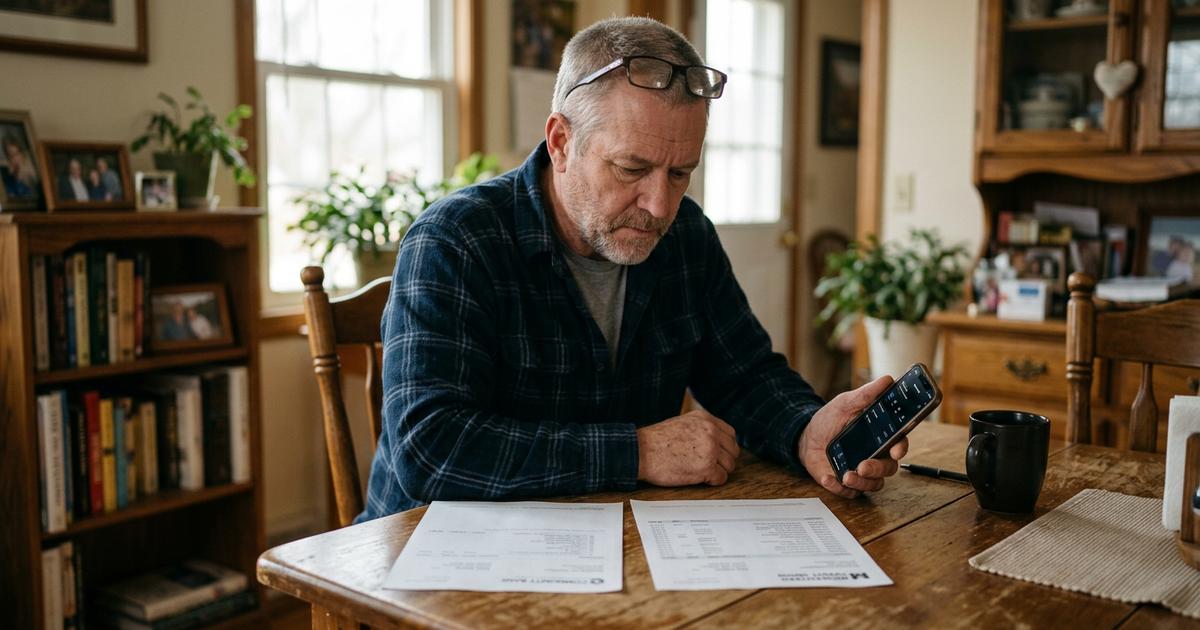
Keep reading ↓Imagine it’s a Tuesday in Belleville and you finally do the thing you have been putting off for two years. The fee schedule changed again, the branch you actually liked closed, and you found an account that costs nothing to keep. You open the new one on your phone in eleven minutes and feel briefly competent.
Nineteen days later, the car payment bounces.
Not because you were broke. The money existed — it was in the wrong account. The loan servicer still had the old routing number, the old account had a few dollars left in it, and the debit hit anyway. Now there is a fee on one side, a returned-payment fee on the other, a late mark to argue your way out of, and an institution you were trying to leave that you have to spend forty minutes on the phone with.
Maybe you already know the feeling. There is a Kirkwood version, where the paycheck lands in the account you already closed. An O’Fallon version, where the electric autopay keeps hitting a dead account for three months because nobody told the utility. A Florissant version, where the homeowners premium — the one that drafts once every twelve months — never made the list at all.
None of that is a hard problem. It is a sequencing problem. Moving a checking account is one of the few money chores where doing the right things in the wrong order is worse than doing nothing. Here is the order, what each step actually takes, what to bring, and the things that work differently because this metro sits on two sides of a state line. This is general consumer information, not advice about your situation, and it names no institution.
How do I switch to another bank without bouncing a payment?
Open the new account first, inventory every recurring debit and deposit, move your direct deposit before you move anything else, run both accounts side by side for one to two full billing cycles, then close the old one in writing and keep the confirmation. That is the whole method.
- Open the new account. Fund it lightly. Change nothing else yet.
- Build the map. Every automatic charge out and every automatic deposit in, with the day of the month each one lands.
- Move direct deposit first. Money has to arrive before payments are allowed to leave.
- Move the debits in order of what hurts most if they fail — and update them at the biller, not at the bank.
- Run both accounts in parallel for one to two complete billing cycles, with a real cash cushion in the old one.
- Close the old account in writing at a zero balance, and get written confirmation.
This is not an invented system. The Consumer Financial Protection Bureau’s guidance on moving a checking account gives the same sequence: open the new account first, list all automatic deposits and withdrawals, reroute the paychecks, and then — once you know the date of the first direct deposit — arrange the automatic debits and cancel them at the old account. Leave enough money behind to cover anything that has not cleared. Close only after the transfer clears, and get written confirmation that the account is closed.
The common mistake is treating step six like step two. People close the old account the day the new debit card arrives, because closing feels like finishing. It is not finishing. It is the last thing you do, and there is a specific reason for that.
How quickly can you switch banks?
People ask how quickly can you switch banks and want one number. There are two: opening the account takes minutes, and completing the switch takes one to two full billing cycles — roughly thirty to sixty days. The gap between those numbers is where bounced payments live.
The money movement is fast. Nacha, which governs the ACH network behind direct deposit and autopay, reports that the significant majority of ACH payments settle in one business day or less, and Same Day ACH offers three settlement windows every banking day. Once an electronic payment reaches your bank, Regulation CC requires the funds to be available for withdrawal no later than the business day after the banking day it was received. The plumbing is not your bottleneck.
The paperwork around the money is slow. Payroll departments run on a calendar with a cutoff, and a change submitted after it waits for the next run. Payroll processors also often send a prenotification — a zero-dollar test entry Nacha describes as a non-monetary entry preceding the first live entry, used to confirm the account is open and can accept deposits. Under Nacha’s rules, prenotifications carry a three-banking-day waiting period before further entries go out. Cutoff plus prenote plus pay period is why the practical answer is one to two pay cycles.
Benefit deposits move faster than they used to. Social Security announced in March 2025 that it expedited direct deposit change requests, in person and online, to one business day, down from a prior thirty-day hold on online changes. That is a real improvement, and it still does not mean you close the old account before watching a full payment land in the new one. The slowest item on your list sets the schedule — never the bank, never the network, always the one biller with a clunky portal or a quarterly draft.
Random, but: Sauget, IL’s food scene is one click away.

What documents do you need to switch banks?
What documents do you need to switch banks is two questions: what the institution legally has to collect, and what you need in hand to redirect your money without a second trip. The legal floor is federal and identical in Missouri and Illinois. Under the customer identification rules at 31 CFR 1020.220, a bank must obtain at minimum your name, date of birth, a residential or business street address, and a taxpayer identification number before opening your account.
- An unexpired government photo ID — driver’s license or state ID, passport, or military ID. Some institutions want a second form.
- Your Social Security number or ITIN. The card is usually not required, but bring it if you have it.
- Proof of your current street address if the ID is outdated — a utility bill, lease, or recent statement.
- An opening deposit, which varies widely. Ask the amount before you go in.
- The new account’s routing and account numbers plus a voided check or the institution’s direct deposit authorization form.
- Twelve months of statements from the old account — the raw material for the map in the next section.
One thing worth doing before you apply. Institutions typically pull a checking account screening report, and an unpaid overdraft or a negatively closed account from years ago can get an application denied. The CFPB explains that you have the right to a free copy of that report every twelve months, plus another free copy after an adverse action notice. If you have any history of a badly closed account, pull the report first rather than finding out the hard way.
Step one: open the new account, then leave it alone
Open it, fund it with the minimum, and do nothing else that day. The temptation is to sweep your whole balance over immediately, which is exactly the move that strands the autopays still pointed at the old account. While you are there:
- Set up online access and confirm you can actually log in.
- Turn on low-balance and large-transaction alerts. During a switch, alerts are your smoke detector.
- Get the written fee schedule — monthly maintenance fee, what waives it, overdraft and returned-item charges, out-of-network ATM charges, and any early closure fee.
- Order checks and the debit card so they arrive before you need them.
- Confirm federal insurance. Verify a bank on the FDIC’s BankFind Suite or a credit union on the NCUA’s locator. FDIC coverage runs to $250,000 per depositor, per insured bank, per ownership category, and NCUA share insurance covers credit union accounts at the same level.
One quiet limitation: a new account does not behave like an established one. Under Regulation CC’s new account exception, an account is treated as new for its first 30 calendar days, and during that window the bank only has to make the first $6,725 of cash and electronic deposits available next business day — the rest can be held until the ninth business day. If a large deposit is due mid-switch, know that before it happens.
Step two: map every recurring debit and every recurring credit
This is the actual work, it takes an hour or two, and skipping it is why most switches go wrong. Pull your statements and build two columns — money that leaves automatically, money that arrives automatically — with the amount, the day of the month, and how each one is connected. Three months catches the monthlies. It misses the annuals: homeowners and auto insurance, term life, roadside memberships, tax software, professional licences, alarm monitoring, warranty plans. Pull twelve months.
Money going out usually means mortgage or rent, a car loan or lease, insurance premiums, electric and gas, water and trash, phone and internet, credit card autopay, student loans, HOA dues, daycare or tuition, storage, gym, streaming, charitable giving, and any installment agreement with a tax authority. Money coming in usually means payroll, Social Security or VA or pension deposits, tax refunds, rent from a tenant, brokerage or retirement transfers, HSA contributions, and whatever account your payment apps pull from.
Now the distinction almost everyone misses, because it decides how each item gets fixed:
- ACH items are tied to your routing and account number. Mortgage servicers, utilities, insurers, and most lenders work this way. They break the moment the old account closes, and the only fix is giving the biller the new numbers.
- Card-on-file items are tied to your debit card number, not the account number. Streaming, app stores, delivery, ride share, and most small subscriptions live here. They keep working right up until the old card dies — so they are easy to miss during the overlap and then fail all at once afterward.
Keep them as two separate lists. Two failure modes, two fix processes. Treating them as one list is how a switch that looked finished falls apart in week six.

Step three: move direct deposit first, and nothing else
Deposits before debits, always. Reroute the bills first and you have built an account that pays money out with nothing coming in. The CFPB frames it the same way: reroute the paycheck, learn the date the first direct deposit lands, then arrange the withdrawals around it.
Submit the change through your employer’s payroll portal or on a direct deposit authorization form, with the new routing and account numbers and usually a voided check. If your payroll system allows split deposits, use it: send a small percentage to the new account first, watch it arrive on the next pay date, then move the remainder. It costs one pay cycle and removes most of the risk. Handle every other incoming deposit the same way, one at a time — benefits, pension, annuity, tenant rent, expected tax refunds. If you already filed a return listing the old account, you generally cannot change it after the fact, which is one more reason to leave that account open and funded.
Do not cancel the old direct deposit until a complete deposit has landed in the new account. Not a prenote, not a partial, not a confirmation email. The actual money, in the actual account, in the actual amount.
Step four: move the debits, worst consequence first
Once a full paycheck has arrived, start moving payments — in order of what a failure costs you, not the order they appear on the statement. Mortgage or rent first. Car loan second. Insurance third, because a lapse is a different category of problem than a late fee: coverage can be cancelled and reinstating it can cost more than the payment. Then utilities, then credit card autopay, then everything else. Subscriptions can fail without damage. A mortgage cannot.
Make the change at the biller, not at your bank. The Office of the Comptroller of the Currency says it plainly: it is your responsibility to cancel all recurring charges with third parties before closing the bank account you authorized for payment. The bank was never party to the agreement between you and the merchant, so it cannot end that arrangement for you. Bank-provided switch kits are a useful checklist, but the authorization itself lives with the company taking the money.
For each item, do four things: update the payment method, confirm the change in writing or screenshot the confirmation, note the next scheduled draft date, and check on that date that it pulled from the new account. Cross it off only after you have watched it hit.
Keep one emergency brake. Under Regulation E, you can stop payment on a preauthorized electronic fund transfer by telling your financial institution orally or in writing at least three business days before the scheduled date, and the institution may require written confirmation of an oral order within fourteen days. Three business days of lead time makes a stop payment useless the morning a surprise debit posts. It is a backstop for a draft you spot early, not a substitute for the map.
Step five: run both accounts in parallel — and forget the two-week rule
The advice you hear most is to keep the old account open about two weeks. Two weeks is a reasonable-sounding number that quietly guarantees failure, because it only covers weekly and biweekly items. Your monthly bills get one shot at proving they moved. Your quarterly water bill, semiannual premium, and annual anything get zero.
Use billing cycles instead of calendar days. Keep the old account open and funded until every item on your map has drafted successfully from the new account at least once — one to two complete monthly cycles for a normal household, longer if you carry a quarterly or annual item. Thirty to sixty days is the honest range. During the overlap:
- Leave a real cushion in the old account. The CFPB advises leaving enough to cover checks that have not cleared and payments not yet moved, specifically so you avoid fees. A near-empty old account is not caution, it is a trap.
- Read the old statement line by line each cycle. Anything still hitting it is an item you missed. A full cycle with no activity is your green light.
- Keep the old debit card until the end. It is the only thing holding your card-on-file subscriptions together, and you want them failing on your schedule.
- Remember paper checks clear late. A check written in June can be presented in August. If you have written checks recently, add a cycle.
Step six: close it in writing, and keep the confirmation
When a full cycle passes with nothing hitting the old account, close it deliberately. Move the remaining balance over, request closure in writing or in person, and — as the CFPB specifically instructs — get written confirmation that the account has been closed. File it with your tax records. That document ends every future argument about a fee you supposedly owe.
Draining an account to zero and walking away is not closing it. A dormant account can still charge a monthly maintenance fee, can still go negative, and a negative balance that ages can be sent to collections and reported to the account screening companies — the exact record that gets your next application denied. Abandonment is not closure in the legal sense either: after a statutory period without owner contact, the balance is handed to the state as unclaimed property, and how long that takes depends on which side of the river you are on.
How to leave without triggering an early-closure or minimum-balance fee
Two fee traps do most of the damage, and both are avoidable if you know they exist before you start.
The early closure fee. Some institutions charge for closing an account shortly after opening it. Bankrate’s 2025 survey of early account closure fees found charges generally running about $5 to $50, typically when the account is closed within 90 to 180 days of opening, and noted that many institutions charge nothing at all. So: if the account you are leaving is itself fairly new, check its fee schedule before closing, and ask about the closure window before you open anything new.
The waiver that dies when your paycheck leaves. This is the subtle one. Many free checking accounts are only free because a monthly maintenance fee is being waived by a qualifying direct deposit or a minimum balance. The moment you move direct deposit to the new institution, the old account may stop qualifying — and the fee it never charged starts landing on the thin balance you deliberately left. That is how people finish a careful switch owing money to a bank they already left. The fix: get the old account’s written fee schedule before you touch anything, learn exactly what waives the fee, keep enough balance during the overlap to satisfy any minimum, and treat any fee you do incur in those weeks as the price of not bouncing a mortgage payment.
On the new account side, a published standard is worth knowing. The Bank On National Account Standards, maintained by the Cities for Financial Empowerment Fund, define a certified account as one with a minimum opening deposit of $25 or less, a monthly fee of $5 or less where it is not waivable, no overdraft or non-sufficient funds fees, and no activation, closure, dormancy, inactivity, or low-balance fees. The national reporting platform for those accounts, the Bank On National Data Hub, is run out of the Federal Reserve Bank of St. Louis — local infrastructure with a national job. The standards and the certified account list are at joinbankon.org. Whether such an account suits you is your call; the point is that a published fee standard exists and gives you concrete language to ask about.

What is different about switching banks in a two-state metro
The reassuring part first: the protections that matter during a switch are federal, so they are identical in Godfrey and in Ballwin. Regulation E, Regulation CC, deposit insurance, and the identification rules do not change at the Mississippi. Routing numbers are not state-locked, ACH is national, and nothing stops a Belleville resident from banking in Missouri or a Chesterfield resident from banking in Illinois. What does change is worth planning around.
Branch and ATM geography is the real variable. Plenty of institutions here are heavily branched on one side of the river and thin on the other. If you live in Edwardsville and work in Clayton, or live in Webster Groves and work in Fairview Heights, your daily banking footprint spans two states, and a branch that looks convenient from your kitchen can be useless from your desk. Look up actual locations by address on BankFind Suite or the NCUA locator, and check both ends of your commute rather than just home.
Credit union membership can stop at a county line. Credit unions serve a defined field of membership, and community charters are geographic. One built around a set of Missouri counties may or may not include St. Clair, Madison, Monroe, or Clinton County. Ask directly before you plan a switch around it.
Complaints route to different regulators. If a closure or a fee goes wrong, who hears it depends on the charter, not your address. Missouri state-chartered banks fall under the Missouri Division of Finance. Illinois state-chartered banks fall under the Illinois Department of Financial and Professional Regulation’s Division of Banking. Nationally chartered banks — the ones with national or N.A. in the legal name — go to the OCC through HelpWithMyBank.gov, federal credit unions go to the NCUA, and the CFPB takes complaints across the board. Find out which charter you are dealing with before you need to know.
Forgotten accounts go to the state on different clocks. This is the sharpest two-state difference in the whole process. Under the Illinois Revised Uniform Unclaimed Property Act, a demand deposit or savings deposit is presumed abandoned three years after the last indication of interest by the owner. In Missouri, the State Treasurer’s dormancy period is five years for most property types, with holders reporting by November 1 each year. The same abandoned account with $340 in it is turned over to the state two years sooner on the Illinois side. The money is not lost — both states hold it and both let you search — but reclaiming it is paperwork you avoid entirely by closing properly instead of drifting.
Two-state payroll adds a step. Plenty of people here live in one state and work in the other, which means the payroll department handling your change may sit in a different state from your new bank, on a calendar you do not control. It does not change the process. It does mean you should assume the slower end of the one-to-two-pay-cycle range.
What are the downsides to switching banks?
It is fair to ask what are the downsides to switching banks before deciding it is worth the trouble. The biggest cost is attention: building the map, updating every biller, and watching two accounts for a month or two is a few hours spread across weeks, and each is a chance to miss something. There is also a genuine risk window — thirty to sixty days of running two accounts where a mistake produces a fee, a late payment, or a mark on a credit file. You may lose things that were never itemized: a fee waiver tied to your deposit relationship, a rate tied to account age, an informal courtesy on overdrafts, or length-of-relationship history some lenders weigh. A new account also carries tighter holds under the Regulation CC new account exception. And if your account screening report has an old blemish, the application itself can be denied.
None of that argues against switching. It argues for doing it once, deliberately, with a written map — rather than three times, casually, hoping it sorts itself out. Whether a given account is right for you depends on your balances, your habits, and how you actually use a branch, and where the stakes are high those are questions for a licensed professional who can see your whole picture.
The short version you can print
- Pull twelve months of statements. Build two lists: automatic money out, automatic money in.
- Split the outgoing list into ACH items and card-on-file items. They break differently.
- Open the new account. Get the fee schedule in writing. Turn on alerts.
- Move direct deposit first, and wait for a full paycheck to land before moving a single bill.
- Move bills in order of consequence: housing, auto loan, insurance, utilities, cards, subscriptions.
- Update each at the biller, confirm in writing, verify on the next draft date.
- Keep a real cash cushion in the old account the entire time.
- Wait for one to two complete billing cycles with zero activity on the old statement, then close in writing at a zero balance and file the confirmation.
If you run a bank, credit union, or financial services office in the metro, listing it on St Louis Near Me Directory is one of the ways neighbours find you when they are ready to make exactly this move.
Comparing your options locally? Browse banks across the St. Louis metro on St Louis Near Me Directory, then ask every one of them the same three questions: what waives the monthly fee, where is the nearest branch to my work, and what does it cost to close this account in the first six months.
Weighing a credit union instead? Start with local credit unions in the St. Louis metro. And if this switch is part of a bigger move, the move-in setup checklist covers the utilities and registrations that hit in the same month.
Shopping money itself follows the same discipline — our guide to choosing a mortgage lender in St. Louis is built on asking every lender identical questions.
If you are moving a business account rather than a personal one, the requirements are different and the paperwork is heavier. Start with how to choose a small business checking account instead.
Frequently asked questions
How do I transfer everything from one bank to another?
Work in this order: open the new account, list every automatic withdrawal and deposit from twelve months of statements, reroute direct deposit and wait for a full paycheck to land, then move automatic payments one at a time starting with housing and loans. Update each payment at the company taking the money, not at your bank — the OCC notes the bank was never party to that agreement and cannot cancel it for you. Keep both accounts open and funded until every item has drafted successfully from the new account, then close the old one in writing.
How quickly can you switch banks?
Opening the new account takes minutes; finishing the switch takes about thirty to sixty days. The money movement is fast — Nacha reports the significant majority of ACH payments settle in one business day or less, and Regulation CC requires electronic deposits to be available no later than the business day after your bank receives them. The delay comes from payroll cutoffs, prenotification test entries that carry a three-banking-day wait under Nacha’s rules, and monthly or annual bills that give you one chance per cycle to confirm they moved. Plan around your slowest biller, not your fastest.
What documents do you need to switch banks?
Federal customer identification rules at 31 CFR 1020.220 require a bank to collect your name, date of birth, street address, and taxpayer identification number before opening an account. So bring an unexpired government photo ID, your Social Security number or ITIN, proof of your current address if the ID is outdated, and an opening deposit. For the switch itself, also bring the new routing and account numbers, a voided check or the institution’s direct deposit authorization form, and twelve months of statements from the old account so you can build a complete list of recurring items.
How long does a bank transfer take between different banks?
A standard ACH transfer between institutions generally settles in one to two business days, and Nacha reports the significant majority of ACH payments settle in one business day or less. Same Day ACH exists as well, with three settlement windows each banking day. Once your bank receives an electronic payment, Regulation CC requires the funds to be available for withdrawal no later than the business day after the banking day it was received. One exception to plan for: during an account’s first thirty calendar days, the new account exception lets a bank make only the first $6,725 available next-day and hold the rest longer.
What are the downsides to switching banks?
Time is the main cost — mapping recurring items and updating billers takes a few hours spread over weeks. There is also a real risk window of thirty to sixty days while two accounts run in parallel and a missed item can produce an overdraft, a returned payment, or a late mark. You may lose a fee waiver tied to your old direct deposit, perks tied to account age, or informal courtesies from a long relationship. New accounts carry tighter initial holds under Regulation CC. And if an account screening report shows an old unpaid overdraft, the new application can be denied outright.
What are the key things to consider when switching banks?
Confirm the institution is federally insured through FDIC BankFind or the NCUA locator, since coverage runs to $250,000 per depositor per ownership category at each. Get the written fee schedule and learn exactly what waives the monthly maintenance fee. Look at branch and ATM access near your work as well as your home, which matters in a two-state metro where a commute crosses the river. Confirm credit union field-of-membership eligibility if you live in Metro East. And ask about an early closure fee — Bankrate found these generally run about $5 to $50 when an account is closed within 90 to 180 days.
The switch that goes badly and the switch that goes quietly are usually the same switch with the steps in a different order. Open first, deposit second, debits third, overlap fourth, close last — and keep the piece of paper that says the old account is closed. The driver in Belleville with the bounced car payment did every one of those things. Just not in that order.

Written by a dedicated team of St. Louis locals who live, work, and play right here in the St. Louis metro. Founder Lane Forman and team are committed to building the region’s most trusted directory by verifying listings and connecting local businesses with loyal customers across Missouri and Illinois.