How to Choose a Carpet Cleaner in St. Louis (Homeowner Guide)
Revised August 29, 2026
How do you choose a good carpet cleaner?
Hire an experienced, well-reviewed, insured carpet cleaner who gives an honest, upfront price and uses the right method for your carpet — and be skeptical of suspiciously cheap ads. The biggest tell of a good one is transparent pricing based on your actual space, with no surprise add-ons once they’re inside. Hot water extraction (steam) deep-cleans best for most homes; look for strong reviews, a real business history, and a guarantee.
Keep reading ↓You’ve been staring at it for weeks: the traffic path worn gray down the hallway, the mystery stain by the couch, the faint pet smell that no amount of vacuuming touches. Carpet takes a beating — especially in a busy St. Louis home with kids, pets, and muddy shoes tracking in the seasons — and every so often it needs a real professional cleaning that a rented machine just can’t match. So you start searching, and immediately hit a wall of “$29 whole-house special!” ads that sound too good to be true (because they usually are).
Choosing a good carpet cleaner is trickier than it looks: the industry is full of bargain-bait pricing, and the difference between a quality job and a cheap one shows up in whether your carpets actually come clean, dry properly, and stay fresh. This guide walks through how to choose a carpet cleaner in St. Louis: the cleaning methods and which to pick, what it really costs, how often to clean, the classic bait-and-switch to avoid, and how to find a trustworthy pro near you.
How Do You Choose a Good Carpet Cleaner?
The essentials: hire an experienced, well-reviewed, insured carpet cleaner who gives you an honest, upfront price and uses the right method for your carpet — and treat suspiciously-cheap ads with real skepticism. The single biggest tell of a good carpet cleaner is transparent pricing: a reputable company quotes based on the actual square footage and condition, explains what’s included, and doesn’t bait you with a rock-bottom number and then pile on charges once they’re in your home. Beyond that, look for strong local reviews, a company that’s been around, insurance (in case something’s damaged), and clear answers about their process, drying time, and any guarantee. A good carpet cleaner also tailors the approach to your carpet type and problem — heavy stains and pet odor need more than a quick surface pass.
Steam Cleaning vs. Dry Cleaning: Which Method?
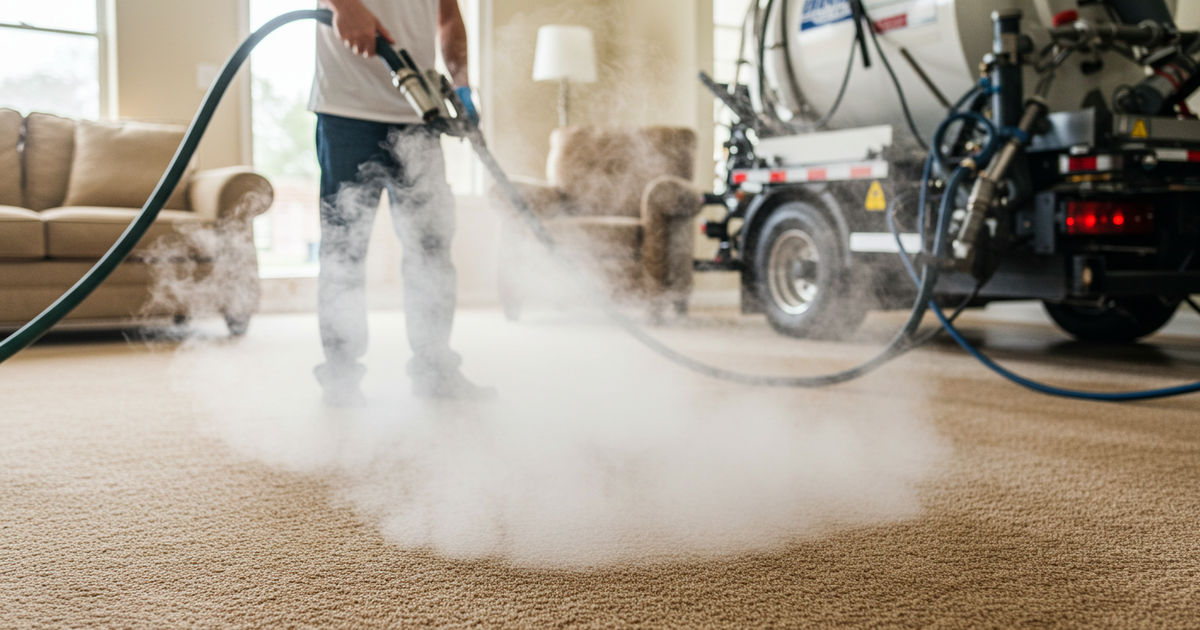
Understanding the two main methods helps you ask the right questions. Hot water extraction — commonly called steam cleaning — sprays hot water and cleaning solution deep into the carpet and immediately extracts it along with the dirt. It’s the method most manufacturers recommend and the most thorough for deep cleaning and lifting stubborn dirt and allergens; the tradeoff is longer drying time (often several hours). Low-moisture or “dry” cleaning uses much less water with specialized compounds or pads, so carpets dry fast — convenient for quick turnarounds or moisture-sensitive situations — but it’s generally less deep than hot water extraction. For most homes wanting a genuine deep clean, hot water extraction is the go-to; low-moisture shines when speed matters. A good cleaner will recommend the right method for your carpet and situation rather than pushing a one-size-fits-all process, and will be able to explain why.
What Does Carpet Cleaning Cost?
Costs depend on the square footage, the number of rooms, the carpet’s condition, and any add-ons like heavy stain treatment, pet-odor removal, or protectant, so ignore the flashy flat-rate ads and get a real quote. Reputable cleaners typically price by the room or by the square foot, and will give you an honest estimate up front — often after asking about your space or seeing it. The classic warning sign is the absurdly low advertised price that exists only to get a technician in your door, after which the “real” price for anything beyond a token surface pass appears. As with any home service, get two or three clear quotes for the same scope, ask exactly what’s included (pre-treatment, spot treatment, moving furniture, drying), and choose on value and trust rather than the lowest headline number. A fair, honest price for quality work beats a bait price every single time.
How Often Should You Have Carpets Cleaned?
A good rule of thumb is a professional cleaning about once a year for most homes, and more often — every six months or so — for households with pets, kids, allergies, or heavy foot traffic. Regular professional cleaning does more than freshen the look: it removes the deep-set dirt, allergens, and dust mites that regular vacuuming can’t reach, which matters for indoor air quality, and it genuinely extends the life of your carpet by preventing abrasive grit from wearing down the fibers. Many carpet warranties even require periodic professional cleaning to stay valid, so it can protect your investment in more ways than one. Between professional visits, vacuum regularly and treat spills quickly — the faster a spill is addressed, the less likely it becomes a permanent stain. Think of professional cleaning as maintenance that pays for itself in longer-lasting, healthier carpet.
Red Flags: The Bait-and-Switch and Other Warning Signs
The carpet-cleaning industry has a well-known bad-actor problem, so vet carefully. The biggest red flag is the bait-and-switch: an unbelievably low advertised price (“3 rooms for $49!”) designed to get a technician in your door, who then declares your carpets need “deep cleaning,” “pet treatment,” or “protectant” at multiples of the quoted price — with high-pressure tactics if you hesitate. Other warning signs: no verifiable reviews or business history, no insurance (important if furniture or flooring is damaged), vague answers about their method or what’s included, demand for full payment upfront, and pressure to buy add-ons on the spot. A trustworthy cleaner gives a straight quote, explains the process, doesn’t ambush you with surprise charges, and stands behind the work with a guarantee. If the price seems too good to be true, it is — and inviting that operator into your home usually costs more, not less, in the end.
DIY Rental vs. Hiring a Pro
You’ve seen the machines you can rent at the grocery store, and for a light freshen-up they have their place — but they’re not the same as professional cleaning, and it’s worth knowing the difference. Rental units have far less suction and heat than truck-mounted professional equipment, which means they extract less dirt and, crucially, leave more water in the carpet — and over-wet carpet that dries slowly can develop mildew or that musty smell, especially in St. Louis humidity. They also can’t match a pro’s pre-treatment and stain expertise. For routine light maintenance between professional visits, a rental or a good spot cleaner is fine. But for a genuine deep clean, set-in stains, pet odor, or protecting a carpet warranty, professional hot water extraction does a dramatically better job and dries properly. The rule of thumb: DIY for touch-ups, hire a pro for the real thing — and never let a carpet stay soaked, however you clean it.
Random, but: Belleville storefronts, here’s the visibility playbook.
What to Do Before the Cleaner Arrives
A little prep makes the visit faster, cheaper, and better. Vacuum first if the company asks you to (many do), since it removes loose surface dirt and lets the pros focus on the deep cleaning. Clear the floor — pick up toys, cords, and small items, and move what fragile or small furniture you can, since some companies charge to move furniture and all of them work faster with clear access. Point out problem areas and specific stains up front, and mention what caused them if you know (pet accidents, wine, grease), since different stains need different treatment. Secure pets somewhere safe and out of the way. And plan for drying time — keep foot traffic off freshly cleaned carpet for several hours and run fans or AC to speed drying. A few minutes of prep helps the cleaner do their best work and protects you from surprise charges for extra labor.
St. Louis-Specific: Allergens, Pets, and Older Homes
A few local realities make professional carpet cleaning especially worthwhile here. St. Louis’s humid climate and notorious allergy seasons — the region regularly ranks among the tougher places for seasonal allergies — mean carpets trap a lot of pollen, dust, and allergens, so deep cleaning genuinely helps indoor air quality for allergy-prone households. The area’s many pet-loving homes add pet dander and the occasional odor challenge that only proper extraction and treatment fully resolve. And the metro’s abundance of older homes sometimes means older carpet, delicate fibers, or wall-to-wall carpet over hardwood that a careless cleaner can over-wet and damage — another reason to hire an experienced pro who knows how to match method to material. A local cleaner who understands St. Louis homes, seasons, and the allergy realities will deliver a genuinely healthier result than a bargain crew rushing through with a one-size-fits-all machine.
Ready to find and compare local carpet cleaners? Browse vetted St. Louis carpet cleaning companies on the St. Louis carpet cleaning map, or explore every trade across the metro on the home services coverage map — so you can shortlist honest local pros with real reputations.
Run a carpet cleaning business? Getting found by homeowners — without competing on bait pricing — is the whole game. Listing your business puts you in front of St. Louisans searching for a carpet cleaner near them.
Concerned about what gets used on your floors? How to verify an eco-friendly cleaning service, including the fragrance loophole most labels rely on.
More St. Louis Home-Services Guides
- How to choose a roofing contractor in St. Louis
- How to find a good handyman
- How to choose a landscaping company
Frequently Asked Questions
Is steam cleaning or dry cleaning better for carpets?
Hot water extraction (steam cleaning) is the most thorough and the method most manufacturers recommend — it deep-cleans and lifts stubborn dirt and allergens, but takes several hours to dry. Low-moisture “dry” cleaning dries fast and is convenient, but is generally less deep. For most homes wanting a genuine deep clean, hot water extraction is the go-to; a good cleaner recommends the right method for your carpet rather than a one-size-fits-all process.
What does carpet cleaning cost?
It depends on square footage, number of rooms, carpet condition, and add-ons like pet-odor treatment or protectant, so ignore flashy flat-rate ads and get a real quote. Reputable cleaners price by the room or square foot and estimate honestly up front. Get two or three clear quotes for the same scope, confirm what’s included (pre-treatment, spot treatment, drying), and choose on value and trust rather than the lowest headline number.
How often should you have carpets professionally cleaned?
About once a year for most homes, and every six months or so with pets, kids, allergies, or heavy traffic. Professional cleaning removes deep-set dirt, allergens, and dust mites that vacuuming can’t reach, improving air quality and extending carpet life by removing abrasive grit. Many warranties even require periodic professional cleaning to stay valid. Between visits, vacuum regularly and treat spills fast to prevent permanent stains.
What is the carpet cleaning bait-and-switch?
It’s the industry’s classic scam: an unbelievably low advertised price (“3 rooms for $49!”) that exists only to get a technician in your door, who then insists your carpets need “deep cleaning,” pet treatment, or protectant at many times the quoted price — often with high-pressure tactics. Avoid it by getting a clear written quote, confirming exactly what’s included, and walking away from any price that seems too good to be true.
How do I find a good carpet cleaner near me in St. Louis?
Start with the St. Louis carpet cleaning map to browse and compare local companies by area, then vet your shortlist with reviews, a real business history, insurance, and an honest upfront quote. Given St. Louis’s humid, allergy-heavy climate and many pet-owning and older homes, an experienced local cleaner who matches the right method to your carpet delivers a genuinely healthier, longer-lasting result than a bargain bait-price crew ever will.
What are the common mistakes in carpet cleaning?
Over-wetting, too much detergent left behind, and rushing the dry. Residue is the one that bites later — carpet that was cleaned cheaply attracts dirt faster afterwards, which is why it looks worse three months on than it did before.
Is it better to shampoo or steam clean carpets?
Hot water extraction — what most people call steam cleaning — is the method most manufacturers specify, because it rinses rather than leaving detergent in the pile. Shampooing can look good immediately and re-soil quickly for exactly that reason.
What is the most recommended carpet cleaner?
Method matters more than brand: look for hot water extraction, a written price before the truck arrives, and no upsell at the door. The classic trap is the “3 rooms for $49” advert — that price exists to get a technician into the house, not to do the job.
Who are some good carpet cleaners in St. Louis?
Rather than name one, use the test that works: a company quoting in writing from room measurements, using hot water extraction, with no bait pricing. Search the directory by category and compare on those three points — they separate the real operators quickly.
Cleaning an office or storefront instead of a home? See our guide to top-rated commercial cleaners in St. Louis.

Written by a dedicated team of St. Louis locals who live, work, and play right here in the St. Louis metro. Founder Lane Forman and team are committed to building the region’s most trusted directory by verifying listings and connecting local businesses with loyal customers across Missouri and Illinois.