Things to Do in University City, MO: Look Up at City Hall
Revised November 19, 2026
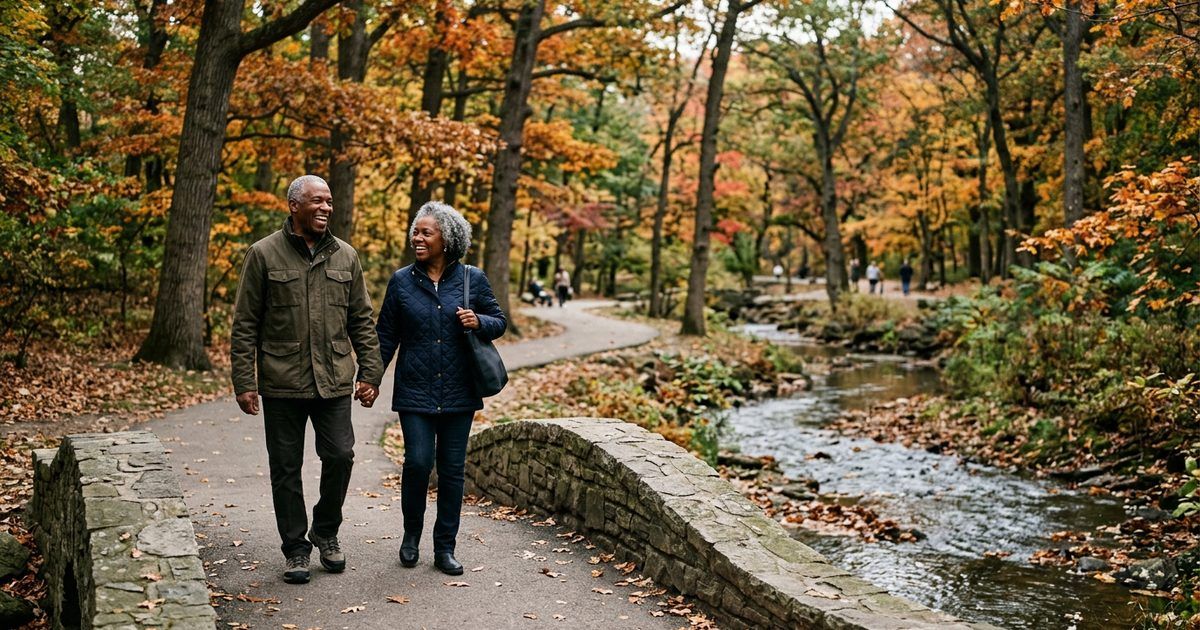
What is University City, Missouri known for?
Most people know University City, Missouri, for the Delmar Loop, which takes its name from the turnaround where streetcars headed back to St. Louis. Fewer know the rest of founder E.G. Lewis’s model city: City Hall began as his octagonal Magazine Building, a searchlight about 80 inches across is still tucked into its roof, and a lion and lioness guard the Gates of Opportunity at Delmar and Trinity.
Keep reading ↓Five tons of searchlight rest above the City Council chambers in University City, past the ornamental ceiling, tucked inside a roof that opens to the sky. Most people walking Delmar to the Loop pass underneath without a clue.
“They might live a block away from there and have no clue because this thing’s just been hidden in this roof,” Eric Kusnierkiewicz, vice president of the Historical Society of University City, told St. Louis Magazine. The light runs on carbon rods that strike an intensely bright arc, and the man trying to bring it back out has one line he likes to say about its reach: “We could hit the Arch with it.”
Founder E.G. Lewis put it on top of his magazine headquarters to pull World’s Fair crowds his way, and almost everything worth seeing here, from the lions on Delmar to the fish in Lewis Park, is the same kind of showmanship still standing on the street. The Loop’s restaurants live in our guide to where to eat on the Delmar Loop. This page is about the town around it. And of all the small towns outside St. Louis worth a day, U City may be the one people think they know from a single street.
What is University City, Missouri known for?
Most people know University City, Missouri, for the Delmar Loop, which takes its name from the turnaround where streetcars headed back to St. Louis. Fewer know the rest of founder E.G. Lewis’s model city: City Hall began as his octagonal Magazine Building, a searchlight about 80 inches across is still tucked into its roof, and a lion and lioness guard the Gates of Opportunity at Delmar and Trinity.
One morning on Delmar: the lions, the tower, the fish
Park once on a Saturday morning and walk it in this order.
1. Stand under the lions. Go to the corner of Delmar and Trinity, the Civic Plaza at 6801 Delmar, and stop at the base of the Gates of Opportunity. Traffic rolls past behind you. Tip your head back until your neck complains: a lion on one pillar, a lioness on the other, sculpted by George Julian Zolnay and set on gates designed by Eames & Young in 1909. Here is the part to tell whoever you brought. The pair up there now are copies, cast from the same molds as the originals.
2. Turn around and look up. Behind the plaza rises City Hall, the old Magazine Building, “an ornate octagonal tower standing 135 feet tall,” in the city’s own words. Find the top of it. The five-ton searchlight rests up there, tucked inside the roof. It is a sidewalk stop, though City Hall’s doors are open weekdays from 8 a.m. to 5 p.m. Want to know when the light might shine again? The Historical Society’s searchlight project takes questions at ucityhistory@hotmail.com.
3. Follow the sound of water to the fish. Walk west on Delmar to Lewis Park, 7001 Delmar. You hear the fountain in its decorative pond before you see it. Out on the water, a bronze fish is pedaling a bicycle, grinning, going nowhere. Fish on a Bicycle is by Steven Gregory, a sculptor who has lived in London since the 1960s, and the Gateway Foundation lists it among the public art it supports. Let the kids find it first.
4. Drive north to the market. The U City Farmers Market sets up outdoors in Heman Park by Centennial Commons, 7210 Olive, every Saturday from 8:30 a.m. to 12:30 p.m. in its outdoor season, which runs from April into November. There is plenty of free parking under the trees. Come hungry and leave with Missouri rainbow trout in a cooler bag. In winter, the market moves indoors to the Heman Park Community Center; check the market’s schedule page for this season’s dates.
What’s hidden in the roof of University City Hall?
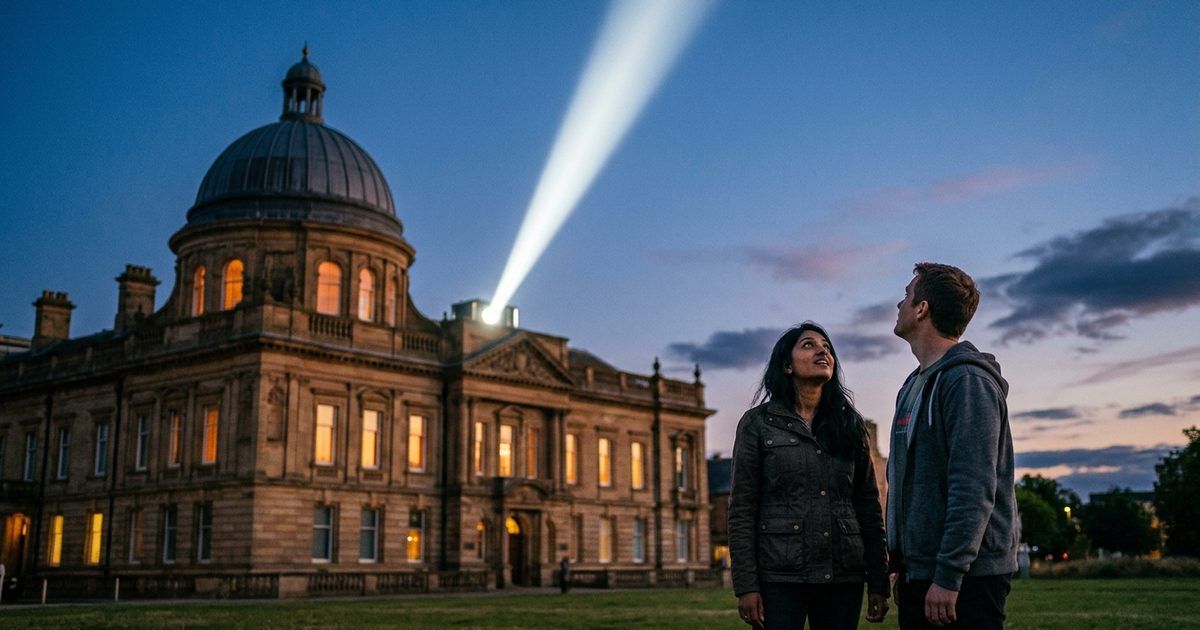
A searchlight built to sell magazines. According to the Historical Society’s searchlight project, Lewis installed it on top of the Woman’s Magazine Building when the building went up in 1903. The light shone over the 1904 World’s Fair in Forest Park, and Lewis used it to draw visitors to his tent city just outside the fairgrounds and to win new subscribers. “He was a publicist, basically in the original sense of the word,” Kusnierkiewicz told St. Louis Magazine.
To light it, two sections of the roof have to open, and then a counterweight elevator raises the light into place. The building became City Hall in 1930. Over time the light was all but forgotten, stored away in the enclosed roof until it was rediscovered in the 1960s. During a restoration project in the mid 1960s, it was retrofitted with the internals from a World War II searchlight. Assistant city engineer Robert Norvell helped revive it then, and Bill Kaufman, son of former Mayor Nathan Kaufman, has helped keep the machinery running for decades.
The light itself still works. The hitch is the elevator, which Kusnierkiewicz says is off balance, and the fear is plain: if the light goes up and won’t come back down, the council chambers below could be ruined. The Historical Society is leading an effort to restore it and bring it back for special events, and the city has put money toward the repairs. When it does shine again, you will see it from a long way off. Follow the University City Searchlight project for news.
Why do they call it the Delmar Loop?
Because a streetcar looped. The city’s own history says the Delmar streetcar “looped” through the southwest corner of the Delmar Garden Amusement Park before heading back downtown. The same history says Delmar Boulevard was originally called Bonhomme, and that before Lewis arrived, this stretch just west of the city limit drew crowds to the Delmar Race Track and the amusement park. Stand on Delmar at the Loop and listen for the bell that isn’t there anymore.
What is there to do at Heman Park in University City?
Heman Park, at 7200 Olive in University City, MO, is the city’s largest park: 85.26 acres bounded by Midland, Olive, Purdue, Pennsylvania and Vernon. The city lists eight tennis courts, four of them lighted, paved basketball courts, horseshoe courts, a one-and-a-half-mile jogging course, a large playground, four picnic pavilions, a swimming pool, a splash pad and a long run of ball diamonds and soccer fields. On a fall morning you hear tennis balls popping before you see the courts.
The Saturday market. The U City Farmers Market calls itself the place “where farmers gather, friends meet,” and it sets up in the trees near Centennial Commons and the pool. Look for Missouri and Illinois produce, cheeses, grass-fed beef, free-range eggs, honey and Missouri rainbow trout. There is plenty of free parking. In winter the market moves indoors to the Heman Park Community Center, 975 Pennsylvania Ave. Dates shift by season, so check the market’s schedule before you go.
Market bag full and stomach empty? Next stop: where to eat in University City, MO
Rainy day. Centennial Commons is the city’s recreation center inside the park. Guests come in with a member, and the center’s desk at 314.505.8625 can tell you current hours and rates. The Heman Park pool keeps its own season, so check the city’s facilities page for current dates.

Where is the Ruth Park nature trail?
Inside Ruth Park Woods on McKnight Road. The Green Center, the nonprofit that helps care for the woods, puts the entrance at 1100 McKnight; the city lists 1160 McKnight. Either way you end up under the same trees. The Green Center calls the 26-acre woods “the last large stand of an oak/hickory hardwood forest in the St. Louis area.” The city’s page says 23 acres. Nobody argues about the trees.
The trail is a 1-mile loop of crushed limestone. Along it you pass interpretive tree markers designed and installed by an Eagle Scout, benches and a picnic shelter, and a branch of the River Des Peres runs through the woods. The limestone crunches under your shoes, the oaks close overhead, and the traffic noise drops away faster than you expect. The woods are open to the public.
Bring binoculars. The Green Center ran a one-year bird study here from May 1, 1997, to April 30, 1998, and has kept recording since. It says about 100+ species have been noted in the woods, from backyard regulars to birds flying between tropical rainforests and the Arctic tundra. It also notes that habitat loss has hit many of the 37 species of warblers that migrate through the St. Louis area every spring and fall. Go early, walk slowly, and listen before you look.
The Green Center, a golf course and a short trail
The Green Center. Its main building, the Green Family Home, has been in University City since 1932, at 8025 Blackberry Ave., beside Kaufman Park. The building and gallery are open weekdays from 8 a.m. to 4 p.m., and the grounds hold a prairie, a greenhouse and garden beds of herbs, vegetables and native plants. Kaufman Park itself adds a natural wooded area the city calls suitable for nature study, plus a tot lot for small kids.
Ruth Park Golf Course. At 8211 Groby Road, this is a 9-hole course with a driving range, formerly known as University Golf Course and designed by the Scotsman Robert Foulis. It is open sunrise to sunset, 7 days a week, weather permitting, and starting times may be reserved by calling 314-727-4800. Forgot your bag? Rental sets are $12.00. Check current greens fees with the golf shop.
The Mona Trail. At 1100 Groby Road, it is a 0.24-mile trail on two acres. Short enough for a toddler, quiet enough for a phone call you have been putting off.
Where can you walk or bike in University City?
Start with the Centennial Greenway. Great Rivers Greenway describes a 1.35-mile paved trail from Skinker and Forsyth at Forest Park, west through the Washington University campus and over Forest Park Parkway on a pedestrian bridge, then north on Kingsbury to a plaza on Delmar with a life-size statue of Chuck Berry. From there the trail continues north along the Ackert Walkway through the Parkview Gardens neighborhood. It is flat and shady, there are bike racks along the way, and the Delmar MetroLink station is close, so you can come without a car.
Ackert Park. The Ackert Walkway itself is a .34-mile path between Delmar and Vernon. Ackert Park has a playground and a splash pad, so a summer walk can end with wet, happy kids.
The greenway’s other piece, from Shaw Park north to Olive, begins on the Clayton side, and we cover it in our list of things to do in Clayton, MO.
The small-park loops. These never make a tourist list, and they are the walks that fill a week. Fogerty Park, 1540 North 82nd Blvd., has a half-mile jogging trail, a splash pad and a weatherproof shelter with restrooms. Janet Majerus Park, 1300 Partridge Ave., rings a decorative pond and fountain with a one-third-mile jogging trail and fitness stations. Millar Park, 7603 Carleton Ave., has a half-mile jogging trail with fitness stations. Add Heman Park’s jogging course, the Ruth Park loop and the fish at Lewis Park, and you have a different U City park for every day of the week.
A few park rules worth knowing before you go: parks close at 10:30 p.m. and reopen at 5 a.m. or as posted, dogs must stay leashed, no glass bottles, and alcohol is prohibited in all University City parks.
Is the University City dog park free?
No. The University City Dog Park, at the corner of Vernon and Pennsylvania in University City, MO, is members only. It is a 1-acre park with separate areas for large and small dogs, open to residents and non-residents alike.
Annual memberships are listed at $40.00 for one dog or $60.00 for two for residents, and $60.00 or $90.00 for non-residents, with a maximum of two memberships per household. You sign up at the Finance Department on the first floor of City Hall, 6801 Delmar, so you will be standing in the building with the searchlight overhead. Bring a paper copy of current vaccination records (rabies, Bordetella, canine hepatitis, distemper and parvovirus), proof of spay or neuter, and, for residents, proof of residency. Renewals open on a set schedule each winter, so check the city’s dog park page for current dates and fees.
Just visiting with your dog? Our guide to the best free dog parks in St. Louis covers off-leash options across the metro.
Nearby, out Olive and down the greenway
U City sits right against its neighbors. The greenway carries you south toward Clayton, and Olive Boulevard runs west toward Creve Coeur. Want a fishing rod in the plan? The ponds at Lewis and Majerus parks are decorative, so head out to the lake instead; our Creve Coeur list covers fishing at Creve Coeur Lake. In December, drive south for the Christmas lights in Webster Groves, and in October, our guide to Halloween events around St. Louis covers the rest of the metro.
Next time someone says U City is just the Loop, you are the one who knows there is a World’s Fair searchlight hidden in City Hall’s roof, that the lions on Delmar are copies cast from the old molds, and where a fish rides a bicycle. Pick a Saturday. Hit the market at Heman Park, walk the Ruth Park loop, and end the day on Delmar, looking up.
After a morning on the Ruth Park loop or the courts at Heman Park, you will be hungry. Our guide to where to eat in University City, MO picks up where this walk ends.
If you run a shop or kitchen on Olive or Delmar that market regulars pass on the way home, those are your next customers. They are asking their phones where to stop before they head back to the highway. Claim your spot so more customers see your name before they get in the car.
Frequently asked questions
Why is it called University City, MO?
The city’s own history says the name reflected the community’s closeness to Washington University and founder E.G. Lewis’s hope that it would become a center of learning and culture. University City was formally incorporated in September 1906, and Lewis became its first mayor.
Why do they call it the Delmar Loop?
The Delmar streetcar “looped” through the southwest corner of the Delmar Garden Amusement Park before returning to downtown St. Louis, according to the city’s history. The American Planning Association says the Delmar Loop “derives its name from the turnaround that once enabled streetcars to return to nearby St. Louis.”
What universities are in University City?
The town is named for Washington University, its neighbor. Great Rivers Greenway’s Centennial Greenway heads west from Forest Park through the Washington University campus. It then continues north on Kingsbury to Delmar Boulevard.
What are some fun things to do in University City, Mo?
Walk the 1-mile limestone loop in Ruth Park Woods. Shop the Saturday farmers market at Heman Park in season. Find Fish on a Bicycle in the pond at Lewis Park, stand under the lions at Delmar and Trinity, and look up at City Hall, where a World’s Fair searchlight hides in the roof. Then walk the Centennial Greenway to the Chuck Berry statue.
What is there to do in University City?
More than the Loop. U City has a 26-acre oak-hickory woods with a bird list of 100+ species, a 9-hole golf course designed by Robert Foulis, an 85.26-acre park with tennis courts and a farmers market, and small neighborhood parks with jogging trails and splash pads. Check each place’s current hours before you go.
What time do University City parks close?
University City parks close at 10:30 p.m. and reopen at 5 a.m. or as posted in individual parks. Alcohol is prohibited in every city park, and dogs must be leashed. Some places keep their own hours: the Green Center’s building is open weekdays from 8 a.m. to 4 p.m., and the golf course runs sunrise to sunset.

Written by a dedicated team of St. Louis locals who live, work, and play right here in the St. Louis metro. Founder Lane Forman and team are committed to building the region’s most trusted directory by verifying listings and connecting local businesses with loyal customers across Missouri and Illinois.