What Makes a Good Bagel: A St. Louis Guide
Revised September 15, 2026
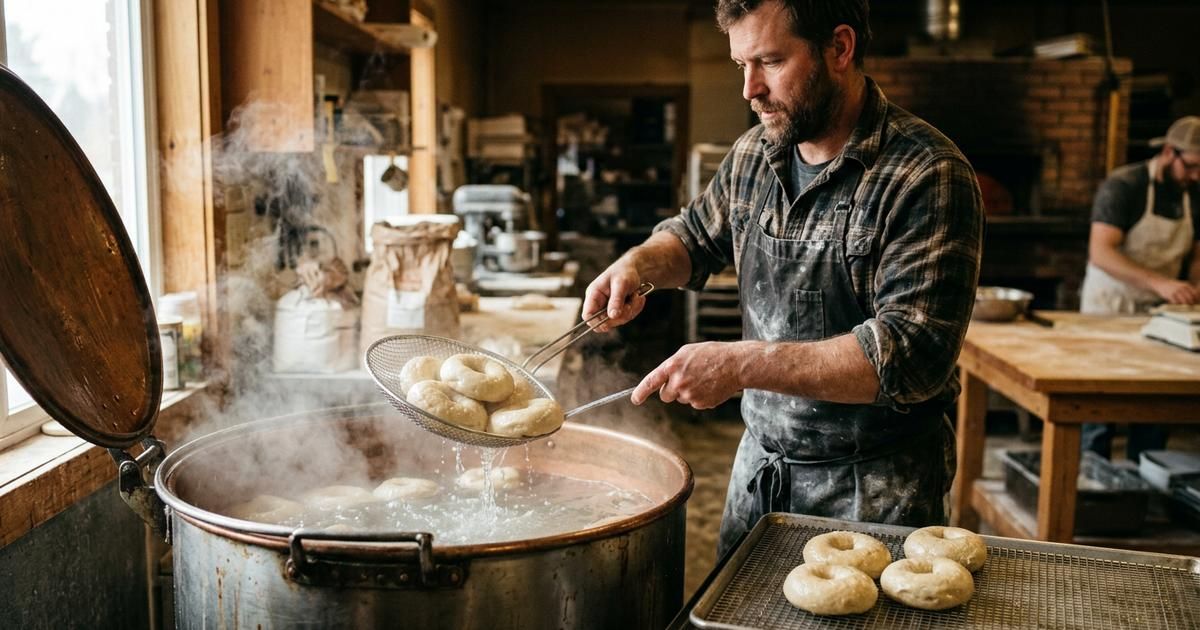
What is the secret to a good bagel?
A good bagel is boiled, not just baked. That quick bath in kettle water sets a glossy, chewy crust while the inside stays dense and tender. Malt in the dough adds a faint sweetness and deep color. And it’s fresh, same-day fresh, because a bagel starts dying the hour it cools.
Keep reading ↓Saturday, a little after eight, and there’s a line out the door in Richmond Heights. Not for coffee. For bagels. The kind that come out of the oven in batches and sell out before eleven. I grabbed the last warm everything bagel one weekend, and the guy behind me actually groaned. That’s a real bagel for you. When it’s good, people build their whole morning around it.
Here’s the blunt part. Most of what gets sold as a bagel isn’t one. It’s a round roll with a hole punched in the middle, soft straight through, no shine, no pull, stale by lunch. A true bagel is a different creature. Once you’ve eaten a proper one, the fakes stop fooling you. So let’s sort out what actually separates the two: what to look for, how the good ones get made, and how to order so you leave with the right bag. A great bagel also anchors a great morning out, which we mapped in our guide to the best breakfast and brunch in St. Louis.
What is the secret to a good bagel?
A good bagel is boiled, not just baked. That quick bath in kettle water sets a glossy, chewy crust while the inside stays dense and tender. Malt in the dough adds a faint sweetness and deep color. And it’s fresh, same-day fresh, because a bagel starts dying the hour it cools.
Everything else follows from those three moves. The boil is why the surface snaps a little when you bite. The malt is why a plain bagel still tastes like something. The freshness is why a bag from this morning beats a “bakery” bagel that shipped in frozen last Tuesday. Miss any one, and you’ve got bread with a hole.
One more thing the pros know: a bagel is a texture story first and a flavor story second. Get the crackle-to-chew ratio right and even a plain one satisfies. Nail the technique and the toppings become a bonus, not a rescue mission. That’s the whole secret, minus the mystique.
What should you look for in a good bagel?
Trust your hands and eyes before your first bite. The characteristics of a good bagel show up fast: a burnished, slightly blistered crust, real heft in the palm, and a springy give when you squeeze. It should feel heavier than it looks. Light and fluffy is a dinner roll wearing a costume.
The crust and the shine
Look for a sheen, almost lacquered, with a few tiny blisters across the top. That gloss comes straight from the boil, and no amount of egg wash fakes it convincingly. The crust should have a thin, crackly resistance, then give way. Pale and matte all over? It probably skipped the kettle. Dark freckles and a little shine mean somebody did the work.
The chew
Chew is the whole point. A proper bagel pulls back a bit, like it’s arguing with you, then releases clean. That resistance comes from a tight, well-developed dough and, again, the boil. If it tears like a hamburger bun or squishes to nothing, the gluten never built up or the dough got rushed. Good chew is dense without being tough, and it lingers.
The crumb and the flavor
Tear one open. The inside, the crumb, should be tight and a touch moist, with small even holes, not the big airy pockets of sandwich bread. Flavor should read faintly sweet and a little malty even before the toppings. Salt matters too. A flat, bland bagel usually means a lazy recipe, skimpy on both salt and malt.

How is a good bagel actually made?
The process is short on ingredients and long on technique. Flour, water, yeast, salt, and malt. That’s basically it. The craft is in the order: mix a stiff dough, let it ferment slow and cold, shape the rings, boil them, then bake hot. Skip a step and the bagel tells on you.
The flour choice matters as much as the method. High-protein bread flour builds the strong gluten network a bagel needs to hold its chew and its shape in the boil. All-purpose flour makes a softer, floppier ring. It’s one more reason a serious shop and a grocery-store six-pack taste worlds apart, even before the first bite.
Why do bakers boil bagels before they bake them?
Bakers boil bagels before they bake them to lock in the shape and set the crust. The hot water gelatinizes the starch on the outside, which becomes that shiny, chewy shell in the oven. A splash of malt or a pinch of baking soda in the kettle deepens the color. Boil too long and the crust turns leathery. Skip the boil, and you’ve baked a roll.
Time is the quiet ingredient. The best shops give the dough a long, cold rest, often overnight, which builds flavor and that signature chew. Some of the most common mistakes when making bagels come from rushing that rest, over-proofing the dough, or boiling in plain water with no malt. Underbake them and they go gummy. Crowd the kettle and they stick and deflate. None of it is hard. It just refuses to be hurried.
Does the water really matter?
You’ll hear that New York bagels owe everything to New York tap water. It’s a fun theory, and probably overblown. Water chemistry can nudge the dough, sure. But technique does far more of the heavy lifting: a long ferment, a real boil, hot ovens, and good flour. Blaming the water lets lazy bakers off the hook.
How do you order a bagel like a regular?
Ask one question first: when did these come out of the oven? A good counter person will tell you straight. Aim for a batch baked within the last few hours, buy a couple extra, and eat at least one before it fully cools. Warm and fresh is the version worth remembering.
Now the toasting debate. A same-day bagel doesn’t need the toaster; the crust already does that job, and toasting a fresh one can dry it out. Day-old is a different story, and toasting brings it right back. As for spreads, a real bagel holds up to a thick schmear of cream cheese without collapsing. If yours goes soggy under a normal layer, that’s the bread talking, not the bagel.
Order enough to have leftovers, because good bagels vanish fast. Plan the drink while you’re at it, since a dark roast cuts the richness of a loaded bagel nicely, and our guide to the best coffee shops in St. Louis is a fair place to start. Ready to find a shop? Search the directory and go early. The best batches don’t last.
A few orders to skip. Don’t buy a bagel that’s been sitting under a heat lamp since dawn; ask for the fresh batch instead. Be wary of one that’s uniformly soft and pale, or that squishes flat the second it hits the bag. And if a shop only sells them pre-sliced and pre-packaged with no baking on site, adjust your expectations before you pay.
Dressing up for a big brunch? See what a tuxedo rental costs.
Which bagel and spread should you get?
If you’re new to a shop, order plain first. A plain bagel is the honest test; there’s nowhere for a bad one to hide. If it’s great, everything else on the board will be too. From there, the everything bagel earns its crowd-favorite status, and a good cinnamon-raisin proves the kitchen can handle a sweeter dough.
Spreads that respect the bagel
Cream cheese is the default, and a real bagel takes it thick. Plain, scallion, or veggie all work. Butter on a warm plain bagel is quietly perfect. If you want the full spread, add lox, tomato, red onion, and capers, and let the chewy crust do the structural work a soft roll never could.
Building a bagel sandwich
For a breakfast sandwich, a sturdy bagel beats every other bread. Egg, cheese, and bacon or sausage sit inside that chew without sliding out or turning to mush. Toast a day-old one for extra grip. The hole is a feature here, not a flaw: it keeps the whole stack from getting too tall to bite.
What’s the deal with St. Louis bagels?
St. Louis picked a fight with the bagel world and never apologized. The local quirk that went viral is the bread-sliced bagel: instead of one horizontal cut, the whole bagel gets run through a bread slicer into vertical strips. Outsiders lose their minds over it. Around here, plenty of folks shrug and pass the cream cheese.
There’s a reason behind the slice, even if it horrifies New Yorkers. It’s a party move. Bread-cut bagels feed a room, they’re easy to grab at an office spread, and toddlers can handle a strip. It says something honest about the local scene, too: St. Louis has long treated bagels as shareable food, not a religion. You can love a proper boiled bagel and still grab one bread-sliced for the kids’ soccer game.
If you grew up here, you probably have a firm opinion on the slice already. If you’re visiting, order it once for the experience, then get a proper hand-cut one to taste the difference side by side. Both can be good. They’re just built for different jobs: one for sharing, one for savoring.
Good news for us: the metro’s bagel game has climbed. Serious boil-and-bake shops have opened, weekend lines have gotten longer, and you can find a real chew from Oakville out to Washington, and even up in Troy or across in Columbia. The trick is knowing what you’re after. Now you do. Go get the warm one.
Hungry yet? Browse bagel shops across the St. Louis metro on St Louis Near Me Directory, find one baking fresh this morning, and ask when the last batch came out before you order.
If you run a business like this yourself, list your business.
Frequently asked questions
What are the characteristics of a good bagel?
A good bagel feels heavy for its size, with a glossy, slightly blistered crust and a springy squeeze. The crust cracks lightly, then gives to a chewy, tight crumb inside. It tastes faintly sweet and malty on its own, before any topping. Same-day freshness ties it all together, since a bagel fades fast once it cools.
What makes a New York bagel different from a regular bagel?
A New York bagel is boiled, hand-shaped, and baked dense, with a shiny, chewy crust that locals credit partly to the water. A “regular” supermarket bagel is usually steamed or simply baked, so it turns out soft, fluffy, and bread-like. The real difference is the boil and the chew, not the shape.
What are some common mistakes when making bagels?
The usual slips: skipping the cold overnight rest, over-proofing so the dough goes slack, and boiling in plain water without malt. Too long in the kettle makes the crust leathery, while too short leaves it pale. Underbaking causes a gummy center, and crowding the pan flattens the rings. Rushing is the root of most of them.
Why do you have to boil bagels before you bake them?
Boiling sets the crust and locks the shape before the oven. Hot water gelatinizes the surface starch, which bakes into that signature glossy, chewy shell. It also keeps the bagel from puffing up like a roll. Malt or baking soda in the water deepens the color. No boil, no real bagel.
What are different styles of bagels?
The big two are New York, larger and puffy-chewy, and Montreal, smaller, sweeter, wood-fired, and boiled in honey water. Beyond those you’ll see kettle-boiled, steamed, sourdough, mini, and flat “flagel” versions. St. Louis adds its own trick: the bread-sliced bagel, cut vertically like a loaf for sharing.
What is the most popular type of bagel?
Plain and everything trade the top spot depending on who you ask, with everything winning loyalty for its garlic, onion, sesame, poppy, and salt mix. Sesame and cinnamon-raisin round out most lists. The most popular type of bagel, honestly, is whichever one your neighborhood shop nails, batch after batch.
How do you store bagels and refresh a stale one?
Eat them the day they’re baked if you can. To keep more, freeze them within hours: slice first, bag them, and pull out only what you need. Skip the fridge, which stales bread faster. To revive a firm one, sprinkle it with water and warm it in the oven for a few minutes.
Why are some St. Louis bagels sliced like bread?
The bread-sliced, or St. Louis-style, bagel gets run through a bread slicer into vertical strips instead of one horizontal cut. The local story is convenience: it feeds a crowd, suits office and party spreads, and is easy for little kids to hold. It went viral online, and opinions about it stay loud.

Written by a dedicated team of St. Louis locals who live, work, and play right here in the St. Louis metro. Founder Lane Forman and team are committed to building the region’s most trusted directory by verifying listings and connecting local businesses with loyal customers across Missouri and Illinois.