What Makes a Pub Different From a Bar, and Which One Fits Your Night
Revised September 1, 2026
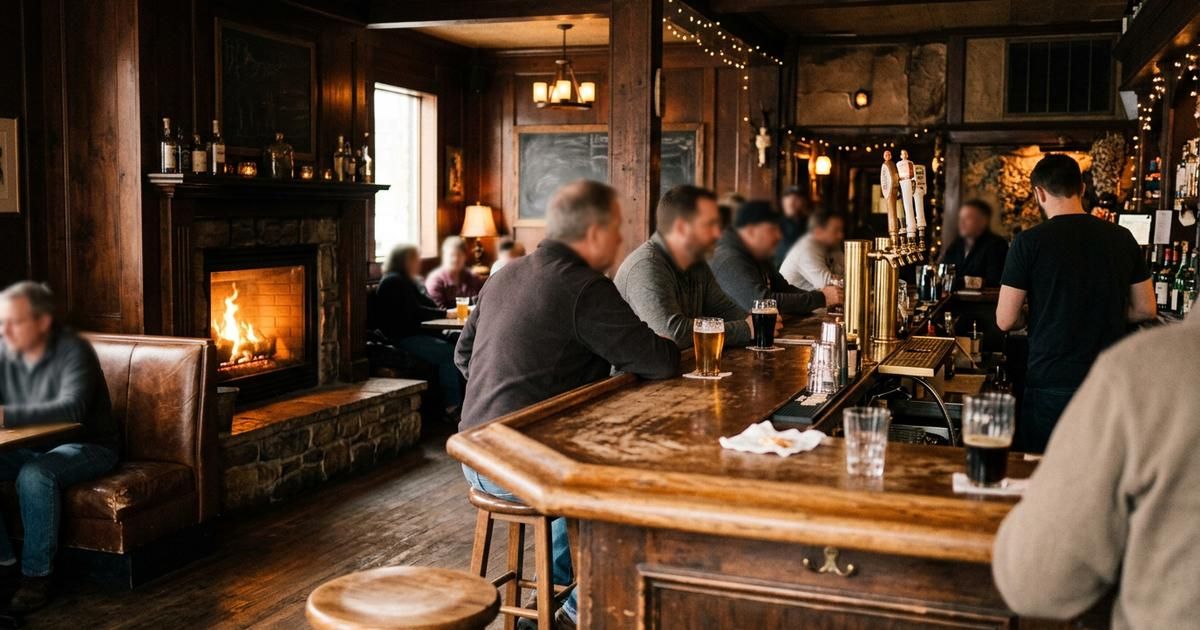
What makes a pub a pub?
A pub is short for public house, and the idea is the house part. It leans on food, daylight hours, mixed ages at the tables, and a room built for sitting and talking. A bar leans on the drink and the counter. The line is atmosphere and habit, not law.
Keep reading ↓Imagine it’s a Tuesday evening and two friends want to meet you somewhere in Soulard. One of them texts to ask whether the place you picked is a pub or a bar. You look at the name, you look at the photos, and you realize you have no real idea what separates the two.
Imagine the same question landing in five other rooms around the metro on the same night. A wood-floored spot off Manchester in Maplewood with a fireplace and a kids menu. A narrow counter on Cherokee Street with a jukebox and no kitchen at all. A quiet corner in Webster Groves that empties out by nine. A patio in Edwardsville that does not fill up until eleven. A corner storefront in Dogtown that regulars have called both words for fifty years.
Same drinks, different rooms. The labels are not regulated, and they are not interchangeable either. They are inherited, and they still tell you something useful about how your night is going to feel. Here is where each word came from, what it tends to promise now, and how to read a listing before you drive across town for the wrong kind of evening.
What makes a pub a pub?
A pub is short for public house, and the idea is the house part. It leans on food, daylight hours, mixed ages at the tables, and a room built for sitting and talking. A bar leans on the drink and the counter. The line is atmosphere and habit, not law.
No statute hands out the word pub. Liquor licensing is organized around what a place sells, when it sells it, and how much food it serves, not around what the sign outside says. Anything here about rules is general information rather than legal advice, so an owner should confirm current requirements with the state and with a lawyer.
What the word promises, in practice, is a room that works before dark. A pub usually opens for lunch, keeps a kitchen running most of the day, seats you at a table rather than a stool, and stays quiet enough that you can talk without leaning in. Families turn up at six. The same room turns over to adults later, and nobody makes an announcement about it.
The history explains the feel. A public house was literally that: a home in an English or Irish village that opened its front rooms to anyone who wanted a drink, with the family still living upstairs. Dark wood, low ceilings, snug corners and a fireplace are less decoration than leftovers from somebody’s parlor. That is why a good pub feels domestic and a good bar does not.
Three signals do most of the work. A real menu instead of a snack list. Opening hours that start with lunch instead of happy hour. And seating arranged around tables, which is the most reliable tell in any photo you will find online.
So what makes a bar a bar?
A bar is named after its furniture. The bar is the long counter that separates the person pouring from the people drinking, and the room eventually took the name of the fixture. Everything else follows from that: stools instead of booths, service by the drink, and an evening that starts later and runs harder.
In American English, bar is the default word. It covers a hotel lobby, a dive on a corner, a cocktail room with a printed menu, and a sports room with nine screens. That breadth is exactly why the word tells you less than people assume. It describes a piece of joinery, not a mood.
Still, a place that calls itself a bar is usually telling you a few things on purpose. Later close. Louder room. A drink-forward menu with more spirits than taps. Food that is short, fried and built to keep you there rather than to be the reason you came. And a door policy that tightens after a certain hour, which matters if anybody in your group is under 21.
Plenty of exceptions exist, and some of the better kitchens in the metro sit behind signs that say bar. In our experience the sign is a starting guess, nothing more. What settles it is the hours page and the menu, and both of those are usually two clicks away.
Where did the words pub, bar and tavern come from?
All three describe the same basic transaction and arrived by different routes. Pub is English and domestic. Bar is a piece of furniture that swallowed the whole room. Tavern is the oldest of the three, and in the United States it also became a licensing term, which is why it still shows up on so many old signs.
The public house
Public house is a formal-sounding phrase that entered ordinary speech and then got clipped. Village alehouses, inns and taverns in Britain were folded together under the label, and the shortened form stuck so completely that almost nobody says the long version now. The word still carries an expectation of food, and of a landlord who lives with the consequences of a bad night.
The tavern
Tavern comes down from the Latin taberna, meaning a hut or a shop. For centuries it meant a place selling wine, and later a place that fed and housed travelers as well. Colonial American taverns sat closer to inns than to bars: a public room, a hearth, a meal, a bed upstairs and the mail. That is why so many of them doubled as courtrooms and meeting halls.
The saloon and the bar
Saloon is the American nineteenth century word, and Prohibition all but killed it off. Bar outlasted everything because it was the most literal term available. You drank at the bar, so you went to a bar. Modern spinoffs follow the same logic. A taproom is named for the taps. A brewpub is named for the brewery attached to the kitchen.
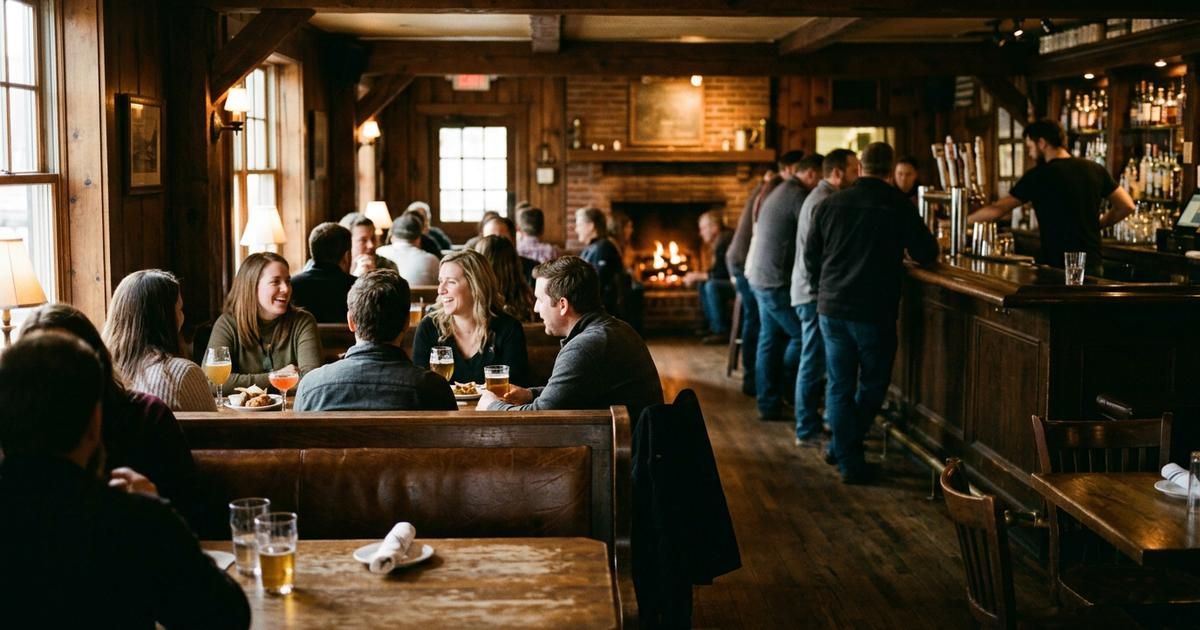
Does any of this change what you order?
It changes what the room is set up to do well, which amounts to the same thing. A pub is built around beer and around food that goes with beer, so the taps are half the menu and the kitchen is not an afterthought. A bar is built around the pour, so spirits, cocktails and speed get the attention instead.
Order to the room and you will do better. In a pub, ask what is on cask or what the house pours most of, then order something that takes a few minutes to cook. In a bar, ask the person working what they make well, because a busy counter rewards a decision far more than it rewards a debate.
One small thing trips people up on both sides of the Atlantic. A British pint is an imperial pint, twenty imperial fluid ounces. An American pint is sixteen US fluid ounces, and the tall shaker glass most places use is measured to the brim rather than to a marked line. So a full-looking glass and a full pint are not always the same thing.
None of this is a hierarchy. It is a fit. The best beer list in a neighborhood might sit behind a sign that says bar, and the best cocktail might come out of a pub with a fireplace. The words point at the odds, not at the outcome.
Buying a place instead of drinking in one? Start with a Missouri real estate attorney.
How do you tell which one you are walking into?
Four things settle it faster than the name on the sign: the opening time, the menu, the seating and the door policy. Every one of them is visible from your phone before you leave the house, and together they predict the room better than any label a marketing team picked out.
Read the opening time
A place that unlocks at eleven in the morning is committed to lunch, and lunch means a kitchen, tables and daytime staff. A place that opens at four or later has decided the evening is the whole business. That single line on a listing tells you more about the room than the photo gallery does.
Read the menu
Look for entrees, not just baskets. A menu with sandwiches, a soup, a few plates and a dessert is a kitchen. A menu that runs wings, pretzels and a frozen pizza is a snack program designed to keep people at the counter. Neither one is wrong. They simply point at different evenings.
Read the seating
Count stools against tables in the interior photos. Booths, four-tops and a patio with real chairs mean the room expects you to stay and eat. A long counter with stools and a standing area near the taps means the room expects you to move around and talk to strangers. Bring a group of eight to the second kind and somebody stands all night.
Read the door policy
Many rooms across the metro welcome all ages while the kitchen is open, then shift to adults only later in the evening. That cutoff is set by the venue and by local rules, and it is not always posted online. If anybody in your party is under 21, or you are bringing kids to dinner, call and ask. It takes a minute and saves a wasted drive.
Which words does St. Louis actually use?
The metro leans on tavern more than most American cities do, and it uses pub loosely. A corner tavern here usually means a neighborhood room in an old storefront, often older than everyone standing in it, with a short menu and a bartender who knows the block. It is not a British word and it does not pretend to be.
Pub shows up in two different ways. Some rooms mean it in the Irish or English sense: dark wood, table service, a working kitchen, a Sunday crowd that settles in. Others use it as a friendlier synonym for bar because it reads as welcoming on a sign. Both are legitimate. Only one of them will feed your family at six.
Then there is the newer category. Brewery taprooms sit somewhere between the two: long communal tables, all ages during the day, beer made on site, and food that ranges from nothing at all to a full kitchen or a truck parked out front. If you are planning around dinner, check the food situation separately, because the taproom label says nothing about it.
Across the river the language shifts again, slightly. Rooms in Belleville, Edwardsville and Alton use tavern and pub with the same looseness, and hours or age policies can differ because the rules belong to a different state. Worth a look at the listing rather than an assumption carried over from the Missouri side.
Which one fits the night you are planning?
Start from the night, not the noun. Six people, a birthday, and a table you can sit at for three hours is a pub problem. A stop after a show at half past ten with no plan to eat is a bar problem. Match the room to the evening and the word on the sign stops mattering much.
Family dinner with grandparents and a seven year old? Look for lunch hours, entrees and booths, then call about the age cutoff. Watching a game with four friends? Ask how many screens they have and whether the sound stays on, because a quiet pub with one television is a bad afternoon for that plan.
A first date where you want to hear each other calls for a smaller room with tables, early, before the volume climbs. A late night with a group calls for the later close, so the bar side wins. A slow Sunday where you want to read for an hour calls for a pub with a fireplace and nobody rushing you out of the booth.
One more piece of practical advice we give constantly. Call. A thirty second phone call answers hours, kitchen close, age policy, patio and whether the group of nine you are bringing needs a reservation. Websites go stale between updates. The person answering the phone knows what is happening tonight.
Where do you find pubs near you?
Search by neighborhood first, then filter on the things that actually decide it: kitchen hours, seating, patio and whether kids are welcome before eight. A category page beats a general search here, because it puts the rooms side by side instead of ranking them by whoever spent the most on ads this month.
And if you run one of these rooms yourself, get it listed properly in the pubs category with real hours and a current menu attached. That is how the family three blocks away finds you on a Tuesday, and it is about the cheapest marketing there is.
Pick the room before you pick the drink. You can browse pubs across the metro on St Louis Near Me Directory, then check hours, kitchen close and age policy on the listing before you head out the door.
Frequently asked questions
Why is a pub called a bar?
Because the counter took over the name. A bar was originally the barrier between the stock and the customers, and in Britain the room where you order and stand became the public bar, as opposed to the lounge or the snug. So a pub contains a bar, and American usage generalized the smaller word into the name for the whole building. Both are correct, which is exactly why the question keeps coming up.
What is a tavern?
Historically a tavern sold wine, and later fed and housed travelers, which put it closer to an inn than to a modern bar. In American use it also became a licensing word in several states, generally covering a place that serves drinks and food without lodging. Around the St. Louis metro it usually means a neighborhood corner room with a short menu and a long memory. Rules vary by state and city, so check locally.
Is a pub a British bar?
Close, but the emphasis sits in a different place. A British or Irish pub is a food and community room that also serves drinks, with table seating, daytime hours and mixed ages until evening. An American bar is a drinking room that may also serve food. American pubs borrow the look and often the menu, and the good ones borrow the hours too, which is the part that actually changes your experience.
What do British people call bartenders?
Barman, barmaid, or bar staff as the neutral term for everyone working. The person who runs the place is the landlord or landlady, and licensee or publican is the formal version you see on the paperwork above the door. Bartender is understood everywhere and gets used more now than it once did, particularly in cocktail rooms. In a traditional pub you order at the bar rather than waiting for table service.
Who drinks more alcohol, Brits or Americans?
Closer than the stereotype suggests. In international comparisons of alcohol consumed per adult, the United Kingdom and the United States land near one another, near enough that the ranking depends on the year and the source you read. We are not quoting a figure here because those numbers get revised. The World Health Organization and the OECD both publish current data. The real difference is pattern rather than volume.
Difference between a bar and a tavern
In everyday speech a tavern is smaller, older and more likely to serve food, while bar is the broader word covering everything from a hotel lounge to a late-night room with a cover charge. In some states the distinction is also a licensing one, with tavern licenses carrying food requirements attached. Locally the useful test stays the same: check the kitchen hours and the seating rather than the sign.
Can you bring kids into a pub?
Often yes while the kitchen is open, and often not after a cutoff later in the evening. That policy is set by the venue and by local rules rather than by the word on the sign, and it is not always posted online. Food-forward pubs and brewery taprooms tend to be the most family friendly during daylight hours. Call ahead and ask for the age cutoff. It takes a minute.
Is a taproom the same as a pub?
Not quite. A taproom is attached to a brewery and pours what that brewery makes, so the beer list runs short and deep instead of broad. Many taprooms welcome all ages during the day and use long communal tables, which feels pub-like in practice. The difference that matters for your evening is food: some have a full kitchen, some have a truck outside, and some have nothing at all.

Written by a dedicated team of St. Louis locals who live, work, and play right here in the St. Louis metro. Founder Lane Forman and team are committed to building the region’s most trusted directory by verifying listings and connecting local businesses with loyal customers across Missouri and Illinois.