Your Auto Body Estimate Will Probably Change. Here Is Why That Is Normal
Revised September 27, 2026
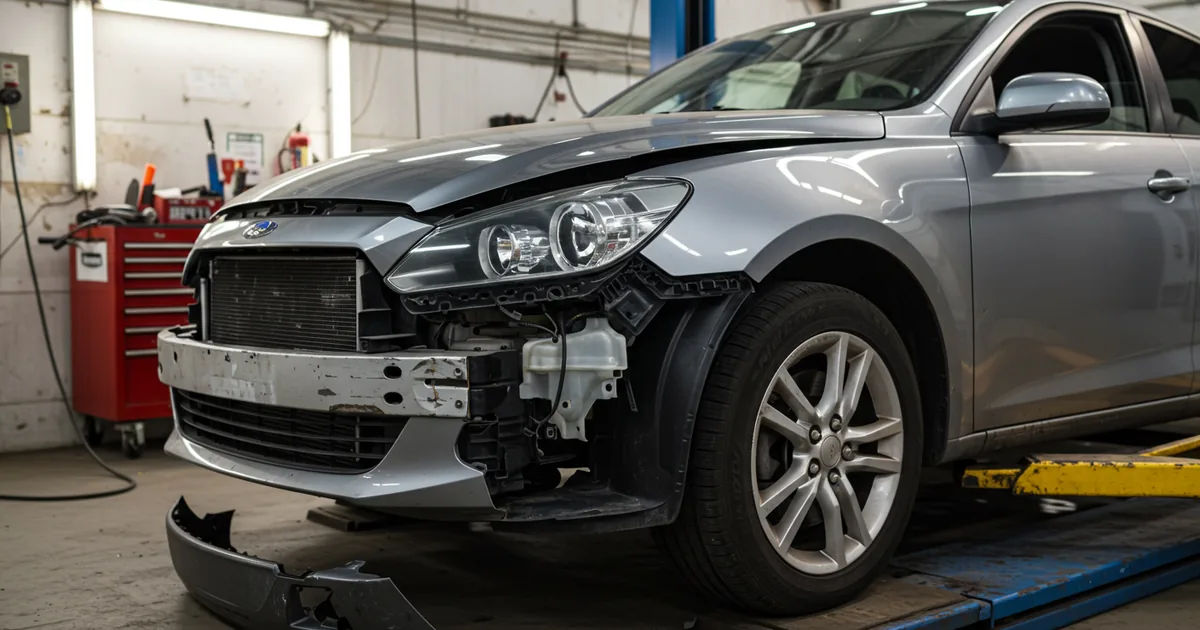
How does an auto body repair estimate actually work?
The first estimate is written from damage somebody can see — it is a starting position, not a final price. Once the vehicle is taken apart, hidden damage may or may not turn up; if it does, the shop writes a supplement and negotiates it directly with your carrier. ⚠️ “Get three estimates” is the wrong instruction when insurance is paying — comparing prices works for the carrier, not for you. 💡 Interview three or more shops instead, then tell your carrier which one you want and expect them to work with it. Almost every detail here depends on your specific policy and your state.
Keep reading ↓The estimate lands in your inbox and the number looks oddly specific. Then the shop calls two weeks later with a second number, and the specificity starts to feel like a magic trick.
Nothing has gone wrong. That is close to how the process is built to work — but almost nothing you will find online explains it, because most of what ranks for this question is a form pretending to be a calculator.
How does an auto body repair estimate actually work?
The first estimate is written from damage somebody can see. It is a starting position, not a final price.
Once the vehicle is disassembled — the bumper cover comes off, the fender liner comes out — hidden damage may or may not turn up. If it does, the shop writes a supplement: a revised estimate for what was not visible the first time. That is normal, and it is why the number moves.
Three things follow from that, and they are the whole article:
- The shop negotiates the supplement with the carrier, not you. That is in your favor, and it is the opposite of what most advice suggests.
- “Get three estimates” is the wrong instruction when insurance is paying. Interview shops instead. You are choosing a contractor, not shopping a price.
- Almost every answer here depends on your specific policy, on which state you are in, and on case law that can shift quickly. Anyone giving you a flat answer is guessing.
Why the shop should do the negotiating
When a supplement is needed, the body shop or mechanic takes it directly to the carrier. Left alone, that arrangement works better for you than getting in the middle of it.
Consider what the negotiation is actually about. Whether a particular bracket is compromised. Whether a sensor housing behind the bumper still meets spec. Whether a panel can be repaired or has to be replaced. Most vehicle owners do not know what those parts are or how they are supposed to function, and there is no reason they should — they want the vehicle fixed correctly and returned.
The shop, meanwhile, has a powerful reason to fight for the right repair: it does not want liability for workmanship that could contribute to a future accident. A shop that lets a carrier talk it into a cheaper repair it does not believe in is the shop holding the risk afterward.
So the incentives line up. Your interest and a good shop's interest point the same direction, and the shop speaks the language.
What “advocate for yourself” should actually mean
The advice is not wrong, it is aimed at the wrong target. The chain runs owner to shop, then shop to carrier — not owner to carrier.
Here is what that looks like. The carrier authorizes repainting the two front fenders and the hood. The work is done and the paint does not match the rest of the car, because paint ages and fresh paint on three panels of an older finish is visibly newer.
The thing to say is simple, and you say it to your shop: this car did not have two-tone paint before the accident, and I do not accept it now. Then the shop takes that to the carrier and argues for the money to blend adjacent panels and do it properly.
The standard underneath that argument is pre-loss condition — the idea that a settlement should restore you to roughly the condition you were in before the damage. That is what it means to indemnify a claim. A mismatched paint job plainly falls short of it, and that is an argument worth making through someone who makes it every week.
Why “get three estimates” is the wrong instruction
Collecting three prices is comparison shopping. That is exactly right when you are buying a vacuum cleaner, or when you are paying for the repair yourself.
When the carrier is paying, price comparison is not working for you. It is working for them.
None of that requires believing carriers are villains. It is arithmetic. An insurer settling on the order of a hundred thousand claims a year, saving two dollars per claim, has covered the annual salaries of several full-time employees. At that scale, small per-claim savings are a genuine business line rather than a conspiracy. Anyone would run it that way.
Which tells you what your job is. You already know who is paying. Your job is deciding who they pay.
So interview and research three or more shops rather than collecting three numbers from them. Ask how long they have been doing this, whether they have worked on your make, what their workmanship warranty covers, whether they will handle the supplement conversation directly, and what happens if you are unhappy with the paint match. Then take your decision to the carrier: based on my research I want this shop to do the repairs, and I expect you to work with them to indemnify my claim.

Whether you can insist on manufacturer parts
This is where people are most often surprised, and the honest answer is that the statute gives you less than you would expect — while your policy may give you more.
Neither Missouri nor Illinois gives you a right to demand OEM parts. Both states require disclosure, not consent. Consent statutes exist in only a handful of states nationally, and neither of ours is among them.
What both states do require is that you be told, in writing, before the work happens:
- Every non-OEM part intended for the repair must be clearly identified on the written estimate.
- A separate disclosure must explain that warranties on those parts come from the part manufacturer or distributor, not from the manufacturer of your vehicle. Missouri specifies the wording and requires it in ten-point type or larger; Illinois requires the customer be advised in writing.
- The parts themselves must carry the maker's logo or name, visible after installation where practicable.
Your policy is the other half, and it may or may not be more generous than the statute. Policies generally fall into one of three shapes: some allow OEM parts only; some give you the choice, though if you pick the cheaper aftermarket part you will not be permitted to pocket the difference; and some let the carrier choose. Which one you have is on your declarations page, and it decides the outcome far more than the statute does.
Read the declarations page, not the estimate.
Nothing to do with fenders — Clayton, MO local SEO lives over here.
Deductibles, depreciation and what “indemnify” buys you
Most carriers pay up to the cost of repair, minus your deductible, minus any non-recoverable depreciation. Depreciation on a claim is typical, not a slight.
What tends to get non-recoverable depreciation — meaning you do not get the held-back money, ever — is high-wear items: tires, hoses, wipers, a battery. The reasoning is that you were not going to get brand-new ones for free out of a collision. Whether it applies, and how much, depends on your policy.
There is a consequence people do not see coming. If you take the money and never do the repair, the carrier has indemnified the claim. The obligation has been met. Whether that has other effects is genuinely uncertain: an insurer or a lender may or may not report to a licensing bureau, and you may never be told either way. Those communications happen out of sight and tend to surface later — at refinance, at trade-in, at sale.
The same pattern exists on the property side, where a carrier may be required to notify a mortgage company above a damage threshold, depending on state statute. Anyone who tells you flatly that taking a settlement without repairing leaves no trace is overstating what they know.
Do I have to use the body shop my insurance company recommends?
No. You choose the repair facility. A carrier is allowed to recommend a shop. It is not allowed to require one.
There is a name for pushing you past a recommendation into a decision: steering. It is worth knowing the word, because most people have never heard it and assume a firm nudge from their own insurer is simply how the process works.
It is not. Steering is treated as an improper claims practice rather than ordinary salesmanship, and the reason is a conflict of interest you are usually not told about: a carrier may have a standing pricing arrangement with the shops it recommends. Those arrangements can be perfectly legitimate, and plenty of those shops do excellent work. But the shop is being recommended to you by the party paying the bill, and that party has an interest in the bill being smaller. You are entitled to weigh that yourself.
In practice it rarely sounds like pressure. It sounds reasonable, because it often is:
“Many of our customers choose that shop — they are close by, they are well known, and they are the only shop nearby that handles your brand of vehicle.”
“You can choose any shop you want, but we do not pay towing or mileage to move your vehicle to a shop that far away when there is one this close.”
Here is the part most consumer articles will not tell you: that may be steering, and it may also be entirely true. The nearby shop may genuinely be the better choice. The towing limitation may genuinely be what the policy says.
Which is why the answer is not suspicion, it is homework. If you have interviewed shops and have a reasoned preference, say so plainly and expect it to be honored — that is your call to make, not a favor being granted. If you have not done that homework, the recommendation you are being given may well be the right one anyway.
The line to listen for is the difference between advising and discouraging. “Here is a shop we work with often” is a recommendation. Being told your chosen shop will delay the repair, void something, or cost you money out of pocket — when your policy does not actually say that — is closer to pressure. If it feels like the latter, you can put your choice in writing, and the Missouri Department of Commerce and Insurance takes consumer complaints about claims handling.
Repairable or totaled, and who decides
Less negotiable than people expect. Most carriers now use applications tied to national databases: photographs, the VIN and the vehicle's vitals upload on the spot, and the underlying calculation returns repairable or total loss.
You can contest a valuation. Unless the vehicle is exotic, it is usually a losing battle.
When an estimate lands genuinely on the cusp, many carriers will ask you which you prefer — repair it or total it. That choice deserves more thought than it usually gets, because totaling a vehicle will typically brand the title through the state licensing bureau, and that brand follows the vehicle for the rest of its life.
Hail is where this gets interesting locally, and hail is not a rare event here. Missouri has recently ranked second in the country for hail claims paid by State Farm, behind only Texas, according to the carrier's own 2025 figures. Missouri is, by any measure anyone publishes, a top hail state.
Consider a vehicle that cost around forty thousand dollars new, is a year old, is worth roughly thirty thousand today, and takes fifteen thousand dollars in hail damage. Mechanically it is exactly as reliable as it was the day before the storm. The dents are cosmetic.
Some owners take the payout and simply do not repair it. They keep a dependable vehicle and keep the money. Resale and trade-in become meaningfully harder afterward, and depending on how the claim is settled a branded title may follow — but for somebody who does not mind driving a dimpled truck, it can be a sound financial decision rather than a mistake.
It is a real trade-off with real consequences on both sides, which is exactly why it should be your decision and not a default.
Choosing a shop here
Ask how long they have worked on your make, what their workmanship warranty actually covers and for how long, whether they will handle the supplement conversation with your carrier directly, and how they approach paint blending on adjacent panels. That last question tells you a great deal quickly.
Then browse body shops and mechanics across the metro on the home services coverage map, which covers both sides of the river.
If the damage came from a collision and you are still working through the immediate aftermath, what to do after a car accident covers the first few days. And if what you need is mechanical rather than cosmetic, finding a trustworthy repair shop is a different set of questions.
Frequently asked questions
How much does body repair usually cost?
It depends almost entirely on the vehicle, which is why the calculators are so unreliable. Parts pricing has changed dramatically: a headlight for a pickup from a decade ago might run a little over a hundred dollars, while a xenon headlight assembly for a current model of the same truck can exceed a thousand — and there are several of them. Sensors behind bumpers and in windshields add calibration work that did not exist before. Get a real estimate on your actual vehicle.
Will a body shop give me an estimate?
Yes, and most will do it at no charge. Understand what you are receiving: an estimate written from visible damage, which may or may not change once the vehicle is disassembled. If it does, the shop writes a supplement and takes it to your carrier. A first estimate that later moves is normal rather than a sign something is wrong.
What is the current labor rate for auto repair?
It varies by shop, by location, and by the experience of the technicians doing the work — and any figure that is accurate today may not be the going rate tomorrow. Rather than chase a number, ask a prospective shop directly what their rate is and whether your carrier has agreed to it. Where a carrier and a shop disagree on rate, that is a conversation for the two of them.
What is steering in an insurance claim?
Steering is when a carrier pushes you past recommending a shop into effectively choosing one for you. It is treated as an improper claims practice, not ordinary salesmanship, because the shop is being recommended by the party paying the bill — and there may be a pricing arrangement between them. You choose the repair facility. A recommendation is fine; being discouraged from your own choice is not.
Can I demand original manufacturer parts in Missouri or Illinois?
Not by statute. Both states require disclosure of non-OEM crash parts rather than your consent, so each such part must be identified on your written estimate along with a warranty disclosure. Your policy may give you more than the law does — some allow OEM only, some let you choose without pocketing any savings, and some leave the choice to the carrier. Check your declarations page.
Can I recover diminished value after a repair?
Check your policy first, because that is where the answer lives. Diminished value coverage is generally not included unless it was purchased, so it should be easy to spot on your declarations page. Mass-market carriers often do not offer it at all, while carriers serving high-net-worth clients sometimes will for additional premium. If you believe it applies and are getting nowhere, have an attorney read the policy — and bear in mind that litigation, even pending litigation, can change this area quickly.
Interview shops, do not just collect prices. When your carrier is paying, three quotes is comparison shopping that works for them - your real leverage is choosing a shop you trust and asking your carrier to work with it. Browse body shops and mechanics across the metro on the home services coverage map or on St Louis Near Me Directory.
If you’re the one providing this, claim your spot. If you built it once and it compounded, when would you want to start - now, or a year from now? What’s the plan when the referrals slow down - hope? See how it works →

Written by a dedicated team of St. Louis locals who live, work, and play right here in the St. Louis metro. Founder Lane Forman and team are committed to building the region’s most trusted directory by verifying listings and connecting local businesses with loyal customers across Missouri and Illinois.