What to Do After a Car Accident in St. Louis
Revised August 10, 2026

What should I do after a car accident in St. Louis?
After a car accident in St. Louis, first get to safety and call 911 if anyone is hurt. Call the police for any injury, death, or more than $500 in property damage, document the scene with photos, and exchange information — without admitting fault. See a doctor even if you feel fine, then notify your own insurer. Missouri is an at-fault, pure-comparative-negligence state, requires at least 25/50/25 liability plus uninsured-motorist coverage, and gives you five years to file most injury claims (RSMo 516.120).
Keep reading ↓One second you are merging onto I-64 thinking about lunch. The next, there is a crunch, your heart is pounding, and a stranger is walking toward your window. The minutes right after a crash are loud, confusing, and easy to fumble — and what you do in them can shape the weeks that follow. Whether your fender-bender happened downtown, out in St. Charles County, across the river in the Metro-East, or on a quiet road in Jefferson County, the same calm checklist applies. The goal in those first minutes is simple: keep everyone safe, capture what happened while it’s fresh, and avoid the handful of mistakes that make the aftermath harder than it needs to be. Do that, and you’ll be in a far stronger position whether the whole thing wraps up with a quick insurance claim or turns into something more complicated.
This is general information to help you stay organized after a wreck. It is not legal advice, and every accident is different. For guidance on your specific situation, talk with a licensed Missouri attorney.
First, Get Safe
Before anything else, check yourself and your passengers for injuries. If anyone is hurt, call 911 right away. If the cars are drivable and blocking traffic, move them to the shoulder or a nearby lot so you are not sitting in a live lane — St. Louis interstates do not slow down for a stopped car. Turn on your hazard lights. If you cannot move the vehicle safely, leave it, get yourself to a safe spot away from traffic, and wait.
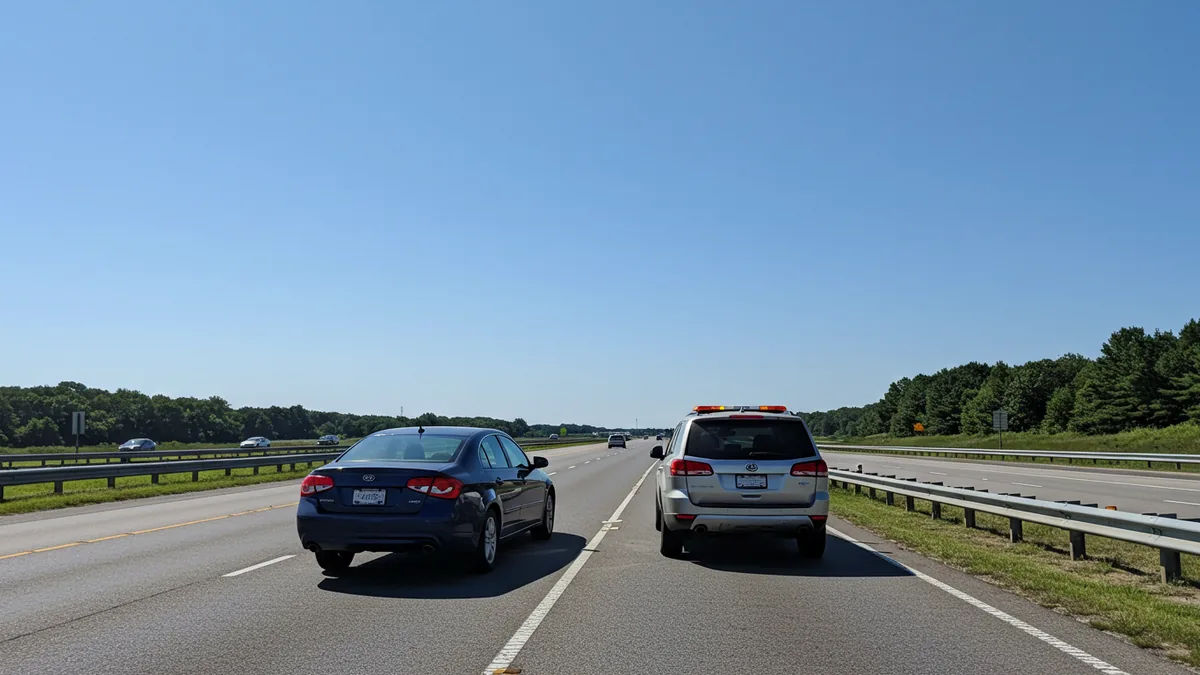
When to Call the Police
Call the police for any crash involving an injury, a death, or noticeable property damage. In Missouri you must report a crash that causes injury, death, or more than $500 in property damage, and you may also need to file a written accident report with the Missouri Department of Revenue within 30 days. A police report gives you an official, neutral record of what happened. Even for a minor bump, a report is worth having. If officers respond, ask how to get a copy of the report and write down the report number. If police do not come to the scene — which happens with smaller crashes — you can still document everything yourself.
Document the Scene
Your phone is your best tool here. Take wide shots and close-ups of:
- Damage to every vehicle involved, from several angles
- License plates
- The position of the cars before anyone moves them, if it is safe to photograph
- Skid marks, debris, traffic signals, and street signs
- Any visible injuries
- The overall scene, so the road and weather conditions are clear
If there are witnesses, politely ask for their names and phone numbers. A neutral bystander who saw the whole thing can matter a great deal later.
Unrelated, and we know it — every rug eventually meets a St. Louis carpet cleaner.
Exchange Information — Carefully
Swap names, phone numbers, addresses, driver’s license numbers, license plate numbers, and insurance details with the other driver. Stay civil, but keep it factual. This is the moment people often slip up: do not apologize, do not say “it was my fault,” and do not argue about who caused it. You may be rattled and not have the full picture yet. Stick to exchanging information and let the facts come out later.
See a Doctor, Even If You Feel Fine
Adrenaline is a powerful painkiller. Plenty of people walk away from a crash feeling okay, only to wake up the next morning with a stiff neck, a pounding headache, or back pain that will not quit. Whiplash and concussions often show up hours or days after impact. Getting checked out by a doctor — even a visit to urgent care or your primary care office — protects your health and creates a medical record that ties any injuries to the accident. If you skip care and symptoms appear later, an insurer may argue your injury had nothing to do with the crash.
Report It to Your Insurance
Notify your own insurance company promptly, even if the other driver was clearly at fault. Most policies require you to report accidents within a reasonable time, and reporting does not mean you are admitting blame. Give your insurer the facts you have. Be honest, but you do not need to volunteer guesses or speculate about fault. If the other driver’s insurance company calls and asks for a recorded statement, you are allowed to slow down, ask questions, and get advice before agreeing to one.
How Fault Works in Missouri
Missouri is an at-fault state, which means the driver responsible for a crash (and their insurer) is generally on the hook for the resulting damages. Missouri also follows what is called pure comparative fault. In plain terms: if you are found partly to blame, your compensation is reduced by your share of the fault, but you are not automatically locked out of recovering. For example, if your damages were $10,000 and you were found 20 percent at fault, you could recover $8,000. Missouri courts have applied this approach to car accident cases for decades. Importantly, the other side has to actually prove you share blame — it is not assumed.
Missouri’s Insurance Basics
It helps to know the coverage rules before you ever need them. Missouri requires every driver to carry at least $25,000 in bodily-injury liability per person, $50,000 per accident, and $25,000 in property-damage liability (often written “25/50/25”). Missouri also requires uninsured-motorist coverage of at least $25,000 per person and $50,000 per accident, which protects you if the at-fault driver has no insurance — a real risk on any given day. Underinsured-motorist coverage, which covers the gap when the other driver’s limits are too low, is optional but worth asking your agent about. These are only minimums; many drivers carry more because a serious injury claim can blow past $25,000 quickly. Knowing your own limits — and whether you have collision, medical-payments, and rental coverage — makes the days after a crash far less stressful.
The Deadline to Take Action
Missouri law sets a time limit, called the statute of limitations, for filing a personal injury lawsuit. For most personal injury claims, that window is five years from the date of the injury under Missouri statute (RSMo 516.120). Some claims are different — wrongful death and medical malpractice, for instance, have shorter deadlines — so do not assume five years applies to every situation. Deadlines are firm, and missing one can permanently end your right to sue. If you are unsure how the deadline applies to you, confirm the current timeline with an attorney or The Missouri Bar.
Watch Out for Quick Lowball Offers
Sometimes an insurer calls within days with a settlement check and a friendly tone. It can be tempting to sign, especially with a car in the shop and bills coming. But an early offer is often made before anyone knows the full extent of your injuries or the real cost of repairs. Once you accept and sign a release, you usually cannot go back and ask for more — even if a problem surfaces weeks later. There is no rule that says you must accept the first number. Take your time, get your medical care, and understand what your claim is actually worth before you agree to anything.
When It Is Worth Talking to an Attorney
Not every fender-bender needs a lawyer. But it is reasonable to consult one when there are serious or lasting injuries, when fault is genuinely disputed, when multiple vehicles are involved, when an insurer denies a fair claim or pressures you, or when you simply feel out of your depth. Most personal injury attorneys offer a free initial consultation, so a conversation costs you nothing and can clarify your options. The Missouri Bar (mobar.org) offers a lawyer referral service and consumer information if you want a starting point.
Keep Your Records Together
From the day of the crash forward, hold on to everything: the police report number, photos, medical bills and notes, repair estimates, a log of missed work, and any letters from insurers. Jot down how you are feeling each day while it is fresh. Organized records make every later step — an insurance claim, a repair dispute, or a conversation with an attorney — far smoother.
Common Mistakes to Avoid
A few missteps trip people up again and again in the days after a crash. Steer clear of these:
- Admitting fault at the scene. “I’m so sorry, I didn’t see you” feels polite, but in a comparative-fault state it can be used against you before anyone knows what really happened. Be kind and factual, not self-blaming.
- Skipping medical care because you “feel fine.” Adrenaline hides injuries, and a gap in treatment gives insurers a reason to deny that your injury came from the crash.
- Giving the other insurer a recorded statement right away. You’re not required to, and it’s easy to say something — while shaken — that gets twisted later. It’s fine to slow down and get advice first.
- Accepting the first check. Once you sign a release, the claim is closed, even if a problem shows up next month.
- Throwing away records. The photo you almost deleted or the estimate you tossed can be the thing that settles a dispute in your favor.
Handling the Repair and Getting Back on the Road
Once the immediate steps are done, there’s the practical side: getting your car fixed. You generally have the right to choose your own repair shop — an insurer can recommend one, but it can’t force you to use it. Get your own estimate, ask whether the shop offers a warranty on the work, and keep every invoice. If your policy includes rental coverage, ask how to set up a loaner while your car is in the shop. And if the other driver was at fault and their insurer accepts liability, your repairs and a rental may be handled through their policy — but don’t let a repair drag on unaddressed while the two insurers sort out who pays. A little persistence here keeps a bad day from turning into a bad month.
Frequently Asked Questions
What should I do first after a car accident in St. Louis?
Get to safety. Check for injuries and call 911 if anyone is hurt, move drivable cars out of live traffic, and turn on your hazards. Then call the police, document the scene with photos, and exchange information with the other driver — without admitting fault.
Do I have to call the police after a minor accident in Missouri?
You’re required to report a crash involving injury, death, or more than $500 in property damage, and you may need to file a report with the Missouri Department of Revenue within 30 days. Even for a small bump, a police report gives you a neutral official record, so it’s usually worth calling.
Is Missouri a no-fault or an at-fault state?
At-fault. The driver responsible for the crash and their insurer generally pay the damages. Missouri also uses pure comparative fault, so if you’re found partly to blame, your recovery is reduced by your share — but you’re not automatically barred from recovering.
How long do I have to file a claim after a car accident in Missouri?
For most personal-injury claims, Missouri gives you five years from the date of the injury (RSMo 516.120). Some claims, like wrongful death, have shorter deadlines, so don’t assume five years applies to every situation — confirm your timeline with an attorney if you’re unsure.
What is Missouri’s minimum car insurance?
At least 25/50/25 — $25,000 bodily injury per person, $50,000 per accident, and $25,000 property damage — plus uninsured-motorist coverage of 25/50. Many drivers carry more, since a serious injury can exceed those minimums.
Should I accept the insurance company’s first offer?
Not automatically. Early offers often come before anyone knows the full extent of your injuries or repair costs, and signing a release usually ends your claim for good. Get your medical care, understand what your claim is worth, and take your time before agreeing to anything.
Need help after a wreck? Browse the St Louis Near Me directory to find body shops, mechanics, and other local help close to home.
If you run a St. Louis business that helps people after a crash — an auto body shop, a repair shop, an attorney — listing it connects you with neighbors who need you.
Once the immediate steps are behind you and the vehicle is headed for repair, the estimate itself is its own process — and the first number you are given is rarely the last. How an auto body repair estimate actually works explains why it moves and who should be doing the negotiating.

Written by a dedicated team of St. Louis locals who live, work, and play right here in the St. Louis metro. Founder Lane Forman and team are committed to building the region’s most trusted directory by verifying listings and connecting local businesses with loyal customers across Missouri and Illinois.