Gumbo, a Flood, a Bordello and a Toy Frog: Cajun and Creole Restaurants in St. Louis
Revised October 22, 2026

What are examples of Cajun and Creole food?
Gumbo, jambalaya, étouffée, red beans and rice, boudin, po’boys, remoulade and beignets. In St. Louis you can find gumbo with the rice on the side in Alton, yaka mein, which one menu calls New Orleans ramen, and fresh beignets in Webster Groves. The quick test between the two styles: Creole cooking uses tomatoes, and proper Cajun food does not.
Keep reading ↓The rice comes on the side. At Gumbo 2 Geaux in Alton, Illinois, a scoop of white rice sits next to a 16-ounce bowl of chicken-and-sausage gumbo, and you decide how much of it goes in. Steam off the bowl, a spoon, and your call on the rice. That is how the traditional gumbo is served here, as a soup, with the rice on the side.
Troy and Kyndra got to Alton by way of a flood. After the 2016 flood in Baton Rouge they packed up what was left, took a $1,200 FEMA check and moved to Illinois to rebuild their lives. In 2018 they started serving gumbo from their home kitchen. In October 2022 they opened the restaurant at 1808 Washington Ave., (618) 208-7048, which is open Monday through Friday, 11 a.m. to 7 p.m., and Saturday, 11 a.m. to 4 p.m.
Order the fried gator po’boy, then take the menu’s advice and add the seafood cream sauce, loaded with crab, shrimp and crawfish, for $5. The menu says the sauce is especially good smothered over a po’boy.
One St. Louis boil caterer admits the heat is tuned for us. His standard spice level is “tuned to the St. Louis palate,” and if you want a more authentic Louisiana level you have to ask for increased spice on the crawfish only, because the sides absorb heat fast.
What are examples of Cajun and Creole food?
The usual list runs gumbo, jambalaya, étouffée, red beans and rice, boudin, po’boys, remoulade and beignets. In the St. Louis area that list reads like a map, and some of the stops are strange. Webster Groves has fresh-fried beignets dusted with powdered sugar, and one topping, Linda’s Special, comes with a honey drizzle and a toy frog. Gumbo comes with the rice on the side in Alton. In the Central West End, Evangeline’s builds its Championship Gumbo on a blonde roux and sells boudin balls. Cajun and Creole overlap on that list more than the labels admit, which is why the tomato test further down matters.
Two South Broadway buildings with a past
Peel, twist, and the lemon garlic butter is on your fingers: Broadway Oyster Bar serves a bucket of boiled crawfish, a pound and a half of them, for $25.75. The bucket lands in a bar that books live music twice a day every night except Friday. The bar is at 736 S. Broadway, (314) 621-8811, and the kitchen is open every day. The building is from the mid 1840s and has been a family home, a boarding house, a Chinese laundry, a record store and a bordello, and its own history page adds that some people feel it is haunted by spirits who play good-hearted jokes on the staff late at night. Order the alligator sausage and shrimp cheesecake, which the menu itself warns is very addictive, and any po’boy, because they come on Gambino’s bread from New Orleans.
Cotton candy grapes go into the County Fair Sangria at Sister Cities Cajun, and the chicken and sausage jambalaya is made with 100% chicken andouille and no pork. The restaurant, at 3550 S. Broadway, says its building was built in 1887 by Paul Oehler and is listed on the National Register of Historic Places. It bills itself as country Cajun, and the menu also lists a shrimp remoulade, a sauce that Mississippi River Country’s Cajun-versus-Creole guide says would not typically be found in Cajun kitchens. Plan around the calendar. It is closed on Wednesdays, and Sunday and Monday are counter service.
The tomato test, and who it is really about
The one-liner you will hear is that Creole is city food and Cajun is country food. Louisiana food writer Jay D. Ducote, in that Mississippi River Country guide, calls that a vastly simplified way to describe the two cuisines, then says the real difference is the people behind them.
Cajun comes from les Acadiens, French colonists from the Acadia region of Canada. The guide says the Acadians were forcibly removed in what became known as Le Grand Dérangement, the Great Upheaval, and that many settled in the swampy region of Louisiana now called Acadiana. Creole describes the people born to settlers in French colonial New Orleans, and the word grew to include native-born enslaved people of African descent and free people of color. The guide says Creole food is a blend of Italian, Spanish, African, German, Caribbean, Native American and Portuguese cooking, and that traditionally enslaved cooks prepared the food in the kitchens of well-to-do families. A history that credits only the French has left out the people at the stove.
The test for the plate is simple. Creole cuisine uses tomatoes and proper Cajun food does not. Sauce piquant is a Cajun exception that does include tomatoes. That is why you find tomatoes in Creole jambalaya and not in Cajun jambalaya, and why a Creole roux is often made with butter and flour while a Cajun roux is made with oil and flour.
You can taste the argument on St. Louis menus. Evangeline’s lists its chicken saucisse jambalaya with Creole tomato. Evangeline’s builds its Championship Gumbo on a classic blonde roux. Gumbo 2 Geaux, which calls its recipes Acadian, builds its traditional gumbo on chicken breast, smoked pork sausage, onion and bell pepper. Sister Cities Cajun says its chef is from well south of New Orleans, which is why the kitchen takes pride in showcasing the differences between Cajun and Creole food.
Food hall, market stall, jazz room: the rest of the city
A Swamp Thang, Slapp’n Shrimp and N’awlins bread pudding share one menu at 4 Hens Creole Kitchen, in the City Foundry food hall at 3730 Foundry Way. A table of people who cannot agree on dinner can still eat together. Its site also names shrimp and grits. City Foundry says everything is made from scratch, down to the remoulade sauces and the Little Chicks Lemonade. The site lists hours Monday and Wednesday through Saturday, 11 a.m. to 10 p.m., and Sunday, 11 a.m. to 8 p.m.
Under a 1929 Renaissance-style hall, Soulard’s Cajun Corner cooks from stand 2 inside Soulard Market, 730 Carroll St., a market that has been running since 1779. MapQuest’s listing describes the cooking as authentic New Orleans Cajun. The city lists market hours of 8 a.m. to 5 p.m., Wednesday through Saturday, and says vendor participation is 10% on Wednesday and Thursday, 35% on Friday and 100% on Saturday. We could not find the stand’s own hours, so Saturday, at 100% vendor participation, is the safest day to go.
Totally unrelated, but here is the whole Gravois Park guide.
Linda’s Special at Beignet All Day is light powdered sugar, a honey drizzle and a toy frog. The shop is at 43 South Old Orchard in Webster Groves, and it began when a self-proclaimed doughnut connoisseur named Joe came home from a family trip to New Orleans over winter break and could not stop thinking about the French doughnut. Three fresh-fried classic beignets are $8 with powdered sugar, and the Italian savory bites come topped with marinara. Chicory coffee is $3. The shop also runs booth #56 inside Soulard Market on Fridays and Saturdays, and it is closed Mondays.
Hot hand-rolled beignets and barrelhouse piano share Sundays at Evangeline’s, a hot jazz brunch with Miss Jubilee and the Yas Yas Boys playing 1920s, 30s and 40s swing. The bistro and music house is at 512 N. Euclid Ave. in the Central West End, and its MapQuest listing calls it a New Orleans inspired restaurant featuring Cajun/Creole cuisine. The Championship Gumbo carries Gulf shrimp, Louisiana crawfish tails, andouille, smoked sausage and chicken. Its current hours run Wednesday through Sunday.
Fresh Catch Cajun Kitchen is at 4745 Morgan Ford Rd. Its site lists Tuesday through Friday, noon to 9 p.m., and Saturday, noon to 7 p.m. Its ordering page highlights six Cajun shrimp and six wings with fries and a roll for $20.
Out the county roads and across the river
Cajun Kitchen of St. Louis works from 115 Flower Valley Shopping Center in Florissant. Its site promises real Cajun recipes from a true NOLA-born cook. The New Orleans Original Gumbo is $13 for a bowl or $9 for a cup. The menu also lists red beans and rice and a shrimp and sausage jambalaya, and the yaka mein, New Orleans ramen, is $13. It is open Tuesday through Thursday, 1 to 8 p.m., and Friday and Saturday, noon to 8 p.m. It is closed Sunday and Monday, and the site says hours are subject to change.
A saltwater tank with live coral reef sits beside the bistro seating at Gulf Shores Restaurant & Grill, 200 gallons in Creve Coeur and 500 gallons in St. Peters, meant to bring Bourbon Street to the table, its site says. The restaurant, owned by Harry and Erica Parker, lists two locations: 12528 Olive Blvd. in Creve Coeur and 5256 N. Service Road in St. Peters. Hours are 11 a.m. to 9 p.m. Monday through Thursday, 11 a.m. to 10 p.m. Friday and Saturday, and 11 a.m. to 9 p.m. Sunday.
More from the Alton menu: the traditional gumbo is $12, the seafood version with shrimp and shredded crab is $18, and crawfish étouffée is $16. The pork jambalaya, $12, is cooked with smothered pork roast, smoked pork sausage, onion, bell pepper and celery. The fried gator po-boy, $18.50, comes on toasted French bread. The Alton kitchen is closed on Sundays.
In Collinsville, Gator’s Louisiana Kitchen at 1048 Collinsville Crossing took over the former Stir Hibachi space, the Belleville News-Democrat reported. The menu it described runs to seafood boils served with corn on the cob, smoked sausage and red potatoes, po’boys on a French baguette, gator bites and pork boudin balls.
Crawfish, and the St. Louis palate
Cajun Boil Co. cooks crawfish and shrimp boils on site or delivers them fresh, and Stephen Robichaux runs the entire boil. His father is from Thibodaux, Louisiana, and he went to his first crawfish boil before he was a year old. The company says live crawfish run February through June, with shrimp year-round, and LSU AgCenter says Louisiana harvests peak March through May. The company describes an on-site boil as watching the boil happen, smelling the seasoning fill the air and eating straight from the pot. Every boil comes with potatoes, whole garlic, corn, sausage, mushrooms and pineapple. A one-sack boil of about 35 pounds of live crawfish is $600 for fresh-boiled delivery.
Robichaux’s tips are plain. Keep the sides at standard heat and ask for the extra spice on the crawfish only. Pour a portion out onto butcher paper or a newspaper-covered table, let people dig in, then bring out the next batch.
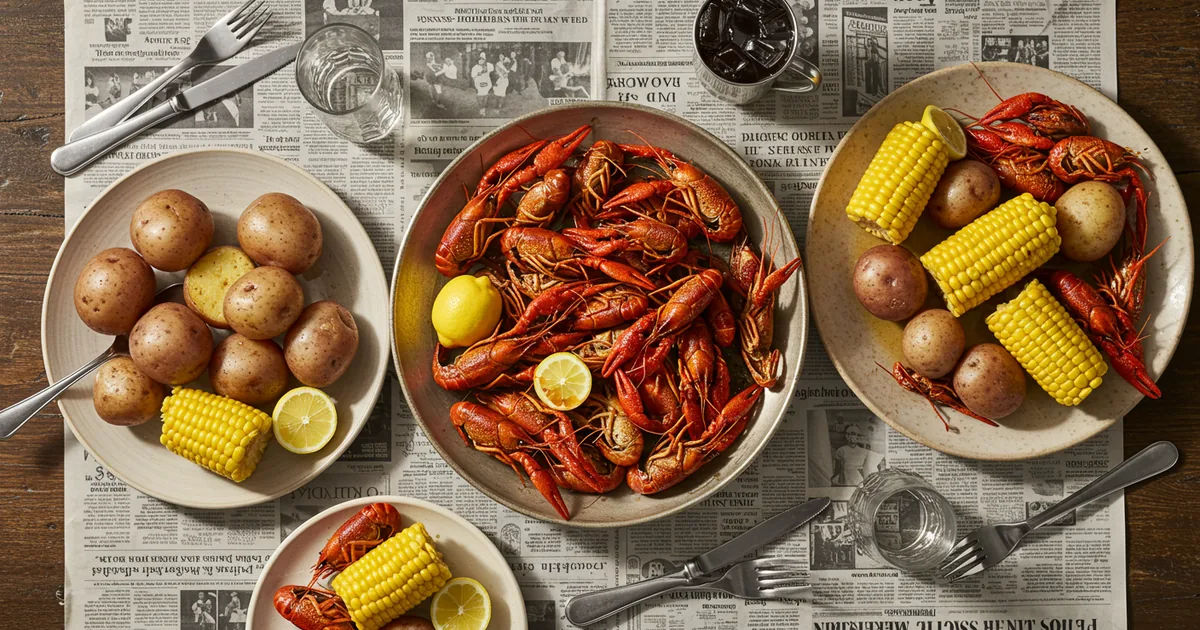
You can also eat a boil without hosting one. Cajun Kitchen’s seafood boil is preorder only, pickup only, with crawfish at $16 a pound and the Full Boil Experience at $41. Evangeline’s says the crawfish for its annual boil festival are flown in from Louisiana that morning. Broadway Oyster Bar keeps a bucket of boiled crawfish on its regular menu. For the full field of boil houses, seafood boils and crawfish across the metro covers them.
Still hungry after the gumbo? Try soul food in St. Louis, the Black-owned restaurants guide, or the whole metro on St Louis Near Me Directory.
If you own a spot like these, a boil crew or a beignet stand, the customers typing “gumbo near me” are choosing between the kitchens a guide like this one could check. Put your hours, your menu and your story where those customers look, and the answer is waiting before they have to call. List your restaurant.
What closed, and what we could not confirm
Gayot lists The Gumbo Shop, 9501 Manchester Rd., as closed. Creole With A Splash Of Soul at 4353 Manchester Ave. has changed hands: St. Louis Magazine’s September openings list has La Crazy Margarita opening at that address on September 2, with Creole With A Splash Of Soul in parentheses.
Gulf Shores’ Edwardsville location at 215 Harvard Drive was set to close Nov. 23, The Intelligencer reported, and the owners planned to reopen the restaurant at 6900 N. Illinois St. in Fairview Heights, in the former TGI Fridays. We could not confirm that it opened, and the company’s own contact page lists the Creve Coeur and St. Peters locations. Shay’s Creole Smokehouse in St. Charles is not on this list because we could not check it against a page of its own.
One distinction keeps these lists honest: a boil caterer is not a restaurant. Cajun Boil Co. is here because it cooks a Louisiana family recipe, though you book it through a request form rather than walking in. If a boil is what you want, the seafood boils guide above has the field.
Frequently Asked Questions
Is New Orleans food Creole or Cajun?
Mostly Creole. The Mississippi River Country guide says Creole describes the people born to settlers in French colonial New Orleans, and that Creole food is a blend of the various cultures of New Orleans. The two styles overlap: Sister Cities Cajun calls itself country Cajun and still lists a shrimp remoulade, a sauce the same guide says would not typically be found in Cajun kitchens.
Is gumbo considered Creole or Cajun?
Both. Louisiana law names gumbo the official state cuisine, and each tradition makes it its own way. The Mississippi River Country guide says the tomato is how you tell a Cajun gumbo from a Creole one. In St. Louis, Evangeline’s builds its gumbo on a classic blonde roux, while the Alton restaurant serves an Acadian-recipe gumbo with chicken breast and smoked pork sausage.
Is jambalaya Cajun or Creole?
Both, and the tomato decides again. The guide says you find tomatoes in Creole jambalaya and not in Cajun jambalaya. Evangeline’s lists Creole tomato in its jambalaya, while the Alton restaurant cooks its pork jambalaya with smothered pork roast, smoked pork sausage, onion, bell pepper and celery.
What is the most famous Cajun dish?
Gumbo is the safest answer, since Louisiana law names it the official state cuisine. Boudin is the other one to know: the guide describes it as a Cajun sausage of pork, rice and seasoning stuffed into a casing. In St. Louis you can find boudin balls at Evangeline’s and Gator’s Louisiana Kitchen.
What is typical Creole food?
The guide describes Creole cooking as an array of spices from many regions and creamy soups and sauces, with tomatoes and often a butter roux. It says a remoulade of nearly a dozen ingredients would not typically be found in Cajun kitchens. In St. Louis, look for the shrimp remoulade at Evangeline’s and the shrimp and grits at 4 Hens Creole Kitchen.
Where do the locals eat in St. Louis, MO?
For Louisiana cooking, the rooms people plan nights around include Broadway Oyster Bar, with live music twice a day every night except Friday, Evangeline’s Sunday jazz brunch, and the stalls at Soulard Market, which the city lists at 100% vendor participation on Saturday. For soul food and Black-owned restaurants across the metro, see the guides linked above.
Which Cajun and Creole restaurants in St. Louis are closed on Mondays?
Cajun Kitchen of St. Louis is closed Sunday and Monday, Beignet All Day is closed Mondays, and Soulard Market is closed on Mondays. Evangeline’s lists hours Wednesday through Sunday and Fresh Catch Cajun Kitchen lists Tuesday through Saturday. Broadway Oyster Bar, Gulf Shores and the Alton restaurant list Monday hours, and Sister Cities is open Monday with counter service.

Written by a dedicated team of St. Louis locals who live, work, and play right here in the St. Louis metro. Founder Lane Forman and team are committed to building the region’s most trusted directory by verifying listings and connecting local businesses with loyal customers across Missouri and Illinois.