Cat Boarding in St. Louis: Nightly Prices, Cat Hotels With No Dogs, and the State Inspection Check
Revised November 9, 2026
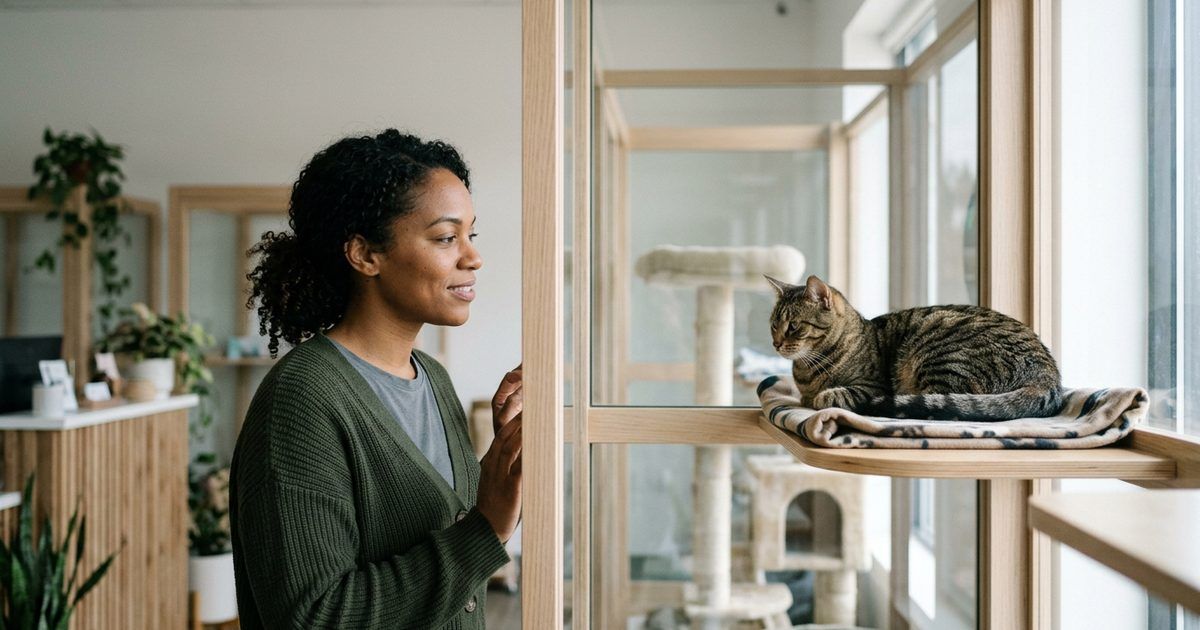
Is it stressful for a cat to be boarded?
Usually yes, at first, and then it eases. In a study of 140 cats boarded for two weeks, stress fell sharply over the first few days and about two-thirds adjusted well. A third stayed tense, and 4 percent never settled. What you control is the room: floor space, a place to hide, and no barking dogs within earshot.
Keep reading ↓Four square feet. That’s the floor space Missouri requires a licensed boarding kennel to give a cat over 8.8 pounds, inside an enclosure at least 24 inches tall. That’s a bath mat with a ceiling two feet up, and your cat, who sleeps sprawled across half your bed, inside it with a litter box and a water bowl. And for stays of three months or less, the state rule doesn’t require a shelf to sit on.
You won’t find that number on a boarding brochure. Brochures lead with the word that sits next to it: licensed. The word means something real, because the state does inspect these places, unannounced, at least once a year. What it doesn’t mean is the thing a cat owner hears, which is that somebody checked whether your cat will be comfortable. A license sets a floor. Plenty of cat rooms in this metro sit far above it. Out in Wildwood, at 16497 Clayton Rd, Cattails Lodge puts its whole pitch in four words, “Cats Only. Period.” and gives each suite a private camera, so you can watch your cat stretch out from a hotel bed two time zones away. In south city, Happy Cat Hotel & Spa at 3460 Hampton recently welcomed its first feline guests. Same law as the cage down the hall from a dog run. Wildly different rooms.
Your job is to find out which kind of room you’re booking before the carrier door opens. That takes three moves you can make today. Call the cattery and ask for the room in feet, not adjectives. Ask for its state license number. Then call the state’s ACFA office in Jefferson City, which runs Missouri’s Animal Care Facilities Act program, at (573) 751-3076 and ask for that facility’s inspection reports. Almost nobody makes that third call. Below: what the metro posts per night right now, where the cats-only rooms are, and when a sitter at home beats all of it.
Is it stressful for a cat to be boarded?
Usually yes, at first, and then it eases. In a study of 140 cats boarded for two weeks, stress fell sharply over the first few days and about two-thirds adjusted well. A third stayed tense, and 4 percent never settled. What you control is the room: floor space, a place to hide, and no barking dogs within earshot.
That study scored stress by watching posture: the cat pressed flat against the back wall, the food bowl untouched. A later paper in the journal Animal Welfare looked at something you can actually shop for: cage size and stress in boarding cattery cats. Hold that next to the bath mat at the top of this page.
Now put that against a St. Louis calendar. The roomy suites go first, and they go at the holidays. Happy Cat on Hampton doesn’t permit check-ins or check-outs on Easter Sunday, Memorial Day, Independence Day, Labor Day, Thanksgiving Day, Christmas Day and New Year’s Day. Nobody is there overnight, either; the building is locked and alarmed. Book in mid-November for Thanksgiving and you aren’t choosing a room. You’re taking whatever’s left, and that’s how a cat who owns your whole couch ends up in the bath-mat box.
None of this says don’t board. Two-thirds of those cats did fine. It says the outcome rests on two things you control: which cat you have, and which room you book. A bold, food-motivated cat who has boarded before is a different case from a shy 14-year-old who disappears when the doorbell rings, and you already know which one lives at your house.
Around here, the room question has real answers. A first night where the only voices through the wall belong to other cats is not the same first night as a condo down the hall from a dog run, where every bark lands on ears that can’t leave. Ask the place you’re considering one blunt thing on the phone: from the cat room, can you hear the dogs? Then ask for a tour and listen for yourself.
How much does cat boarding cost in St. Louis?
Posted rates around the metro ran from $27 to $69 a night for one cat when we checked in October 2026, with most standard rooms between $30 and $45. Rates change, so treat every number below as a starting point and confirm the price for your dates before you book. Listed from the lowest posted rate up:
Williamsburg Pet Hotel, 13998 Manchester Rd in Ballwin: standard cat condos from $27 a night, $30 with a window. Cats stay in quiet areas away from the dogs, and a 30-minute catio playtime is $20.
Petropolis, in Chesterfield and St. Charles: $31 a night for a private cat room and $47 for the larger room, plus $25 for each additional cat. Cats board in dedicated cat areas, and play or cuddle sessions run $22.
Silver Maple Pet Center, 2014 N Ballas Rd in Des Peres: $36 a night for a two-room condo of about 15 square feet, $38.50 for a Purradise suite with climbing tiers, and $30.25 for a second cat sharing the suite. Stays over 30 days get 10 percent off.
Creve Coeur Animal Hospital, 12550 Olive Blvd: $38 a day for a multilevel cat condo and $20 for an adjoining one. Routine medications are included at no added charge.
Elm Point Animal Hospital, 3250 Elm Point Industrial Dr in St. Charles: $45 a day for cat boarding, plus $10 to $25 a day if your cat needs medication.
Cattails Lodge, 16497 Clayton Rd in Wildwood, cats only: $45 a night for a lodge condo and suites from $69, with $25 a day for each extra cat sharing a suite.
Happy Cat Hotel & Spa, 3460 Hampton Ave in south city, cats only: no nightly rate on its rooms page. Reservations run through its online booking system or (314) 888-5222, and a second cat sharing a room adds a per-cat fee.
So a week runs roughly $189 to $483 for one cat before extras. The extras are where bills drift. Medication can be free at one clinic and $25 a day at the next. Arrival day is billed differently everywhere: Elm Point charges a full day the moment your cat checks in, Creve Coeur bills by the quarter day, and Cattails may charge a half day for a late pickup. Holidays cost more, too. Cattails adds $10 a day per suite, $4 per lodge, during its peak periods. Ask for the total, in writing, for your exact dates.
One cat, one night, posted
Silver Maple Pet Center in Des Peres posts a two-room condo at $36.00 per night and a second cat sharing a suite at $30.25. Cattails Lodge in Wildwood posts cozy condos at $45 per night and suites starting at $69. What moves your bill: a window or a bigger suite, a second cat, medication, and the holiday weeks.
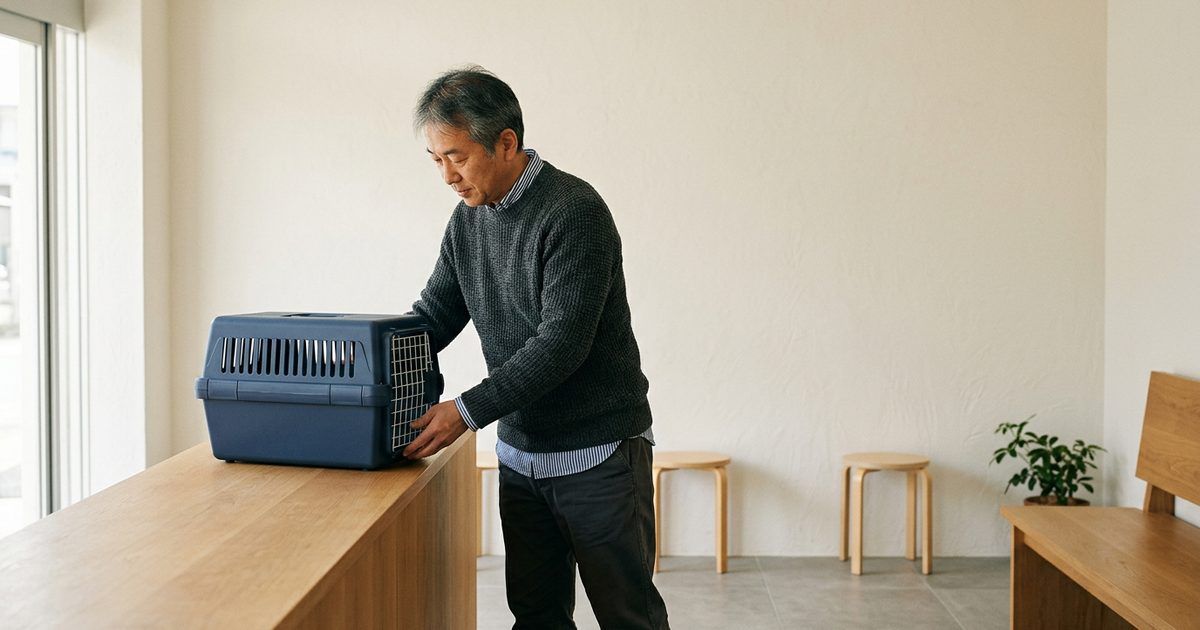
Are there cat-only boarding rooms in St. Louis?
Yes. Two cat hotels we found in the metro board cats and nothing else: Cattails Lodge in Wildwood and Happy Cat Hotel & Spa on Hampton Avenue. Several mixed facilities also keep cats in separate rooms away from the dogs. That’s a different arrangement, and it’s worth asking exactly how separate.
Cattails Lodge sits in a small commercial center at Clayton and Strecker roads. Every cat gets a private suite or lodge condo, daily play and up to an hour in an enrichment lounge. Suites come with a private camera, and cats from different households are never mixed. It gives insulin ($5 a dose) and subcutaneous fluids ($10), doesn’t accept cats that aren’t spayed or neutered, and requires rabies and FVRCP vaccines. Tours are by appointment on Tuesdays and Thursdays, and the office keeps weekday hours, 8 a.m. to 4 p.m.
Happy Cat Hotel & Spa opened at 3460 Hampton Ave in 2026, a franchise location owned by a local couple. Its themed private suites run 280 to 512 cubic feet. Guests get the chance at 15 minutes or more out of their rooms each day, at the staff’s discretion, and cats from different families are never out at the same time. It doesn’t accept diabetic cats. Check-in runs 4 to 5:30 p.m. and checkout 8:30 to 10 a.m., seven days a week, except on seven holidays when nobody checks in or out at all, Thanksgiving and Christmas Day among them.
Among the mixed facilities, Petropolis and Williamsburg both say cats board in their own areas away from dog activity. Creve Coeur Animal Hospital keeps a separate cat room inside a kennel wing that runs on its own heating and cooling, apart from the hospital, and its condos have portals that can connect up to three units for a family of cats.
Here’s the detail the brochures bury. Both cats-only hotels say plainly that nobody is on site overnight; they rely on locked, monitored buildings. Elm Point Animal Hospital in St. Charles says it has staff dedicated to its boarders 24 hours a day. Neither answer is wrong. A healthy cat asleep in a quiet suite doesn’t need a person at 3 a.m. A fragile senior on three medications might.
Flying out right after drop-off? Where to park at Lambert
Some cats-only vet clinics have boarded over the years, so don’t assume. City Cat Clinic in the Central West End, which treats cats exclusively, lists its boarding service as currently not available. Call before you plan around anyone.
How much space does Missouri require for a boarded cat?
At least 3 square feet of floor for a cat up to 8.8 pounds and 4 square feet for a bigger one, in an enclosure at least 24 inches high, under the state’s animal care facility rule, 2 CSR 30-9.030. Floor under a low shelf doesn’t count toward it. For stays of three months or less at a boarding kennel, an elevated shelf isn’t required.
That number isn’t abstract around here. When Wildwood’s planning commission approved the site plan for Cattails Lodge in June 2025, the city wrote the same floor into its conditions: kenneled cats get a minimum of four square feet. The lodge’s actual suites run 180 to 256 cubic feet. A four-square-foot box two feet tall holds eight.
For a benchmark, look at what shelter veterinarians accept. The Association of Shelter Veterinarians, whose standards shape how shelters across the country house cats, calls individual housing under 8 square feet unacceptable for an adult cat and puts the ideal at 11 square feet or more. They also say every cat must be able to hide, climb, perch and scratch, and must be able to eat and sleep away from its litter. Those are shelter guidelines, not boarding law. A shelter cat and a boarded cat are in the same spot, though: a strange room, strange smells, nowhere they chose to be. Missouri’s legal floor for a boarded cat is half the size shelter vets call unacceptable.
Posted sizes around town give you something to measure against. Silver Maple’s two-room condo is about 15 square feet and puts the litter box in its own compartment. Happy Cat’s suites run 280 to 512 cubic feet, Cattails’ 180 to 256. Most places don’t publish a size at all.
So ask for the room in feet. Not “spacious.” Not “luxury.” Feet. Then ask whether there’s a shelf, whether your cat can get behind or under something to hide, and whether the litter box shares a space with the food bowl. Ask about sight lines, too. Happy Cat says its guests can see one another through windows and doors and learn to ignore each other, and plenty of cats do. If yours spends evenings glaring at the neighbor’s cat through your back door, ask for a room without a direct view of another guest.
How do you check a cattery’s state inspection?
Ask the cattery for its Missouri Animal Care Facilities Act license number, then call or email the state’s ACFA program and request the facility’s inspection reports. Anyone boarding cats for pay at a place that isn’t the owner’s home needs that license, and the reports are public records under Missouri’s Sunshine Law.
The Missouri Department of Agriculture runs the program with a field staff of 18 for the whole state. Licensed facilities are inspected at least once a year. Routine inspections are unannounced and can happen any weekday from 7 a.m. to 7 p.m. A place with multiple, direct or repeat violations gets reinspected, also unannounced, and a complaint brings its own unannounced visit. Licenses renew every year and expire January 31, with a separate license for each physical location.
To get the records, call (573) 751-3076, email acfa@mda.mo.gov, or use the open records webform on the department’s ACFA program page. We couldn’t find a public search tool for licensees or reports on the department’s site, so this is a request, not a lookup. Almost nobody makes it, which is exactly why inspection history never shows up in anyone’s star rating.
Ask one more question while you have the cattery on the phone: who is your attending veterinarian? A licensed boarding business files a written program of veterinary care signed by its vet, and that vet is supposed to visit the premises at least once a year. A cattery that can name its vet on the spot is a cattery that has done the paperwork.
Running a boarding kennel without a license is a class A misdemeanor under the state rule, and the department takes reports of unlicensed facilities through a webform it calls Operation Bark Alert. Complaints are public records, names included. The same license and the same phone number cover dog boarding in St. Louis, so a household sending a dog and a cat out the door can check two places with one call.
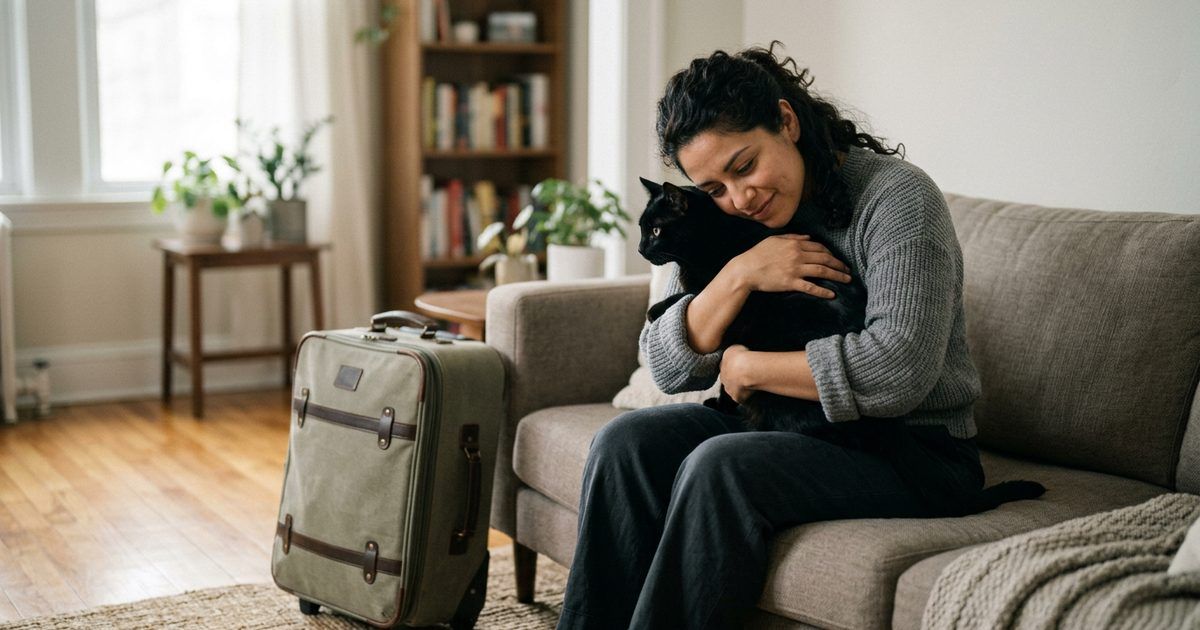
Cat boarding or a sitter at home: which is better?
For a healthy adult cat on a short trip, a sitter at home usually wins, because the cat keeps its own room, its own smells and its own routine. Boarding wins for cats that need medication on a strict schedule, cats that bolt for any open door, and long trips where one visit a day is too little company.
Missouri draws a line here that most owners never hear about. The state license covers anyone boarding cats for pay away from the owner’s home, and the department says that explicitly includes a pet sitter who takes cats into her own house. A sitter who comes to your house isn’t boarding anything, so the boarding license doesn’t cover that arrangement, and references, insurance and a meet-and-greet are your whole check. Our guide to pet sitters in St. Louis covers what those visits cost and what to ask.
If you go with a licensed sitter who boards in her own home, the state rules for that setup are stricter than a kennel’s in one striking way: a cat boarded in someone’s home can’t be caged or crated unless it’s medically necessary. The house has to stay between 60 and 85 degrees. You have the right to meet the caregiver and see the room your cat will stay in. And the head count is capped at one animal per standard room, so a four-room house tops out at four.
Then match the setup to the cat in front of you. A shy cat that vanishes when company comes over often does better with its own sofa and a visiting stranger than with its own blanket in a strange room. A cat on insulin needs somebody there at seven and seven, every day, which points to a vet clinic or a cattery that medicates. A door-dasher is safer in a cattery than with a sitter opening your front door twice a day. For a two-week trip, either can work, but one visit a day is thin company for that long. Book two.
What should you ask a cattery before you book?
Ask what happens on the worst day, not the best one. Can I hear dogs from the cat room? Stand in it and listen. How big is the room, in feet? Is anyone here overnight? What’s your license number, and when was your last state inspection? Who is your attending vet, and which emergency clinic do you use after hours? If my cat doesn’t eat for a day, what do you do, and when do you call me?
Then the money and calendar questions, because those are the ones that surprise people at pickup. What’s the full bill for my dates, with medication, a second cat and any holiday fee? Which days can’t I check in or out? Happy Cat closes check-in and checkout on seven holidays. Cattails takes drop-offs between 3 and 6 p.m. by appointment, and Elm Point wants boarders out by noon to avoid another day’s charge.
A good cattery answers all of it without flinching, and usually offers a tour before you ask. One that goes vague on the license question, or won’t let you see the actual cat room, has told you what you needed to know.
How do you get your cat ready for its first boarding stay?
Start two weeks out. Confirm vaccines, book a trial, and get the carrier out of the closet. Every cattery we checked that spells out its cat rules requires rabies plus a distemper shot, usually the FVRCP combination, and Creve Coeur Animal Hospital wants new patients examined by its own vets at least 14 days before boarding.
Stress can also wake feline herpesvirus, one of the viruses behind most cat colds, which is one reason a cat can come home from a spotless cattery sneezing. If your cat hasn’t had a booster in the previous year, feline vaccination guidelines generally recommend a single dose of core vaccines 7 to 10 days before it enters a boarding facility. That’s a call for your vet, and if you don’t have one you trust yet, start with how to choose a vet in St. Louis.
For the trial, Cattails sells a $35 Day Pass, 8 a.m. to 7 p.m., with $15 for each extra cat. It’s pitched for days when the house is chaos: roofers, showings, the exterminator. It also works as a dress rehearsal. Anywhere else, ask for a single night before the real trip. Pack your cat’s own food, which both cat hotels ask for, and a small washable item that smells like home. Cattails caps comfort items at two and wants one cat per carrier.
And book the holidays now. Cattails charges peak rates from the Wednesday through the Sunday of Thanksgiving, and again from the Friday a week before Christmas through the Sunday after New Year’s, with a 21-day cancellation window on peak stays. Happy Cat lists November 17 to December 1 and December 15 to January 5 as peak season. If your cat needs a room at Thanksgiving, October isn’t early.
Most people pick a cattery off a photo of a cat in a hammock. You’ll be the one who asked for the square footage, the license number and the overnight answer, then watched your cat stroll out of its carrier on day two like it owned the place. For the rest of pet-friendly St. Louis, from parks to patios, start with our guide.
Your shortlist starts with two phone calls, not ten browser tabs. Browse pet boarding around St. Louis on St Louis Near Me Directory, pick two places, and call with your dates and the questions above in hand.
If you’re the cattery, the vet clinic or the one-person pet sitter whose rooms clear Missouri’s minimum by a mile, say so in feet where cat owners are already looking. That’s how a good room gets more customers. Put your cattery on the map with us.
Frequently asked questions
How long is cat boarding?
As long as you book. Catteries price by the night, so a single overnight works and so does a month. Silver Maple Pet Center takes 10 percent off stays over 30 days, and Happy Cat Hotel & Spa quotes extended stays case by case. Watch the edges: some places bill a full day on arrival, and Cattails Lodge keeps two days of fees if you come home early and credits the rest.
Is it better to leave a cat at home or board?
For most healthy cats on trips of a week or so, home with a sitter visiting once or twice a day is easier on the cat. Boarding makes more sense for medicated cats, door-dashers and long trips. If you board, choose a cats-only building or a cat room out of earshot of dogs, and ask for the room’s size in feet before you pay a deposit.
How much does a vet charge to board a cat?
Two area animal hospitals we checked post their cat rates. Creve Coeur Animal Hospital charges $38 a day for a cat condo with routine medications included, and Elm Point Animal Hospital in St. Charles charges $45 a day plus $10 to $25 a day to medicate. Those were the posted prices in October 2026, so call to confirm. Some clinics also require an exam by their own vet first.
Is 2 weeks too long to board a cat?
Not for most cats. In the 140-cat study, two-thirds had adjusted well by the end of two weeks. About a third were still tense, and for 4 percent the stay never got easier. Book a trial night first, ask for a daily photo, and agree in advance on when the cattery calls you if your cat stops eating.
Is it traumatic for cats to be boarded?
For a small minority it can be. Most cats show stress for the first few days and then settle. The ones that don’t usually make it obvious: they stop eating, hide around the clock, or quit grooming. A cattery that tracks appetite and litter every day will catch that early, and your vet can tell you whether your cat belongs in the stay-at-home column.
Do cats get sad being alone all day?
Some do. A 2020 survey of owners of 223 cats, published in PLOS ONE, found about 13 percent showed signs of separation-related problems, most often destructive behavior, excess meowing and peeing outside the box. Cats with no toys and no other animal in the house were more likely to show it. Thinking about a companion? The cat cafes in St. Louis are a low-pressure way to meet adoptable cats.
What vaccines does a cat need for boarding in St. Louis?
Rabies and a distemper vaccine, usually the FVRCP combination covering rhinotracheitis, calicivirus and panleukopenia. Every cattery we checked that posts its cat rules requires both. Some ask for a feline leukemia test or vaccine without requiring it. Bring paper or digital records to check-in, because most places won’t take a cat without proof, and a few will call your vet for them if you ask ahead.
Can two cats share a boarding room?
Usually, if they live together and get along. Silver Maple charges $30.25 a night for a second cat in a suite, and Cattails and Petropolis each add $25 per extra cat. Cats from different households never share space at Cattails or Happy Cat. If your two squabble at home, book two rooms side by side. Williamsburg can adjoin two condos for a pair that wants to stay close.

Written by a dedicated team of St. Louis locals who live, work, and play right here in the St. Louis metro. Founder Lane Forman and team are committed to building the region’s most trusted directory by verifying listings and connecting local businesses with loyal customers across Missouri and Illinois.