How to Find a Plumber in St. Louis You Can Actually Trust (Cost Guide)
Revised August 29, 2026

How much do plumbers charge per hour in St. Louis?
St. Louis plumbers generally charge about $75 to $140 per hour for standard service and roughly $135 to $275 for emergency or after-hours calls; a master plumber runs about $80 to $200 an hour. Local pricing tends to sit a bit below national averages. Many plumbers price bigger jobs as a flat rate instead of hourly — either way, get the number in writing before work starts.
Keep reading ↓Picture it: you pad into the basement in your socks one January morning and step into cold water. Somewhere behind the wall, a pipe let go overnight. Or maybe it’s subtler — a faint sewage smell in the laundry room, a toilet that gurgles every time the washing machine drains, a water bill that jumped for no reason you can see. Maybe you’ve lived it, whether it was your parents’ place in Kirkwood, a rental you manage in Florissant, or your own house out in St. Charles.
Plumbing trouble has a way of turning calm people into panicked, 2 a.m. Googlers. The water is spreading, you’re not sure where the shutoff is, and the first name that pops up is quoting a number that feels invented. Two questions actually matter in that moment: is this an emergency — and who do I call who’ll fix it right without gouging me? This is a plain-English guide to answering both, with the St. Louis-specific details generic advice tends to skip — including what plumbers really charge here.
How Much Do Plumbers Charge Per Hour in St. Louis?
For a straight answer: plumbers in the St. Louis area generally charge about $75 to $140 per hour for standard service, rising to roughly $135 to $275 per hour for emergency or after-hours calls. A master plumber typically runs $80 to $200 an hour depending on the job’s complexity. The good news is that St. Louis pricing tends to sit a bit below national averages thanks to our lower cost of living and a competitive local market. That said, many plumbers price bigger jobs as a flat rate rather than hourly — a set price for, say, a water-heater swap or a toilet replacement — which protects you from a slow clock. What matters most isn’t the raw rate but getting the number in writing before work starts.
What Is the Average Call-Out Charge for a Plumber?
Most plumbers charge a service-call (or “call-out”) fee just to come diagnose the problem — in St. Louis that typically runs $65 to $300, and it often covers the first hour of work rather than being a pure trip charge. Many companies will also credit that fee toward the repair if you approve the work on the spot. For a genuine after-hours emergency, expect to pay more — the average emergency plumber visit here lands around $162, with the range depending on the hour and severity. When you call, ask two things directly: what’s the service-call fee, and is it applied to the repair if I move forward? A straight answer is itself a good sign.
What Are the Three Types of Plumbers?
Knowing who does what helps you hire the right person. Broadly, plumbers specialize in three areas: residential plumbers handle homes — the leaks, clogs, fixtures, water heaters, and repipes most homeowners need; commercial plumbers work on businesses and larger buildings with bigger, more complex systems; and service-and-repair plumbers focus on diagnosing and fixing problems (versus new-construction plumbers who install systems in buildings going up). For your house, you want a residential service-and-repair plumber. You’ll also hear skill levels — apprentice, journeyman, and master — which describe training and licensing rather than specialty. Matching both the specialty and an appropriate skill level to your job is half of hiring well.
What Is the Highest Level of a Plumber?
The highest level is a master plumber. It’s a real, earned credential — not a business-card title. In St. Louis County, a master plumber licensed through the Board of Plumber & Drainlayer Examiners has to document at least two years of experience as a licensed journeyman and pass a master exam. A master plumber can pull permits, design systems, and oversee other plumbers. Below that, a journeyman is fully qualified to do most plumbing work independently, and an apprentice is still training under supervision. For a complex job — a repipe, a sewer line, anything touching gas — you want a master plumber or a company that employs one; for a routine fixture repair, a good journeyman is perfectly appropriate.
What “Licensed Plumber” Actually Means in St. Louis
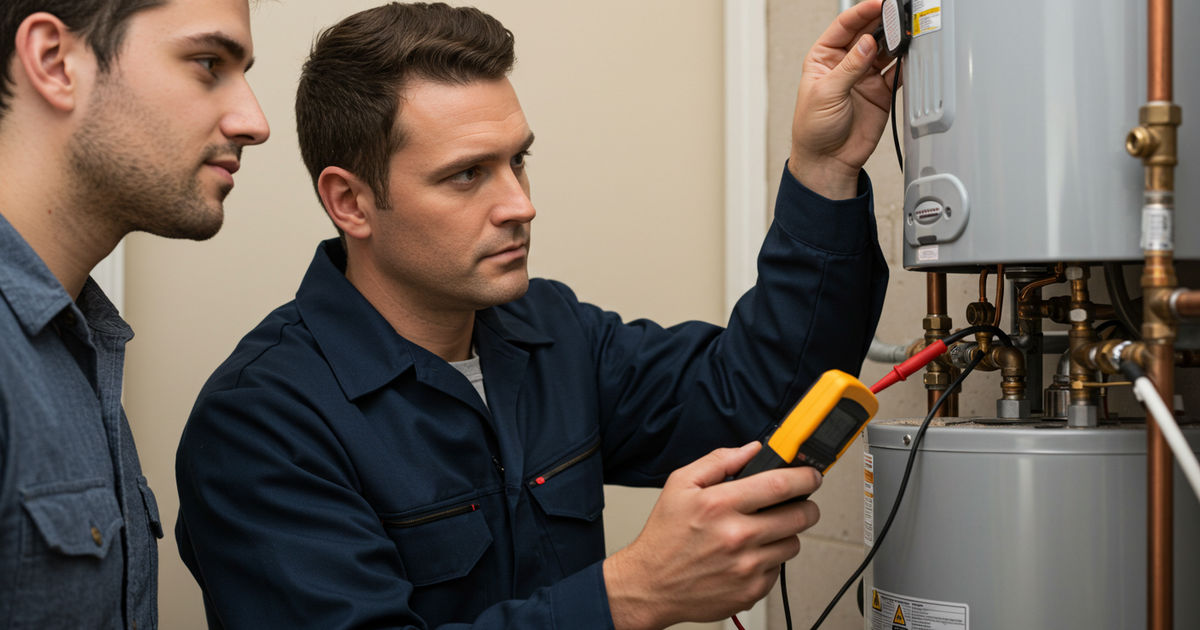
Here’s a local wrinkle that matters: Missouri has no statewide plumbing license. There’s no single “Missouri plumber’s license” good everywhere — it’s handled locally. St. Louis City and St. Louis County each license plumbers separately, and a legitimate plumber holds the license for the jurisdiction they’re working in. Bigger jobs — a water-heater swap, a repipe, sewer work, anything touching a gas line — require a permit and an inspection, which is really a free second set of expert eyes confirming the work is safe. So “licensed and insured” isn’t filler here; it’s a checkable bar. Ask which City or County license they hold and confirm they carry insurance. A real pro answers instantly.
Before Anything Else: Know Where Your Shutoffs Are
The single most damage-limiting thing you can do in a burst-pipe moment is stop the water — and the time to learn where the valve is is not while it’s spraying. Your main shutoff is usually where the water line enters the house: near the water heater, along the front foundation wall, or by the meter. Every toilet has a valve behind it, and most sinks have one underneath. Find them this weekend, turn each a quarter-turn to make sure it isn’t seized, and label the main. When something lets go, shut the water first, then call — you’ll save yourself a flooded floor and a much bigger bill.
The St. Louis Realities a Good Plumber Plans Around
Our housing stock skews old, and old houses have old pipes. Many metro homes still run on galvanized steel supply lines that corrode from the inside and quietly strangle water pressure, or cast-iron drain stacks that rust and crack with age. In the oldest homes, the water service line may still be lead — an active issue local water utilities are working to replace, so it’s worth asking about. On top of that, our hard water builds sediment in water heaters and scale on fixtures (flushing your heater once a year genuinely extends its life), and our freeze-thaw winters burst pipes on exterior walls and in unheated crawlspaces. Disconnecting garden hoses before the first hard freeze is a two-minute chore that prevents an expensive spring surprise.
Nothing to do with pipes — Tower Grove South is a great walk.
The Sewer-Lateral Program That Can Save You Thousands
Here’s the local money-saver most homeowners have never heard of. Your sewer lateral is the pipe carrying waste from your house out to the public sewer main. When our expansive clay soil shifts, or tree roots find an old clay pipe, that lateral cracks — and you get backups. A full lateral repair can run well into the thousands. But most St. Louis County municipalities and the City of St. Louis run a Sewer Lateral Repair Program, funded by a small annual fee — around $28 a year on the real-estate taxes of homes with six or fewer units — that helps cover repair of the damaged section, particularly the part under the public right of way. It doesn’t cover every situation or the entire line, and the rules vary by municipality. So before you pay a plumber out of pocket for a lateral, call your city hall or local sewer authority to see whether your property qualifies. That one phone call can be worth thousands.
Emergency, or Can It Wait?
Shut the water and call now if you’ve got active flooding, sewage backing up into the house, or no water at all. If you smell gas near a gas water heater or line, don’t troubleshoot it — leave and call the gas company or 911 first. A single dripping faucet, a slow drain, or a running toilet can usually wait for a scheduled visit — though don’t sit on a running toilet too long, because it quietly wastes real money every month.
How Do You Know If You’re Overpaying a Plumber?
The best protection against overpaying is simple: get the price in writing before work begins, and for anything major, get two or three itemized quotes for the same scope. That comparison instantly reveals an outlier. Watch for the tells of a gouge: a quote dramatically higher than the others, pressure to decide immediately, a plumber who leads with fear rather than explanation, refusal to itemize, or big cash-up-front demands. On the flip side, a suspiciously low bid can hide skipped permits or thin work. Fair pricing, clear communication, the right City or County license, and a plumber who explains the problem in plain English — that combination is how you know you’re paying for real work at a fair rate.
How to Vet a Plumber in Ten Minutes
Before you hand over your keys or your credit card, run this quick checklist: confirm the City or County license and insurance; ask how they price — flat-rate per job or hourly — and get the number in writing before work starts; for anything big (repipe, water heater, sewer, gas), ask whether the permit is included; read recent reviews for specifics (showed up on time, cleaned up, no surprise upcharge) rather than just the star count; and trust the plumber who explains the problem in plain English over the one who leads with fear. Ten minutes of vetting up front is what separates a smooth repair from a regret.
Standing in a rising puddle is the worst time to juggle ten browser tabs. Browse and compare local plumbers across the metro on the St. Louis Plumbers Map — see who serves your neighborhood, compare reviews, and bookmark it now, while the water’s still off.
Are you a plumber — or run any local trade? Being on that map is how the neighbor with the flooded basement finds you at the exact moment they need you. Listing your business takes only a few minutes.
More St. Louis Home-Services Guides
- How to choose an AC repair pro in St. Louis
- How to choose a roofing contractor in St. Louis
- How to choose an electrician in St. Louis
Frequently Asked Questions
What is the average call-out charge for a plumber?
A plumbing service call in St. Louis typically runs $65 to $300 and often covers the first hour of work rather than being a pure trip charge; many companies credit it toward the repair if you approve the work. A genuine after-hours emergency visit averages around $162 here. Ask upfront what the service-call fee is and whether it applies to the repair if you proceed.
What are the three types of plumbers?
Broadly: residential plumbers handle homes (leaks, clogs, fixtures, water heaters, repipes), commercial plumbers work on businesses and larger buildings, and service-and-repair plumbers focus on diagnosing and fixing problems versus installing new systems. For your house you want a residential service-and-repair plumber. Skill levels — apprentice, journeyman, master — describe training rather than specialty.
What is the highest level of a plumber?
A master plumber is the highest level — an earned credential, not a title. In St. Louis County, a master plumber licensed through the Board of Plumber & Drainlayer Examiners must document at least two years as a licensed journeyman and pass a master exam. They can pull permits, design systems, and oversee other plumbers. For complex jobs like repipes, sewer lines, or gas work, hire a master plumber or a company that employs one.
Are you supposed to tip a plumber?
Tipping a plumber isn’t expected or required — plumbing is a skilled trade priced accordingly, not a tipped service. That said, a tip is a nice optional gesture for exceptional work, a messy emergency handled well, or going above and beyond. If you’d rather not tip, a strong online review and referrals to neighbors are genuinely valued and help a good local plumber more than cash.
How much an hour should a plumber charge?
In the St. Louis area, about $75 to $140 an hour for standard service, rising to roughly $135 to $275 for emergency work. A master plumber typically runs $80 to $200 depending on complexity. The service call itself is usually $65 to $300 and often covers the first hour.
How to tell if your plumber is overcharging you?
Compare the whole job, not the hourly rate. A well-equipped plumber at the top of the range who diagnoses in ten minutes costs less than a cheap one who spends an hour and leaves for parts. What should worry you is no written scope and a price that moves after work starts.
How much does it cost to put plumbing in a 2000 sq ft house?
That is new-construction rough-in rather than repair work, priced by fixture count and layout rather than by the hour. Get it quoted as a scope, not a rate — and confirm what the permit and inspection schedule adds, because those are separate line items.
How much does a union plumber make in St. Louis, Missouri?
What a plumber earns and what a shop bills are different numbers — the billed rate carries insurance, the truck, parts stock, dispatch and warranty. That is why $75 to $140 an hour for standard service does not mean the person in your basement takes that home.

Written by a dedicated team of St. Louis locals who live, work, and play right here in the St. Louis metro. Founder Lane Forman and team are committed to building the region’s most trusted directory by verifying listings and connecting local businesses with loyal customers across Missouri and Illinois.