St. Louis AC Repair: How to Choose a Pro and When to Replace
Revised August 29, 2026
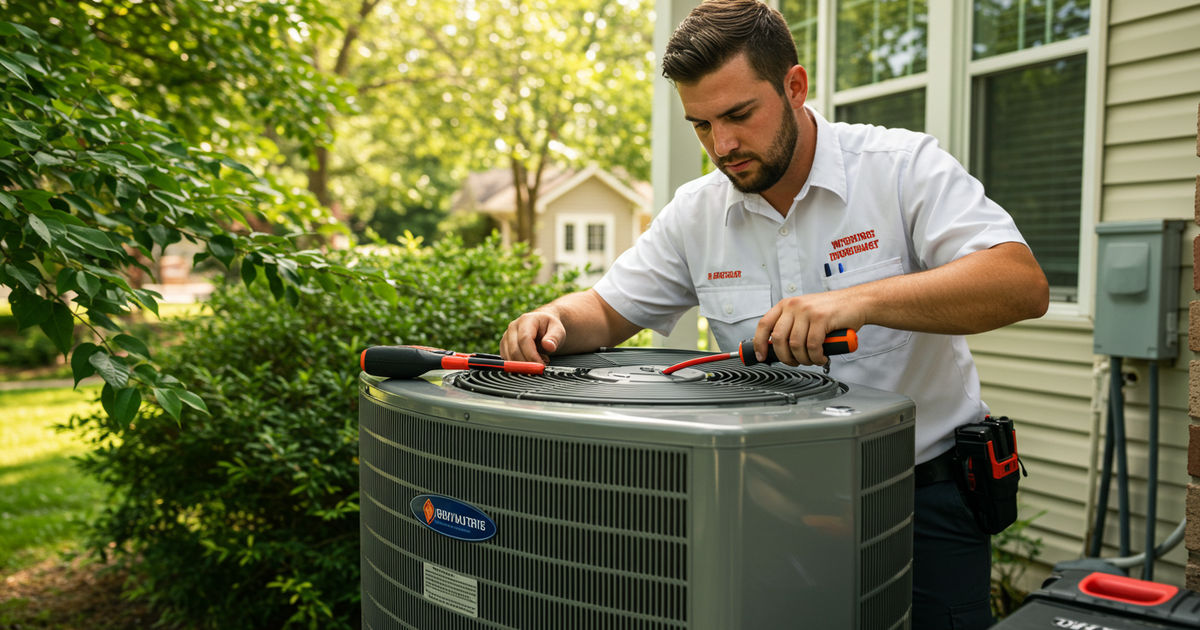
What is the $5000 rule for AC?
The $5,000 rule is a quick repair-or-replace gut-check: multiply your AC unit’s age in years by the estimated repair cost. If the result is under $5,000, repairing is usually worth it; if it’s over $5,000, replacement is generally smarter. A 14-year-old unit needing a $600 repair scores 8,400 — replace. For context, a full central-AC replacement runs about $3,000 to $7,500 installed.
Keep reading ↓It’s the third day of a July heatwave, the kind where the air outside feels like a wet wool blanket. You come home, the house is 84 degrees and climbing, and the vents are blowing… nothing. Or barely-cool nothing. Maybe you’ve lived it — your parents’ ranch in Ballwin, a rental you manage up in north county, or your own place across the river in Belleville.
In a St. Louis summer, a dead air conditioner isn’t just uncomfortable — with our humidity it gets genuinely miserable fast, and for older folks and little kids it can be a real health risk. So the pressure to call the first company you find and say “yes” to whatever they quote is enormous. That pressure is exactly how people overpay. Here’s how to slow down for ten minutes, choose an AC pro you can trust, and tell when repairing the old unit is throwing good money after bad — including the simple rules the pros use to make that call.
What Is the $5,000 Rule for AC?
The $5,000 rule is a quick gut-check for whether to repair or replace: multiply your AC unit’s age (in years) by the estimated repair cost. If the result is under $5,000, repairing is usually worth it. If it’s over $5,000, replacement is generally the smarter move. So a 6-year-old unit needing a $500 repair scores 3,000 — fix it. A 14-year-old unit needing a $600 repair scores 8,400 — lean toward replacing. It’s a rule of thumb, not gospel, but it captures the real math: pouring money into an old, inefficient system rarely pays off when a new one will be more reliable and cheaper to run. For context, a full central-AC replacement generally runs about $3,000 to $7,500 installed for a typical home, so weigh the repair against that.
What Does an AC Service Call Cost?
Most HVAC companies charge a service-call or diagnostic fee of about $75 to $200 to come out, identify the problem, and quote the fix — and many will credit that fee toward the repair if you approve the work on the same visit. Once diagnosed, common AC repairs nationally average $300 to $600, with most jobs falling between $150 and $1,500 depending on the part and complexity. The big-ticket exception is the compressor (more on that below), which runs well into the thousands. When you book, ask the two questions that protect you: what’s the diagnostic fee, and is it applied to the repair if I move forward today?
Is It Worth Fixing a 20-Year-Old AC Unit?
Usually not. Central AC units generally last around 12 to 15 years in our climate, so at 20 years a unit is well past its expected life — you’re maintaining borrowed time, and units that old typically need service calls twice a year just to limp along. There’s also a hidden cost trap: a system that old may still run on R-22 (the old “Freon”), whose production was banned in the U.S. in 2020. Because the remaining supply is shrinking, recharging an R-22 system after a leak has become very expensive — which often tips the math decisively toward replacement. A 20-year-old unit is also far less efficient than a modern one, quietly inflating every summer’s electric bill. Barring a cheap, minor fix, replacement almost always wins at that age.
How to Tell If an AC Compressor Is Blown
The compressor is the heart (and the most expensive part) of your AC, so knowing the warning signs helps. Classic symptoms of a failing or blown compressor include warm air blowing from the vents even though the system is running, loud clunking, grinding, or rattling noises from the outdoor unit, the circuit breaker tripping repeatedly when the AC kicks on, hard starting (the unit struggles or hesitates to turn on), and noticeable vibration or shaking of the outdoor unit. A compressor replacement typically costs $1,800 to $2,800 — which is exactly the kind of high repair figure that, on an older unit, sends the $5,000 rule toward replacement. If a tech diagnoses a blown compressor on a unit over ten years old, seriously weigh a new system before sinking that much into the old one.
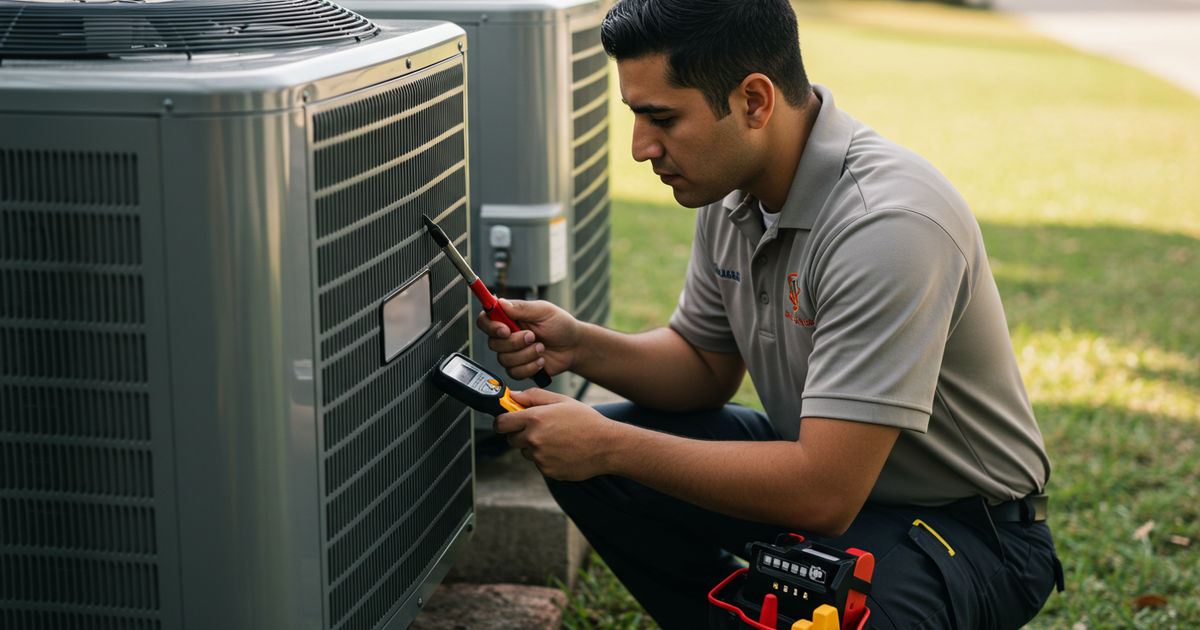
What Is the 3-Minute Rule for AC?
The 3-minute rule (some techs say five) is a simple habit that protects your compressor: after your AC shuts off, wait at least three minutes before turning it back on. When the system cuts out, pressure inside the compressor needs time to equalize; restarting too quickly forces the compressor to work against that trapped pressure, which strains it and can shorten its life or trip the breaker. Most modern thermostats build in a delay for exactly this reason, but if you’re manually flipping the system or the power, give it those few minutes. It’s a small discipline that helps you avoid the most expensive repair on the list.
Check Credentials the St. Louis Way
Missouri has no statewide HVAC license — it’s handled locally, and both St. Louis City and St. Louis County license mechanical (heating and cooling) contractors. So step one is confirming the company is licensed to work in your jurisdiction and carries insurance (which protects you if something goes wrong during the repair). Beyond the license, two industry certifications are worth looking for because they’re real and earned, not marketing badges: NATE (North American Technician Excellence), the leading certification for HVAC technicians, and ACCA (Air Conditioning Contractors of America) membership, a sign the company follows recognized industry standards.
Nothing to do with air conditioning — people eat in Sauget, surprisingly well.
Repair or Replace? The St. Louis Math
Beyond the $5,000 rule, a few honest signals point toward replacement. Age: past that 12–15-year mark, you’re on borrowed time. Refrigerant: an R-22 system is increasingly costly to service. Repair frequency: if you’re calling every summer, those repairs are adding up to a down payment on a new, efficient system. Creeping bills: a unit losing efficiency quietly raises your electric bill every hot month. A trustworthy tech walks you through this honestly instead of automatically pushing the most expensive option — and if someone inspects a five-year-old unit and immediately insists on a full replacement, get a second opinion.
The Eco Angle That Also Saves You Money
With air conditioning, “green” and “cheaper to run” are the same thing — less energy in means a smaller bill and a smaller footprint. A few things genuinely move the needle. Right-sizing matters more than raw power: an oversized unit short-cycles, blasting cold then shutting off before it can pull the humidity out, so the house feels clammy and the equipment wears faster — a good contractor sizes the system to your home, not by rule of thumb. High-efficiency systems (check the SEER2 rating) and heat pumps cost more up front but less to run. And a smart or programmable thermostat stops you from cooling an empty house all day. Before you buy, check whether Ameren Missouri has a current rebate and whether any federal energy tax credits apply — these change year to year, so confirm what’s active and ask your contractor to help you claim it. It can knock real money off a high-efficiency upgrade.
Simple Maintenance That Prevents the 84-Degree Afternoon
Most heatwave breakdowns are preventable. You can do these yourself: change the air filter monthly during cooling season, keep the outdoor condenser clear of grass, leaves, and our infamous spring cottonwood fluff, and don’t block indoor vents with furniture. Then have a pro do a tune-up in the spring, before the first hot spell — it’s far cheaper than an emergency call in July, when every company in town is slammed. Booking that spring visit is the single best way to avoid ever coming home to an 84-degree living room.
Signs It’s Time to Call a Pro (Not Just Change a Filter)
Some AC problems are DIY-fixable — a clogged filter, a tripped breaker, a thermostat set wrong — but others are clear signals to call a licensed tech before a small issue becomes a compressor bill. Call a pro if you notice warm air despite a correct thermostat setting, weak airflow from the vents, short-cycling (the unit turning on and off rapidly), water pooling or ice on the indoor unit or refrigerant lines, strange smells or noises, or a sudden jump in your electric bill. Ice on the lines in particular is a common one homeowners misread — it usually signals low refrigerant or airflow problems, and running the system that way can damage the compressor. When in doubt during a heatwave, it’s cheaper to have a pro check something minor than to run a struggling system until it dies.
Getting Quotes Without Getting Burned
For any big repair or replacement, get a few estimates and get them itemized in writing. Be wary of a quote dramatically lower than the rest — it often hides add-ons or thin work — and just as wary of one dramatically higher. Ask about warranties on both parts and labor; a company that stands behind its work says so in writing. And notice how they communicate: a pro who explains the problem in plain English, shows you the failed part, and returns your calls is telling you how the whole job will go. The people who stay cool and spend the least aren’t lucky — they’re prepared: they book the tune-up early, know their unit’s age and refrigerant, ask for the license, and keep a trusted local pro bookmarked.
Sweating through a heatwave is the worst time to research contractors from scratch. Browse and compare local heating-and-cooling companies across the metro on the St. Louis HVAC Map — see who serves your neighborhood, compare reviews, and line up a spring tune-up before the rush.
Run an HVAC company — or any local trade? Being on that map is how the family in the 84-degree living room finds you first. Listing your business takes only a few minutes.
More St. Louis Home-Services Guides
- How to find a plumber in St. Louis you can trust
- How to choose an electrician in St. Louis
- How to choose a roofing contractor in St. Louis
One habit worth building before you call anyone: give the unit a beat. The three-minute rule exists because restarting air conditioners too quickly is hard on the compressor, and the compressor is the expensive part.
Frequently Asked Questions
What does an AC service call cost?
Most HVAC companies charge a $75 to $200 diagnostic or service-call fee to come out and quote the fix, and many credit it toward the repair if you approve the work same-visit. Once diagnosed, common AC repairs average $300 to $600, with most jobs between $150 and $1,500 depending on the part. Ask whether the diagnostic fee applies to the repair if you proceed.
Is it worth fixing a 20-year-old AC unit?
Usually not. Central AC lasts about 12 to 15 years here, so at 20 it’s well past its life and often needs twice-yearly service to limp along. It may also run on R-22 refrigerant, banned from production in 2020 and now costly to recharge, and it’s far less efficient than a modern unit. Barring a cheap minor fix, replacement almost always wins at that age.
How can you tell if an AC compressor is blown?
Warning signs include warm air from the vents while the system runs, loud clunking or grinding from the outdoor unit, the breaker tripping repeatedly when the AC starts, hard starting or hesitation, and heavy vibration. A compressor replacement runs about $1,800 to $2,800 — a high figure that, on an older unit, tips the $5,000 rule toward replacing the whole system rather than the compressor alone.
What is the 3-minute rule for AC?
After your AC shuts off, wait at least three minutes before turning it back on. When the system cuts out, pressure inside the compressor needs time to equalize; restarting too soon forces the compressor to work against trapped pressure, straining it and possibly tripping the breaker. Most modern thermostats build in this delay automatically, but if you’re manually cycling the system, give it those few minutes.
What is the $5000 rule for HVAC?
Multiply the unit’s age in years by the estimated repair cost. Under $5,000 and repairing is usually worth it; over $5,000 and replacement is generally the smarter move. It is a gut-check rather than a formula — efficiency gains and refrigerant type can push the answer either way.
Is it better to run AC all day or just when home?
A modest setback while you are out beats switching it off entirely in a St. Louis summer — a house that gets deeply heat-soaked costs more to pull back down, and the humidity comes with it. Programmable setbacks of a few degrees are the practical middle.
What is the 3-minute rule for air conditioners?
Wait about three minutes before restarting a compressor after it shuts off, so refrigerant pressures can equalise. Short-cycling is hard on the compressor, which is the expensive part — most modern thermostats enforce the delay for you.
Is there a big difference between a 5000 and 6000 BTU air conditioner?
About one room’s worth. Roughly, 5,000 BTU suits around 150 square feet and 6,000 around 250. Oversizing is the more common mistake — an over-large unit cools fast, shuts off, and never runs long enough to pull the humidity out, which is what actually makes a room comfortable here.

Written by a dedicated team of St. Louis locals who live, work, and play right here in the St. Louis metro. Founder Lane Forman and team are committed to building the region’s most trusted directory by verifying listings and connecting local businesses with loyal customers across Missouri and Illinois.