DIY Interior Painting in St. Louis: Lead, Plaster, and What It Really Costs
Revised October 9, 2026
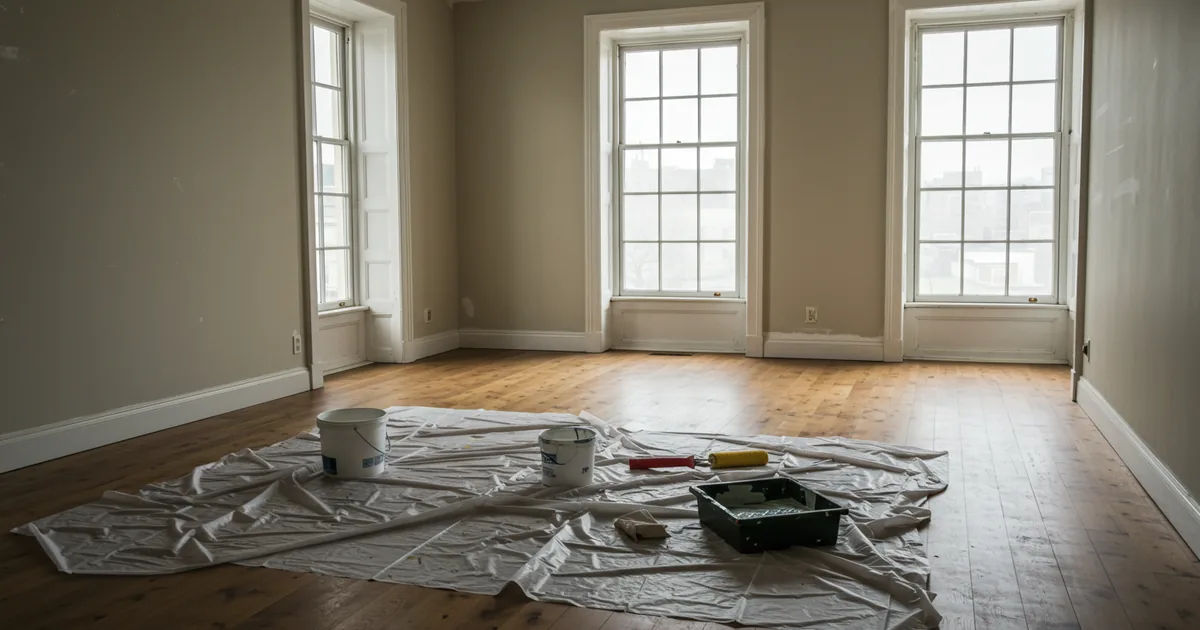
Do I need to be certified to paint my own house?
⭐ EPA’s lead rule (RRP) does NOT apply to a homeowner painting their own home — it governs anyone PAID to disturb paint in pre-1978 housing. Exceptions that pull you back in: you rent out part of the home, run a childcare center in it, or flip houses. ⚠️ But ~87% of City of St. Louis housing was built 1979 or earlier (median 1938), and St. Louis County’s median is 1970 with ~67% pre-1980 — so assume lead. 🎁 The City offers FREE lead inspections where a child under 6 or a pregnant woman lives: 622-4800. Test kits work in ONE direction — EPA says no kit meets both criteria, so a NEGATIVE is fairly reliable and a POSITIVE is not validated. Never dry-sand or dry-scrape; no heat gun above 1,100°F; HEPA vac then wet-wipe. Plaster holds via “keys” behind lath — plaster pulled loose from the lath is STRUCTURAL, not a patching job. 🔑 Missouri doesn’t license painters, but any firm you PAY must be EPA Lead-Safe certified.
Keep reading ↓Federal lead-paint rules do not apply to you painting your own house.
That is the actual text of the EPA rule, and almost nobody says it plainly — the guidance you find is written for contractors, so homeowners come away thinking they need certification to paint a bedroom.
But before you reach for the sander: 87% of houses in the City of St. Louis were built in 1979 or earlier — before the 1978 lead-paint ban. The rule doesn’t bind you. The dust doesn’t care.
Do I need to be certified to paint my own house?
No. EPA states that the Renovation, Repair and Painting Rule “does not apply to homeowners doing RRP projects in their own home.” The rule governs anyone paid to disturb painted surfaces in pre-1978 housing. There are three exceptions that pull you back in: it does apply if you rent out all or part of your home, operate a childcare center in it, or buy and renovate homes to sell for profit. If any of those describe you, you are inside the rule and need a certified firm.
The square-footage numbers are not your permission slip
You’ll see thresholds quoted everywhere: more than 6 square feet of paint disturbed inside a room, or more than 20 square feet outside, makes a job a regulated renovation. Below that it’s “minor repair and maintenance.”
Those numbers decide whether a paid contractor’s job is regulated. They are not a homeowner safety line. A homeowner painting their own primary residence is outside the rule at 6 square feet and at 600.
Two details worth knowing anyway, because they catch people hiring out small jobs: window replacement and demolition of painted surfaces are always covered regardless of square footage, and multiple jobs in the same room within 30 days count as one job for the threshold.
Why 1978 matters so much here
Lead in consumer paint was banned effective February 1978. The ban stopped new sales; it did not require anyone to remove what was already on the walls.
Which is why the date lands so hard in this market. About 87% of St. Louis city housing units were built in 1979 or earlier, and the median city home dates to 1938 — forty years before the ban. The Missouri Department of Health and Senior Services designates the entire city a high-risk area for lead poisoning.
And this is not only a city story, which is where most coverage gets it wrong. St. Louis County’s median home was built in 1970 — also pre-1978 — and about 67% of county housing predates 1980. Florissant, Webster Groves, Kirkwood, Maplewood, Overland, Ferguson: all inside the frame.
Before you sand anything, check this
Here is the most useful thing in this article, and it is buried on a page almost nobody reads.
The City of St. Louis offers free lead inspections on residential property where a child under six or a pregnant woman lives. Call the Building Division’s lead program at 622-4800. There is also remediation assistance, income- and occupancy-based.
If that describes your household and you are about to disturb paint in a pre-1978 house, make the call first. It costs nothing and it changes what you should do next.
Test kits work in one direction only
EPA recognizes exactly three lead test kits: LeadCheck, D-Lead, and a Massachusetts state kit that works on drywall and plaster only. The first two work on wood, ferrous metal, drywall and plaster.
Now the part that changes how you should read your result. EPA says plainly that “to date no lead test kit has met both of the performance criteria outlined in the RRP rule.” The recognized kits satisfy only the negative-response criterion — a demonstrated false-negative rate of no more than 5% at 95% confidence.
In plain terms: a negative result is reasonably trustworthy. A positive result is not independently validated. A swab turning red is a signal to stop and get real testing — not a confirmed measurement.
Real testing means one of two things a homeowner can’t do at the kitchen table: XRF analysis, which reads lead concentration through multiple layers without damaging anything, or paint chips sent to an accredited lab.
And know which service you’re buying. An inspection tells you whether the building has lead-based paint and where it is. A risk assessment tells you whether there are actual hazards right now and what to do about them — usually the more useful product for someone deciding whether to start a project.
How to work without making it worse
The rule doesn’t bind a homeowner, but EPA’s practices are the practices for a reason. The whole game is not turning paint into airborne dust.
Don’t dry sand and don’t dry scrape. Mist the surface first and use wet-dry sandpaper. Don’t use a heat gun above 1,100°F, and never open flame. Don’t use power tools without HEPA exhaust control — an ordinary shop vac spreads fine lead dust rather than capturing it.
Contain the room with plastic sheeting and an airlock at the door. Wear a respirator, coveralls, gloves and shoe covers. Clean at the end of every day rather than at the end of the project, because you are still living in the house while the work goes on — the same reason it’s worth knowing how long to wait before sleeping in a freshly painted room. Finish by HEPA-vacuuming and then wet-wiping until the cloths come away clean.
One more, which people get wrong constantly: painting over a lead hazard with ordinary paint is not abatement. It is a temporary encapsulation at best, and if the underlying surface is failing it will fail again through your new paint.
Nothing to do with paint — but Columbus Square is a neighborhood worth knowing.
Plaster is not drywall, and it changes the job
A house built in 1938 almost certainly has lath-and-plaster walls, and if you have only ever painted drywall, some of what you know doesn’t transfer.
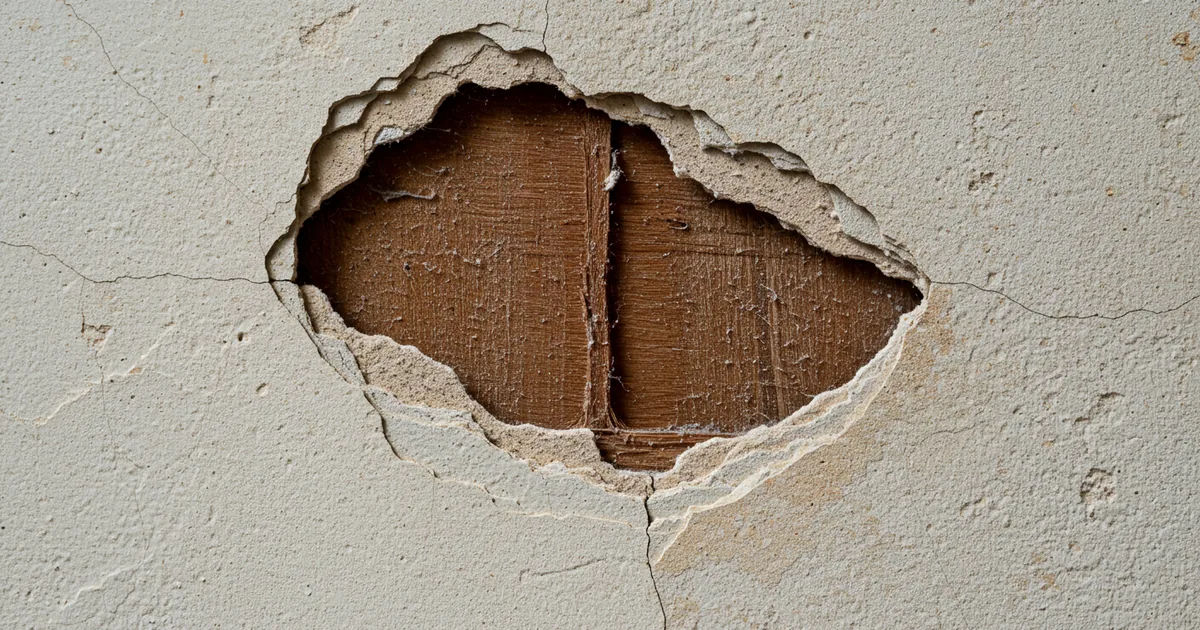
Here is how plaster actually holds on, which explains everything else. Thin wood lath was nailed across the studs with gaps between the strips. A rough basecoat about three-quarters of an inch thick was applied and squeezed into those gaps, forming “keys” behind the lath. Those keys are what hold the whole surface up, including on ceilings.
So there are two completely different problems that look similar from the front. Surface cracking is cosmetic. Plaster that has pulled loose from the lath is structural — the keys have broken — and the National Park Service describes that as requiring specialized restoration rather than patching. Press gently on a suspect area: if it moves or sounds hollow, you are looking at the second problem, and painting over it accomplishes nothing.
Before you decide to tear it out, know what you have. Multi-coat plaster is extremely durable, fire resistant, and it reduces sound transmission in ways drywall does not, and federal preservation standards strongly recommend repair over wholesale replacement. The instinct to strip to the studs and hang sheetrock produces a flatter wall and a worse house.
Two practical notes. Old plaster is rarely perfectly flat, so a flat or matte sheen hides what satin and eggshell reveal under raking light. And ask an experienced local plasterer which patching material suits your specific substrate — the compatible-compound question depends on what kind of plaster you have, and it’s worth a real answer rather than a guess from a blog.
What it costs, honestly
There is no St. Louis-specific pricing source for painting from any government or research body. The best national figure we could verify directly puts professional interior painting at roughly $4.22 to $8.19 per square foot as of spring 2026 — a national marketplace estimate, not a St. Louis quote, and our market generally runs below national labor rates.
On the materials side, the math is simple. A gallon covers about 350 to 400 square feet in one coat on a smooth surface, less on texture. Most interiors need two coats, so plan on roughly 175 to 200 square feet of finished wall per gallon.
And on paint quality: Consumer Reports’ testing spans interior paints from about $17 to $105 a gallon, and their finding is worth internalizing — a higher price does not guarantee better paint. Mid-priced lines routinely score within a few points of flagship products. Buy on tested performance, not on the shelf position.
The honest structural point about DIY savings: on a small, simple room you save roughly half, because materials and labor run close to even. On a complicated room you save much less, because prep is the part that scales with difficulty and it’s the part you cannot skip. A pro is fast at prep. That’s most of what you’re paying for.
When to hire it out
Genuinely call someone when you are disturbing lead paint at scale in a pre-1978 house — the homeowner exemption removes your legal duty, not your exposure. When you rent out part of the house, run a daycare in it, or are flipping it, in which case the exemption doesn’t apply at all. When plaster has pulled away from the lath or there’s long-term moisture damage. And when the work is high ceilings or a stairwell — that’s ladder work over a drop, and it is where DIY painting projects turn into emergency room visits.
Spraying deserves its own mention. In a pre-1978 house, spraying atomizes coating in a room where you may have just created lead dust. If you’ve never sprayed, an old house is the wrong place to learn — that is the point to start comparing painting contractors across the St. Louis metro.
The question to ask any painter you hire
Missouri’s Division of Professional Registration lists no painting license — painters are not a licensed profession in this state. Missouri’s health department licenses lead abatement, and it says explicitly that incidental disturbance of lead paint during remodeling doesn’t meet its definition of abatement, so no state lead license is required for ordinary repainting.
But federal law fills that gap, and this is the one thing to remember:
Missouri does not license painters — but if someone takes your money to disturb paint in a pre-1978 St. Louis home, federal law requires their firm to be EPA Lead-Safe certified. And roughly 87% of city housing is pre-1978.
So the question is simply: “Are you EPA Lead-Safe certified, and can I see the certificate?” A legitimate firm answers instantly. EPA maintains a public list of certified firms you can check yourself.
Separately, the City of St. Louis requires contractors to hold a Construction Industry business license, which involves a clearance from the Collector of Revenue and proof of workers’ compensation coverage. The City’s page names general and sub-contractors without listing painting specifically, so call the License Collector at (314) 622-4528 to confirm how your trade is classified.
Frequently asked questions
Do I need a lead certification to paint my own house?
No. EPA states the Renovation, Repair and Painting Rule does not apply to homeowners working on their own home. It does apply if you rent out all or part of the house, operate a childcare center in it, or buy and renovate homes to sell for profit — in those cases you are treated as a regulated renovator.
How do I know if my St. Louis house has lead paint?
Assume it does if it was built before 1978, which covers roughly 87% of city housing and about two-thirds of the county. Confirm with an EPA-recognized test kit — LeadCheck or D-Lead — or with professional XRF testing or lab-analyzed paint chips. If a child under six or a pregnant woman lives there, the City offers a free lead inspection.
Are lead paint test kits accurate?
Only in one direction. EPA states that no lead test kit has met both of its performance criteria; the recognized kits satisfy only the negative-response standard, meaning a false negative no more than 5% of the time. So a negative result is reasonably reliable, but a positive is not independently validated — treat it as a signal to get real testing.
What if I accidentally sanded lead paint?
Stop, and do not dry-sweep or reach for a shop vac — both throw the dust back into the air. Keep children and pets out of the room. Clean with wet methods and a HEPA vacuum rather than a broom, wipe down horizontal surfaces and window wells, and bag the debris. If anyone, especially a child or someone pregnant, may have been exposed, that is a question for a doctor rather than a website. For anything beyond a small patch, bring in a certified firm.
Can I just paint over lead paint?
Painting over a lead hazard with ordinary paint is not abatement, and EPA is explicit about that. Intact, undisturbed lead paint in good condition is generally lower risk than damaged paint, but if the surface underneath is failing, it will fail again through your new coat. The hazard is deteriorating paint and the dust from disturbing it.
One limit worth knowing: encapsulation works on surfaces that stay still. It is a poor answer for friction surfaces — window sashes that slide, doors that rub, stair treads — because those grind through any coating and start making dust again. Those are the components a certified firm will usually recommend replacing rather than sealing.
How do you paint plaster walls?
First determine whether the problem is cosmetic cracking or structural. Plaster holds on via “keys” squeezed through gaps in wood lath; when plaster has pulled loose from the lath, that is a structural failure requiring specialized repair, not patching. Press gently — movement or a hollow sound means stop. Flat or matte sheens hide old plaster’s irregularity better than satin.
How much paint do I need for a room?
A gallon covers roughly 350 to 400 square feet in one coat on a smooth surface, less on texture. Since most interiors need two coats, plan on about 175 to 200 square feet of finished wall per gallon. Measure wall length times height, subtract large openings, and buy one extra quart for touch-ups.
Is expensive paint worth it?
Not automatically. Consumer Reports tests interior paints ranging from about $17 to $105 a gallon and has found that a higher price does not guarantee better performance — mid-priced lines often score within a few points of flagship products. Buy on tested hiding and durability rather than on price.
Does Missouri license painters?
The Missouri Division of Professional Registration lists no painting license. However, any firm paid to disturb paint in a pre-1978 home must be EPA Lead-Safe certified under federal law — which covers most St. Louis housing. Ask any painter you hire for their certification, and check the City’s business license requirements at (314) 622-4528.
Hiring instead of doing it yourself? See our guide to choosing a painting company, or our guide to old-house wiring. Browse local pros on St Louis Near Me Directory.
If you run a painting company, this part is yours. If you built it once and it compounded, when would you want to start - now, or a year from now? What would change if your best customers could finally find you first? What’s the plan when the referrals slow down - hope? See how it works →

Written by a dedicated team of St. Louis locals who live, work, and play right here in the St. Louis metro. Founder Lane Forman and team are committed to building the region’s most trusted directory by verifying listings and connecting local businesses with loyal customers across Missouri and Illinois.