Roof Washing in St. Louis: The Streaks Are Cosmetic, the Pressure Washer Isn’t
Revised October 23, 2026
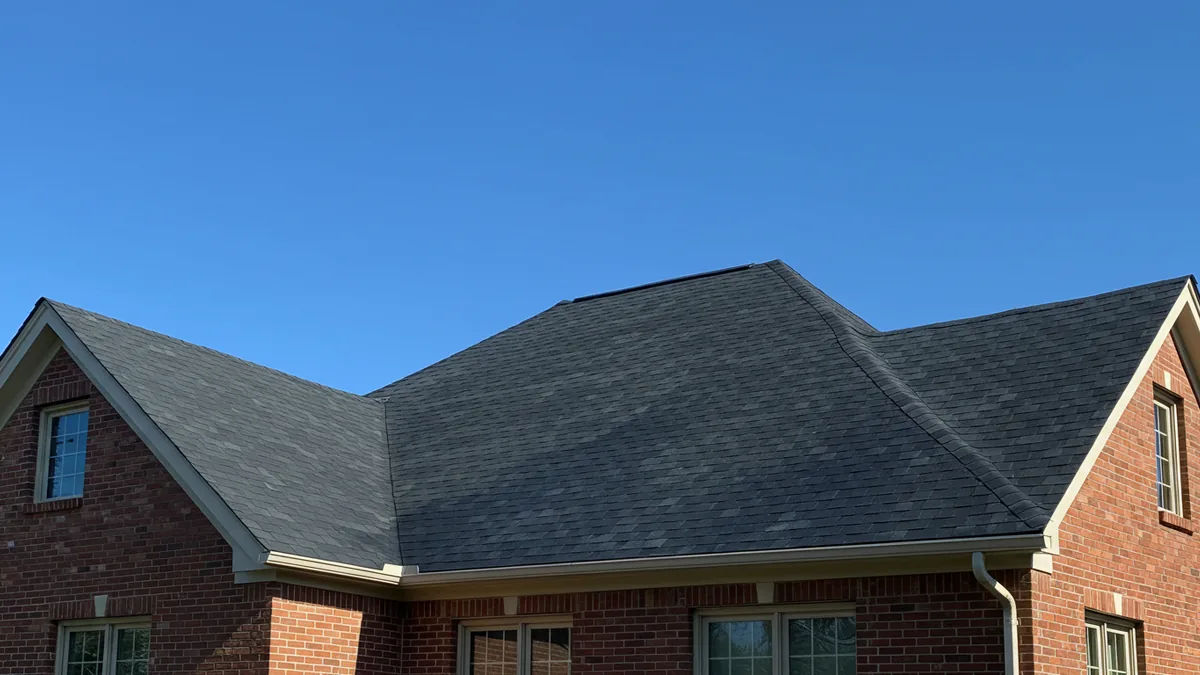
How should I clean my St. Louis roof?
Soft wash it. Never pressure wash it. The Asphalt Roofing Manufacturers Association says high pressure washing should not be used for algae and warns that scrubbing can strip granules and shorten shingle life. Gently apply a bleach, trisodium phosphate and water solution, rinse with a gentle spray, and work from a ladder, because the roof turns slippery. Soak and protect plants first, and keep the runoff out of the storm drain: here, that water often goes straight to creeks untreated.
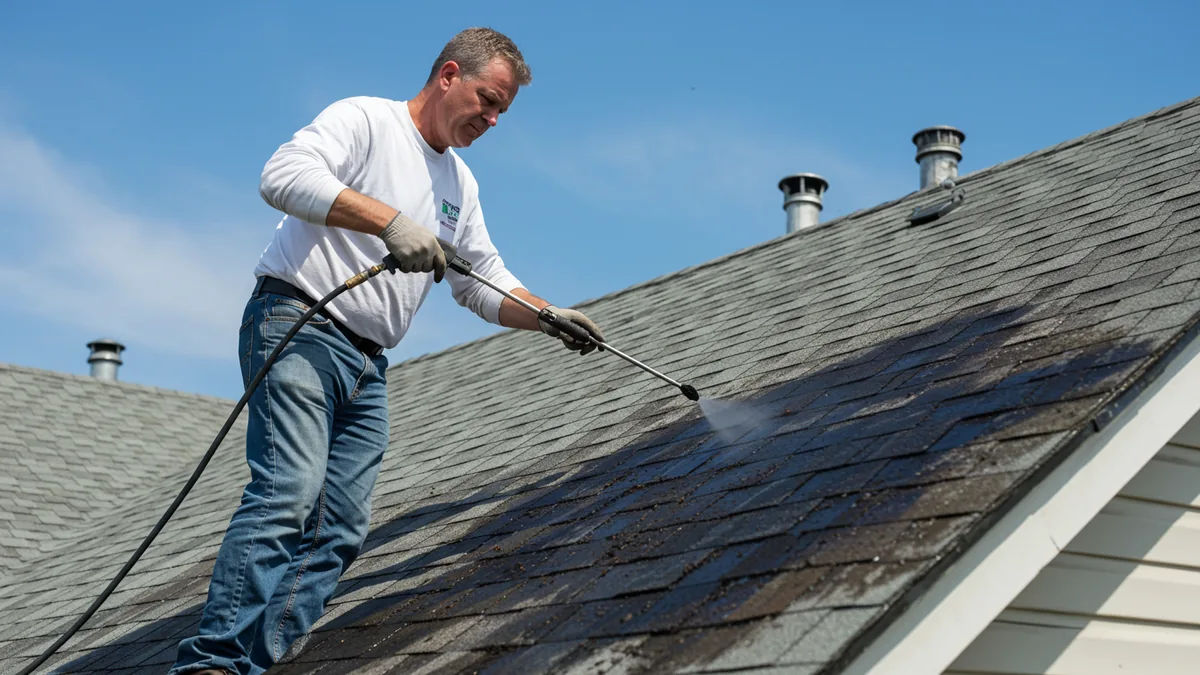
Keep reading ↓Saturday morning, two doors down. A gas pressure washer coughs to life, a guy climbs onto the roof, and the hiss of the wand starts. From your porch you can see a fine gray grit spraying off the eaves and pattering onto the driveway. Your own roof has the same black streaks running down the north slope. You wonder if you should flag him down when he’s done.
Don’t. That grit is the roof.
The Asphalt Roofing Manufacturers Association, the trade group of the companies that make the shingles, says high pressure washing systems for algae removal should not be used, and warns that even scrubbing “may loosen and remove granules, shortening the life of the shingle.” The streaks themselves? ARMA calls them “an aesthetic irritant to many people because of its unsightly appearance.” The streaks bother your eyes. The cleaning is what can hurt the roof.
And the right way isn’t cheap. Fixr says soft-washing a 1,500-square-foot roof can run as high as $1,326. Spend that on the wrong method and you’ve paid to age your shingles.
Now the part nobody selling roof cleaning in St. Louis tells you. Walk to the end of your street after a rain and look at the storm drain. Volunteers in a Metropolitan St. Louis Sewer District project have stuck plastic markers on St. Louis-area drains reading “NO DUMPING, DRAINS TO STREAM,” and in 2019 they marked over 1,700 inlets in the city and county, according to the Missouri Botanical Garden. The Garden puts it bluntly: storm water is not treated or cleaned, and it often travels directly to our creeks and streams. Roof cleaning runs on bleach. If you ever watch a crew hose that rinse down the driveway into the drain, MSD’s 24-hour hotline is 314-768-6260.
So before anyone climbs your roof, ask three things on the phone: “How will you clean it?” (the answer you want is soft wash), “Will you walk on it?” and “Where will the rinse water go?” The screenshot version for your neighbor: the streaks are cosmetic, the pressure washer isn’t, and in St. Louis the rinse water goes to a creek.
How should I clean my St. Louis roof?
Soft wash it. Never pressure wash it. The Asphalt Roofing Manufacturers Association says high pressure washing should not be used for algae and warns that scrubbing can strip granules and shorten shingle life. Gently apply a bleach, trisodium phosphate and water solution, rinse with a gentle spray, and work from a ladder, because the roof turns slippery. Soak and protect plants first, and keep the runoff out of the storm drain: here, that water often goes straight to creeks untreated.
What those black streaks actually are
You notice them most on a gray morning after rain, when the whole north slope of the roof looks wet and dirty even after it dries. Long dark stripes running down from the ridge, like somebody dragged a paintbrush full of soot.
It isn’t soot. ARMA’s bulletin says the primary species of algae being observed is Gloeocapsa magma, which is carried through the air and tends to collect and grow on roofing surfaces. The algae produce natural pigments that can turn a light-colored roof gradually dark brown or black. Roof discoloration is commonly found in the Midwest, and algae grows especially in regions subjected to warm, humid conditions. Anybody who has walked out of an air-conditioned house into a St. Louis July knows which category we live in.
Here’s the reassuring part. The manufacturers’ own group describes this as a looks problem. That changes the whole decision. You are not racing a clock to save your roof from streaks. You can take a breath, get two quotes, ask hard questions, and hire the crew that cleans it the right way, instead of the one who knocked first.
Is it better to pressure wash or soft wash a roof?
Soft wash, and it isn’t close. Stand next to a pressure washer on a roof and you hear it before you see it: the engine roar, the hiss of the wand, and then a gritty spray coming off the edge of the roof. That grit is the point. Asphalt shingles are covered in granules, and high pressure knocks them loose.
ARMA’s guidance is short and blunt. High pressure washing systems for algae removal should not be used. Avoid scrubbing, because friction may loosen and remove granules and shorten the life of the shingle. If you see a crew walking your roof with a pressure wand aimed at the shingles, you have every right to stop the job.
Soft washing works differently. The cleaning solution does the work, not the force of the water. ARMA’s bulletin describes the method: gently disperse the solution on the roof, then rinse it off by gently spraying the surface with water. Quiet, slow, a little boring to watch. That is what a good job looks like.
The St. Louis rule nobody mentions: where the rinse water goes
The bleach smell is the first thing you’ll notice on cleaning day, that sharp swimming-pool sting in the air around the house. Then you notice the water: running off the eaves, out the downspouts and down the driveway.
ARMA’s own instructions say to apply the solution carefully to avoid damage to other parts of the building and its surrounding landscape. In plain terms, bleach on your boxwoods is your problem. Bleach in the storm drain is everybody’s problem, because in St. Louis the Missouri Botanical Garden notes that storm water is not treated before it reaches our creeks and streams.
So ask every company you call one question: “Where does your runoff go?” A good answer covers soaking the plants, protecting the beds and not flooding the driveway with rinse water. A shrug is your answer, too.
How much does it cost to soft wash your roof?
Expect a few hundred dollars and, on a bigger roof, more than a thousand. This Old House puts the average roof cleaning at $675 for a 1,500-square-foot home, with a range of $300-$1,050, and lists soft washing as the priciest method at $0.30-$0.75 per square foot. Fixr gives a national average of $612 and says soft-washing a 1,500-square-foot roof can run as high as $1,326 on the high end.
Do the math on your own roof before anybody climbs a ladder. A 1,500-square-foot roof at $0.30-$0.75 a square foot works out to roughly $450-$1,125. A steep, cut-up roof with heavy growth sits at the top of that range; a simple low-pitch roof sits near the bottom.
Those are national figures. I could not find a published St. Louis average, which is exactly why local quotes matter. Get at least two written local estimates, and if one comes in far below everybody else, ask what method they use. The cheap bid is often the pressure-washer bid.
Streaks can wait a weekend. Lunch can’t: a Kimmswick lunch trip fixes a Saturday.
Questions to ask before anyone climbs your roof
- “How will you clean it?” You want to hear soft wash, a cleaning solution and a gentle rinse. If you hear “pressure washer,” keep calling.
- “Will you walk on the roof?” ARMA suggests working from a ladder or walkboards when possible to avoid direct contact with the roof surface.
- “Where does the runoff go, and how do you protect my plants?” Listen for soaking and covering beds, and keeping the rinse out of the storm drain.
- “Can I see insurance and a written estimate?” Height work on a slick roof is exactly the job you want covered in writing.
- “What happens if the streaks come back?” A confident crew will tell you what they guarantee and what they don’t.
After a big storm, expect flyers and door-knockers. Take the flyer, look the company up, and call back on your schedule, not theirs. Never pay the full price before the work is done.
Can I clean my roof myself?
You can, and ARMA’s bulletin even gives the recipe: solutions range from one cup of trisodium phosphate, one gallon of bleach and five gallons of water, up to one cup of TSP with 2.5 gallons each of bleach and water, with the mix varying by shingle manufacturer and how heavy the discoloration is. Use normal precautions for handling bleach. Gently spread it on, then rinse with a gentle spray of water.
The catch is the footing. ARMA warns the application and rinse process will make the roof slippery and potentially hazardous to walk on during treatment. Wet shingles, bleach under your shoes and a two-story drop. If your roof is steep or tall, this is the job to hand off. If you do it yourself, stay on a ladder at the edge, wear old clothes and eye protection, and soak your plants before and after.
Keeping the streaks from coming back
Cleaning is temporary; the algae is airborne and it will try again. When it’s time for a new roof, ask your roofer about algae-resistant shingles. Copper is being incorporated into the granules of asphalt shingles, according to the ARMA bulletin, and appropriate levels of copper effectively block the growth of algae on roofs. Most manufacturers offer a version with it.
Until then, trimming back branches that keep a slope in deep shade helps the roof dry faster after rain, and a roof that dries fast is a less comfortable home for algae.
And when the gutters get cleaned, take a look at what comes out. A handful of black, sandy grit in the gutter after a cleaning is a sign granules came off the shingles. If you see a lot of it right after a roof wash, call the company back and ask what pressure they used. A gentle soft wash should leave the streaks gone and the gutters looking about the way they did before the crew showed up.
Find a pro
Ready to clear those streaks? Browse the Home Services listings in St Louis Near Me Directory to find roof and exterior-cleaning pros across the metro, compare reviews, and ask every one of them the runoff question.
Tackling other projects? See our step-by-step home repair guide.
Want two soft-wash quotes by the weekend? Start with the St Louis Near Me home services directory, call two exterior-cleaning pros, and ask each one how they clean and where the runoff goes.
If you’re the soft-wash crew or the roofer homeowners call when the streaks show up, this part is for you. When a homeowner searches for roof cleaning tonight, do they find you or the pressure-washer flyer? A listing on St Louis Near Me Directory is built to help you get more customers from exactly that search. See your options →
Frequently Asked Questions
Is it worth getting your roof cleaned?
For looks, often yes. ARMA calls algae streaks an aesthetic irritant, so cleaning is mostly about appearance, curb appeal and peace of mind. It is worth it only if it’s done gently: high pressure and scrubbing can strip granules and shorten shingle life.
Is it better to pressure wash or soft wash a roof?
Soft wash. The Asphalt Roofing Manufacturers Association says high pressure washing systems for algae removal should not be used. Soft washing lets a cleaning solution do the work, followed by a gentle rinse.
How much does it cost to soft wash your roof?
This Old House lists soft washing at $0.30-$0.75 per square foot, so a 1,500-square-foot roof works out to about $450-$1,125. Fixr says soft-washing a 1,500-square-foot roof can reach $1,326 at the high end. Get two written local quotes.
What is soft wash roof cleaning?
It’s cleaning with a solution instead of force. A crew gently applies a mix of bleach, trisodium phosphate and water, then rinses the roof with a gentle spray. No high-pressure wand on the shingles.
How often should a house roof be cleaned?
There’s no fixed calendar. Because the streaks are cosmetic, clean when they come back enough to bother you. Shady slopes that stay damp tend to streak first. Algae-resistant shingles, many made with copper, are the preventive option when you re-roof.
Can I clean my roof myself?
Yes, using ARMA’s bleach, TSP and water mix and a gentle rinse, but ARMA warns the process makes the roof slippery and hazardous to walk on. Work from a ladder, protect your plants, and hire a pro for steep or two-story roofs.
Is it okay to pressure wash asphalt?
Not asphalt shingles. ARMA says high pressure washing should not be used for algae removal, and warns that friction can loosen and remove granules, shortening the life of the shingle.

Written by a dedicated team of St. Louis locals who live, work, and play right here in the St. Louis metro. Founder Lane Forman and team are committed to building the region’s most trusted directory by verifying listings and connecting local businesses with loyal customers across Missouri and Illinois.