Master Home Repair in St. Louis: A Step-by-Step Guide to Hiring the Right Pro
Revised September 13, 2026

How do I find a trustworthy home repair contractor in St. Louis?
Eight steps: name the job precisely, ask neighbors who they’d use again, check recent reviews, verify licensing and — critically — liability insurance and workers’ compensation (ask for the certificate), get three written estimates and compare scope not just price, test how they communicate before they have your money, get the warranty in a signed agreement, and trust your gut. In St. Louis specifically, watch for clay-soil foundation issues, old-brick tuckpointing, aging wiring in pre-1950s homes, and post-storm door-knockers.
Keep reading ↓Updated June 21, 2026.
The water heater quits on a Sunday. Or a storm drops a branch through the gutter, or that “I’ll get to it” repair finally can’t wait another week. However it starts, you end up staring at your phone, about to hand a stranger your house, your money, and your trust, and hoping you pick a good one.
The steps below find you a home repair pro in St. Louis you can actually count on, and help you spot the ones you can’t. They work the same for a century-old brick two-family in the city and a newer build out in the county.
1. Get clear on what you need
Before you call anyone, name the job: plumbing, electrical, roofing, HVAC, drywall, general handyman work — and be honest about which of those needs a licensed pro and which you could handle yourself with a basic St. Louis homeowner toolkit. The clearer you are, the easier it is to find a specialist instead of a jack-of-all-trades who dabbles — and the more accurate your quotes will be.
2. Ask the people you trust
A neighbor who just had the same work done is worth more than any ad — they’ve seen the crew’s punctuality, the cleanup, and the final invoice. Ask friends, family, and your neighborhood Facebook group who they’d use again — and, just as useful, who they’d warn you away from.
3. Do a little homework online
Look the company up: their website, recent reviews across Google and other sites, and a local directory listing. You’re looking for a real, consistent track record — and recent reviews, since a company can change a lot in a year.
4. Check the credentials that protect you
This is the step that saves people thousands. Confirm the company is licensed for the work (and that any required St. Louis city or county permits will be pulled), and — this is the big one — that they carry liability insurance and workers’ compensation. Ask for a certificate of insurance. If an uninsured worker is hurt on your property, you don’t want to be the one holding that bill.
5. Get at least three written estimates
Don’t take the first number. Get three, in writing, and read them closely — the cheapest bid often leaves something out, while a higher one may include better materials or a step the others skipped. Price is one factor; understanding exactly what each includes is the real goal. Be especially wary of a quote that’s dramatically lower than the rest.
6. Test how they communicate
Call the office. Does a real person answer, or does it ring out? How quickly do they call back? The way a company communicates before they have your money is a pretty good preview of how they’ll treat you after. Prompt, clear, patient communication is a green flag.
7. Ask about warranties — and get it in writing
A confident pro stands behind their work with a warranty on parts and labor. Ask what’s covered and for how long, and make sure the scope, price, timeline, and warranty all land in a signed written agreement before work starts.
8. Trust your gut
You’ll know. The right pro listens, answers your questions in plain English without hiding behind jargon, doesn’t pressure you, and makes you feel like a customer rather than a transaction. If something feels off, keep looking — there are plenty of good ones in this town.
One quiet tell: look at how a company keeps its online presence and directory profile. A business that takes the time to maintain a complete, professional profile tends to bring that same care to the work itself.
Reading three estimates side by side
Once the three written quotes are in hand, don’t just compare the bottom lines — compare what each one actually commits to:
Scope: Does each bid describe the same job? A cheaper bid that quietly omits haul-away, patching, or a code-required upgrade only looks cheaper. You pay the difference later.
Materials: Brand and grade matter. “Water heater” tells you nothing; a specific model with a specific warranty tells you plenty.
Allowances and exclusions: The fine print where surprises live. What happens if they open the wall and find rot, old wiring, or a surprise from a previous owner’s handiwork? A good estimate says how change orders get priced and approved.
Timeline and payment schedule: Start date, duration, and payments tied to completed milestones — not the calendar.
If a bid is dramatically lower than the other two, ask the contractor to walk you through it line by line. Sometimes there’s an honest reason — lighter overhead, a slower season, a simpler approach. Often, though, the walkthrough answers the question for you: something was missing, and you’d have paid for it later as a change order.
The St. Louis homework: what makes repairs here different
Generic hiring advice misses the things this metro’s housing actually throws at you. A few local realities worth knowing before you talk to anyone:
Clay soil moves. The region’s expansive clay swells when wet and shrinks in drought, which is why foundation cracks, sticking doors, and bowing basement walls are such common calls here. For anything structural, you want a contractor who works with St. Louis soil for a living — and for water in the basement, start with our basement waterproofing guide.
This is a brick town. Much of the city’s housing stock is century-old brick, and old mortar joints eventually need tuckpointing. It’s a specialty trade — done badly, it’s ugly and traps moisture; done well, it buys your walls decades.
Old houses carry old systems. Knob-and-tube wiring, galvanized supply lines, and undersized panels still hide in older homes across the city and inner suburbs. If your house predates the 1950s, budget for surprises behind the walls — and hire accordingly (our electrician guide covers what to ask).
Storm season brings storm chasers. After every big hail or wind event, out-of-town crews sweep neighborhoods knocking on doors. Some are legitimate; plenty are not. The safest rule: never sign anything on your doorstep the day of the knock, and run any roofer through the checks above first — our roofing contractor guide goes deeper.
Build your bench before you need it
The single best home-repair habit costs nothing: assemble your shortlist while nothing is broken. One plumber, one electrician, one HVAC company, one handyman pulled from the St. Louis handyman services map — each vetted with the steps above, on a calm afternoon, with time to check reviews and make an unhurried call. Save the numbers in your phone, and note who answered fast and who explained things clearly — that’s your tiebreaker later.
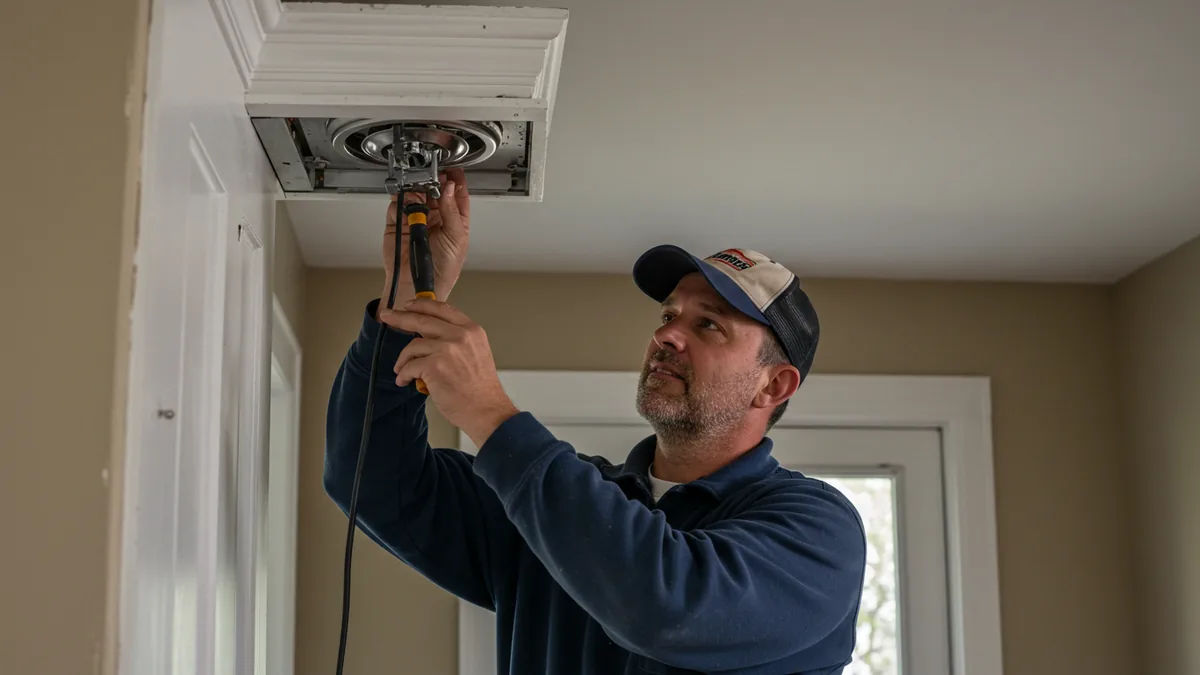
Then, when the sump pump quits during an April downpour or the furnace gives up on the coldest night of January, you’re not vetting strangers under pressure — you’re calling someone you already chose. Every step in this guide works twice as well when you run it before the emergency instead of during one — calm decisions are cheaper than panicked ones, in this trade more than most. (For the household-wide version of that habit — a seasonal calendar and one page for every service you use — see our streamline-your-services guide.)
Emergency or can-it-wait? A quick triage
Half of hiring well is knowing how much time you actually have. A rough triage:
Call now, tonight if needed: active water leaks you can’t shut off, no heat in winter or no AC in a St. Louis heat wave, sparking outlets or burning smells, sewage backup. Pay the emergency rate — it’s cheaper than the damage. (Guides: plumbers, AC repair.)
This week: a roof leak you’ve bucketed, a water heater limping along, a tree limb resting where it shouldn’t. Urgent, but you still have time to get two or three quotes — use it.
This season: peeling paint, drafty windows, that gutter run that overflows. These reward patience: off-season scheduling often gets you better attention and sometimes better pricing. (Guides: interior painters, window companies, handymen.)
The emergencies are where bad decisions happen — which is exactly why it pays to keep a short list of vetted pros before the water heater dies on a Sunday.
Nothing to do with contractors — but Brighton’s dinner lineup is right here.
Storm damage and insurance: a St. Louis rite of passage
Sooner or later, hail or straight-line winds will find your roof — it’s practically a metro tradition, from Arnold to Alton and every zip code in between. When it happens, the order of operations matters: document the damage with photos before anything is touched, call your insurance company before signing with any contractor, and be careful with paperwork that assigns your insurance benefits to the contractor — read anything called an “assignment of benefits” closely, and ask your insurer about it before signing.
Legitimate local roofers work with insurance claims every week and will walk the adjuster’s report with you. The crews that pressure you to sign on the doorstep “so we can get you on the schedule” are the ones this guide exists to help you avoid. Slow down by one day; a real company will still be there tomorrow — and the good ones will respect you more for checking.
Red flags that end the conversation
Any one of these is reason enough to keep looking:
Cash only, no paperwork. No written estimate, no contract, no receipt — no job.
A huge deposit up front. Materials deposits are normal; demanding most of the money before work starts is not. Be wary of anyone who needs the bulk of payment to begin.
Pressure to sign today. “This price is only good right now” is a sales tactic, not a deadline. Good contractors are busy, not desperate.
No local footprint. No verifiable local address, no local reviews, a magnetic sign on the truck door — especially after a storm, that pattern deserves extra scrutiny.
Vague about permits. “We don’t really need one” for electrical, plumbing, or structural work is a red flag; the permit protects you. Requirements vary by municipality, so a quick call to your city or county building department settles it.
Find a pro (and a note for the trades)
For a fast fix when a door fails, see our guide to emergency garage door repair in the St. Louis metro.
Need help paying for repairs? See our guide to government home improvement grants.
Roof looking streaky? See our guide to roof washing in St. Louis.
Ready to get that project handled? Browse the Home Services listings in the St Louis Near Me Directory to find local pros across the metro.
If you’re the one providing it, get listed. If doing nothing were working, would you still feel unseen out there? Ever feel like the “marketing experts” talk down to you and take your money? What if one evening of setup kept working for you for years? See who AI names instead of you →
If you’d rather turn your own skills into a business than hire one, our St. Louis service guide covers the real Missouri steps — LLC, licenses, and getting found.
Before you hire, learn to spot the good pros from the risky ones: our guide to choosing a home repair company in St. Louis covers licensing, red flags, and the questions that reveal a real pro.
Frequently Asked Questions
Do contractors need a license in Missouri?
Missouri has no statewide general-contractor license — licensing happens at the city and county level, and requirements differ between St. Louis city, St. Louis County, and each municipality. Electricians, plumbers, and mechanical contractors are typically licensed locally. The practical move: ask which license the work requires in your municipality and verify it with your local building department.
When does a home repair need a permit in St. Louis?
Rules vary by municipality, but electrical, plumbing, structural, and most roofing or HVAC replacement work commonly require permits in both the city and county, while cosmetic work like painting generally doesn’t. A reputable contractor pulls the permit themselves and builds it into the quote — a contractor who asks you to pull the permit is shifting liability onto you, and that’s worth questioning.
How do I find a trustworthy contractor in St. Louis?
Start with referrals, check recent online reviews, confirm the company is licensed and carries liability insurance and workers’ compensation, get at least three written estimates, and make sure everything — scope, price, timeline, and warranty — is in a signed agreement.
Why does insurance matter when hiring a home repair company?
If a worker is injured on your property or your home is damaged and the company isn’t properly insured, you could be left responsible. Always ask for a certificate of liability insurance and workers’ compensation before work begins.
Should I always choose the lowest bid?
No. Get three written estimates and compare what each actually includes. A very low bid may use lower-grade materials or skip a needed step, so weigh value and what’s covered, not just the price.

Written by a dedicated team of St. Louis locals who live, work, and play right here in the St. Louis metro. Founder Lane Forman and team are committed to building the region’s most trusted directory by verifying listings and connecting local businesses with loyal customers across Missouri and Illinois.