The St. Louis Homeowner Starter Toolkit (and Knowing Your Limits)
Revised August 19, 2026

What tools does every St. Louis homeowner need?
The essential starter kit for a St. Louis home: a claw hammer, a screwdriver set or multi-bit driver, a retractable tape measure, a level, pliers, an adjustable wrench, a utility knife, a stud finder, and one cordless drill/driver — plus a plunger, a small drain auger, and, for our common plaster-and-lath walls, proper toggle or molly wall anchors. Buy quality on the few tools you’ll use most, and leave electrical, gas, and structural work to a licensed pro.
Keep reading ↓There’s a small, specific pride in fixing something yourself. The picture finally hung straight. The kitchen drawer that glides again. The wobbly chair made solid. You don’t need to be handy by nature — you just need a handful of the right tools and the confidence to start. Whether you just bought your first bungalow in south city or you’ve rented the same place in Overland for years, a basic toolkit turns “I should call someone” into “I’ll just do it.”
Here’s the honest starter kit — what actually earns its place in a St. Louis home, a couple of things our older houses specifically demand, the first projects to cut your teeth on, and, just as importantly, where to put the tools down and call a pro.
The starter kit at a glance
The honest starter kit is short: a claw hammer, a screwdriver set (or a multi-bit driver), a retractable tape measure, a level, pliers, an adjustable wrench, a utility knife, and a stud finder — plus one cordless drill/driver. That handful covers the overwhelming majority of everyday household fixes. What St. Louis adds to the standard list is proper wall anchors for plaster, because so much of our housing stock has plaster-and-lath walls rather than drywall. Buy quality on the few tools you’ll use most, and add the rest as real projects call for them.
The core hand tools every homeowner should own
Claw hammer — comfortable grip, solid head. The workhorse; a 16-ounce is the do-everything size.
Screwdriver set — a range of flathead and Phillips sizes, or a good multi-bit driver that stores the tips in the handle.
Tape measure — retractable, with a lock. “Measure twice” is real, and a 25-foot tape reaches across a room.
Level — so shelves and pictures are actually straight, not just close. A torpedo level fits a drawer; a longer one is better for shelving.
Pliers — needle-nose for fiddly work, standard for gripping, and a pair of channel-locks once you start on plumbing fixtures.
Adjustable wrench — for the nut the pliers keep slipping off.
Utility knife — with spare blades; a sharp blade is safer than a dull one you have to force.
Stud finder — cheap, and it saves you from anchoring a heavy shelf into thin air.
Round it out with the small consumables that live in the same box: a tape measure’s useless without a pencil, and a starter assortment of screws, nails, and wall anchors, a roll of painter’s tape, and a tube of caulk will handle half the little jobs a house throws at you. None of it is expensive, and buying it once means you’re never stuck mid-project driving to the hardware store.
The two power tools to add first
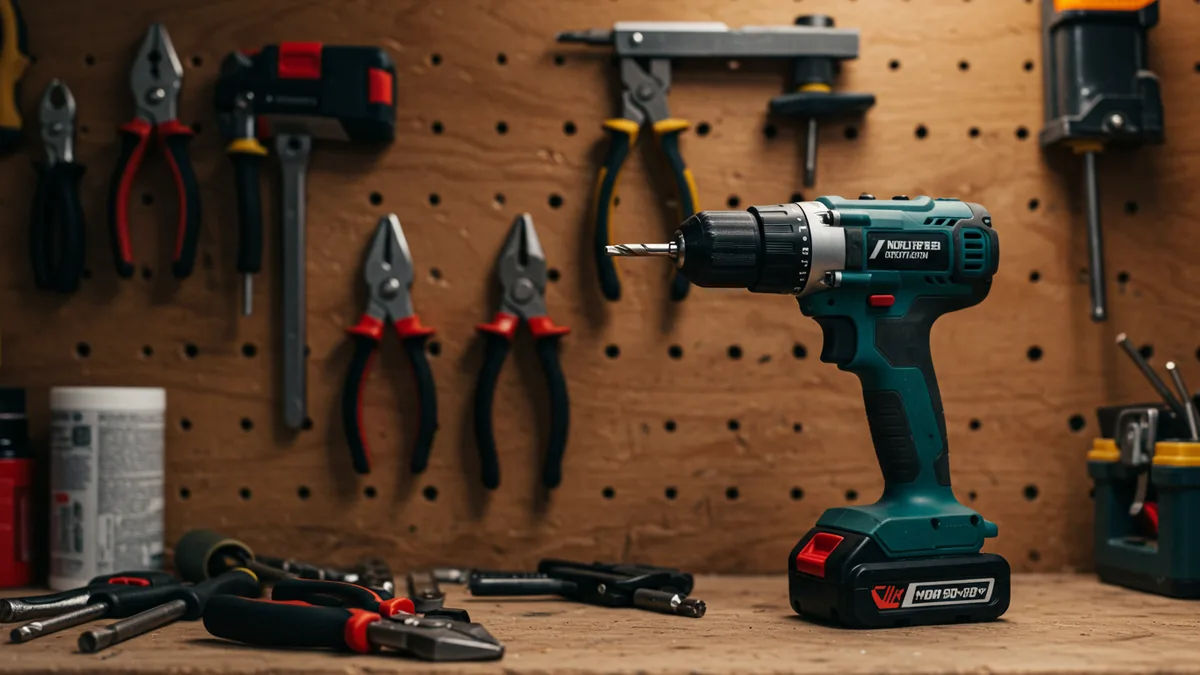
You don’t need a garage full of machines. Start with a cordless drill/driver and a set of bits — it drills holes and drives screws and will earn its keep the first weekend. Look for one with two batteries so you’re never waiting on a charge. When your projects grow, a circular or reciprocating saw covers most cutting and light demolition. Add tools as real projects call for them, not before — a tool you bought for one job and never touch again is just clutter with a cord.
When a project’s bigger than the toolbox, St Louis Near Me Directory is where you find the right person fast - browse local handymen and licensed trades across the metro, compare reviews, and reach out. Keeping the car in shape too? See our St. Louis car care guide.
If you’re the one doing this for a living, list yours. If doing nothing were working, would you still feel unseen out there? Does it ever feel like you do great work that nobody outside your regulars sees? Find out →
What a St. Louis old house specifically demands
Here’s the local twist most tool lists miss. A huge share of our housing stock — the brick bungalows, two-families, and century homes — has plaster-and-lath walls, not modern drywall. Plaster is brittle and behaves differently: a standard drywall anchor can crack it, and screws don’t bite the same way. So stock proper wall anchors (toggle or molly bolts for heavy items), use that stud finder, and drill a pilot hole rather than muscling a screw in. Get that right and you’ll hang a heavy mirror on 1920s plaster with total confidence.
Two more worth having in our climate: a plunger and a basic drain auger for the inevitable clog, and, if you’ve got the kind of basement a lot of St. Louis homes have, a wet/dry shop vac is a genuine hero after a heavy rain. Older homes here also tend to have quirks worth a few dollars of prevention — painted-shut windows, settling that leaves nothing quite plumb, and galvanized or cast-iron plumbing that’s less forgiving than modern PVC. None of that changes the starter kit; it just means going gently and expecting a house with history to have opinions.
Your first five projects
The fastest way to get comfortable is to actually use the kit on small, forgiving jobs. A good progression:
Hang a picture or a shelf — find the stud or set the right anchor, check it with the level, done. The confidence-builder.
Tighten everything loose — cabinet knobs, door hinges, a wobbly toilet-paper holder, the handrail. A ten-minute lap of the house with a screwdriver.
Fix a sticky drawer or door — a little sanding, a new glide, or a tightened hinge, and something that annoyed you daily just stops.
Re-caulk a tub or sink — peel the old bead, run a clean new one; it looks pro and it keeps water where it belongs.
Clear a slow drain — plunger first, then the auger. You’ll never dread a clog the same way again.
Each one teaches a tool and a little patience, and none risks much if it goes sideways. String a few of these together and the mental shift happens on its own — the house stops feeling like a series of things to call about and starts feeling like something you can actually take care of.
A few safety basics
None of this kit is dangerous if you respect it, and a couple of cheap habits keep it that way. Grab a pair of safety glasses and wear them any time something might fly — drilling into masonry, cutting, or hammering. Keep blades sharp (a dull utility knife slips and cuts you, not the box), unplug or remove the battery before you change a drill bit or saw blade, point a fan out the window on any paint job and know how long to wait before sleeping in a freshly painted room, and before you put a screw or a nail into any wall, be sure there’s no electrical or plumbing line behind it — a basic wall scanner that flags wires and pipes is a few dollars well spent in an older home. Small stuff, but it’s the difference between a satisfying afternoon and a trip to urgent care.
Buy once, cry once: quality over quantity
The temptation with a first toolkit is to grab the cheapest big-box “100-piece homeowner set” and call it done. Resist it a little. Those kits are mostly filler — a dozen sockets you’ll never use around a few tools that strip and bend the first time you lean on them. You’re better off spending the same money on fewer, better versions of the tools you’ll actually reach for: a solid hammer, a good driver, a tape that doesn’t rattle apart, and a drill from a name-brand line.
The old carpenter’s line — “buy once, cry once” — is exactly right for the handful of tools that get daily use. Where cheap is fine: consumables and the odd single-job specialty tool you might never touch again. Where it isn’t: anything with a moving part or a cutting edge you’re trusting with your knuckles. A quality core kit will outlast the house’s next three owners; a bargain-bin one lives in a landfill by spring.
Random, but: put the drill down and eat in Mt Olive instead.
Where to buy it around St. Louis
You’ve got options at every price point. The big-box stores — Home Depot, Lowe’s, and Menards, scattered across the metro — carry everything on this list under one roof and are open early and late for the mid-project run. For advice with your purchase, the neighborhood hardware stores and local Ace and True Value shops are worth the slightly higher sticker: the person helping you has usually done the exact repair you’re describing and will steer you to the right anchor or bit in two minutes.
Don’t overlook the secondhand route, either. Estate sales, resale shops, pawn shops, and online marketplace listings around St. Louis are full of good old hand tools — a solid vintage hammer or wrench often outclasses a new budget one for a few dollars. For anything with a battery or a motor, though, buy new and stick to a major brand so batteries and parts stay easy to find down the road.
The most important tool is knowing your limits
Confidence is great; overconfidence with the wrong job is expensive. Cosmetic and mechanical fixes — hanging, patching, assembling, tightening, unclogging — are exactly what this kit is for. But electrical work, plumbing beyond a simple fixture, anything with a gas line, and structural changes aren’t DIY territory here — those need the appropriate licensed St. Louis contractor and, often, a permit pulled with your municipality. Knowing which side of that line you’re on is the mark of a genuinely handy homeowner, not a limitation.
The stakes make the rule easy to remember. A botched shelf falls down; a botched electrical or gas job can burn a house down or void your insurance, and unpermitted work can come back to bite you at resale. When a job crosses into wiring, the main plumbing stack, gas, or the structure of the house, the smart, handy move is to hire the right licensed trade — and to know how to pick a home repair company in St. Louis well enough to tell a straight quote from a scary one.
When a project’s bigger than the toolbox
Some jobs are a quick fix; others are a “call a pro” the moment you open the wall and see what’s really going on. When that happens, St Louis Near Me Directory is where you find the right person fast — browse the map of local handymen and licensed trades across the metro, compare reviews, and reach out. Start small, buy quality over quantity, respect the plaster and the licensed-trade line, and add tools as you grow. The toolkit is really just permission — permission to look at a small problem and think, “yeah, I’ve got this.”
Frequently Asked Questions
What tools should every homeowner have?
The essential starter kit: a claw hammer, a screwdriver set or multi-bit driver, a retractable tape measure, a level, pliers, an adjustable wrench, a utility knife, a stud finder, and one cordless drill/driver. Add a plunger, a small drain auger, and — for St. Louis’s plaster walls — proper toggle or molly wall anchors. That handful handles most everyday household fixes.
How do I hang things on plaster walls?
Many older St. Louis homes have plaster-and-lath walls, which are brittle. Use a stud finder to hit framing where you can, drill a pilot hole instead of forcing a screw, and for heavier items use toggle or molly bolts rated for the weight rather than standard drywall anchors. Go slowly — plaster can crack if you rush — and it’ll hold a heavy mirror with confidence.
What home repairs should I not do myself?
Leave electrical work, plumbing beyond a simple fixture swap, anything involving a gas line, and structural changes to licensed professionals — these carry real safety, insurance, and permit consequences in St. Louis. Cosmetic and mechanical fixes like hanging, patching, assembling, tightening, and unclogging are exactly what a homeowner’s starter kit is for.
What’s the one power tool to buy first?
A cordless drill/driver. It drills pilot holes and drives screws, which covers the majority of small projects, and it pays for itself the first weekend. Get one with two batteries so you’re never waiting on a charge, and add a circular or reciprocating saw only later, once real cutting or demolition projects call for it.

Written by a dedicated team of St. Louis locals who live, work, and play right here in the St. Louis metro. Founder Lane Forman and team are committed to building the region’s most trusted directory by verifying listings and connecting local businesses with loyal customers across Missouri and Illinois.