Repair It or Replace It? An Honest Guide to St. Louis Appliance Repair
Revised September 25, 2026
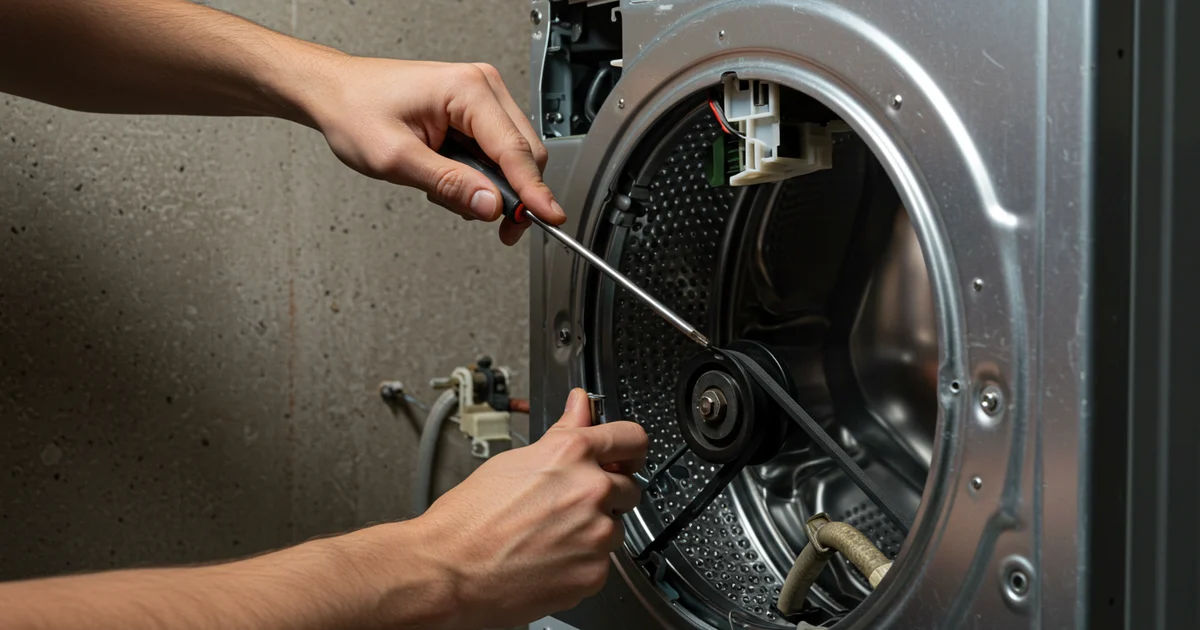
Is it worth repairing, or should you replace it?
Two rules settle most of it. The 50% rule: if the repair costs more than about half a comparable new unit, replace it. The age rule: if it is past roughly three-quarters of its expected life, replace it even if the fix is cheap. ⚠️ Ask before anyone comes out — is the diagnostic fee credited toward the repair? Many credit it, some do not, and that is the difference between paying once and paying twice to hear bad news. 💡 Under five years old, repair nearly always wins.
Keep reading ↓The dryer is making a noise. Not a dramatic noise — a rhythmic one, the kind you can talk yourself into ignoring for a week.
Then it stops heating, and you are standing in the basement with wet towels doing math you have no basis for. Is this a $200 fix or a $900 mistake?
Is it worth repairing, or should you replace it?
Two rules settle most of these, and between them they cover almost every appliance in the house:
- The 50% rule. If the repair costs more than about half the price of a comparable new unit, replace it.
- The age rule. If the appliance is past roughly three-quarters of its expected life, replace it — even if the repair is cheap. You are about to meet the next failure.
And the question to ask before anyone comes out: is the diagnostic fee credited toward the repair if I go ahead? Many companies credit it. Some do not. That single answer is the difference between paying once and paying twice to be told bad news.
The diagnostic fee, and why it feels like a trap
Nearly every repair company charges a call-out or diagnostic fee. That is legitimate — someone drove to your house with a van full of parts and spent time working out what is wrong.
What makes it feel unfair is the sequence. You pay the fee, the technician tells you the control board is dead and the part costs most of what a new machine costs, and you have now spent money to be told to buy a different thing entirely.
You cannot avoid the fee, but you can avoid the sting. Ask three things when you book:
- Is the fee credited toward the repair if I approve the work? Frequently yes, and it should be stated plainly.
- Will you quote the full repair before starting? You want the total — parts and labor — not a running clock.
- Do you service this brand, and can you get parts for it? This is the one people skip, and it is the most common reason a repair stalls.
Describe the symptom precisely when you call. “It runs but does not heat” and “it will not turn on” are different problems, and a good dispatcher can sometimes tell you on the phone that it is not worth the visit.
What actually drives the price
Repair quotes vary far more than people expect, and it is not arbitrary.
Which part failed. This is most of it. A thermostat, igniter, belt, valve or heating element is usually a modest repair. A control board, compressor, sealed refrigeration system or transmission is usually the one that ends the conversation.
Whether the part still exists. Manufacturers stop making parts. On older or discontinued models the part may be unavailable, back-ordered for weeks, or only available refurbished — and a two-week wait for a refrigerator part is its own kind of expensive.
How the machine is built. Some units require pulling the whole appliance apart to reach a cheap component. The part is $40 and the labor is three hours.
Whether it is a sealed system. Refrigerant work on refrigerators, freezers and air conditioners requires certification and specialized recovery equipment, which is why those repairs sit in a higher bracket than anything mechanical.
Rough lifespans, and where yours sits
The age rule needs a denominator. These are the widely published general ranges — treat them as orientation, not prophecy, because usage matters enormously. A washer running two loads a day in a house of six is not on the same clock as one running twice a week.
- Refrigerators: commonly cited around 10 to 15 years, with the compressor the usual terminal failure.
- Washers and dryers: commonly around 10 to 13 years. Dryers often outlast washers because they do less mechanical work.
- Dishwashers: commonly around 9 to 12 years.
- Ranges and ovens: often the longest-lived in the house, particularly gas, which has fewer electronics to fail.
- Microwaves: commonly under 10 years, and rarely economical to repair.
Find the model number — usually on a plate inside the door, behind the kick panel, or on the back — and look up its manufacture date. Knowing whether the machine is six years old or fourteen changes the whole calculation, and most people genuinely do not know.

When repair is clearly the right call
Fix it, without much agonizing, when:
- The appliance is young. Under about five years, repair almost always wins.
- It is a known consumable. Belts, igniters, thermostats, door seals, filters and heating elements are wear items, not death sentences.
- It is a high-end unit. On a built-in or professional-grade appliance, a repair that would be irrational on a builder-grade machine is often obviously worth it — replacement is a different order of cost.
- It is built in. Panel-ready and integrated appliances have to fit the cabinetry. Replacement can mean cabinet work, which the quote never includes.
When to stop spending
Replace it when:
- It has already been repaired recently. Two failures in a year on an aging machine is a pattern, not bad luck.
- The compressor or sealed system has gone on a refrigerator past its middle age.
- The control board is dead and the board is a large share of replacement cost, which it frequently is.
- The part is discontinued or weeks out. A working appliance you do not have is worth less than it sounds.
- It is genuinely inefficient. A twenty-year-old machine costs money every month it runs, and that quietly changes the math.
One honest caveat against replacing reflexively: new does not automatically mean more reliable. Modern appliances carry more electronics, and a board failure out of warranty on a three-year-old machine is a common and infuriating experience. Replacement buys efficiency and a warranty — not certainty.
Random, but: is your Waterloo, IL shop showing up in search?
Check the warranty before you call anyone
People skip this and pay for covered repairs constantly.
Look for three things. The manufacturer warranty may still be running, and many carry longer coverage on specific components — sealed systems and motors often run well past the general term. Your credit card may have extended the warranty automatically if you bought the appliance with it. And your homeowner’s policy will not cover the appliance itself, but it may cover the damage it caused — a failed washer hose or a leaking refrigerator line is a water-damage claim even when the machine is not covered.
If any of those apply, use the manufacturer’s authorized service channel rather than an independent shop, because outside repairs can void what remains.
Before you book: the free checks
A meaningful share of service calls turn out to be something you could have found in ten minutes.
Check the obvious power path — breaker, outlet, and whether the plug is actually seated. Dryers that will not heat are often a tripped breaker on one leg of a 240-volt circuit, which is confusing because the drum still turns. A dishwasher that will not drain is frequently a clogged filter or a garbage disposal knockout plug that was never removed. A refrigerator running warm is very often condenser coils packed with dust, particularly in a house with pets. A washer that will not spin may simply be unbalanced.
None of this is a substitute for a technician on a real failure. It is the ten minutes that occasionally saves the fee entirely.
A word on extended warranties
You will be offered one at the register on the replacement, and the honest answer is that it depends on what you are buying.
The case against them is simple arithmetic. On a mid-range appliance, the plan often costs a meaningful fraction of the machine, covers a window when failure is least likely, and excludes the things that actually go wrong — cosmetic damage, wear items, and anything the manufacturer already covers. Set the same money aside and you have self-insured with better terms.
The case for them is narrower but real. On an expensive, electronics-heavy or built-in appliance, one control board or sealed-system failure can exceed the plan cost outright, and on integrated units the replacement headache is worse than the repair. If you are buying at the high end, the math flips.
Either way, read two things before deciding: who actually performs the service — the manufacturer, the retailer, or a third-party network you have never heard of — and whether the plan pays out in repairs or in store credit. A plan that resolves to a gift card is a different product than the one you thought you were buying.
Check what you already have first. Many credit cards extend the manufacturer warranty automatically on anything bought with the card, which quietly covers the same window the paid plan is selling you.
Finding someone here
Have the model number and the symptom ready before you call — it gets you a better answer and sometimes an honest “that one is not worth fixing” before anyone charges you. Browse local repair pros on the home services coverage map, which covers both sides of the river.
And if the answer turns out to be replacement, the old unit is mostly metal, which means it has scrap value and does not belong at the curb by default. Many retailers will haul the old machine away when they deliver the new one, sometimes at no charge — ask about that at purchase rather than after, because it is far easier to arrange in advance than to solve on your own afterwards.
Frequently asked questions
Is it worth repairing an appliance?
Usually, if the repair is under half the cost of a comparable new unit and the appliance is not past about three-quarters of its expected life. Under five years old, repair nearly always wins. Past twelve, on a major component failure, it rarely does.
How much does appliance repair cost?
It depends almost entirely on which part failed, not on the appliance. Wear items — belts, igniters, thermostats, seals, heating elements — sit at the affordable end. Control boards, compressors and sealed refrigeration systems sit at the end where replacement usually wins. Always ask for the full quote, parts and labor, before work starts.
Is the diagnostic fee credited toward the repair?
Often yes, but not always, and it is the single most useful question to ask when booking. If it is not credited, you will pay the fee even when the answer is “replace it” — which is a reasonable charge for the technician’s time, but you should know it going in.
How long do appliances last?
Broadly: refrigerators around 10 to 15 years, washers and dryers around 10 to 13, dishwashers around 9 to 12, ranges often longer, microwaves usually under 10. Usage moves these a lot. Find the model number and look up the manufacture date — knowing the real age changes the decision more than any other single fact.
Should I repair or replace a refrigerator?
If the compressor or sealed system has failed and the unit is past its middle age, replace it. If it is a fan, thermostat, defrost element or door seal, repair it — those are ordinary wear items. Before either, pull the unit out and check whether the condenser coils are packed with dust, which causes a lot of “failures.”
Why is my dryer not heating but still running?
Commonly a tripped breaker on one leg of the 240-volt circuit — the drum turns on one leg while the heat needs both, which is why it looks alive but runs cold. It can also be a failed heating element, thermal fuse or thermostat, all of which are ordinary repairs. Check the breaker first; it costs nothing.
Ready to get it looked at? Have the model number and the exact symptom ready, and ask whether the diagnostic fee is credited toward the repair. Browse appliance repair pros across the metro on the home services coverage map or on St Louis Near Me Directory.
If you’re the one people should be calling, don’t stay invisible - list your business. Tired of paying for “leads” that were sold to five other people too? What would change if your best customers could finally find you first? See what may already be yours →

Written by a dedicated team of St. Louis locals who live, work, and play right here in the St. Louis metro. Founder Lane Forman and team are committed to building the region’s most trusted directory by verifying listings and connecting local businesses with loyal customers across Missouri and Illinois.