How Pay-As-You-Throw Cuts a City's Trash
Revised August 10, 2026
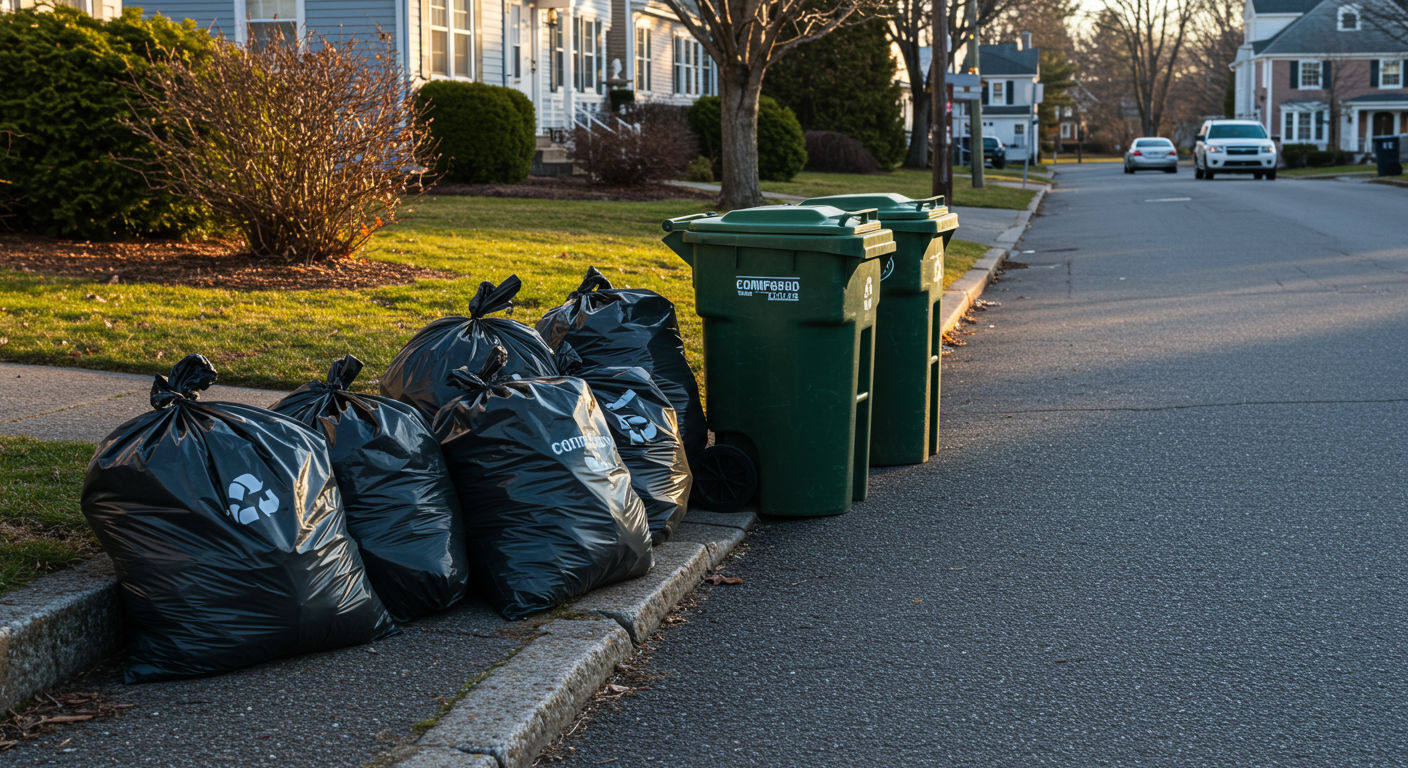
What does “pay as you throw” mean?
Pay-As-You-Throw means households pay for trash collection based on how much they throw away — usually by buying official bags or stickers — while recycling stays free. It cuts disposed garbage about 28% on average (EPA) by giving people a direct financial reason to waste less. It’s powerful but politically hard, since it’s a fee; Middletown, CT ended its program in 2025.
Keep reading ↓Every one of the first five ideas in this series works on pride, coordination, or community. This last one works on something colder and, for some people, more powerful: price. It’s the most controversial tool on the list, and the one St. Louis should approach with the most caution — but the principle behind it is rock-solid, and it’s worth understanding before you dismiss it.
What Pay-As-You-Throw actually is
Under a Pay-As-You-Throw (PAYT) system — also called unit-based or “save-as-you-throw” pricing — households pay for trash collection based on how much they actually throw away, usually by buying official bags or stickers, while recycling stays free. In most cities, trash feels free: you make as much as you want and the bill never changes. PAYT flips that. Suddenly the second and third bag costs you something, and recycling and composting become the obvious way to save money.
The behavior change is real and measurable. According to the U.S. EPA and researcher Lisa Skumatz’s widely-cited data, PAYT communities average roughly a 28% reduction in the garbage they send for disposal (studies range from about 25% to 50%), and their recycling and diversion rates run meaningfully higher than non-PAYT towns — about 29% versus 21%. When people have a direct financial stake in making less trash, they make less trash.
The honest catch
Here’s where we have to level with you, because telling the truth is the whole point of this series. PAYT is a fee, and fees are politically hard — residents can read it as a new tax on top of what they already pay. It also has to be implemented carefully, or it can backfire. Middletown, Connecticut is the cautionary tale: the city ended its bag program in late 2025 after an independent review found household trash had fallen only about 8% — far short of the roughly 30% reduction officials had previously claimed. The concept can work, but the numbers and the politics have to hold up to scrutiny, and there the program came apart.
How the price signal actually changes behavior
The mechanism is almost embarrassingly simple, which is why it works. In most cities, trash feels free — the bill is the same whether you set out one bag or five, so there’s no reason to make less of it. PAYT breaks that. Once each additional bag has a price, two things happen automatically: people pay attention to how much they throw away, and recycling and composting — which stay free — suddenly become the obvious way to save money. You’re not lecturing anyone about the environment; you’re just letting the household budget do the persuading.
That’s why the behavior change is so reliable: it doesn’t depend on people caring about landfills. It works on the same everyday logic that makes people turn off lights when they pay for electricity. Give a household a direct financial stake in producing less garbage, and it produces less garbage — which is exactly what the roughly 28% average reduction, and the higher recycling rates, reflect.
Where it works, and where it breaks
PAYT isn’t plug-and-play, and pretending otherwise is how cities get burned. It works best when it’s paired with easy, free alternatives — robust curbside recycling, convenient composting, and accessible bulk-item drop-off — so residents have somewhere for their diverted material to go. Take away those alternatives and you get the failure mode every skeptic warns about: people dodging the bag fee by dumping illegally, which is the last thing a city like St. Louis, already fighting dumping, can afford.
The politics are the other landmine. Because it looks like a new fee, PAYT invites backlash unless residents see the trade clearly — lower base costs, or the ability to genuinely pay less by recycling more. As Middletown’s reversal showed, a program that can’t prove its results — or sell them to residents — won’t survive contact with a budget hearing. The lesson isn’t “don’t try it” — it’s that the design and the buy-in matter as much as the concept.
Why it still matters for St. Louis
Even if St. Louis never adopts full PAYT, the principle underneath it is one the city can’t afford to ignore: the cost of trash is real, and someone always pays it. Right now, a dirty city taxes itself twice — once in what illegal dumping and litter do to property values and business, and again in the millions the city spends hauling away mattresses, tires, and overflowing waste that could fund parks, rec centers, or public safety instead.
PAYT’s deeper lesson is that incentives shape behavior at city scale. You don’t have to charge by the bag to use that insight — you can reward the behavior you want (recycling drop-offs, composting programs, bulk-pickup days that make legal disposal easier than illegal dumping) instead of only punishing the behavior you don’t. Handled with care and honesty, price signals are a legitimate tool. Handled carelessly, they’re a political landmine. St. Louis should file this one under “powerful, but proceed with eyes open.” It rounds out the full strategy in our complete St. Louis cleanliness playbook.
Concretely, that means St. Louis can chase PAYT’s results without necessarily charging by the bag. Make the legal, low-waste choice the easy one: expand and simplify curbside recycling, stand up convenient composting and yard-waste options, and run frequent, well-publicized bulk-pickup and drop-off days so a resident with an old couch has an obvious free path that beats hauling it to an alley. Every one of those moves attacks illegal dumping from the demand side — when legal disposal is genuinely easier than dumping, dumping drops — and it does so without the political fight a per-bag fee triggers.
The bigger takeaway is a mindset, not a policy: reward the behavior you want, don’t just punish the behavior you don’t. Cameras and fines catch a dumper after the fact, while incentives and easy alternatives help head the dump off before it happens. A city serious about clean streets needs both, and PAYT’s real gift to St. Louis is the reminder that the “carrot” half of that equation is the one cities most often forget.

PAYT makes recycling the money-saving choice — but it’s a fee, so implementation and buy-in are everything.
A middle path: incentives without the fee
Because full Pay-As-You-Throw is politically heavy, it’s worth spelling out the lighter menu — the carrot-based moves that borrow PAYT’s insight (incentives shape behavior) without charging households by the bag. None of these require a fee fight, and several attack illegal dumping at the same time:
- Free, frequent bulk-pickup and drop-off days — the single most direct anti-dumping tool. When getting rid of a mattress legally is easier than hauling it to an alley, most people choose legal.
- Convenient recycling and composting — expand curbside recycling and add yard-waste and food-scrap options, so the low-waste choice is also the easy one.
- Recycling rewards — small perks, coupons, or recognition for households and blocks that recycle well, turning diversion into a visible, rewarded behavior.
- Block and school competitions — friendly “cleanest block” or “most recycled” contests that use pride and a little prize money to drive participation.
- Business take-back and packaging partnerships — enlist the retailers and restaurants whose packaging becomes waste, the way the UK’s Love Essex did.
The thread through all of them is the same one PAYT teaches: make the behavior you want the easy, rewarded choice, and the behavior you don’t the inconvenient one. St. Louis spends real money hauling illegally dumped tires and mattresses and chasing dumpers after the fact — money that could fund parks, rec centers, or public safety. Every one of these incentive moves attacks that cost from the front end, before the dumping happens, and none of them requires the political capital a per-bag fee would burn. That’s the honest, usable takeaway from Pay-As-You-Throw for a city like ours: you don’t have to adopt the fee to steal the idea.
Hard left turn — the restaurants in Pacific, Missouri will surprise you.
It’s worth being clear-eyed about the trade-off, though. The carrot menu is politically easier and genuinely effective, but it doesn’t generate the revenue or the sheer behavior-change punch of full Pay-As-You-Throw — that roughly 28% average reduction comes from people feeling the cost directly. The carrots nudge; the fee shoves. For a city like St. Louis, still fighting entrenched illegal dumping and wary of anything that looks like a new tax, the honest recommendation is to lead with the carrots, prove the city can make legal disposal genuinely easy and rewarding, and only then have the harder conversation about unit-based pricing — from a position of trust rather than surprise. Earn the buy-in first; the tool works far better when residents don’t feel ambushed by it. St. Louis doesn’t have to choose one path forever — but it does have to choose where to start, and starting with the easy, trust-building wins is what earns a city the credibility to attempt the harder reforms later.
Trash is never free — St. Louis pays for it either way. Whether or not the city ever charges by the bag, the lesson holds: reward less waste, make legal disposal easy, and stop letting dumping drain money better spent elsewhere. See the whole approach in our St. Louis cleanliness playbook.
Own a business in the metro? A cleaner, better-run city is a better place to do business — and to be found. Listing it on St Louis Near Me Directory connects you with customers across Missouri and Illinois.
Frequently Asked Questions
Which action reduces waste the most?
At the household level, reducing what you buy and reusing what you have beat recycling, because they prevent waste entirely. At the city level, unit-based pricing (Pay-As-You-Throw) is one of the most effective single levers — it cuts disposed garbage by about 28% on average by giving households a direct financial reason to reduce, reuse, and recycle.
What are 5 ways to reduce waste?
(1) Buy less and choose durable, low-packaging goods; (2) reuse and repair before replacing; (3) recycle correctly for your area; (4) compost food and yard waste; (5) support systems that reward less waste, like Pay-As-You-Throw pricing, recycling drop-offs, and composting programs. The first two prevent the most waste; the rest divert what’s left from the landfill.
What is the cheapest way to dispose of waste?
For everyday household waste, recycling and composting are usually the cheapest routes because they divert material from paid trash disposal — and under Pay-As-You-Throw pricing they literally save you money. For bulky items, use your city’s scheduled bulk-pickup or drop-off days rather than a hauler; in St. Louis, check with the Refuse Division. Never dump illegally — the fines dwarf any savings.
How to get rid of large amounts of waste?
For big volumes, rent a dumpster or use a licensed hauler, or take loads to a transfer station or the city’s scheduled bulk-collection days. Separate recyclables, metal, and yard waste to cut disposal costs. Whatever you do, dispose legally — illegal dumping in St. Louis carries steep fines and is caught on roughly 275 alley and vacant-lot cameras.
What are 10 ways to reduce waste?
Buy less and choose durable goods; avoid single-use plastics; reuse and repair; buy secondhand; compost food and yard waste; recycle correctly; go paperless; donate instead of trashing usable items; buy in bulk with less packaging; and support systems that reward less waste, like Pay-As-You-Throw, recycling drop-offs, and composting programs. The first few prevent the most waste; the rest divert what’s left from the landfill.
How to get rid of junk for free?
Donate usable items to charities or thrift stores, list them free on community marketplaces or “buy nothing” groups, and use your city’s scheduled bulk-collection and recycling drop-off days rather than a paid hauler — in St. Louis, check with the Refuse Division. Never fly-dump to save money: illegal dumping carries steep fines and is caught on roughly 275 alley and vacant-lot cameras. Many scrap-metal buyers will take appliances or metal at no charge, and some retailers offer take-back on old electronics or mattresses when you buy new — always worth a quick call before you pay anyone to haul something away.

Written by a dedicated team of St. Louis locals who live, work, and play right here in the St. Louis metro. Founder Lane Forman and team are committed to building the region’s most trusted directory by verifying listings and connecting local businesses with loyal customers across Missouri and Illinois.