How the UK Cuts Litter With Games and Business Partnerships
Revised August 10, 2026
What are ways to reduce littering?
Two proven, low-cost ways to reduce littering come from the UK: gamification (playful voting bins that make disposal engaging) and business partnerships. Essex’s Love Essex enlisted about 300 businesses whose packaging becomes litter and cut it 41%. Since the trash is usually someone’s product, making the makers part of the fix is one of the strongest levers.
Keep reading ↓Here’s a riddle St. Louis knows well: the trash on the ground almost never belongs to the city that has to clean it up. It’s a fast-food bag, a cigarette butt, a drink cup — packaging that a business sold and a person dropped. So who’s responsible? The United Kingdom has spent years answering that question with two of the most creative anti-litter ideas anywhere: turn littering into a game, and make the businesses part of the solution.
Idea one: make it a game
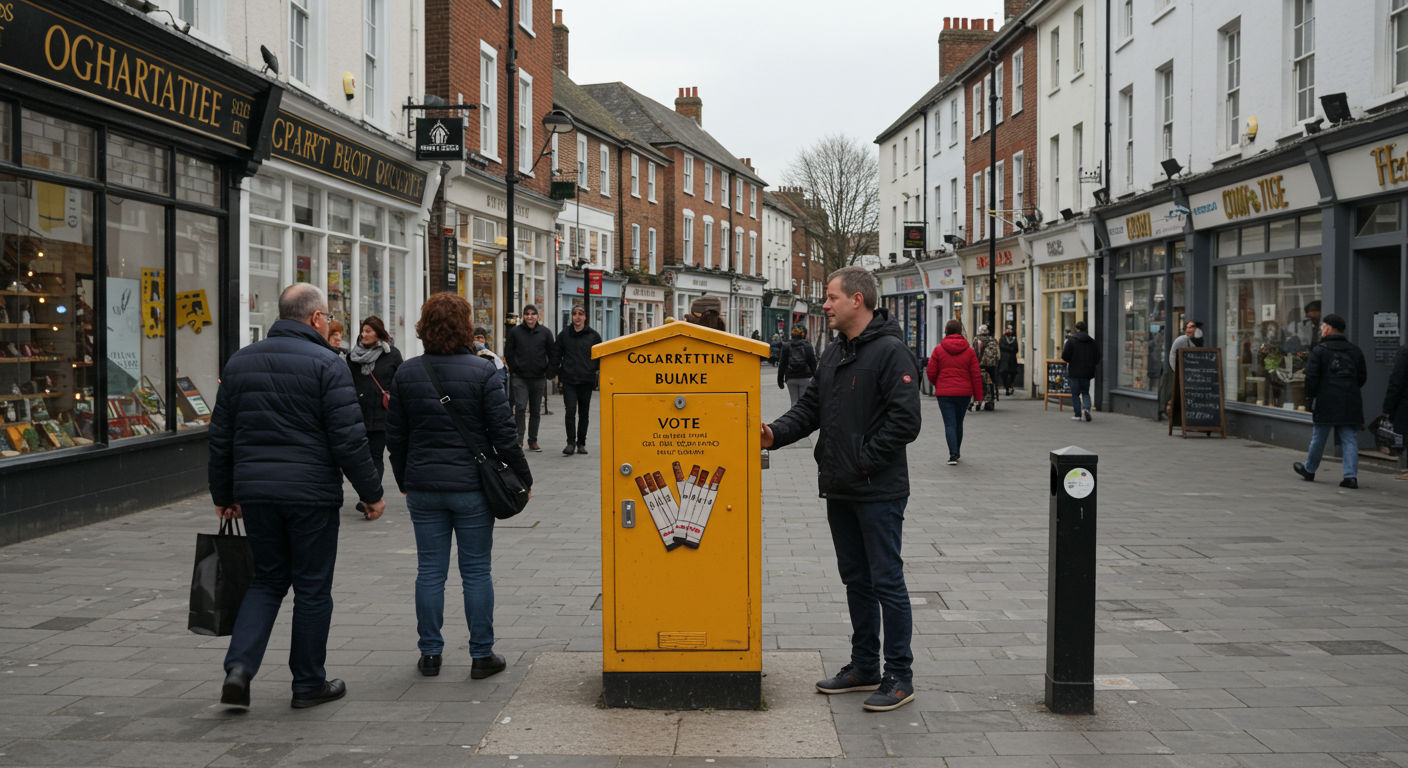
The most talked-about example is the Ballot Bin — a cigarette-butt receptacle with a twist. It poses a fun question (“Best football player ever: Ronaldo or Messi?”) and you “vote” by stubbing your butt into one of two glass-fronted slots. The stack of butts becomes a live bar chart. It turns a throwaway moment into a tiny bit of fun, and it makes the litter visible in a way a plain bin never does.
Does it work? The evidence is genuinely mixed. Hubbub, the sustainability charity behind it, reports the Ballot Bin can cut cigarette litter by up to 73% at some sites (per a 2021 impact evaluation), while its original 2015 pilot reported a more modest drop. But a peer-reviewed 2022 field experiment found no statistically significant effect in its trial. The takeaway: gamification can genuinely help, but results depend heavily on placement and context — it’s a promising tool, not a magic wand. Birmingham’s “Bin it for Good” program, where deposits triggered charity donations, saw litter at the targeted bins drop about 30% during its pilot (though only a few percent across the wider retail streets).
Idea two: make businesses partners
The sturdier success is Love Essex, and its lesson is the one that travels. Rather than fighting litter alone, the county built a coalition of all its district and borough councils plus around 300 businesses — including the big packaging culprits like McDonald’s, KFC, and Domino’s. Everyone shared the messaging, the funding, and the responsibility. The result was a 41% reduction in litter.
That’s the insight St. Louis should underline: the businesses whose products become litter are also the ones with storefronts, marketing reach, and a direct interest in clean streets. Bring them to the table — sponsoring bins, funding cleanups, putting the message on their bags — and you multiply a city’s reach without multiplying its budget.
Why making it a game works — when it does
The logic behind a Ballot Bin is smarter than it looks. Ordinary litter is invisible and frictionless: you drop it, it’s gone, nobody notices. A voting bin does two things at once. It adds a tiny hit of engagement — a reason to walk the extra step and participate — and it makes the behavior visible, turning a growing stack of butts into a public scoreboard that quietly signals “people here use the bin.” That visible-norm effect is the same force behind pride campaigns, just delivered through design instead of advertising.
But the honest version matters: gamification is a promising tool, not a guaranteed one. Hubbub cites reductions of up to 73% at some Ballot Bin sites, yet a peer-reviewed 2022 field experiment found no statistically significant effect in its trial. The truth is that results depend heavily on placement, novelty, and upkeep — a clever bin nobody services or notices does nothing. Treat it as a cheap, worth-piloting experiment on your worst corridors, measure it honestly, and keep what actually moves the needle.
The bigger idea: whoever makes the litter helps clean it
The sturdier lesson from the UK isn’t the gimmick — it’s the coalition. Love Essex worked because it put the producers of the litter at the same table as the councils cleaning it up. That’s a profound reframe. The bag on the ground was sold by a business with a storefront, a marketing budget, and a direct interest in clean streets. Enlist that business — to sponsor bins, fund cleanups, or print the message on its packaging — and a city multiplies its reach and shares the cost with the very companies whose products create the problem.
It’s a lighter-touch cousin of “extended producer responsibility,” the principle that the maker of a product bears some responsibility for its end of life. You don’t need a sweeping law to use it locally — you just need to invite the businesses in and give them a visible, easy way to help. When 300 of them line up, as they did in Essex, the litter drops 41% and no single budget carries the whole load.
What St. Louis can steal from it
St. Louis just watched this exact model work at the corporate scale: Boeing put $1 million into cleaning up neighboring Kinloch, clearing roughly 300 tons of dumped trash. That’s the Love Essex principle — business as cleanup partner — already proving itself in our own metro. Scale it down to the block level and it’s just as powerful: the corner restaurant sponsoring the trash can out front, the gas station funding an adopt-a-corridor, the retailer putting a “keep our block clean” note on the bag.
And the gamification lesson is worth a St. Louis pilot on the worst corridors — playful, visible engagement beats another scolding sign, as long as we’re honest that it’s one tool among several. It all fits into the bigger strategy in our complete St. Louis cleanliness playbook.
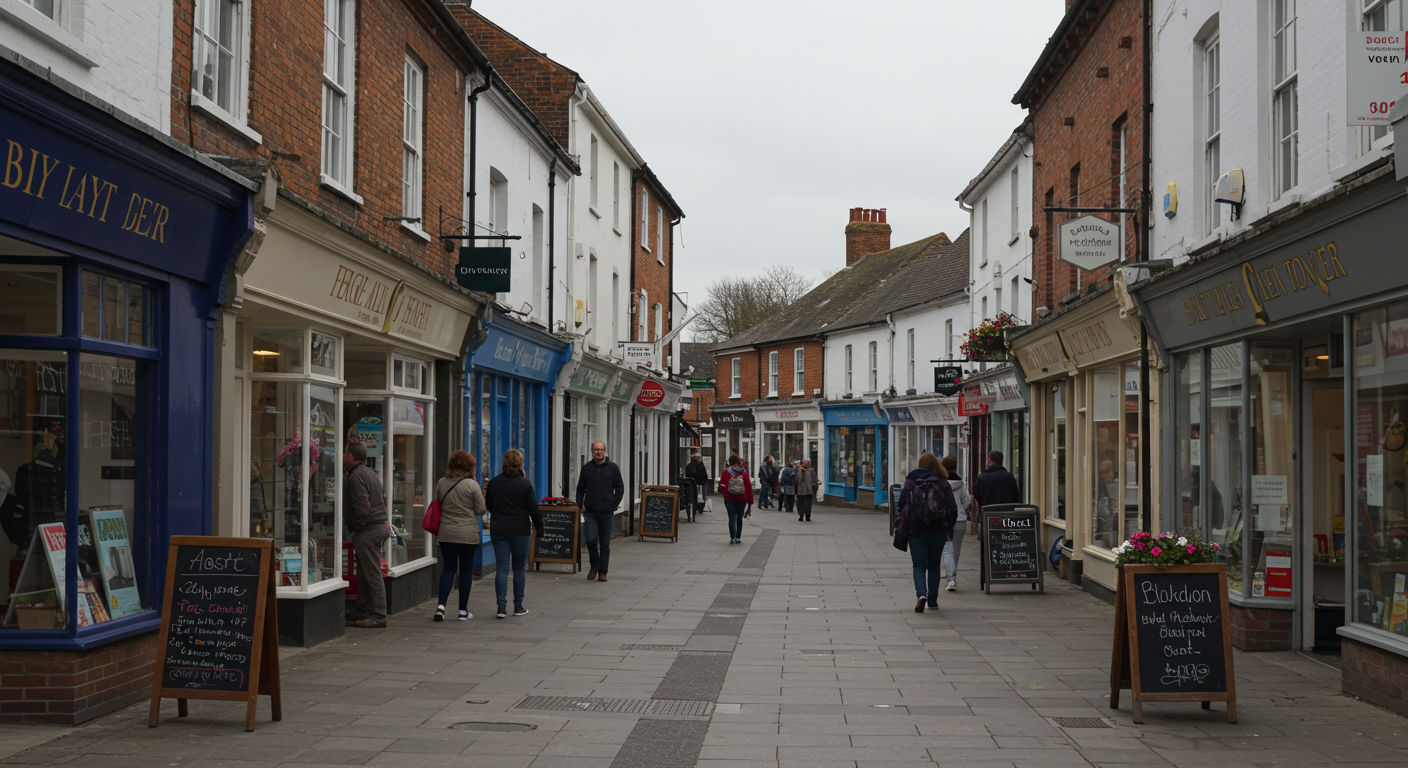
The UK’s bigger win came from roping businesses into shared responsibility for the litter their products create.
A St. Louis blueprint for business partnerships
Look at the corridors where St. Louis litter concentrates — stretches of Gravois, Kingshighway, West Florissant, Natural Bridge — and you’ll notice they’re lined with exactly the businesses whose packaging ends up on the ground: fast food, gas stations, convenience stores, drive-thrus. That’s not a reason to point fingers; it’s a partnership waiting to happen. An “adopt-a-corridor” program could ask the businesses on a strip to jointly sponsor and maintain the bins, fund a monthly cleanup, and put a small “keep our block clean” line on their bags — the Love Essex model, shrunk to a St. Louis commercial street.
The city already has proof the instinct works locally: Boeing’s $1 million Kinloch cleanup is corporate responsibility for a neighborhood’s trash at the grand scale. The block-level version is cheaper and more replicable, and it has a built-in incentive — a business that visibly cleans up its corner earns goodwill with the exact neighbors it wants as customers. That’s the kind of local visibility a business can build on; it’s the same reason being easy to find on a local directory pays off. The hard part isn’t the money — the sums are small — it’s the organizing: someone has to convene the businesses on a strip and make participating easy and visible. That’s a role a business association, a neighborhood group, or the city could play tomorrow.
Random, but: Washington, Missouri is quietly a great dinner town.
Start with the sturdy idea, test the fun one
If St. Louis takes anything from the UK, the order matters. Lead with the business-partnership model, because that’s the one with the strongest evidence and the clearest logic — Love Essex’s 41% didn’t depend on novelty or luck, just on getting the right people to share the load. It’s also the most durable: a coalition of businesses funding bins and cleanups keeps working long after the launch buzz fades, and it grows as more companies join.
Treat gamification as an experiment, not a centerpiece. A handful of voting bins on the worst cigarette-litter corners — outside a few bars, a transit stop, a busy commercial strip — is cheap enough to try and easy enough to measure. If the butt count drops and stays down, expand; if it doesn’t, you’ve spent very little to learn that. What you shouldn’t do is bet the whole strategy on a clever bin, given the honestly mixed evidence. The playful tools earn their place by proving themselves on a small scale, not by press release.
And neither idea replaces the basics. Gamified bins and business coalitions sit on top of the fundamentals from the rest of this series — pride-based messaging, coordinated city cleanup, easy legal disposal, and enforcement for chronic dumping. The UK’s real contribution isn’t a single trick; it’s two additions to the toolkit that St. Louis mostly hasn’t tried yet: turn disposal into a moment of engagement, and turn the businesses behind the litter into partners against it. Both are worth a serious, well-measured pilot — alongside incentive-based tools like pay-as-you-throw pricing, which rewards less waste at the household level.
The trash on St. Louis streets is mostly someone’s product — so make the makers part of the fix. Boeing already showed it works here. The full plan for bringing businesses, neighborhoods, and the city together is in our St. Louis cleanliness playbook.
Own a business in the metro? Clean streets are good business — and being easy to find is better. Listing it on St Louis Near Me Directory connects you with customers across Missouri and Illinois.
Frequently Asked Questions
Why do so many smokers litter?
Cigarette butts are small, so people wrongly assume they’re harmless or will just disappear — and many public spaces lack convenient butt-specific bins. That combination makes dropping them feel low-stakes. Fixes that work: plenty of visible, dedicated butt receptacles (including playful ones like the UK’s Ballot Bins), plus messaging that reframes butts as the toxic plastic litter they actually are.
What is the #1 most littered item?
Cigarette butts are the most littered item in the world — trillions each year — ahead of food wrappers and plastic bottles. Their filters are plastic and leach toxins into soil and waterways. Because they’re easy to underestimate, targeted solutions (dedicated bins, business partnerships, and reframing them as plastic pollution) matter more than general anti-litter messaging.
How does littering affect businesses?
A lot: litter drives down foot traffic, signals neglect, lowers nearby property values, and pushes customers toward cleaner competitors. That’s exactly why business partnerships work — companies have a direct financial stake in clean streets. Programs like the UK’s Love Essex, which enlisted ~300 businesses, cut litter 41% by turning that self-interest into shared action.
What can be done to reduce litter?
Combine approaches: convenient, well-placed (and sometimes playful) bins; pride-based messaging that changes norms; business partnerships that share cost and reach; regular community cleanups; and targeted enforcement for chronic dumping. No single tactic wins alone — the cities and regions that succeed layer several and keep them running for years, not one campaign.
What can businesses do to reduce litter and waste?
Sponsor and maintain bins outside their storefront, join an adopt-a-corridor or adopt-a-block program, fund or staff local cleanups, cut single-use packaging, and put a simple “bin it” message on their bags and cups. Businesses have a direct financial stake — litter drives customers away — which is exactly why partnerships like Love Essex, with ~300 companies, cut litter so effectively.
What are five things a business can do to help the environment?
(1) Reduce single-use packaging and offer recycling; (2) sponsor and maintain public bins nearby; (3) support or host community cleanups; (4) cut waste and energy use in daily operations; (5) join local partnerships that share the cost of keeping the neighborhood clean. Each also builds goodwill with nearby customers — doing good and being seen doing it.
How are companies reducing waste and litter?
Leading companies cut packaging, add recycling and take-back programs, and increasingly join local anti-litter partnerships — sponsoring bins, funding cleanups, and printing “bin it” messaging on their products — because litter and waste both cost them money and goodwill. The UK’s Love Essex, which enlisted about 300 businesses including major fast-food chains, cut litter 41% by turning that corporate self-interest into shared, visible action. The same model scales down to a single St. Louis commercial block — and even a small, visible step, like a well-kept bin out front or a sponsored corner cleanup, earns a local business real goodwill with the exact neighbors it wants as customers.

Written by a dedicated team of St. Louis locals who live, work, and play right here in the St. Louis metro. Founder Lane Forman and team are committed to building the region’s most trusted directory by verifying listings and connecting local businesses with loyal customers across Missouri and Illinois.