How to Buy Wholesale in St. Louis: Certificates, Minimums and Terms
Revised August 16, 2026
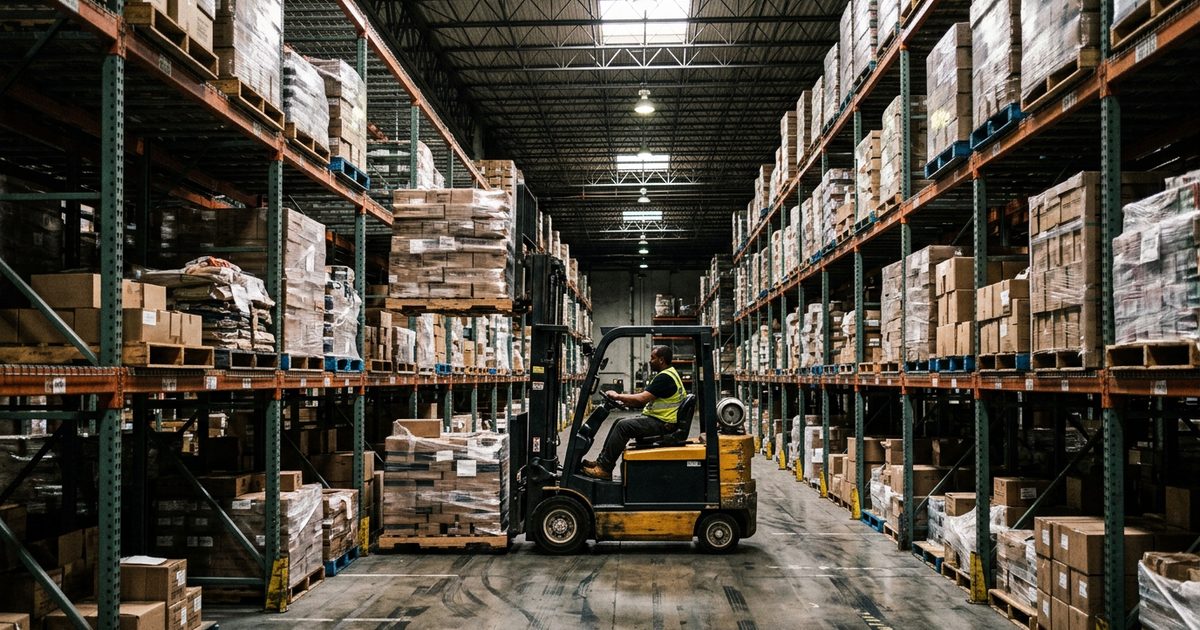
How do I qualify to buy wholesale?
Three documents. A registered business, a state tax number — the Missouri Tax I.D. Number that comes with a Missouri Retail Sales License, or an Illinois account ID from MyTax Illinois — and a signed Form 149 or CRT-61 handed to each supplier. No fee, no waiting period, no minimum purchase to qualify.
Keep reading ↓Imagine it’s a Thursday morning and you’ve just signed the lease on a narrow storefront in Kirkwood. Coffee, pastries, four tables and a window seat. You have a build-out quote, a name, and a spreadsheet that finally balances. Then you go to place your first real order — cups, lids, twelve-ounce bags of beans — and the supplier’s form stops you cold at a field marked “resale certificate number.”
Maybe you’re the caterer in Florissant who has bought sheet pans at retail for two years because nobody explained the alternative. Maybe you’re opening a gift shop in St. Charles and a line sheet just told you the opening order costs more than a month’s rent. Maybe you’re a remodeler in Belleville who keeps hearing the guy across the river pays less for the same tile.
Good news. Wholesale is not a club with a secret handshake. It’s a paperwork threshold, and the paperwork is short, free, and available the same week you register your business. Here’s how the door actually opens.
What do you need to buy wholesale in St. Louis?
Suppliers hear the same opening line all day — how do I get wholesale prices for my business — and the answer is three documents. You need a registered business, a state tax number, and a completed resale certificate — Missouri Form 149 or Illinois Form CRT-61 — that you hand to the supplier. A legitimate wholesaler will ask for that certificate before it sells you anything untaxed. If nobody asks you for one, be suspicious.
The ask is not gatekeeping. Under Missouri law the burden of proving a sale was not a retail sale falls on the seller, who must obtain and keep exemption certificates as evidence — that’s RSMo 144.210. Illinois lands in the same place from the other direction: 86 Ill. Adm. Code 130.210 says failing to present an active registration or resale number, plus a certification, creates a presumption the sale was not for resale. Your certificate is the wholesaler’s audit shield. That’s why the counter wants it before it wants your order.
What is a resale certificate, and which form does each state use?
A resale certificate is a signed statement telling a supplier you’re buying goods to resell, so no sales tax is charged on that purchase. Missouri uses Form 149, the Sales/Use Tax Exemption Certificate. Illinois uses Form CRT-61, the Certificate of Resale. You fill it out, you sign it, the supplier keeps it. No fee, no waiting period.
On the Missouri side, check the box for purchases of tangible personal property for resale and enter your Missouri Tax I.D. Number — printed on your Missouri Retail Sales License. An out-of-state retailer can list its home state and registration instead. One wrinkle: Form 149 says a purchaser claiming resale on taxable services in Missouri must hold a Missouri retail license. Missouri’s state sales and use tax rate is 4.225 percent before local add-ons — what you stop paying on inventory.
Illinois runs it tighter. CRT-61 asks for your Illinois retailer account ID, your Illinois reseller account ID, or a certificate of resale issued to an out-of-state purchaser. The Illinois Department of Revenue tells sellers plainly that verifying the number is valid and active is their job, and MyTax Illinois has a public lookup for it. The seller must keep your certificate not less than three and a half years, and blanket certificates should be updated at least every three years. Illinois charges 6.25 percent at the state level on general merchandise, 1 percent on qualifying food, drugs and medical appliances.
An Illinois quirk: you register as a reseller only if every one of your sales is a nontaxable resale. A shop that merely buys for resale registers as a retailer and files a CRT-61 with each supplier. Both start at MyTax Illinois.
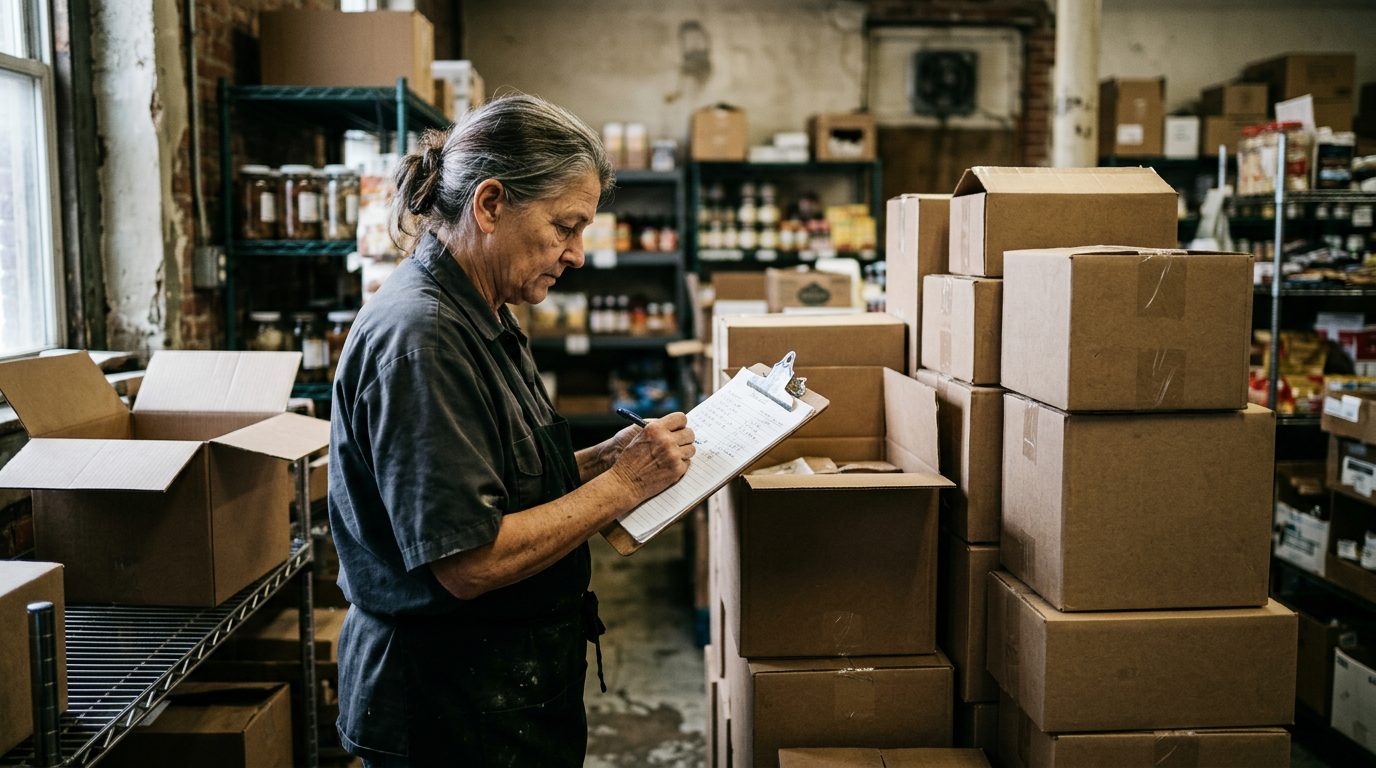
What are the four types of wholesalers?
Four different business models, and picking the wrong one is the expensive rookie mistake. A wholesaler buys deep and resells to trade only. A distributor carries specific brands inside a defined territory. A cash-and-carry is a warehouse you shop yourself. A buying group pools your volume with other independents so you negotiate like a chain.
- True wholesaler. Buys in volume, sells to trade only, usually delivers, usually extends credit terms, almost always has a minimum. The account you open once and reorder from for years.
- Distributor. An authorized channel for particular brands in a set territory. You get a rep, warranty backing, often the only legitimate source for that line — plus the brand’s rules on pricing and display.
- Cash-and-carry. A self-service warehouse. Show your certificate at the desk, shop the aisles, pay at the register, load your own van. No delivery, no credit account, typically no minimum. You supply the truck and the labor.
- Buying group or GPO. Aggregates small buyers to negotiate contracts one independent never could. You still buy from the distributor; the group negotiates the deal. Read the membership terms and rebate structure first.
Most small operators run two or three at once. A standing distributor order for predictable volume, a cash-and-carry run for the Saturday you underestimated, a specialty wholesaler for the thing that makes you different.
Nothing to do with pallets — a good accountant pays for themselves.
What is a minimum order, and why won’t the wholesaler budge?
Two numbers matter: the minimum opening order, what it takes to establish the account, and the ongoing minimum, what it takes to earn a delivery. They exist because picking, packing, invoicing and driving a stop costs about the same whether the order is small or large. Below a certain line, the sale loses money.
Get both numbers in writing before you fall in love with a product line. Then ask three follow-ups. Dollars or cases? Does it reset per delivery, per week, or per month? Any small-order fee underneath the threshold? Ask about case pack too — you may want a dozen when the only sellable unit is seventy-two. Splitting cases is a cash-and-carry behavior, not a distributor one.
How does a new business get net-30 terms?
Net-30 means the supplier ships now and you pay within thirty days, which means the wholesaler is financing your inventory. Brand-new businesses rarely get it on the first order. The normal path: pay by card or COD for the first several orders, submit a credit application, supply trade references, then ask again after three to six clean months.
A credit application wants your EIN, entity paperwork, a bank reference, and two or three trade references — suppliers who confirm you pay on time. With no history, expect a request for a personal guarantee. That isn’t an insult. It’s how a stranger’s risk gets priced. Some suppliers report payment history to Dun & Bradstreet, Experian or Equifax, which is how a business credit file gets built at all. Open two or three small accounts you can pay early, and the fourth supplier answers differently.
Read the discount language. Terms written as 2/10 net 30 mean you may deduct 2 percent if you pay within ten days. On thin retail margins, that beats the extra twenty days of float more often than not.
How is restaurant and food service supply different from general merchandise?
Food service runs on a truck route; general merchandise runs on a season. A broadline food distributor may deliver two or three fixed days a week with a hard cutoff the night before. A gift, apparel or housewares wholesaler may write orders at market twice a year and ship months later, with opening-order and per-style minimums, territory rules and minimum advertised pricing attached.
The tax treatment splits too, and Missouri has a rule worth memorizing if you feed people. Food you buy to cook and sell is inventory, so it’s a resale purchase. On top of that, RSMo 144.011(10) excludes from Missouri sales tax the purchase by eating or food service establishments of items of a nonreusable nature furnished to customers with their food or beverage — the cups, napkins, straws, wrappers and to-go containers. The mop, the dish machine, the office printer and the menus are not covered. Same invoice, different lines, different answers.
Can I use a resale certificate for things I keep and use myself?
No, and this is the part worth being blunt about. A resale certificate covers goods you will resell. Using one to buy things you consume yourself — shop supplies, office furniture, a television for the den — is tax fraud. Missouri’s rule makes the purchaser liable for the tax when the exemption was claimed improperly or the property is later used inconsistently with the claim.
Missouri’s exemption certificate rule, 12 CSR 10-107.100, lets a seller rely on a certificate on file only in good faith — defined as “honesty of intention and freedom from knowledge of circumstances which ought to put the holder upon inquiry.” RSMo 144.210 then lets the Department of Revenue collect the proper tax, interest, additions to tax and penalty directly from the purchaser when an exemption claim proves improper. Illinois prints the warning on the form: CRT-61 has the purchaser acknowledge that misuse or misrepresentation may result in penalties, interest, and criminal prosecution.
The practical version. Buy a case of candles for the shelf, take one home, and you owe use tax on that candle — 4.225 percent at the Missouri state level. Nobody is driving out to Maryland Heights over one candle. The habit is what surfaces in an audit, and 86 Ill. Adm. Code 130.210 is explicit that resale treatment holds only to the extent goods were not first put to a use for which they were purchased. Keep a withdrawal log. Cheapest insurance in the building.
What this looks like from the wholesaler’s side of the counter
Wholesale is a volume business with almost no cushion. In results released July 29, 2025, foodservice distributor Sysco reported fiscal 2025 sales of $81.4 billion, gross profit of $15.0 billion — an 18.4 percent gross margin — and net earnings of $1.8 billion. Roughly two cents of profit per dollar moved. Minimums aren’t attitude; a stop costs what a stop costs, and warehouse space and diesel don’t scale down. Net terms mean the warehouse is lending you inventory unsecured, and when a kitchen goes dark in month four the distributor eats the receivable. That’s why the counter checks whether you’re a real business before it checks your order — the seller carries the audit burden, and your certificate is their defense. Buyers who show up registered, papered and paying early get answers first. Operators on that side also know new accounts start with somebody searching locally, which is why a complete listing you can claim on St Louis Near Me Directory earns its keep.
Related reading: signage for the shopfront and if you lease the building.
Ready to stop buying your inventory at the register? Browse wholesalers across the St. Louis metro on St Louis Near Me Directory, then call two of them with your tax number in hand and ask the same two questions: what is your minimum opening order, and what are your terms for a new account?
Frequently asked questions
Do I need an LLC to buy wholesale?
No. Neither Form 149 nor CRT-61 asks for an entity type; both ask for a state tax number, so a sole proprietor with the right registration buys wholesale exactly as an LLC does. Missouri requires a retail sales license before you make retail sales, and operating without one carries a $500 penalty for the first day plus $100 a day after, up to $10,000. Illinois issues a Certificate of Registration through MyTax Illinois or Form REG-1.
Can a regular person buy wholesale?
Not as a private individual. A wholesaler sells to the trade because the seller carries the burden of proving a sale was not retail, so it needs a resale certificate on file before it sells you anything untaxed. Register the business first; a cash-and-carry asks at the desk too.
How do I qualify to buy wholesale?
Three documents. A registered business, a state tax number — the Missouri Tax I.D. Number that comes with a Missouri Retail Sales License, or an Illinois account ID from MyTax Illinois — and a signed Form 149 or CRT-61 handed to each supplier. No fee, no waiting period, no minimum purchase to qualify.
How do I get a Missouri resale certificate?
Nothing to apply for. Missouri Form 149 is a free fillable PDF on dor.mo.gov that you complete and hand to your supplier; the state never sees your copy. What you need first is a Missouri Tax I.D. Number, which arrives with your Missouri Retail Sales License. Register the business, then paper the suppliers.
Can I use Missouri Form 149 at an Illinois wholesaler?
No. Each state wants its own document. In Illinois, use Form CRT-61 with an Illinois retailer account ID, an Illinois reseller account ID, or a certificate of resale issued to an out-of-state purchaser. Missouri Form 149 does accept an out-of-state retailer’s home-state registration for goods, though not for claiming resale on taxable services.
How much do I need to start wholesale?
It varies enormously by trade, which is exactly why you ask before you shop. Get two figures in writing: the minimum opening order, and the ongoing minimum per delivery. Then confirm whether it is counted in dollars or cases, whether it resets weekly or monthly, and whether a small-order fee applies below the line.
Is a cash-and-carry cheaper than a delivering distributor?
Usually not on unit price. A cash-and-carry is self-service — no delivery, no credit terms, no minimum — and you supply the van, the fuel and the hour. That flexibility is worth real money on a surprise catering order. Once your volume clears a distributor’s minimum, the delivered price generally wins.
What happens if I buy something for resale and then use it myself?
You owe the tax. Missouri’s exemption certificate rule makes the purchaser liable when property is used inconsistently with the exemption claimed, and RSMo 144.210 lets the state collect tax, interest, additions and penalty from the purchaser directly. Illinois Form CRT-61 warns that misuse may bring penalties, interest and criminal prosecution. Log withdrawals, report use tax.
How long does my supplier keep my resale certificate on file?
In Illinois, the seller must keep it not less than three and a half years, and blanket certificates should be updated at least every three years. Missouri’s rule lets a seller rely on a certificate already on file for future sales unless circumstances change. Send a fresh one when your address, entity type or tax number changes.

Written by a dedicated team of St. Louis locals who live, work, and play right here in the St. Louis metro. Founder Lane Forman and team are committed to building the region’s most trusted directory by verifying listings and connecting local businesses with loyal customers across Missouri and Illinois.