How to Choose a School in St. Louis: A Family Guide to Districts, Magnet, Charter & Private
Revised August 10, 2026
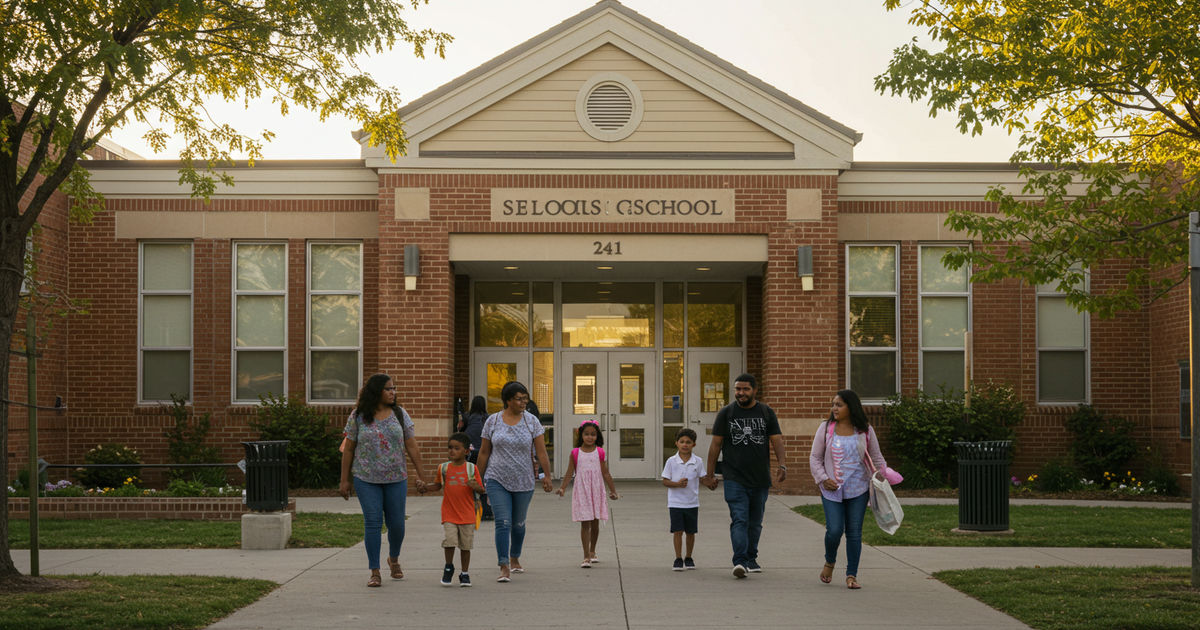
How do you pick the best school for your child?
There’s no single “best” school for every child — the right one is the best fit for your child and family. Weigh five things together: academics, environment and culture, your child’s specific needs, logistics (commute, schedule, cost), and your family’s values. Decide which matter most to you, then find the school that lines up best. A school that’s ideal for another family may be the wrong fit for yours — and that’s completely normal.
Keep reading ↓Imagine it’s a quiet evening and you’re at the kitchen table — maybe down in Arnold, maybe up in St Peters, maybe across the river in Belleville — with a laptop open and a knot in your stomach. Your oldest starts kindergarten next fall, or you’re about to relocate for a job, and you’ve just discovered that the St. Louis region has an almost overwhelming number of options: public districts, magnet programs, charter schools, private academies, and Catholic schools, spread across two states. Where do you even begin?
Here’s the honest, reassuring truth up front: there is no single “best” school that’s right for every child. Families weigh education very differently — what matters deeply to one household barely registers for another, and that’s completely normal. This guide is a calm, practical framework for finding the school that fits your child and your family, plus a plain-English tour of the St. Louis metro’s options and the tools that let you compare them. We’ll stay out of the politics entirely and stick to what helps you decide.
How Do You Pick the Best School for Your Child?
Start by reframing the question. The “best” school isn’t a national ranking or the one with the highest test scores — it’s the one that’s the best fit for your particular child and your family’s circumstances. A practical way to approach it is to weigh five things together: academics (the quality and rigor of teaching and the programs offered), environment and culture (whether the school feels safe, supportive, and welcoming), your child’s specific needs (learning style, special-education services, gifted programming, language support, activities they love), logistics (commute, schedule, before- and after-care, cost), and your family’s values (what kind of community and philosophy you want around your child). No school scores perfectly on all five, so the real task is deciding which factors matter most to you, then finding the school that lines up best. A school that’s ideal for the family down the street may be the wrong fit for yours — and that’s not a failing, it’s just how children and families differ. If your child has a disability or you suspect one, the process runs on a different set of rules entirely — start with what parents need to know about special education here.
What Makes a Good School? (And the “5 C’s”)
While “fit” is personal, decades of research point to some qualities that consistently mark a strong school. Look for effective, supported teachers and low turnover; a safe, respectful, and inclusive culture where children feel they belong; high expectations paired with real support so students are challenged but not left behind; strong leadership and a clear sense of mission; engaged families and communication that keeps you in the loop; and well-rounded opportunities beyond core academics — arts, activities, and enrichment.
Many modern schools frame their goals around the “5 C’s” — commonly communication, collaboration, critical thinking, creativity, and citizenship (some schools swap in “character”). These describe the durable, real-world skills a good education builds beyond memorized facts: the ability to work with others, think independently, express ideas clearly, solve problems creatively, and contribute to a community. You don’t need a school to use that exact phrase, but it’s a useful lens when you visit: Is this a place that’s building those capacities in kids, or just teaching to a test? A great school develops the whole child, not only the report card.

How Do You Pick a Good School District?
If you’re choosing where to live as much as where to enroll, the district matters — and here the good news is that you can research it before you ever tour a building. The most authoritative starting point is the state’s own data. In Missouri, the Department of Elementary and Secondary Education (DESE) publishes an Annual Performance Report and building- and district-level report cards (drawn from MAP test results and other measures) through its public data portal. On the Illinois side, the Illinois Report Card does the same for Metro East districts. These official sources give you attendance, graduation rates, test performance, class sizes, and finances straight from the state.
Third-party sites like GreatSchools and Niche repackage a lot of that data into easier-to-read ratings and reviews, which are handy for a quick comparison. Use them — but with a grain of salt. Ratings lean heavily on standardized test scores, which correlate strongly with community income and don’t capture everything that makes a school good for your child. Even the state acknowledges its report cards hold a lot of data without always giving clear context. So treat the numbers as a starting point that narrows your list, not a verdict. The decisive information almost always comes from visiting in person and talking to families who are actually there.
What About “Best School District” Rankings?
People naturally search for the best district, and ranking sites are happy to publish lists. They can be a useful way to discover well-regarded districts you hadn’t considered — the St. Louis metro has many highly rated public districts on both the Missouri and Illinois sides. But a few honest cautions: rankings compress a complex, multi-year institution into a single number; they can shift year to year; and the “#1” district is often simply the most affluent one, which may or may not be reachable or right for you. A district that ranks a bit lower overall might have exactly the special-education program, dual-language track, or arts magnet your child would thrive in. Our advice is to use rankings to build a shortlist, then judge each finalist on how well it fits your child rather than on its position in a list. The best district for your family is the one where your child is known, supported, and challenged — and that’s not something a single ranking can tell you.
The St. Louis School Landscape: Public, Magnet, Charter, Private, and Catholic
One thing that surprises newcomers is just how much choice the region offers. Greater St. Louis is home to roughly 132 public school districts spread across the City of St. Louis, St. Louis County, St. Charles, Jefferson, and Franklin counties, and the Southern Illinois Metro East — far more than any one district you might have heard of. Layered on top of the public districts are magnet programs, charter schools, and a deep bench of private and Catholic schools. Here’s a neutral overview of the five main types:
Public school districts are free, funded by taxes, and organized by geographic boundaries — where you live usually determines which district your child attends. With scores of districts across the metro, quality and character vary widely, which is exactly why researching the specific district matters.
Magnet schools are public schools built around a specialized theme or program — think STEM, performing arts, International Baccalaureate, or gifted education. They’re tuition-free but usually require an application, and admission can be competitive or lottery-based. They’re a way to access specialized public education outside your assigned school.
Charter schools are also public and tuition-free, but they’re independently operated under a charter rather than run by the local district, which gives them more flexibility in curriculum and approach. In our region they’re concentrated mainly in the City of St. Louis. Admission is typically open to eligible students, often by application or lottery when demand exceeds seats.
Private schools charge tuition and set their own curricula, admissions, and philosophies — from college-prep academies to Montessori, Lutheran, and independent schools. They offer smaller classes and distinct approaches, at a cost.
Catholic schools are a large and long-established part of St. Louis’s educational fabric, offering faith-based education (usually open to non-Catholic families too) at tuition rates that are often lower than secular private schools. The Archdiocese operates a substantial network across the metro.
Public vs. Private: How to Think About It
This is one of the most-asked questions, and the honest answer is that neither is universally “better” — it depends entirely on the child, the specific schools, and the family. Strong public schools offer excellent academics, a wider range of programs and activities, more diversity, transportation, and full special-education services required by law, all at no tuition. Private schools may offer smaller classes, a particular philosophy or faith community, and more flexibility, but at a cost, and with fewer legal obligations around special education, so you’ll want to ask directly about services your child needs. The research on whether private-school students “do better” is genuinely mixed once you account for family background — which is a useful reminder that the specific school matters far more than the category. Rather than debating the labels, compare the actual schools in front of you: a great public school beats a mediocre private one and vice versa. Weigh cost realistically, and remember there’s no wrong answer that a loving, involved family can’t make work.

Magnet vs. Charter: What’s the Difference?
These two get confused constantly because both are tuition-free public options you apply to — but they work differently. A magnet school operates within (or in cooperation with) a public school district and organizes its program around a specialized theme to draw students from a wider area. A charter school is publicly funded but independently run under its own charter, operating outside the traditional district structure with more autonomy over curriculum and staffing.
Neither is inherently better — each has trade-offs worth knowing. Magnet schools can offer outstanding specialized programs but often have competitive admissions and longer commutes, and seats are limited. Charter schools offer innovation and choice, but quality varies from one charter to another, they may have fewer extracurriculars or less transportation than a big district, and because they’re newer and independent, their track records differ widely. The practical takeaway is the same for both: judge the individual school, not the category. Visit, look at its specific results and stability, and ask how it serves kids like yours.
How Much Value Does a Good School District Add to Your Home?
If you’re buying a home, school quality and property values are tightly linked — worth understanding whether or not you have kids. Nationally, homes in highly rated school districts typically cost about 10% to 20% more than comparable homes in average-rated areas, and in the most sought-after districts the premium can run higher still. That cuts both ways: a top-rated district can protect and grow your home’s value and resale demand, but you also pay more up front and in property taxes to buy in. For families, it can be worth it; for buyers without school-age children, it’s a factor to weigh against paying a premium for a benefit you may not use. Either way, don’t assume “expensive district” automatically equals “right for my child” — the value premium reflects demand and test scores, not necessarily fit. Run the real numbers on tuition-free public options versus private tuition too; sometimes buying into a strong public district costs less over time than years of private-school bills.
Wildly off-topic: where to eat in Glen Carbon, IL.
A Simple Step-by-Step Way to Narrow It Down
If the number of options feels paralyzing, a simple process helps. First, write down your family’s priorities — rank those five fit factors (academics, environment, your child’s needs, logistics, values) so you know what you’re actually optimizing for. Second, map the field: use the schools map to see which public districts, magnet, charter, private, and Catholic options are genuinely near you, and note what you can realistically reach and afford. Third, do the desk research: pull the state report cards and skim GreatSchools or Niche to narrow to a shortlist of three to five. Fourth, visit those finalists in person, ask the questions below, and talk to a couple of current families at each. Fifth, sit with your gut — after the data and the visits, the right fit usually becomes clear. Start earlier than you think you need to, since magnet, charter, and private schools often have application windows and lotteries months ahead of the school year. Working the steps in order turns an overwhelming decision into a manageable one.
Questions to Ask When You Tour a School
Nothing replaces walking the halls. When you visit — and you should visit your finalists — come with questions: How do you support students who are struggling, and those who are ahead? What does a typical day look like? How do you handle discipline and bullying? How do teachers communicate with parents? What’s the class size and teacher turnover? What special-education or gifted services are available? What arts, activities, and enrichment do you offer? How stable is enrollment and staffing? Just as important as the answers is the feel: Do the students seem engaged and happy? Are the teachers warm? Does the office greet families kindly? Trust your read of the environment — you know your child, and a place that feels right for them usually is. If you can, talk to a few current parents, who will tell you things no brochure will.
Special Considerations: Needs, Commute, and Change
A few practical factors deserve special weight. If your child has a disability or learning difference, ask pointedly about special-education services, IEP and 504 support, and staffing — public districts are legally required to provide services, while private and some charter schools vary, so get specifics in writing before you commit. Consider the commute and logistics honestly: a slightly “better” school an hour away can cost your family more in daily stress than it’s worth, while a strong school close to home makes involvement easier. And keep in mind that schools change over time — enrollment rises and falls, boundaries and programs get adjusted, and sometimes districts grow while others consolidate. Sometimes schools grow, and sometimes they don’t. It’s reasonable to ask a school or district about enrollment trends and long-term stability, especially if you’re making a multi-year decision around it. None of this should cause alarm — it’s simply part of asking good questions.
St. Louis-Specific: A Big Metro With a Lot of Choices
The defining feature of choosing a school here is the sheer breadth of options across two states. The St. Louis region spans the City of St. Louis, the many districts of St. Louis County, the fast-growing communities of St. Charles County, Jefferson and Franklin counties to the south and west, and the Illinois Metro East — each with its own public districts, plus magnet, charter, private, and Catholic schools. That’s a lot of ground to cover, which is exactly why starting with a map of what’s actually near you beats trying to hold it all in your head. Our interactive schools map plots K-12 schools — public districts, magnet, charter, private, and Catholic — across the greater St. Louis metro on both the Missouri and Illinois sides, so you can see the real options in your area and build a shortlist to research and tour. Wherever you land, remember the throughline of this whole guide: the right school is the one that fits your child, and a caring, engaged family is the biggest factor in any child’s success, at any school.
Ready to see the schools near you? Explore public districts, magnet, charter, private, and Catholic schools across Missouri and Illinois on the St. Louis Schools Map — a simple way to spot every option in your area and start building your shortlist. Bookmark the schools map — or save the Google map directly to your phone — so the right schools near you are always one tap away when you need them.
Run a school, tutoring service, or education program? Families across the metro are searching for you. Listing your school or program helps local parents find it.
More St. Louis Family & Local Guides
- How to choose a college or trade school in St. Louis
- A guide to St. Louis neighborhood associations
- The best indoor activities in St. Louis for families
- The best outdoor activities in St. Louis
Frequently Asked Questions
What makes a good school?
Strong schools consistently share a few traits: effective, supported teachers with low turnover; a safe, respectful, inclusive culture; high expectations paired with real support; clear leadership; good family communication; and well-rounded opportunities beyond core academics. Many frame their goals around the “5 C’s.” Beyond the checklist, a good school is one where your specific child feels known, supported, and challenged — which is why an in-person visit matters as much as any rating.
What are the 5 C’s in school?
The 5 C’s commonly refer to communication, collaboration, critical thinking, creativity, and citizenship (some schools use “character” in place of citizenship). They describe the durable, real-world skills a strong education builds beyond memorized facts — working with others, thinking independently, expressing ideas, solving problems creatively, and contributing to a community. It’s a useful lens when touring: is the school developing the whole child, or just teaching to a test?
How do you pick a good school district?
Start with the official state data: Missouri’s DESE Annual Performance Report and report cards, or the Illinois Report Card for Metro East, give you graduation rates, test scores, class sizes, and finances straight from the state. Sites like GreatSchools and Niche repackage this into easy ratings — useful, but weighted toward test scores that track community income. Use the numbers to narrow your list, then decide by visiting in person and talking to current families.
What is better, a magnet school or a charter school?
Neither is inherently better — they’re different. A magnet school is a public school (within or cooperating with a district) organized around a specialized theme, usually with competitive or lottery admission. A charter school is publicly funded but independently run under its own charter, with more autonomy. Magnets can offer standout programs but limited seats and longer commutes; charter quality varies by school. Judge the individual school, not the category.
Which is better, public school or private?
Neither is universally better — it depends on the child, the specific schools, and the family. Strong public schools offer free tuition, wide programs, diversity, transportation, and full legally-required special-education services; private schools may offer smaller classes and a particular philosophy at a cost. Research on outcomes is mixed once family background is considered, which shows the specific school matters more than the category. Compare the actual schools in front of you.
How much value does a good school district add to your home?
Nationally, homes in highly rated school districts typically cost about 10% to 20% more than comparable homes in average-rated areas, with even higher premiums in the most sought-after districts. A top district can support your home’s value and resale demand, but you pay more up front and in property taxes. Weigh that against your actual needs — the premium reflects demand and test scores, not necessarily the right fit for your child.

Written by a dedicated team of St. Louis locals who live, work, and play right here in the St. Louis metro. Founder Lane Forman and team are committed to building the region’s most trusted directory by verifying listings and connecting local businesses with loyal customers across Missouri and Illinois.