Things to Do in Waterloo, IL: Caving at Illinois Caverns, Kayak Lakes, a Stagecoach Inn
Revised November 10, 2026
What are some fun things to do in Waterloo, Illinois?
In Waterloo, Illinois, go caving at Illinois Caverns, the wild cave south of town, open Thursday to Sunday from mid-April to late October. Fish or kayak the three old water-works lakes at Lakeview Park, stand on the courthouse lawn where Lincoln spoke in 1840, and tour the Peterstown House, the only surviving stagecoach stop on the Kaskaskia-Cahokia Trail.
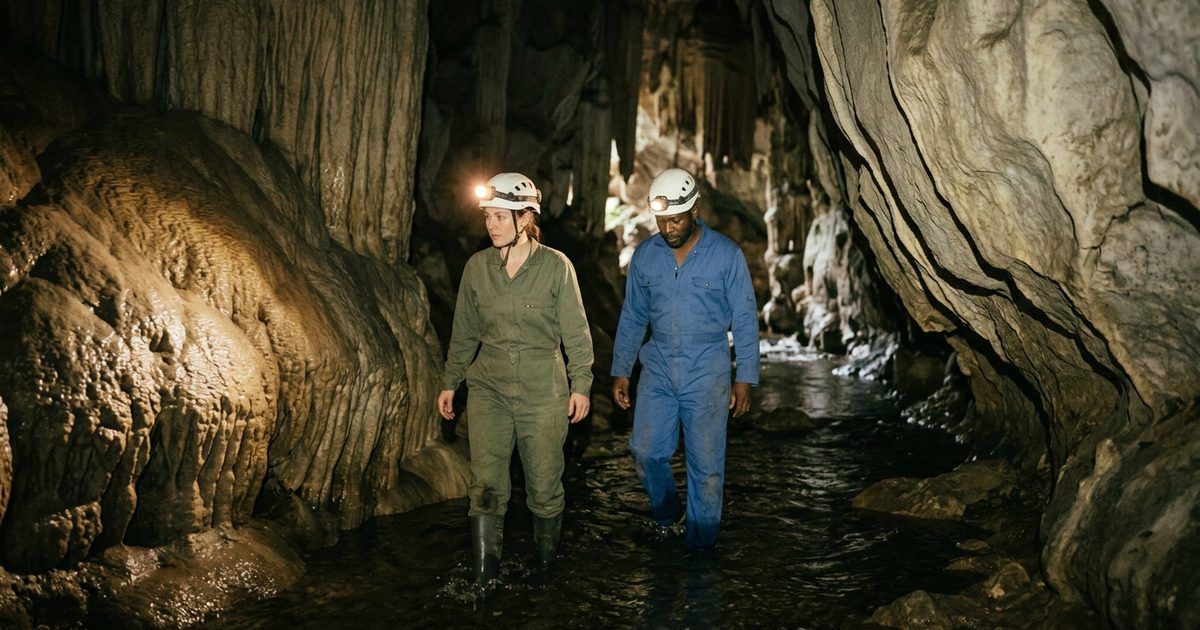
Keep reading ↓Three lights. That’s the state’s rule for every person who walks into Illinois Caverns, and you understand why about two minutes in, when the daylight behind you shrinks to a coin, the creek is cold around your ankles, and the only sound is water and your own breathing. It is the only cave in Illinois ever operated commercially, and it keeps a short season: mid-April through late October, then dark. The recycled Waterloo lists never mention it. They send you to a golf course and a winery, and the most visible online review still says the cave is closed. That review is stale, and it has cost a lot of people a good Saturday.
Some orientation first, because search results blur three different Waterloos together. This one is Waterloo, Illinois, the Monroe County seat, about 20 minutes south of downtown St. Louis by the city’s own count. During the 1904 World’s Fair, a steady stream of sightseers came down here by train, rode horse-drawn wagons the last few miles, and paid to walk a cave lit by kerosene lamps. The lamps are long gone. Now you bring your own light, sign a state permit, and walk the same passages with a creek running past your boots.
That cave is the reason to come, and it’s only the start. Of all the small towns outside St. Louis, Waterloo is the one where the best afternoon happens underground and the rest of the day still fills up: fishing lakes you can paddle, a stagecoach inn, the lawn where Lincoln talked for two hours straight. Everything below was checked against Illinois Department of Natural Resources (IDNR), park district, city and organizer pages in October 2026, and it’s sorted by what you came to do.
What are some fun things to do in Waterloo, Illinois?
In Waterloo, Illinois, go caving at Illinois Caverns, the wild cave south of town, open Thursday to Sunday from mid-April to late October. Fish or kayak the three old water-works lakes at Lakeview Park, stand on the courthouse lawn where Lincoln spoke in 1840, and tour the Peterstown House, the only surviving stagecoach stop on the Kaskaskia-Cahokia Trail.
Notice what’s missing. Besides Annbriar Golf Course, which the usual lists lead with, Waterloo has a second layer that only shows up when you plan around its calendar. The cave keeps short hours. The historic houses open on weekend afternoons. The lakes run dawn to dusk at no charge. Get the order right and one Sunday covers all of it.
Morning, underground. Illinois Caverns opens at 9 a.m., Thursday through Sunday in season, and nobody goes in after 3 p.m. Go early. You’ll come out wet to the knees and muddy to the elbows, so pack a full change of clothes and a trash bag for the boots.
Midday, downtown. Drive back to the courthouse square for lunch and read the historical markers while you’re there. The one at 114 N. Main St. explains the town’s name, and it’s better than anything on a menu.
Afternoon, 1800s. The Peterstown House on North Main opens 1 to 4 p.m. on Saturdays and Sundays. On Sundays from May through December, the Bellefontaine House on the south side keeps the same hours, so a Sunday gets you both ends of the rivalry that named the town.
Evening, on the water. Finish with a lap of the 2.25-mile paved loop at Lakeview Park while the anglers pack up. The park closes at dusk.
What are some interesting caves to visit around St. Louis?
Ask that question online and you mostly get threads about the old lager caves under South St. Louis streets, the ones you can read about and can’t legally walk into. City Museum’s caves were built, not found. The cave at Cliff Cave Park is gated except on ranger-led summer trips. If you want a real cave, mud and all, with no tour guide, the honest answer sits about 35 miles south of the city in the county with more caves than any other in Illinois.
Illinois Caverns State Natural Area is that cave. IDNR calls it the only cave in Illinois that has ever been operated commercially. A bound register kept at the site shows the first paying sightseers arrived April 23, 1901. During the 1904 World’s Fair, IDNR says, a steady stream of curiosity seekers came out to see it, which makes it a strange underground cousin of the buildings left from the 1904 World’s Fair back in the city. When the fair closed, visitors dropped off, and that first business ended in 1907. A second try after 1947 strung electric lights through the main passages and advertised the “Mammoth Cave of Illinois.” The crowds never came. The state bought the 118-acre tract in 1985. Most of the fair was torn down long ago. The cave those fairgoers rode out to see is still open, and it’s darker now than it was then.
What you walk into today is a wild cave. No paved path, no handrails, no lights. IDNR describes about 6 miles of mapped passage with an underground stream winding through it, plus stalactites, stalagmites, rimstone dams, flowstone and soda straws, many of them still growing. It holds near 58 degrees all year. Little brown bats and tricolored bats live inside, along with cave salamanders and the Illinois cave amphipod, a tiny federally endangered crustacean known from only a handful of caves in this corner of the state.
The rules are part of the adventure. You don’t buy a ticket. You fill out an IDNR cave exploration permit at the site, and the form lists no fee. Then the conditions kick in:
- At least four people per group. No solo trips, and groups of 25 or more must register with the site ahead of time.
- A hard hat or plastic protective headgear for everyone.
- Three light sources per person. A headlamp and two flashlights is the usual kit.
- Closed-toe shoes with treaded soles, and clothes you’re willing to ruin. IDNR’s own advice is to expect to get wet and muddy.
- Anyone under 18 needs a parent or guardian’s signature on the permit, and youth groups need one adult for every five kids.
- No entry after 3 p.m. Don’t drink the cave water or let open cuts touch it; the permit warns about bacteria.
The season is the catch. IDNR lists current hours as 9 a.m. to 4 p.m., Thursday through Sunday, mid-April through late October, and site staff close the cave whenever conditions turn unsafe. After late October the gate stays shut until spring, and the bats get the place to themselves. This cave has lost years to bat trouble before. It closed in early 2010 over white-nose syndrome, the fungal disease that has killed bats across the country, and stayed closed until June 16, 2021. That long closure is why stale reviews still call it shut. Call the site at 618-458-6699 before you drive, especially after a heavy rain.
The bigger cave you can’t enter. Monroe County sits on the Sinkhole Plain, which IDNR calls one of the densest concentrations of sinkholes in the country, and the county has more than 100 recorded caves. The largest cave in Illinois is down here too, and it’s permission-only (more on it in the FAQ below). So Illinois Caverns is the one you get. It’s plenty.
Before you go: the address is 4369 G Road, which IDNR files under Waterloo, roughly 7 miles south of the Monroe County Courthouse as the crow flies. Up top there’s a picnic area and trails across restored prairie, so anyone who’d rather not crawl still gets a walk. It’s one of the very few caves near St. Louis you can explore yourself, so treat it that way. The permit’s rule is simple: take nothing out, leave nothing in.

Where can you fish or kayak in Waterloo, IL?
At the old city water works. Lakeview Park, on the southwest edge of town off Lakeview Drive, was Waterloo’s water works until the city leased it to the park district in 1998. Its three large lakes, Demint, Schorr and Korte, are now open for fishing, and you can paddle them.
Lakeview Park. All three lakes allow fishing with an Illinois license, and there’s a handicapped-accessible fishing dock. The park district’s rules on the water are short. Small boats, canoes and kayaks are allowed. The only motors permitted are electric trolling motors, and every boat launches from an approved area. No swimming, water-skiing or scuba. That adds up to a calm first paddle with no wakes and no jet skis. Bring your own boat.
A 2.25-mile paved loop runs through the park, and it’s for walkers only. Bikes, scooters and skateboards are banned; strollers and wheelchairs are welcome. You’ll also find a butterfly garden, two pickleball courts, the Monroe County Veterans Memorial near the flagpole and gazebo, and the fenced Lakeview Dog Park, the one spot in the park district where a dog can run off leash. Dogs can’t swim in the lakes, so the retriever watches from the bank.
Konarcik Park. It’s east of town off Konarcik Road (Fourth Street), on land the Pupava family gave the park district in 1956. The lake allows fishing with a valid license. The bigger draw is the 18-hole disc golf course, which the park district calls one of the premier courses in the St. Louis area, and it has hosted events that post scores to the Professional Disc Golf Association. There’s also a short walking trail, two sand volleyball courts and six pavilions.
License math. Illinois requires a fishing license on every public lake, these included. Anglers under 16 don’t need one, and during Illinois Free Fishing Days, a long weekend each June (June 19 to 22 in 2026), nobody does. Both parks are free and open dawn to dusk. For more public water closer to the city, see our picks for the best fishing spots in St. Louis.
Where is the haunted trail in Waterloo, IL?
Out at the Waterloo Sportsman’s Club, 4903 Sportsman Road. The club is private, but it says all of its events are open to the public, and every October it turns its grounds into a Haunted Trail and Hayride. The 2026 nights are Fridays and Saturdays, Oct. 2, 3, 9, 10, 16 and 17, from 7 to 11 p.m. The club’s page lists all ages at $20, though an older line on the same site still says $15, so check before you go. Younger kids get the Pumpkin Express instead of the full scare, and there are concessions and kids’ games while you wait.
Miss those six nights and October still has a run of smaller things, all on the city’s 2026 calendar:
- Night at the Museum, Bellefontaine House: Friday, Oct. 9.
- PumpkinFest: Saturday, Oct. 10, 9 a.m. to 4 p.m. on Courthouse Square. Bring an item for the charity drive.
- Witches Night Out: Thursday, Oct. 15, at participating downtown merchants and restaurants.
- “The Story of Exorcism”: Thursday, Oct. 29, 6:30 p.m., at the History Museum of Monroe County.
- Trunk-or-Treat: Saturday, Oct. 31, 5:30 to 7:30 p.m. on Courthouse Square.
Events can change, so confirm the week of. And mind the clock. The haunted trail ends in mid-October, the cave season ends late in the month, and neither one waits.

Can you tour the Peterstown House and Bellefontaine House in Waterloo, IL?
Yes, both, on weekend afternoons, and together they explain how Waterloo got its name. Bellefontaine grew up on the south side and Peterstown on the north, two rival settlements with a creek between them. The legend, told on a marker at 114 N. Main St. and on the city’s history page, says that in 1818 an Irishman named Charles Carroll built his house on one side and his barn on the other and settled the argument: “It won’t be Bellefontaine, and it won’t be Peterstown, but begorra, I’ll give ye’s both your Waterloo.” The name points back to Napoleon’s defeat three years earlier. Treat the Carroll story as a legend. It’s a good one.
The Peterstown House, 275 N. Main St., is the only remaining stagecoach stop on the 60-mile Kaskaskia-Cahokia Trail, the road that linked the old French villages on the river. Its oldest section dates to somewhere between 1815 and 1830, an estimate based on its nine-over-six windows. Over the years it served as an inn, a general store and a tavern, and it later gained a second-floor ballroom and theater. Out back are two century-old log cabins, a watering trough and a hand pump. It joined the National Register of Historic Places in 1977. The Peterstown Heritage Society opens it Saturdays and Sundays, 1 to 4 p.m., with no reservation needed; groups and school trips book ahead at 618-939-4222. The society doesn’t post admission, so ask when you call, and call ahead in winter, when hours have thinned in past years. Come December, watch its calendar for the Christmas Ball.
The Bellefontaine House, run by the Monroe County Historical Society at 709 S. Church St., sits where Waterloo began. The society says that by spring 1782, Capt. James Moore, an officer under George Rogers Clark, and a group of Revolutionary War veterans had settled at a spring the French called La Bellefontaine, “the beautiful spring.” The society calls it one of the first American settlements in what is now Illinois, and by 1800 it counted 286 people. The house opens Sundays, 1 to 4 p.m., May through December, and closes on some holiday weekends and the last two Sundays in July for the county fair. Near the house stands the 1877 Bellefontaine Bridge, a stone arch over Moore’s Run restored in 2015. Its marker says it connects the only intact stretch of the original Kaskaskia-Cahokia Trail. Ask at the house about seeing it.
The History Museum of Monroe County, 724 Elaine Dr., is the curveball: a Western collection in an Illinois river county. Built around Col. Edd Kueker’s collection, it fills three galleries with saddles, spurs, wagons and a stagecoach, plus a reconstructed 1860s general store. Its posted hours have been weekends 1 to 4 p.m., closing for the season around Dec. 20, with evening programs that start at 6:30, so confirm before you go. The Kuekers also placed the bronze bison on the courthouse grounds in 2014. It honors the herds whose paths became the Kaskaskia-Cahokia Trail, the same road that runs past both houses.
Cave mud on your boots and hungry? Where to eat in Waterloo, IL
What are some free things to do in Waterloo, IL?
Most of the best ones. The park district charges no admission to any of its parks or attractions, and the cave permit lists no fee. Add these.
Stand where Lincoln spoke. On Aug. 25, 1840, Abraham Lincoln gave a political speech at the Monroe County Courthouse as a Whig presidential elector. A marker at 114 N. Main St. fills in the rest. He arrived on Sunday, Aug. 23, a notice went up at the courthouse Monday, and on Tuesday he spoke for two hours. Then Democrat Adam Snyder answered him for two more. The spot is marked today by the Monroe County Bicentennial Bandstand at Main and Third streets.
Walk the markers. The Historical Marker Database lists 97 markers in Waterloo, a lot for a town of about 11,000. Downtown, the city’s Self-Guided Historic Building Tour adds plaques on 25 buildings, written from research that Gibault Catholic High School history students began in 2014. The district has been on the National Register since 1978. Start at the bandstand, find the bison, read the name legend at 114 N. Main, and keep going.
Hear the band where Lincoln stood. Every Tuesday at 8 p.m., from the first Tuesday after Memorial Day through the last Tuesday in August, the Waterloo Municipal Band plays a free concert at Main and Third. More than 50 musicians from both Illinois and Missouri work through marches, show tunes, standards, a little rock and roll and, in a nod to the town’s German roots, an occasional polka. A marker says the band formed in 1931 because the town got tired of paying an out-of-town band that charged too much. Bring a lawn chair. The Chamber of Commerce adds a free Downtown Concert Series on second Sundays, June through September, starting at 4:30 p.m.
The Saturday market. The Monroe County Farmers Market has been run by its own vendors for nearly four decades, with a 10-person board made up entirely of sellers. It runs Saturdays, 7:30 a.m. to noon, from late April through Oct. 31 in 2026, in the Annex building lot at 901 Illinois Ave. facing Route 3. Browsing costs nothing. One rule the market asks everyone to follow: never park on the drive north of the Annex. It’s an ambulance exit.
What is there to do in Waterloo, IL at night?
More than the drive-through lists suggest, as long as you know the season.
A play at the Capitol Theatre. Monroe Actors Stage Company, the local community theater group, puts on five shows a year in the historic Capitol Theatre at 202 S. Main St., a building whose downtown plaque also lists it as the old Oddfellows Lodge. The company’s November 2026 show is “The Cottage” by Sandy Rustin, a romantic farce, on Nov. 6, 7, 8, 13, 14 and 15. Call 618-939-7469 or check the company’s site for tickets, curtain times and the shows that follow. It’s the easiest date night in town: dinner downtown, then walk to the show.
Breweries and a winery. Downtown has two breweries, Stubborn German Brewing and Hopskeller Brewing, and Schorr Lake Vineyards sits just south of town. All three are in our Waterloo where-to-eat guide. For wine country beyond Waterloo, our St. Louis winery day trip guide covers tasting rooms on both sides of the river.
A movie from the front seat. For a drive-in night, Belleville’s Skyview Drive-In is the classic, and it usually runs into October before closing for winter. By fall it’s often down to weekends, so check the schedule first.
For teenagers. The Optimist Skate Park at Koenigsmark Park stays open until 9 p.m. from April through October and until 8 p.m. the rest of the year.
Summer evenings belong to the Tuesday band concerts. October belongs to the haunted trail. December belongs to Santa.
When is the Waterloo, IL Christmas Walk and Santa Float?
The Christmas Walk always falls the week and weekend of Thanksgiving, and in 2026 the Santa Float takes the ten nights leading up to Christmas Eve. The city’s 2026 calendar lays the season out like this:
- Waterloo Christmas Walk: Nov. 28 and 29 at participating downtown merchants. Get your shopping card stamped at each stop for a gift certificate drawing, and catch free carriage rides and visits with Santa.
- GLOW Lighted Holiday Parade: Saturday, Nov. 28, 5:30 p.m., downtown.
- Lamppost Decorating Contest judging: Sunday, Nov. 29, noon to 3 p.m. on Courthouse Square.
- 12th Annual Community Christmas Tree Lighting: Sunday, Nov. 29, 6:30 p.m., at Mill and Main.
- Cookie Walk: Saturday, Dec. 5, 9 a.m. to noon, at Immanuel Lutheran Church.
- Candle Light Tour with Santa: Saturday, Dec. 12, 6:30 p.m., at the History Museum of Monroe County.
- Santa Float: Monday, Dec. 14, through Wednesday, Dec. 23, heading out at 5 p.m. each night and running until about 8:30.
The Santa Float is the one to plan around. Harry Wolf and the Waterloo German Band started it, and the city, the Chamber of Commerce and the town’s sister-city group keep it rolling. Each neighborhood route runs two nights, and the second night runs it in reverse, so the kids who live at the end of the line see Santa before bedtime too. A city vehicle with flashing red and green lights leads the way, and an online Santa Tracker shows where the float is right now. Then there’s the part kids remember for years. Every night, three golden tickets are hidden among the candy bars. Find one, bring it to City Hall at 9 a.m. on Christmas Eve, and Santa has a gift waiting. Only kids 13 and under can win.
Want a second cookie walk the same weekend? The Kimmswick Cookie Walk and Christmas Festival fills that first weekend of December across the river. Waterloo’s takes one Saturday morning. Kimmswick’s runs four days.
So the next time somebody tells you there’s nothing south of the Jefferson Barracks Bridge, you’re the one who knows where the 1904 crowds went, which lakes take a kayak, and why the kids chase the Santa Float for golden tickets. Pick a weekend before the gate closes for the bats. Bring three lights.
Mud to the knees and starving is the right way to finish a cave morning. Our guide to where to eat in Waterloo, IL covers the downtown breweries and the spots a few minutes from the courthouse.
If you’re the shop that stamps Christmas Walk cards, the bait counter near Lakeview Park or the one-person crew selling headlamps first-time cavers forget, put your business where cave-weekend planners look and get more customers before they leave St. Louis.
Frequently asked questions
What is Waterloo, IL known for?
Waterloo, Illinois is known as the Monroe County seat, a role it has held since 1825, and for German roots deep enough that a marker says two-thirds of the county’s citizens traced their heritage to one German town, Porta Westfalica, now Waterloo’s sister city with its own festival every June. It also has Bellefontaine, settled by 1782, a downtown historic district on the National Register since 1978, Lincoln’s 1840 courthouse speech and, a few miles south, the only cave in Illinois ever run commercially.
What famous people went to Waterloo?
Abraham Lincoln is the big name in Waterloo, Illinois. He arrived on Sunday, Aug. 23, 1840, and spoke for two hours at the courthouse that Tuesday as a Whig presidential elector. Another local marker notes that Barack Obama campaigned at the Waterloo VFW hall during his 2004 U.S. Senate run, and one more says Gov. Thomas Ford, Illinois’ eighth governor, grew up in a log house on Main Street.
What is the largest cave in Illinois?
Fogelpole Cave, in southern Monroe County, Illinois, not far from Waterloo. More than 15 miles of it have been mapped. It’s a state nature preserve, dedicated in 1989, and access is by permission only. The cave you can actually walk into is Illinois Caverns, with about 6 miles mapped, open on a state permit from mid-April through late October.
What are some good walks around Waterloo?
In Waterloo, Illinois, start with the 2.25-mile paved loop around the three lakes at Lakeview Park. It’s walkers only, with strollers and wheelchairs welcome and no bikes or scooters. For history, walk the downtown building plaques and markers around the courthouse square, from the Lincoln bandstand to the bison statue. Konarcik Park adds a short trail, and the prairie trails at Illinois Caverns give non-cavers a walk while the rest of the group is underground.
What are some fun activities for adults in Waterloo?
For adults in Waterloo, Illinois, the strongest picks are a permit caving trip at Illinois Caverns (your group needs four people), a round on Konarcik Park’s 18-hole disc golf course, and a Monroe Actors Stage Company show at the Capitol Theatre. In October there’s Witches Night Out downtown (Oct. 15 in 2026), and the History Museum’s 6:30 p.m. talks and the two downtown breweries cover other evenings.
What to do in Waterloo, IL today?
In Waterloo, Illinois, it depends on the day. Thursday through Sunday from mid-April to late October, Illinois Caverns is open 9 a.m. to 4 p.m., with no entry after 3. On Saturday mornings in season (through Oct. 31 in 2026), the farmers market runs 7:30 to noon. On Saturday and Sunday afternoons the Peterstown House opens 1 to 4, and on Sundays from May through December, so does the Bellefontaine House. Every park is free and open dawn to dusk.
What is there to do around Waterloo?
Around Waterloo, Illinois, Columbia is the next Monroe County town north, and our Columbia, IL guide covers it. Belleville sits a short drive northeast, with the Skyview Drive-In and antique shops. Across the Mississippi, Kimmswick and Ste. Genevieve keep the same river-history thread going.
Do you need a ticket for Illinois Caverns?
No. Illinois Caverns, south of Waterloo, Illinois, doesn’t sell tickets. You fill out an IDNR cave exploration permit at the site, and the form lists no fee. Only groups of 25 or more must register ahead. Bring at least four people, a hard hat for each and three lights apiece, and confirm hours with the site at 618-458-6699 before you drive.

Written by a dedicated team of St. Louis locals who live, work, and play right here in the St. Louis metro. Founder Lane Forman and team are committed to building the region’s most trusted directory by verifying listings and connecting local businesses with loyal customers across Missouri and Illinois.