Underrated Places in St. Louis: 3 of the Last 7 Standpipe Water Towers, and the Climb That's Locked
Revised November 6, 2026
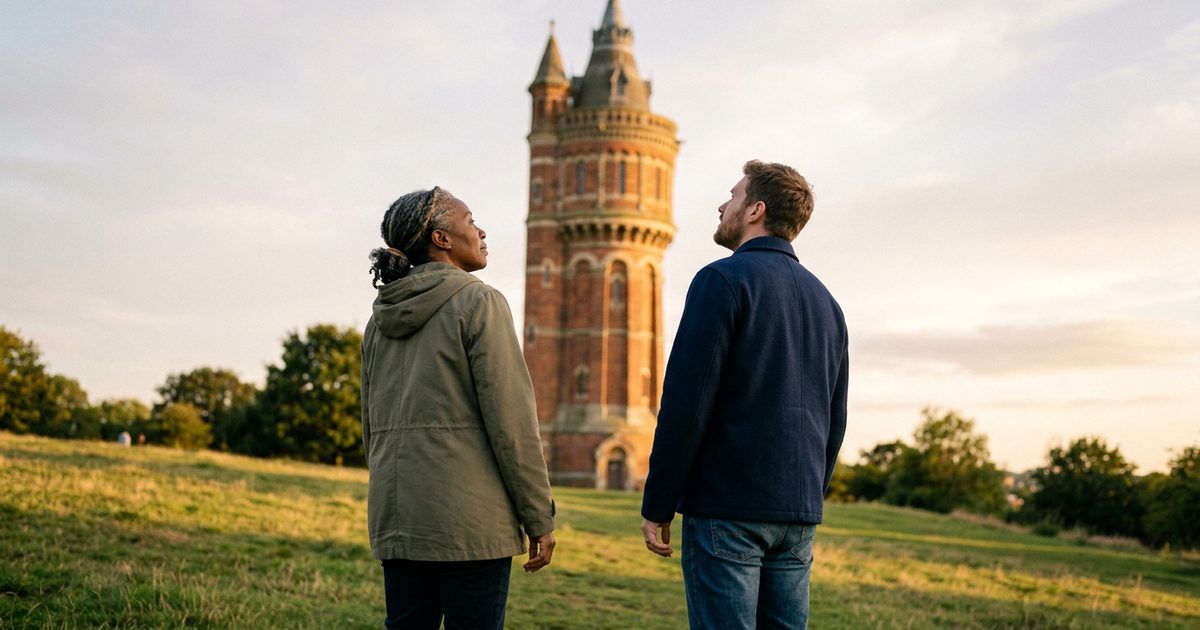
What are some underrated places to visit in St. Louis?
Start with what the lists skip: three of the last seven standpipe water towers in the U.S., stone water intake towers standing in the Mississippi, a burned hotel’s stones turned into ruins in Tower Grove Park, Ulysses S. Grant’s White Haven farm with no entrance fee, and Richard Serra’s torqued spiral, Joe, in the courtyard of the free Pulitzer Arts Foundation.
Keep reading ↓Locked. That’s the honest answer about the one St. Louis water tower the travel lists still tell you to climb. Compton Hill Water Tower, 179 feet of Indiana limestone and Alabama terra cotta at Grand and Russell, has been closed for several years because of masonry deterioration and falling debris, St. Louis Magazine reported. The preservation society that looks after it says so in one line across the top of its own website: the tower is closed for preservation.
So stand at the bottom and tip your head back instead. For close to a century, locals and tourists climbed its 198 steps for the view. Now the view runs the other way: up the rusticated stone base, up the shaft, to the high bell-cast roof. It’s still worth the drive, and once you know what the tower actually is, you’ll never pass it the same way again.
Here’s the part the roundups miss. Hundreds of standpipe water towers once stood all over the country, and only seven remain standing today, notes Cameron Collins, the St. Louis historian who writes the Distilled History blog. Three of them are ours. A standpipe tower doesn’t hold a tank of water like the ones on stilts by the highway. It helps maintain water pressure, the water inside constantly rising and falling to balance the city’s supply. All that brick and terra cotta is a costume for the plumbing, and St. Louis built three of them within thirty years.
That’s the thread running through this page. The places St. Louis overlooks tend to be the ones nobody is selling a ticket to: towers, a fake ruin, a river overlook, a sacred mound. If you’ve already worked through the small towns outside St. Louis, this list points the same curiosity back at the city.
What are some underrated places to visit in St. Louis?
Start with what the lists skip: three of the last seven standpipe water towers in the U.S., stone water intake towers standing in the Mississippi, a burned hotel’s stones turned into ruins in Tower Grove Park, Ulysses S. Grant’s White Haven farm with no entrance fee, and Richard Serra’s torqued spiral, Joe, in the courtyard of the free Pulitzer Arts Foundation.
The towers make a morning by themselves, one car and three stops up Grand.
Compton Hill. A stone base, then a brick shaft rising 179 feet, and at its foot the reservoir wall climbs in steps and wall fountains laid out in the manner of the gardens of Italian villas. It was the last of the three, built in 1898 from a design by Harvey Ellis. Go: Grand and Russell, on the east side of the street; the park around it is open 6 a.m. to 10 p.m., and you see the tower from the lawn, since the tower itself is closed.
The White tower. A giant Corinthian column of brick with a cast iron capital, soaring above a Grand Avenue roundabout that once included a trolley. It went up in 1871 and was taken out of service in 1912. Go: the roundabout on Grand Avenue, a few blocks from the Bissell Street tower, seen from the street.
The Bissell Street tower. Red brick, light gray stone and terra cotta, 194 feet high, styled as a “Moorish Minaret” by William S. Eames in 1885. Go: Bissell Street and Blair Avenue; see it from the sidewalk, because the tower remains closed to the public. Three landmarks, and most of the city drives under them without looking up.
Keep Eames’s name in your pocket. He also designed Intake Tower No. 1, the stone tower standing out in the Mississippi on the north side, and that’s where the river section of this page goes.
One more stop belongs at the top of the list, and you can’t walk onto it. Sugarloaf Mound, named for its conical shape that resembled the sugarloaf cones sold in the 19th century, is the last intact Mississippian mound and the oldest human-made structure in St. Louis. It was built roughly between AD 600 and 1200, during the time the Osage occupied Missouri. After 17 years of work, the Osage Nation regained sole ownership of it, with plans for preservation and an interpretive center. The Nation considers the mound a sacred site. Go: 4420 Ohio Avenue in the Mount Pleasant neighborhood, seen only from the public street.
Until that center exists, this isn’t an outing. If you pass it, pass it the way you’d pass a cemetery: briefly, quietly, from the public street. For more of the region south of the city line, our list of things to do in Arnold, MO picks up there.
Can you legally climb a water tower in St. Louis?
Not right now, and that’s the part the older lists get wrong. Compton Hill drew climbers for close to a century, and it’s closed. The Bissell Street tower has a lookout platform at the top, a local magazine profile of the towers reported, but it remains closed to the public. Any calendar that still lists climbing nights is sending you to a locked door.
And don’t freelance it. In Missouri, a person who knowingly enters unlawfully or knowingly remains unlawfully in a building or inhabitable structure or upon real property commits trespass in the first degree, a class B misdemeanor. A water tower is a bad place to learn that lesson.
The good news is that a restoration is in motion. St. Louis Magazine reported that a plan to preserve Compton Hill is taking shape, and the Water Tower & Park Preservation Society is raising money toward an $8 million restoration goal. If you want to see the climb come back, the society’s site is where the reopening news will land first.
What are some abandoned places in Saint Louis, Missouri?
Plenty, and most of them are a bad idea. An abandoned building still belongs to someone, whether that’s an owner, a bank or the city, and walking into one is trespassing before you even get to the rotten floors. So this list sticks to places that look ruined or forgotten and that you’re allowed to see.
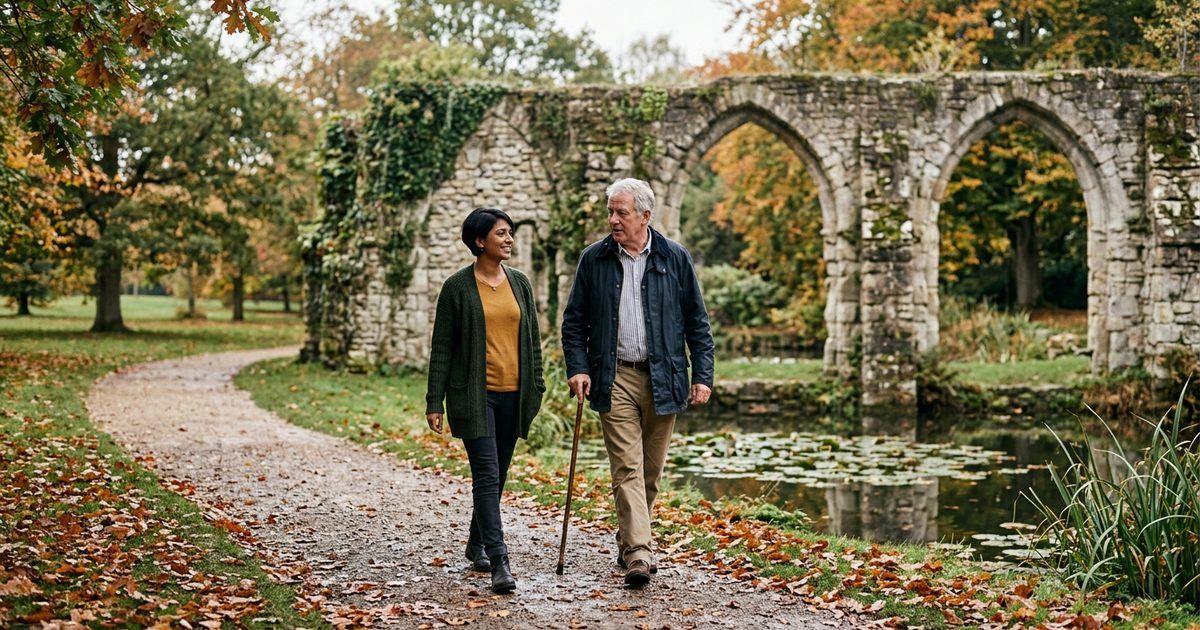
The Ruins in Tower Grove Park. The stones in the park’s Fountain Pond and Ruins came from the Old Lindell House Hotel, which was destroyed in a fire in 1867. The Lindell was an ornate, six-story building of iron, brick and stone, considered an architectural marvel in its day. A plaque at the site says Henry Shaw, the park’s founder, created the “faux” ruins between 1872 and 1873. A fake ruin built from a real disaster. Go on a weekday, when it’s quiet. Go: the Fountain Pond in Tower Grove Park.
The intake towers. Water intake towers were built in the Mississippi to collect water and draw it to the city reservoir at Bissell’s Point. Intake Tower No. 1, by William S. Eames, was built in 1894 in the Romanesque Revival style, with an asymmetrically placed turret under a conical roof and rusticated limestone facades, and it included living quarters for workmen. Both towers sit just downstream from the Old Chain of Rocks Bridge. You can’t reach them, and you don’t need to. The view from the bridge is the point. Go: the Old Chain of Rocks Bridge, 10820 Riverview Drive; look downstream from the deck.
Closer to downtown, the river gets a different treatment. Walk the St. Louis Riverfront Trail north of the Arch, and read the story of the Great Flood of 1993 before you go. It changes how that floodwall looks.
What to do in St. Louis, MO for free?
The usual free answers are the big museums in the big park. They’re fine, and you’ve done them. These are the free ones the lists leave off.
Stand inside a Richard Serra. Admission to the Pulitzer Arts Foundation, at 3716 Washington Boulevard, is free, and visitors can park for free in the lot next door. Joe, Serra’s torqued spiral sculpture, was commissioned for the Pulitzer’s courtyard. The museum keeps short hours, Thursday through Sunday from 10 to 5, and until 9 on First Fridays. The outdoor campus is open daily, sunrise to sunset.
See Grant’s St. Louis farm. Turn in at 7400 Grant Road. At Ulysses S. Grant National Historic Site, Grant first met Julia Dent, his future wife, at her family home, White Haven. No entrance pass is required, and the visitor center is open daily from 9 to 5, except Thanksgiving Day, December 25 and January 1. The Park Service doesn’t soften the hard part: from 1854 to 1859, the Dents, the Grants and an enslaved African-American workforce lived on the property.
Sit on a bench that faces the river. Bellerive Park, in Carondelet, gets its own section below. If you’re working the free list in the inner suburbs too, our guide to free things to do in Webster Groves picks up where this one stops.
Touring the towers? Here’s where to eat in St. Louis.
Where can you watch the Mississippi without the riverfront crowds?
Skip the crowded steps downtown. Two quieter spots do it better, one south and one north, and a third waits across the water.
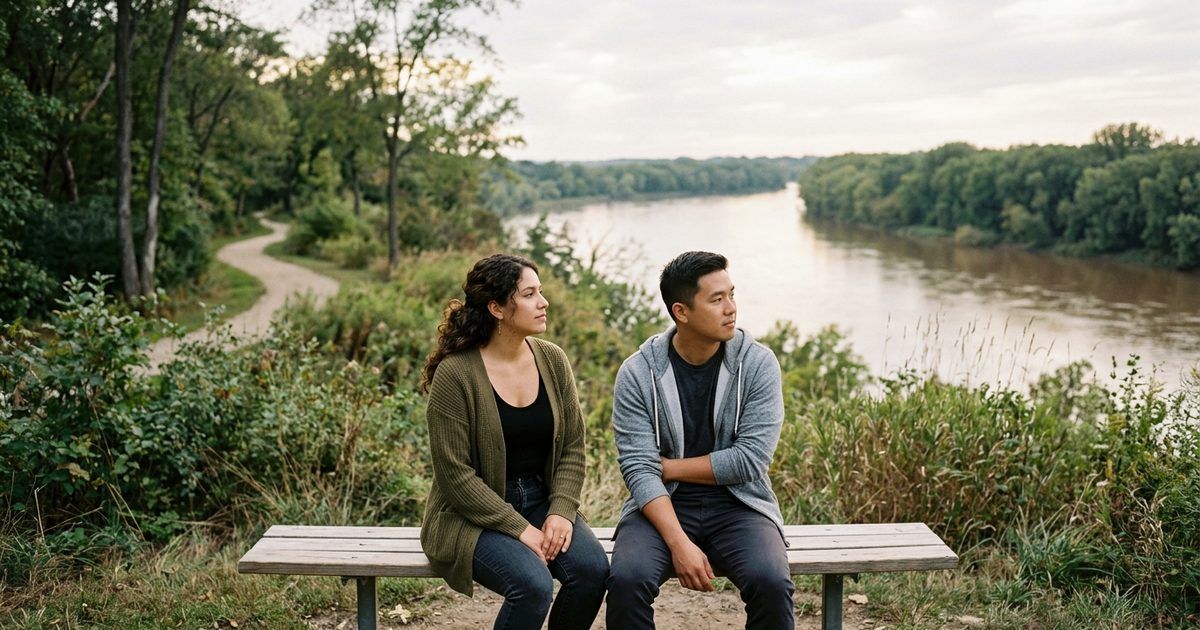
Bellerive Park, south. The city set this 8.67-acre park aside by ordinance in 1908. It was first called Riverside Park, then renamed Bellerive in honor of the early French governor of St. Louis. The city’s own park page is blunt about the reason to go: nearly every bench faces out toward the Mighty Mississippi, and the views heading south are sweeping. A crescent drive leads up to the pavilion and its overlook. Bring coffee and watch the barges work. There are no bike racks, so plan to walk the last bit.
The Old Chain of Rocks Bridge, north. The bridge stands more than 60 feet above the Mississippi, and for more than three decades it was a landmark for travelers driving Route 66. It has a famous bend in the middle: the bridge had to bend. Walk out and look downstream, and the two intake towers stand in the river below you. The bridge gets its full due in our guide to historic sites in St. Louis, and our Chain of Rocks Bridge guide covers parking and the walk.
Across the river. For the skyline from the Illinois side, start at Malcolm W. Martin Memorial Park. If you’re over there anyway, our guide to parks in Fairview Heights covers the next stop east.
Want the river from higher up, on foot? Start with our easy family-friendly hiking trails around St. Louis.
Or head to Emmenegger Nature Park’s bluff trails in Kirkwood for a view over the Meramec instead.
Where do the quieter lists lead past the city limits?
West, mostly, to a place that sits a few minutes off a highway everyone takes for something else.
The Black Madonna Shrine and Grottos, Pacific. The shrine’s story goes back to 1927, when Cardinal John J. Glennon invited six Franciscan Missionary Brothers from Poland to the Archdiocese of St. Louis. One of them, Brother Bronislaus Luszcz, spent 23 years building the grottos by hand from tiff rock out of the Old Mines area. The result is a hillside of multicolored rock grottos, mosaics and rock sculptures in the woods at 100 St. Joseph Hill Road. Missouri’s tourism office lists admission as free, with donations accepted. Call the shrine office at 636-938-5361 to check the day’s hours before you drive. It pairs well with the rest of our list of unique things to do in Eureka.
Next time somebody tells you they’ve done St. Louis, ask them how many standpipe towers are left in the whole country, or where Henry Shaw put a burned hotel. You’ll be the one who knows the climb is locked, the mound is back in Osage hands and the best bench in town faces a river. Pick one this weekend.
Planning a tower loop or a weekday morning at the Ruins? Check where to eat around St. Louis on St Louis Near Me Directory and put lunch near the stop.
If you run a café, gallery or shop a few blocks from one of these places, the people reading this are deciding where to stop next. List your business with us and turn more of them into customers.
Frequently asked questions
Why are secret towers in the Mississippi River?
They’re water intakes, not secrets. Water intake towers were built in the Mississippi to collect water and draw it to the city reservoir at Bissell’s Point. Intake Tower No. 1, designed by William S. Eames, dates to 1894. Both towers sit just downstream from the Old Chain of Rocks Bridge, which is the place to see them from.
What was the original purpose of the water tower?
In St. Louis, pressure. A standpipe tower doesn’t store water the way a tank does; it helps maintain water pressure, its water constantly rising and falling to balance the city’s supply. The Grand Avenue tower used gravity to provide pressure to water mains throughout the city before it was taken out of service in 1912.
How illegal is it to explore abandoned places?
Illegal enough to skip. In Missouri, knowingly entering or remaining unlawfully in a building or on real property is trespass in the first degree, a class B misdemeanor. Entering unlawfully upon someone else’s real property is trespass in the second degree, an infraction. This isn’t legal advice. It’s the reason every place on this page is one you can see legally.
What are some strange and unusual things to do in St. Louis?
The famous-weird circuit lives in our guide to unique things to do in St. Louis. This page is the quieter list: a fake ruin built from a burned hotel, a water tower styled as a Moorish minaret, and a stone intake tower with workmen’s quarters standing in the Mississippi.
What are some hidden places to visit in Missouri?
Start with the small places most people only drive through. Our guide to day trips from St. Louis maps the ones within two hours. Closer in, the Black Madonna Shrine’s hand-built rock grottos near Pacific are worth the drive.
Can you visit Sugarloaf Mound?
Not as an attraction. Sugarloaf Mound is a sacred site to the Osage Nation, which regained sole ownership of it after 17 years and plans preservation work and an interpretive center. Until then, see it briefly and quietly from the public street.

Written by a dedicated team of St. Louis locals who live, work, and play right here in the St. Louis metro. Founder Lane Forman and team are committed to building the region’s most trusted directory by verifying listings and connecting local businesses with loyal customers across Missouri and Illinois.