Explore St. Louis: A Local’s Guide to the Must-See Attractions
Revised October 6, 2026

What are the must-see attractions in St. Louis?
St. Louis’s must-see attractions include the Gateway Arch, the City Museum, and Forest Park — home to the free Saint Louis Zoo, Saint Louis Art Museum, Missouri History Museum, and Science Center. Add the Missouri Botanical Garden, the Cathedral Basilica, the Fabulous Fox Theatre, and a Cardinals game at Busch Stadium. Many of the best stops are free, making St. Louis one of the best big U.S. cities for a full day out on a budget.
Keep reading ↓Maybe you’ve got a long weekend and out-of-town family to entertain. Maybe you’ve lived in the metro for years and realized you’ve never actually gone up in the Arch. Either way, St. Louis rewards the person who goes looking — it’s a city of world-class institutions hiding in plain sight, many of them free, most of them within a short drive of each other.
This is a local’s overview of how to explore St. Louis: the landmarks worth your time, the neighborhoods worth wandering, and the outdoor spaces that surprise first-time visitors. Think of it as the map; the deeper neighborhood and restaurant guides linked throughout are the turn-by-turn directions once you pick a direction.
The landmarks you actually have to see
Gateway Arch National Park
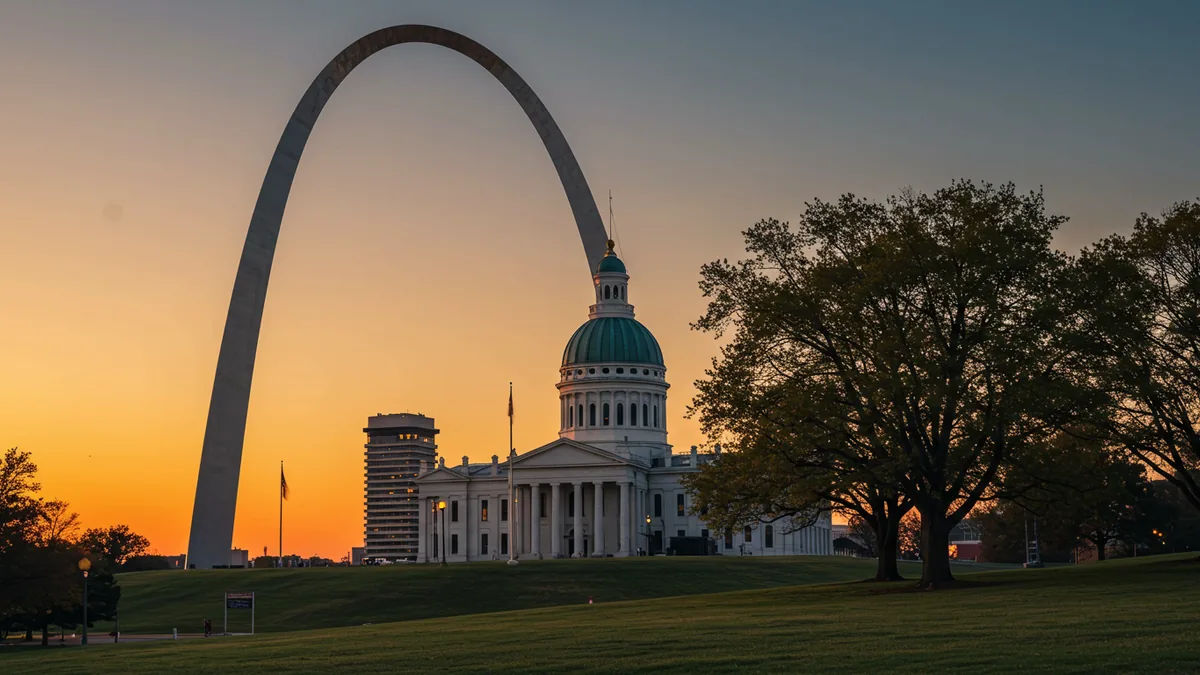
Start with the obvious, because the obvious earns it. The 630-foot Gateway Arch is the tallest man-made monument in the country and the symbol of St. Louis’s role in westward expansion. Take the tram to the top for a view stretching across the Mississippi and deep into Illinois — book tickets ahead in busy seasons, because the small pods fill up. Underneath sits a genuinely excellent (and free-to-enter) museum on the pioneers and the monument’s construction, and the riverfront walk gives you the Arch from below, framing the river.
City Museum
Forget every museum you’ve been dragged through. The City Museum, built inside a former shoe factory downtown, is a giant hand-built playground of repurposed industrial salvage — caves, slides, a rooftop Ferris wheel, aircraft you can climb into, a multi-story slide. It’s beloved by kids and, honestly, more so by adults who forgot they were allowed to climb things. Wear clothes you don’t mind scuffing. It consistently ranks among the most original attractions in the country for a reason.
Forest Park
Larger than New York’s Central Park, Forest Park is the beating cultural heart of the city and home to a remarkable cluster of institutions — most of them free. You could spend a whole day here without repeating yourself:
Saint Louis Zoo — consistently ranked among the nation’s best, with free general admission.
Saint Louis Art Museum — a world-class collection from ancient artifacts to modern masters, also free to enter.
Missouri History Museum and the Saint Louis Science Center — both free, both excellent for families.
That so much of this is free is not a small thing — St. Louis is genuinely one of the best big cities in America for a rich day out on almost no budget.
Don’t miss the James S. McDonnell Planetarium at the Saint Louis Science Center.
Planning where to eat between stops? The St Louis Near Me Directory keeps local restaurants, shops, and things to do in one place - start with our local guide to the best restaurants in St. Louis.
If you run a business like this yourself, list your business. You do good work. Why should getting more customers cost you a fortune and your trust? When a neighbor two streets over needs what you do, does your name even come up? What would it be worth to show up in a dozen searches you’re invisible in today? See who AI names instead of you →
Arts, culture, and the grand old rooms
Beyond Forest Park, the culture keeps going. The Fabulous Fox Theatre is a jaw-dropping 1929 movie palace — a “Siamese-Byzantine” fantasy of gold leaf and grand staircases — that now hosts Broadway tours and concerts; walking into the lobby is genuinely half the show, and the Fox even runs tours of the building on non-performance days for anyone who wants to gawk in daylight. The Cathedral Basilica of St. Louis holds one of the largest mosaic collections in the world — a quietly stunning, free stop that first-timers rarely expect. For contemporary work and local artists, the galleries clustered around Grand Center and the Central West End rotate often enough that there’s always something new.
Downtown adds more: Citygarden’s free sculpture park, where kids splash in the fountains in summer; the historic Old Courthouse, where the Dred Scott case was first heard; and the growing entertainment around Ballpark Village next to Busch Stadium. Union Station, the grand former train depot, now holds an aquarium, a giant Ferris wheel, a nightly light-and-fountain show, and a mini-golf course — a full evening in one place, especially with kids. It’s all an easy area to explore on foot between other stops.
A little further out, two stops reward the curious. Grant’s Farm — the ancestral home of the Busch family, on land once farmed by Ulysses S. Grant — offers a free tram tour past free-roaming animals and is a longtime family favorite. And the Anheuser-Busch brewery, a working National Historic Landmark, runs tours through its cathedral-like brew houses and Clydesdale stables. Both are quintessentially St. Louis in a way no museum quite captures.
Neighborhoods worth wandering
The truest way to feel St. Louis is to pick a neighborhood and walk it. A few of the best:
The Delmar Loop — a lively stretch of independent shops, theaters, and globe-spanning restaurants. See our Delmar Loop dining guide.
Soulard — one of the oldest neighborhoods in the city, all red brick and cobblestone, anchored by the historic Soulard Farmers Market (open Wednesday through Saturday) and a deep live-blues tradition. More in our Soulard guide.
The Central West End — tree-lined, elegant, full of sidewalk cafes, boutiques, and gorgeous historic homes. Our Central West End guide maps the food.
The Hill — St. Louis’s historic Italian neighborhood and one of the best eating streets in the Midwest; start with the guide to The Hill.
Eat like you live here
St. Louis food is its own dialect, and eating your way through it is half the point of a visit. Try toasted ravioli (breaded and fried, a genuine local invention), gooey butter cake, St. Louis-style thin-crust pizza with its distinctive Provel cheese, and a frozen custard concrete so thick they hand it to you upside down. Barbecue runs deep here too, with the local pork-steak tradition you won’t find in most other cities.
The metro’s international food is where it really opens up. St. Louis has one of the largest Bosnian communities outside Bosnia, centered in the Bevo Mill area, and its Vietnamese, Ethiopian, Mexican, and Middle Eastern kitchens are destinations in their own right — many of them family-run spots in unassuming strip malls out in the county. The brewing history is everywhere, from the Anheuser-Busch complex to a whole wave of independent craft breweries with taprooms worth an afternoon. Rather than list a hundred restaurants here, our best-restaurants guide and the neighborhood guides above do the heavy lifting — and they spread across the whole metro, Missouri and Illinois sides alike, not just the tourist core.
Get outside
For a major city, St. Louis is unusually green. The Missouri Botanical Garden — one of the oldest continuously operating gardens in the nation — is worth a slow half-day, especially the Climatron rainforest dome, the serene 14-acre Japanese Garden, and the seasonal flower shows. Beyond it, Forest Park and the historic Tower Grove Park offer miles of walking and biking paths shaded by old-growth trees, and the Great Rivers Greenway trail network keeps expanding routes across the region for cyclists. Just southwest of the city, Lone Elk Park lets you drive past free-roaming bison and elk without leaving your car, and the neighboring World Bird Sanctuary charges just $5 a person to see its raptors up close. The Mississippi and Missouri rivers open up riverboat cruises and, on calmer stretches and nearby lakes, kayaking and paddleboarding for anyone wanting time on the water. It adds up to a remarkable amount of nature for a metro this size — you’re never far from somewhere green to reset.
Nothing to do with the Arch — Troy, Illinois businesses can win the Metro East.
When to visit, and what each season offers
St. Louis is a four-season city, and each one changes what’s worth doing. Spring is the sweet spot — the Botanical Garden and Forest Park explode into color, the Cardinals season opens, and patios reopen across the neighborhoods. Summer is festival season, hot and humid, best planned around morning outdoor stops and air-conditioned museums in the afternoon; frozen custard exists precisely for these evenings. Fall brings crisp weather, the best patio dining of the year, and gorgeous light through Forest Park. Winter turns quieter and cheaper, and it’s when the free indoor museums, the Fox’s Broadway season, and the City Museum earn their keep. Whenever you come, a quick check of hours is worth it — some gardens and attractions shift seasonal schedules, and a few close on major holidays, so call ahead before a long drive.
Getting around the metro
St. Louis is a driving city, and most visitors will want a car to move between Forest Park, downtown, and the neighborhoods — distances are short but not always walkable end to end. Parking is generally easy and cheap by big-city standards, with lots and street parking near most attractions. For downtown and the Delmar Loop, the MetroLink light rail is a genuinely useful option that skips parking headaches, especially on game days when downtown fills up. Once you’re inside a district — the Loop, Soulard, the Central West End, the Hill — the move is to park once and explore on foot, because these neighborhoods reward wandering far more than they reward a windshield tour. The metro spreads across Missouri and Illinois, so if you’re staying out in St. Charles or over on the Illinois side, factor a little drive time into your plan.
Family-friendly by default
Much of what makes St. Louis great for adults doubles as kid gold. The Saint Louis Science Center — free, with a planetarium, an OMNIMAX theater, and hands-on exhibits — connects to Forest Park by a bridge over the highway that kids love in its own right. The Magic House in Kirkwood is a beloved hands-on children’s museum, the Zoo and City Museum need no further sell, and the Saint Louis Aquarium at Union Station rounds out a rainy-day lineup. Most of the best of it costs little or nothing.
Sports are woven into the city’s identity. Catching a Cardinals game at Busch Stadium is a rite of passage — the fanbase is famously knowledgeable and friendly — and a Blues game at Enterprise Center or a St. Louis City SC match at the gleaming new downtown soccer stadium brings the same energy. When there’s no game on the schedule, stadium tours get you behind the scenes. A little planning — comfortable shoes, tickets booked ahead, snacks packed for the young ones — goes a long way toward a full day that ends with tired feet and good memories rather than a meltdown.
Planning more than one stop? Here are the towns around St. Louis worth the drive, each with its own local guide.
Frequently Asked Questions
How should I spend one day in St. Louis?
A great one-day loop: morning at the Gateway Arch and its riverfront, midday exploring Forest Park (pick the Zoo or the Art Museum — both free), and an afternoon or evening in a walkable neighborhood like the Delmar Loop or the Central West End for dinner. It keeps drive time short and mixes a landmark, a free institution, and real local flavor.
What are the most famous things to see in St. Louis?
The Gateway Arch is the signature landmark, followed by the City Museum, the free Saint Louis Zoo, Forest Park and its museums, the Missouri Botanical Garden, and Busch Stadium. The Cathedral Basilica and the Fabulous Fox Theatre are stunning stops many visitors overlook.
What can you do in St. Louis for free?
A lot. The Saint Louis Zoo, Saint Louis Art Museum, Missouri History Museum, and Saint Louis Science Center all have free general admission, and the Gateway Arch museum, Citygarden sculpture park, the Cathedral Basilica, and wandering neighborhoods like Soulard and the Loop cost nothing. St. Louis is one of the best big U.S. cities for a full day out on a budget.
What is St. Louis known for?
The Gateway Arch, a deep brewing heritage, passionate Cardinals baseball, and a surprising density of free world-class museums and gardens. Food-wise, it’s known for local originals like toasted ravioli and gooey butter cake, plus a rich international dining scene across its neighborhoods.

Written by a dedicated team of St. Louis locals who live, work, and play right here in the St. Louis metro. Founder Lane Forman and team are committed to building the region’s most trusted directory by verifying listings and connecting local businesses with loyal customers across Missouri and Illinois.