Your St. Louis Home Inspector Isn't Required to Check for Radon or Lead
Revised October 24, 2026
What does a home inspection cover in St. Louis?
A home inspection is a non-invasive, visual examination of the accessible areas of a house. Under the InterNACHI standard it is not technically exhaustive, and the inspector is not required to check for radon, lead paint, asbestos, mold, pests or underground items, or to estimate repair costs. In the City of St. Louis, the separate $120 occupancy inspection is a basic code check, not a condition report.
Keep reading ↓“The inspector said it was fine.”
People say it standing on the basement steps after the first hard rain, the floor drain gurgling, a sour sewer smell coming up off the cold concrete. They said it at the closing table too, pen in hand, a forty-page report full of photos sitting in their inbox. Here is the part that stings: the inspector was probably telling the truth. The pipe under the yard was never on the list.
Start with the City’s own words. Every property in St. Louis sits in a Housing Conservation District, and a residential sale needs a City Certificate of Inspection before anyone moves in. Then the City’s permit page says, in plain print, that its inspection “does not imply a guarantee or warranty as to the overall condition of the building and/or its systems,” and that buyers may want a separate commercial grade building inspection. The private inspector you hire for that job? In Missouri, home inspectors do not need a license or training. And the InterNACHI standard of practice tells inspectors they are not required to determine radon or lead paint, or to inspect underground items.
So “it passed inspection” can mean two different inspections, and neither one promised to look at the line that carries your sewage to the street.
So do this before your inspection deadline runs out. Book a sewer scope and watch the camera crawl down your line to the street. Order the free state radon kit with the coupon code TESTING. If the house was built before 1978, use your 10-day window for a lead paint inspection instead of signing it away. Then get a contractor quote on every big finding, because the inspector is not required to price a single repair.
What does a home inspection cover in St. Louis?
A home inspection is a non-invasive, visual examination of the accessible areas of a house. Under the InterNACHI standard it is not technically exhaustive, and the inspector is not required to check for radon, lead paint, asbestos, mold, pests or underground items, or to estimate repair costs. In the City of St. Louis, the separate $120 occupancy inspection is a basic code check, not a condition report.
Read that list again with an old St. Louis house in mind. The brick basement that smells like wet stone. The painted-over trim. The yard where the sewer line runs out toward the street, out of sight. The standard says an inspection “will not identify concealed or latent defects,” and that it does not estimate what any repair will cost. That is not an inspector cutting corners. That is the rulebook. A buyer who assumes the report covered those things finds out later, usually with a plumber’s invoice in one hand.
The City’s inspection is a code check, and the City says so
The City visit feels official, and it is: a City inspector with a clipboard walking through your rooms and around the outside of the house. The City’s Housing Conservation District inspection is real, it is required on a sale, and it is cheap: the application is $120, and the certificate is good for 12 months. A City inspector walks the exterior and interior and sets the dwelling’s occupancy load. If the certificate comes back with violations, the owner has 30 days to fix them. You can read how St. Louis occupancy and code inspections actually work before your closing date.
But look at what the City says it is checking: minimal interior code violations and minimum exterior standards under the International Property Maintenance Code. Minimum. A furnace can rattle to life, pass a code walk-through and still be close to the end. Nobody on that visit is paid to tell you how many winters it has left.
So when a seller or a listing says the house “passed inspection,” ask one question: which one? The City’s certificate protects the City’s housing stock. The private inspection is the one meant to protect you, and it has its own blind spots.
Nobody licensed the person with the flashlight
You will spend an afternoon following a stranger with a flashlight and a moisture meter through the biggest purchase of your life. In Missouri, that person does not need a state license or any training to do the job. Professional engineers are licensed by the state. Home inspectors are not.
And the seller’s agent? Missouri law is blunt about that too. Section 339.730 says a seller’s or landlord’s agent “owes no duty to conduct an independent inspection or discover any adverse material facts” for the buyer.
Line it up and it reads like a joke nobody laughs at. The City’s inspection guarantees nothing. The private inspector needs no license. The seller’s agent has no duty to go looking. That leaves you. Screenshot that and send it to anyone about to buy in this town.
The pipe under the yard is yours
Flush the upstairs toilet and listen. If the basement floor drain answers with a slow gurgle, you are hearing the part of the house nobody inspected.
Here is the St. Louis fact that turns a house from a good deal into a bad week. The City’s Street Department says the entire sewer lateral line from your home to the MSD main is private property. Your pipe, all the way out.
There is a safety net, and it is smaller than people think. Owners of homes with 6 or fewer units pay a $28 fee on their real estate tax bill for the City’s Sewer Lateral Repair Program. It pays to repair broken lateral lines under the public right of way. It does not cover breaks in the part of the line under private property, and it does not cover clearing clogs or tree roots along any part of the line. To use it, you need a licensed plumber’s report and video of the problem.
That is why the add-on worth paying for on an older house is a sewer scope: a plumber or inspector feeds a camera down the line while you watch the screen, and you see roots fanning through the joints or a sag holding standing water before you own it, not after. A general inspection will not do it. The standard says the inspector is not required to inspect underground items.
Done reading about sewer lines for one sitting? Fair. Go get dinner in Cedar Hill and come back for the radon part.
Radon is on the skip list, and the state will mail you a test
Radon has no smell, no color, no sound. You can stand in a finished basement with the dehumidifier humming and never know. The inspection standard lists airborne hazards, including radon, among the things the inspector is not required to determine.
The Missouri health department says data from its residential radon testing program shows that 1 in 3 homes tested were above the recommended action level of 4.0 pCi/L. It also offers free radon test kits to Missouri residents, limit one per household, sent to your home at no cost. Use the coupon code TESTING on the request form linked from the state’s radon page. A free envelope in your mailbox beats a guess.
Lead paint, and the 10 days you can sign away
Run a thumbnail along the windowsill of an old house and the paint comes up in chips, layer under layer. The InterNACHI standard does not require the inspector to determine lead paint either. Federal law gives you a separate tool.
For most housing built before 1978, federal law requires sellers to provide homebuyers a 10-day period to conduct a paint inspection or risk assessment for lead-based paint hazards. The two sides can agree in writing to lengthen or shorten that window, and homebuyers may waive it. That waiver is one checkbox in a stack of paperwork. Decide on purpose whether you are giving it up.
Got a report full of red flags and need someone to fix them? Get quotes before your inspection window closes, and find local plumbers, electricians and contractors on St Louis Near Me Directory.
If you run a home inspection, sewer scope or radon testing business in St. Louis, a listing on St Louis Near Me Directory puts your name on the page buyers read before they hire, so see how to get more customers here.
Inspection day: go, and bring a notebook
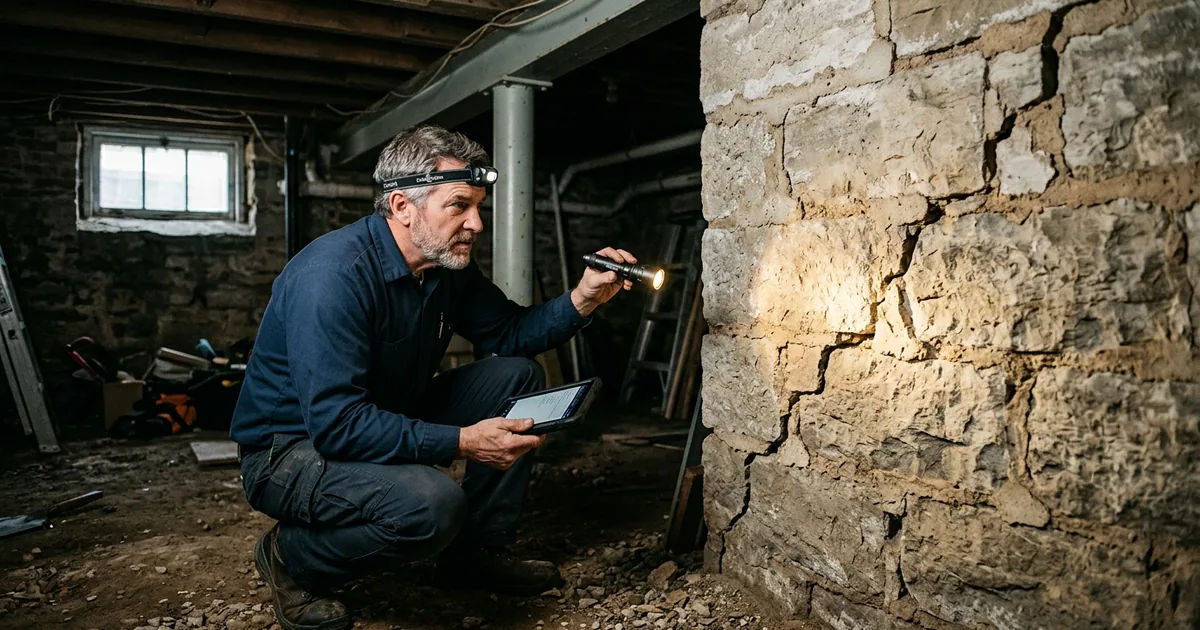
Ask when you book whether you can come along, and then show up in shoes you don’t mind getting dusty. Follow the flashlight into the basement. Stand next to the electrical panel when the cover comes off. Listen when the furnace kicks on: the click, the whoosh, any rattle the inspector stops to note. A photo in a PDF never lands the way that sound does in a cold basement.
Keep two columns in your notebook. One is what the inspector found. The other is what the inspector says is outside the job: the sewer line, radon, lead, pests, whatever sits behind a wall or under the ground. That second column is your shopping list for the week, and it is the one most buyers never write down.
Before you leave, ask three plain questions. Which of these findings would you fix first in your own house? What did you not look at today, and why? And when will the report land in my inbox? Then put your inspection deadline from the contract on the calendar in red, because every specialist you need has to fit inside it.
What to order for an older St. Louis house
The general inspection is the starting point. For an older house here, add the pieces the standard leaves out:
- A sewer scope of the lateral, because the whole line to the MSD main is yours.
- A termite or pest inspection, since the standard does not require the inspector to determine pests.
- The free state radon kit, if your timeline allows for it.
- A deliberate choice on the 10-day lead window if the house predates 1978.
- Contractor quotes for anything flagged, because the inspector is not required to estimate repair costs.
More reading before you sign:
- Old-house wiring in St. Louis
- How to choose a real estate agent in St. Louis
- How to verify a contractor in Missouri
- When a contractor won’t finish the job
Frequently asked questions
Is it worth doing a sewer scope inspection?
On an older St. Louis house, yes. The City says the entire sewer lateral from your home to the MSD main is private property, and its repair program covers only breaks under the public right of way, not breaks under your yard or clogs and tree roots. A general inspection is not required to inspect underground items, so the scope is the only way to see the line before you own it.
What is the biggest red flag in a home inspection?
Often it is what the report leaves out. A standard inspection is not required to check radon, lead paint, pests or anything underground, and it will not identify concealed defects. If the report is thin and photo-free, or the inspector will not show you a sample report, treat that as the flag. Missouri does not require inspectors to be licensed, so vetting them is your job.
What is a deal breaker in a home inspection?
That depends on your budget and the repair quotes, not on a fixed list. In St. Louis, some of the costliest surprises sit outside a general inspection entirely, like a broken sewer lateral under the yard that the City’s program will not pay for. Get a sewer scope and contractor quotes before your inspection window closes.
Do the seller have to fix everything on a home inspection?
A private inspection report is information for you, not an order, so repairs are something you negotiate in the contract: a fix, a credit, a lower price, or nothing. The City’s occupancy inspection is different. If its certificate is issued with violations, the property owner has 30 days to make the repairs.
How much does a good house inspection cost?
Prices vary from one inspector to the next, so call three inspectors, ask for a sample report and ask what add-ons like a sewer scope cost. The City of St. Louis does publish one fee: $120 for its occupancy inspection application, and that is a basic code check, not a condition inspection.
Do you lose earnest money if an inspection fails?
Whether you can walk away and keep your earnest money depends on the inspection terms and deadlines written into your contract, so read them before inspection day and ask your agent which date matters.
Does Missouri license home inspectors?
No. In Missouri, home inspectors do not need a license or training, while professional engineers are licensed by the state. Ask any inspector for a sample report and for the standard of practice they follow before you book.

Written by a dedicated team of St. Louis locals who live, work, and play right here in the St. Louis metro. Founder Lane Forman and team are committed to building the region’s most trusted directory by verifying listings and connecting local businesses with loyal customers across Missouri and Illinois.