Nobody Is Watching Your Feet: How to Choose a Dance Studio in St. Louis
Revised November 10, 2026
What is the best dance to learn as an adult?
There isn’t one answer, but for most adult beginners it’s a social partner style, like swing, salsa or basic ballroom, because the patterns repeat and you can use them on a real floor quickly. Want technique instead of a partner? Adult ballet or tap. Pick by what you want to be able to do.
Keep reading ↓Your palms are already damp in the parking lot. That’s the real first step of every dance class, and no studio puts it on the schedule: the walk from the car to a room full of mirrors, sure that everyone inside is about to watch you trip over your own feet. They won’t. They’re all watching their own. What deserves your attention is the thing under everybody’s feet, and almost nobody looks at it.
The floor. There’s one in South St. Louis worth the drive. The Casa Loma Ballroom at 3354 Iowa Avenue, in the Cherokee Street and Antique Row business district, was built in 1927 and says it offers one of the largest “floating” dance floors in the Midwest at 5,000 square feet. The ballroom’s own history lists the music of Artie Shaw, Glenn Miller, Benny Goodman and Frank Sinatra among what it has offered over the years. A floating floor isn’t a poetic phrase. It’s built to give a little under your weight, so your knees and ankles aren’t the only thing absorbing every landing. Your joints notice it right away. A studio brochure never mentions it.
So before you pay any studio a dime, go feel a real floor. The Casa Loma’s site lists a 16 to 24-piece orchestra every Friday night and dancing to the oldies on Saturday nights, and it offers dance lessons in waltz, fox trot, tango, Latin and swing. Its 24-hour information line is 314-282-2258. Stand at the edge of that floor on a Friday with the horns going, feel the floor give a hair under your shoes, and watch who’s out there. Every one of them was a beginner once. Then do the same test in every studio you visit: kick off a shoe, bounce once on your heels, and notice whether the floor gives back or hits back through your shins.
That’s the quiet truth about choosing a dance studio, for yourself or for a kid. The decision doesn’t get made on a website or in front of a trophy shelf. It gets made in the first hour after the music starts: the floor, whether the teacher learns your name, whether the room laughs with beginners or past them. Call two studios this week, ask to watch a class in the exact time slot you’d take, and go. And ask how the price drops if you commit. At the Ballroom Dance Academy St. Louis, which holds classes in the Grand Hall at the Grandel Theatre, 3610 Grandel Ave, beginner Bronze ballroom is $13 a class, payable by the session, and dropping in on adult ballroom runs $20 a class. Same floor, same teacher. The only difference is whether you said yes to the whole session.
What is the best dance to learn as an adult?
There isn’t one answer, but for most adult beginners it’s a social partner style, like swing, salsa or basic ballroom, because the patterns repeat and you can use them on a real floor quickly. Want technique instead of a partner? Adult ballet or tap. Pick by what you want to be able to do.
Most adults pick a style by how it looks on video. Ballroom looks elegant, hip hop looks fun, ballet looks like discipline. None of that tells you what the first couple of months feel like, and the first couple of months are where beginners quit.
Try a different question. What do you want to be able to do six months from now? Dance at a wedding without that cold drop in your stomach when the DJ calls everyone up. Move better and get stronger. Have somewhere to be on Thursday nights where nobody asks about work. Those three answers point at three different rooms, and a studio that’s excellent for one can be a poor fit for another.
Social partner styles get you to usable fastest. Swing, salsa, bachata and the basic ballroom rhythms are built on a small set of patterns that repeat, so a handful of classes really can put you on a floor with a stranger, your hand on their shoulder blade, and have it work. Solo styles reward patience instead. Adult ballet, tap and contemporary hand you technique, body awareness and a slow, satisfying climb, and they ask you to be visibly a beginner a good while longer.
How do you choose a style when you’ve never danced?
Start with whether you want a partner. That one fork sorts most of the confusion, because partner dancing is a conversation and solo dancing is a practice. Adults who call themselves uncoordinated often do better in partner classes, where rotation and a lead give the body something to answer instead of a mirror to fight.
If you want to dance socially
Swing and salsa are the usual doors. Beginner classes in both tend to assume nothing and rotate partners, so you don’t need to bring one, and both connect to a scene where people go out dancing afterward. Ask whether the studio hosts social nights or points you toward them. A partner-dance class with nowhere to use it is a treadmill. In South St. Louis, the Casa Loma offers both halves under one roof: lessons in swing and fox trot, and a live orchestra every Friday night.
If you want technique
Adult ballet is the most underrated class there is. Nobody in that room is auditioning for anything. A good adult ballet or barre-based class rebuilds your posture, your ankles and your patience, and it makes every other style easier later, tap very much included. Progress feels slow at first, like your feet belong to somebody else. Then something clicks.
If you mostly want the workout
Hip hop, jazz, heels and cardio-style dance classes carry the least homework. Show up, sweat through your shirt, leave. They’re also the hardest place to actually learn, because the choreography changes often and repetition is what builds a dancer. That’s a fine goal. Just name it honestly, and pick a studio that names it honestly back.
What is a first dance class actually like?
Louder, sweatier and friendlier than you pictured. You’ll hear the count before you hear the song, the teacher calling five, six, seven, eight over the speakers while the room smells faintly of rubber soles and somebody’s deodorant. Most beginner classes open with a warm-up, move into a basic step or a short across-the-floor drill, break the material down in pieces, then run it with music at the end. You’ll be lost for stretches of it. Everyone is.
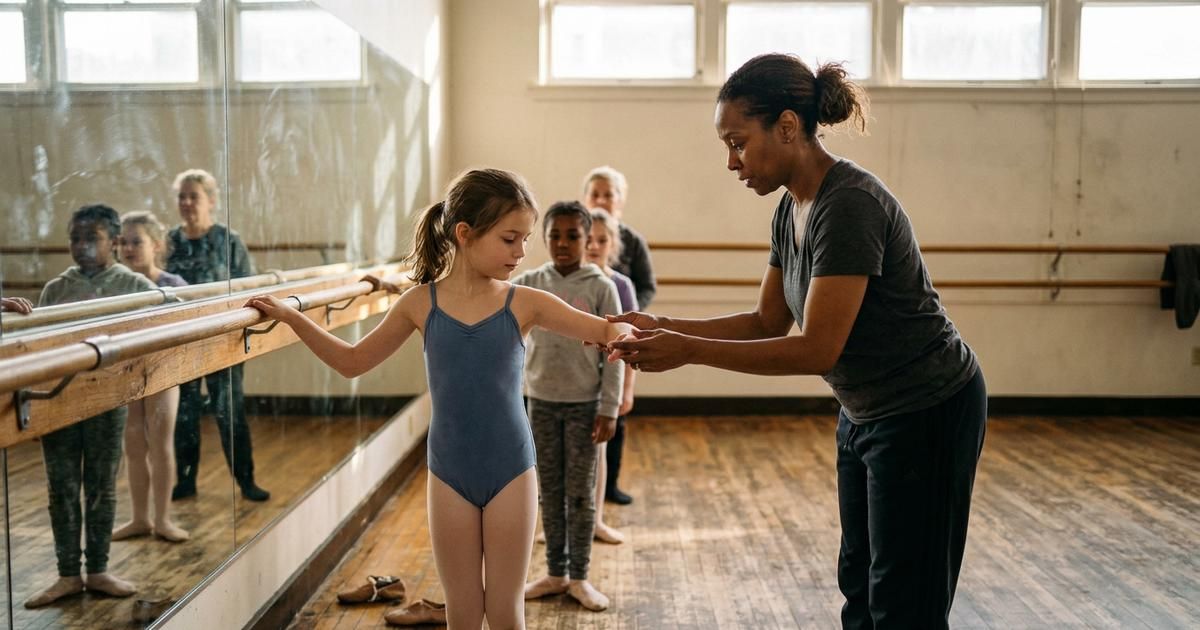
Here’s what nobody tells first-timers: nobody is watching you. They’re watching themselves in the mirror and worrying about their own feet, exactly the way you are. The instructor is watching, which is the entire point, and a good one will fix something small about your frame or your weight transfer early in the hour.
Wear clothes you can move and sweat in. Fitted enough that the teacher can see your knees and hips, loose enough that you forget about them. On shoes, ask before you buy. Ballet wants slippers, tap needs tap shoes, partner dance wants a smooth sole that pivots, and hip hop wants clean sneakers that never go outside. Plenty of studios let a first-timer borrow a pair or dance in socks, and a decent front desk volunteers that instead of selling you shoes on night one. For ballroom, the Grandel classes ask for enclosed shoes with low heels, no spikes and nothing backless, and note that leather soles are best while rubber soles can make it more challenging. Their tip: Tom’s are surprisingly good dance shoes.
Get there early. A few minutes in the lobby tells you more than an hour on the website: who greets people, whether the adults talk to each other, whether the class before yours walks out flushed and smiling or quiet and grim.
Sweaty palms before a first night out are a St. Louis tradition, not just a dance thing. See how open mic comedy nights work.
How much should I pay for dance classes?
Enough to get a trained teacher in a real dance space, and never before you know what the whole season costs. Pricing comes in a few different shapes, and comparing two studios on the per-class rate alone is how families get surprised in the spring. Ask what the season total comes to, not the per-class rate.
Adults usually meet one of three structures. Drop-in by the class, the most flexible and usually the priciest per hour. A class card or punch pass, cheaper per class, with an expiration date worth reading twice. Or monthly and session tuition, which assumes you come every week: best value if you do, worst deal in the building if your job travels.
Grand Center ballroom, by the class
At the Ballroom Dance Academy St. Louis, Bronze ballroom levels, including Wedding Essentials, cost $13 a class and Argentine Tango 101 is $14 a class, paid by the session. Children’s ballroom is $10 a class. Dropping in on adult ballroom or tango is $20 a class, and beginner Bronze isn’t open to drop-ins, so the session is the cheaper way in.
Private lessons sit in their own category, billed by the lesson and often sold in packages. They’re the fastest way to learn and the fastest way to spend. For a hard deadline like a first dance at a wedding, a few privates plus a weekly group class beats privates alone, because the group class is where you learn to dance with somebody who isn’t your teacher.
Children’s tuition is built differently. It often runs as a season that roughly tracks the school year, with a registration fee at the front and a recital at the back. The recital is where the real number hides. Costume fees are often charged per routine, so a child in three classes can need three costumes, plus tickets, tights, shoes, a photo package and recital week itself. If the studio competes, add entry fees, choreography fees and travel. None of that is a trick. It just isn’t printed on the tuition page. The same pattern shows up in how to choose music lessons in St. Louis, where the recital is smaller and the instrument is the line that bites.
Don’t expect a line-by-line quote on the first call. Say it plainly instead: one class a week, and I need to know what I’m committing to through the end of the season. How clearly that gets answered tells you plenty about the months ahead.

Is dance an expensive hobby?
It can be either, and the split falls on one word: performance. An adult taking a single weekly group class in one pair of shoes is running a cheap hobby by any standard. A child in three classes with a spring recital and a competition team is running an expensive one, and almost all of that gap is costumes, fees and travel.
Creep is the thing to watch for. One class becomes two because her friends are in jazz. Two becomes three because a teacher says she’s ready for pointe prep. Each step is small and reasonable. Each one also brings a costume, a rehearsal slot and another night of eating dinner in the car, and the arc looks about the same whether the family lives in Dardenne Prairie or Shrewsbury.
Adults have the opposite problem, which is stopping. A punch pass with an expiration date pressures you into classes you didn’t want, and monthly tuition you skip for six weeks is just a donation with extra steps. Match the payment structure to your real calendar rather than your January intentions.
Cheapest honest path for an adult beginner: one weekly group class, one style, borrowed or basic shoes, for a full session before you add anything. Still going when the session ends? Buy the good shoes.
What should you look for when you watch a class?
The floor and the teacher’s eyes. A sprung or floating floor protects knees and ankles in a way that tile laid over concrete simply can’t, and you can feel the difference in one jump: one gives back, the other jars your teeth. Where the instructor’s attention goes tells you whether corrections actually happen. Watch the weakest dancer in the room. What happens to that person is what will happen to you.
Class size matters more than credentials on a wall. A room where the teacher can reach everyone is teachable. A packed room is a performance the teacher gives at students. Count bodies, then count how many times the teacher says an individual name out loud. No names in a whole class is a warning.
Other things worth clocking from the doorway: whether the music is so loud that instruction drowns, whether late arrivals derail everything, whether class ends on time, whether a struggling kid gets corrected kindly or embarrassed in front of friends. Then stand in the lobby at pickup, which is the most honest few minutes in a studio’s week.
Credentials aren’t nothing, mind you. Training background, years teaching, and whether the person running the class is also the person in the photos all count for something. For children, ask who covers when the regular teacher is out, because across a long season it will happen.
The questions that reveal a studio’s real character
Ask about the student who struggles. Every studio keeps a polished answer ready for questions about excellence, and almost none has one ready for the child who can’t keep up or the adult who vanished for three weeks. Watch the face of whoever answers. That pause predicts your experience better than anything else you could ask.
Shortlist two or three studios worth interviewing. Watch a class, take the trial, then say plainly what you want: fun, real technique, competition, a first dance at a wedding, or one hour a week that gets you out of the house. Hold that against what the studio is set up to deliver. The gap is the signal, not the price.
Questions that earn their keep: Where do your adult beginners go after this class? Is the recital required, and what happens if we skip it? Do you rotate partners, or should I bring one? What’s the level above this one, and how do people move up? What do you do with a student who falls behind? How full is this class in February, not September? Can I pause if I travel? Who teaches when the owner is out?
One studio hears “I have never taken a class and I want to dance at my sister’s wedding” and comes back with a level, a plan, a social night and an honest caution about the timeline. Another quotes a rate and stops talking. Both might teach well. Only one has told you they’ve had your exact student before.
What is the most important skill in dancing?
Keeping time. Musicality beats flexibility, memory and even coordination, because a dancer who lands on the beat reads as a dancer and one who rushes never will. In partner styles the skill has a second half: clear leading and honest following, which is communication far more than choreography.
The unglamorous skill matters more, though. Tolerating being bad. Adults leave dance early not because the steps are hard but because the mirror is relentless, and being willing to look clumsy in a bright room full of people, cheeks hot, is the real gate. No studio advertises that class. Every studio teaches it anyway.
Which makes a room’s culture a technical feature rather than a soft one. A studio where beginners laugh at themselves out loud keeps more dancers than a studio with sharper technique and no warmth, because the dancers who stay are the ones who get good.
How do you pick between two studios that both look fine?
Pick the one you’ll still be driving to in February. Convenience beats reputation across a long season, and the celebrated studio across the county loses to the good one around the corner by the third cold Tuesday, wipers going, kid asleep in the back seat. A family in Spanish Lake and a family in Frontenac can look at the same studio and reach opposite answers, because only one of them is crossing the county in the dark.
Test the commitment structure next. Can you leave? A monthly or session arrangement with a clean exit is worth more to a new adult dancer than a discount for paying a year upfront, and a parent enrolling a child for a first season should know exactly what withdrawing in November costs, in money and in costumes already ordered.
Then take the trial. Ask for one, or at least to observe, and if a studio refuses, it has told you something useful. Go on an ordinary week rather than during an open house, and go in the time slot you’d actually attend. A Saturday demo class is not the Wednesday-at-seven room you would be living in.
Ready to start calling? Browse dance instructors and studios around St. Louis on St Louis Near Me Directory, pick two or three, and go watch a class with your questions already written down.
If you’re the studio owner, the ballroom instructor or the one-person salsa crew teaching those beginner nights, the customers you want are asking Google and ChatGPT where to learn right now, and the name that comes up first gets the call. Put your studio where they look.
With younger children the weighting shifts toward patience, scheduling and the drive more than pedigree. The roundup of kids music, art and dance classes in St. Louis is a reasonable place to see the options side by side before you start calling.
Frequently asked questions
What is a good age to start dance classes?
Whenever a child can follow a teacher in a room full of other kids, and the format matters more than the birthday. For the youngest kids, look for a creative-movement class, which mostly teaches a room: lines, listening, taking turns. Formal ballet technique tends to come later, once ankles and attention can carry it. Starting later costs a child very little. Ask each studio which class fits your child’s age.
What is the average cost of dance lessons?
There isn’t a usable average, because the shapes differ too much to blend. Private lessons bill by the lesson. Adult group classes sell as drop-ins, punch passes or session tuition, and a session usually beats dropping in on price per class. Children’s classes often run as a season with registration, recital and per-routine costume fees layered on top. Ask what the full season comes to, then compare two studios on that number.
Can I learn dance after 40?
Yes, and adult beginner classes are full of people doing exactly that. What changes is recovery, not capacity. Warm-ups matter more, floors that give a little matter more, and progress arrives in weeks rather than days. Partner styles like swing and ballroom make the friendliest entry because the patterns repeat. Mention knees, hips or a bad back to the instructor on night one.
What to do on the first day of dance class?
Arrive a few minutes early, wear something you can sweat in, and tell the teacher it’s your first class. Stand where you can see rather than in the back corner. Expect to be lost for parts of the hour, because the material repeats and the second week feels very different from the first. Hold off on buying shoes until you know you’re staying.
What should my daughter wear to dance class?
Whatever the studio’s dress code says, and most studios have one. Ballet typically means a leotard and tights with hair pulled back off the neck. Jazz and hip hop usually allow fitted athletic clothes. Shoes vary by style, so ask the front desk before buying anything, and label every single item, because a studio lost-and-found bin in March is a sad place.
What is the easiest dance to learn for beginners?
For most adults it’s swing or a basic ballroom rhythm, since both rest on a handful of repeating patterns you can use on a real floor quickly. Line dancing is easier still and needs no partner at all. Solo technical styles aren’t harder to begin, they’re just slower to feel good, which is a different problem worth knowing in advance.
Do I need a partner for adult dance classes?
Usually not. Many beginner partner classes rotate, so you dance with several people in an hour while the teacher balances the room. Bringing someone is fine and occasionally slows you both down, because you learn faster against different frames. Call ahead if a class is listed as couples-only, which some wedding-prep courses are by design.

Written by a dedicated team of St. Louis locals who live, work, and play right here in the St. Louis metro. Founder Lane Forman and team are committed to building the region’s most trusted directory by verifying listings and connecting local businesses with loyal customers across Missouri and Illinois.