Is Pet Insurance Worth It in St. Louis? The Local Vet Fund Won’t Pay for the ER
Revised November 8, 2026

Should I get pet insurance or just put money aside?
If a $1,300 vet bill tomorrow would mean a credit card you can’t pay off, get insurance and save on the side. A savings fund starts empty, and anything diagnosed before you buy a policy is excluded as pre-existing. Owners with several thousand dollars set aside just for the pet can reasonably skip it.
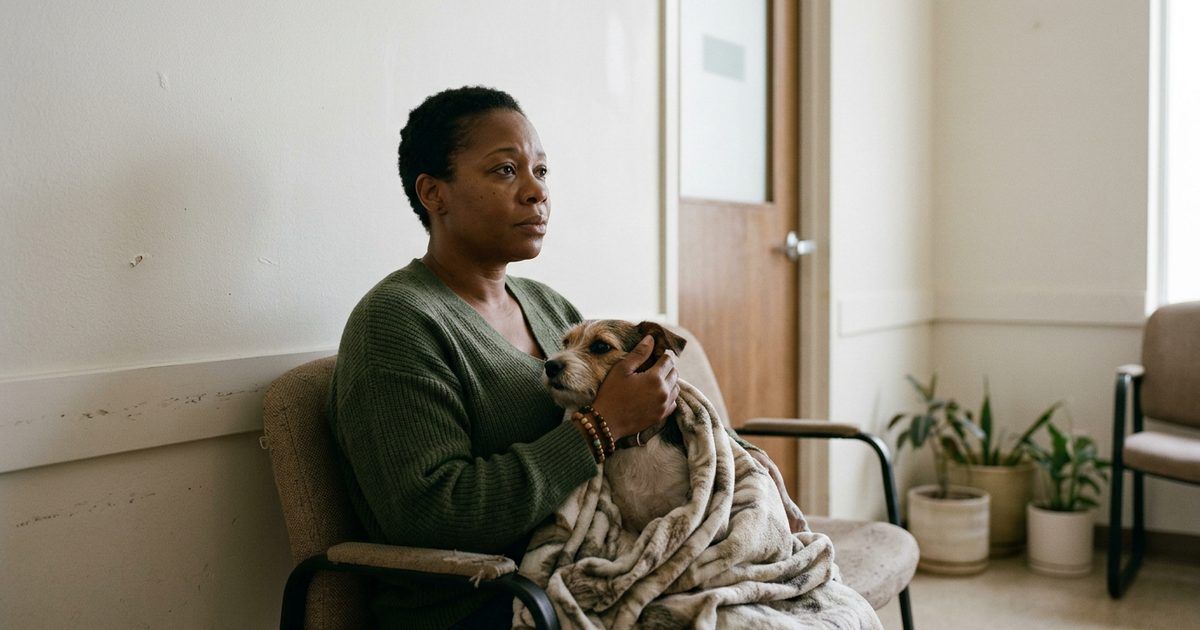
Keep reading ↓The estimate comes across the counter on a clipboard while your dog shivers against your leg on the cold tile. Exam. Bloodwork. Ultrasound. One night in the hospital. You read it twice, the way everybody does, and somewhere behind you the lobby TV keeps talking to nobody.
Most St. Louis owners have a backup plan for that moment, and it’s usually “there’s help for this around here.” There is, just not at that counter. The APA Adoption Center runs the Heads to Tails Hope Fund, a local fund that helps owners with vet bills, and its own page says it in capital letters: funding is NOT available for emergency services, or for care that’s already in process. Even when a grant does come through for planned care, it typically covers up to half of the estimate and never more than $1,000.
So the real St. Louis question isn’t whether insurance is a good product in general. It’s who pays at 2 a.m., when the city’s own safety net has already said no. Your options at that counter come down to three: what you’ve saved, what you can charge, and what a policy hands back afterward. This guide runs all three with real numbers, then shows the timing trap that makes “I’ll save first and insure later” the most expensive plan of the lot. And if your dog rides along to every patio and trailhead on our list of dog-friendly places in St. Louis, count each outing as one more chance at a cut paw.
Should I get pet insurance or just put money aside?
If a $1,300 vet bill tomorrow would mean a credit card you can’t pay off, get insurance and save on the side. A savings fund starts empty, and anything diagnosed before you buy a policy is excluded as pre-existing. Owners with several thousand dollars set aside just for the pet can reasonably skip it.
Savings are good at the bills you can see coming. The yearly shots. The monthly heartworm pill. The ear infection that shows up every humid summer like a bad houseguest. Paying a premium so an insurer can hand part of that back to you, minus its costs, is a poor trade.
Insurance earns its money on the other kind of bill, the one that lands all at once with four digits on it. A savings fund loses that race two ways. It’s slow: set aside $100 a month and you won’t cover one bad ER night for more than a year. And it’s blind to timing, because your dog doesn’t know the fund is still filling up.
For most households the strongest setup is both. A policy with a deductible high enough to keep the premium down, plus a small fund that covers that deductible and the routine stuff. If you already have several thousand dollars set aside for the pet, and you’d spend it on a surgery without losing sleep, skipping insurance is a fair call. Just make it a decision, not a default.
The $1,321 night, line by line
Here’s what that clipboard usually adds up to. CareCredit, the vet-financing company, publishes average emergency prices by state, and in Missouri an emergency exam for a dog averages $115. Add that $115 to the national averages for a basic blood count at $104, an ultrasound at $483 and one night in a veterinary clinic at $619, and a fairly ordinary scare comes to $1,321. That’s the dog who ate something strange and goes home the next afternoon, tail going, smelling like the clinic.
Nothing about that night is exotic, and that’s the point. The exam is the cheap line. The hospital bed is where the money goes, and every extra night repeats it. Ask for a written estimate before treatment starts, and ask what would change it. Our guide to finding an emergency vet in St. Louis walks through the clinics and what to bring.
Now hold that $1,321 next to the local help. The Hope Fund won’t touch it, because it’s an emergency. The low-cost clinics and voucher programs in our guide to low-cost vet care in St. Louis are built for spay days and shots, not a 2 a.m. ultrasound. That’s the gap a policy is for.
How does a policy actually pay the bill?
After the fact. With most policies you pay the clinic in full, send the insurer the itemized invoice, and wait for the money to come back. You still need the $1,321 on a card that night, which is why the small fund matters even with a policy.
Three dials set the size of the check: the deductible you pay first each year, the share of the rest the insurer reimburses, and the most it will pay. Run the $1,321 night through a $250 deductible at 80%. The insurer takes off the $250, then pays 80% of the remaining $1,071, which is $856.80. You’re out $464.20 that night, plus the premiums. Turn the dials to a $500 deductible at 70% and the check drops to $574.70. Before you sign, ask your clinic whether it takes direct payment from any insurer. If it does, that answer can be worth more than a cheaper premium somewhere else.
Why does waiting to buy pet insurance cost the most?
Because the first diagnosis writes the exclusion. Under the National Association of Insurance Commissioners’ model law, a pre-existing condition is one where, before the policy started or during the waiting period, a vet gave medical advice about it, the pet was treated for it, or the pet had signs or symptoms directly related to it. Your pet’s chart is the evidence.
Knees show how much that costs. The American College of Veterinary Surgeons says 40-60% of dogs with cruciate ligament disease in one knee will, at some future time, have a similar problem in the other knee. CareCredit puts the average surgery at $3,000 in Missouri. If the first knee goes before you buy, a policy that treats the two knees as a pair will exclude the second one too, and a dog who needs both is a $6,000 bill you carry alone. Buy before the first limp, and both can be covered claims.
Then there’s the waiting period itself. Most policies don’t cover anything that starts in the first stretch after you buy, and the clock runs whether your pet is healthy or not. Under the NAIC model law, illness waits are capped at 30 days. Missouri hasn’t adopted that model, so the policy sets the clock, and a limp that starts in week three may never be covered. Ask how long each waiting period runs, for accidents, illness and orthopedic problems, before you pay the first premium.
The cheapest moment to buy is the first month you own a young, healthy pet, while the chart still says healthy. It’s also the moment insurance feels least necessary. Funny how that works.
What a policy runs here
Nationally, NAPHIA’s latest averages put an accident-and-illness policy at $836 a year for a dog and $435 for a cat, and accident-only coverage at $190 and $112. Missouri holds 1.1% of the country’s insured pets but only 0.8% of the premium, so policies here tend to run below those figures. Breed, age, ZIP code and the deductible you pick move your own quote the most.
Missouri has no pet-insurance law
This is the part almost nobody mentions. The NAIC wrote a model pet-insurance law that bans waiting periods for accidents, caps illness waiting periods at 30 days, puts the burden of proving a pre-existing condition on the insurer, and gives you 15 days to return a new policy for a refund. Some states have passed it. The NAIC’s own state chart lists Missouri as “no current activity,” and Illinois the same. So neither Missouri nor Illinois has written those protections into law.
That doesn’t make the policies sold here bad. It means the policy wording is your only protection, so read the full sample policy, not the brochure. Find the waiting periods, the pre-existing definition, whether a cured condition can be covered again, whether claims can change your renewal, and how many days you have to cancel. If a claim goes sideways later, the Missouri Department of Insurance runs an Insurance Consumer Hotline at 800-726-7390.

When does pet insurance stop making sense?
When the policy can no longer pay you back for the bills you’re likely to face. A senior dog whose chart already lists arthritis and allergies is buying coverage for everything except those two. Add a year of premiums to the deductible and compare it with what the policy would realistically pay after its exclusions. When those numbers get close, you’re prepaying your own vet bills with a markup.
It also stops making sense when you already know where you’d stop. That one is hard to say out loud, sitting on the couch with a gray muzzle in your lap. If you wouldn’t approve a major surgery for a very old cat, a policy built to pay for major surgery isn’t buying you much. Picking a clinic you trust before any of this happens helps too, and our guide on how to choose a vet in St. Louis covers what to ask.
Need the vet fund to grow faster? Flexible work-from-home income for St. Louis parents
If you drop a policy, keep the plan. Keep the fund growing every month, and decide now which card you’d hand over at that counter, after reading its interest terms. Make the call this week, while your pet is asleep on the rug and the chart still says healthy.
Picking a vet before you need one? Start with veterinarians around St. Louis, and ask each clinic two questions: does it take direct payment from any pet insurer, and which financing does it accept.
If you run the clinic, the owners reading this are about to call with exactly those two questions. Answer them on a listing where they’re already looking, and get more customers before the phone rings somewhere else.
Frequently asked questions
What are the downsides of having pet insurance?
You pay the vet first and wait to be reimbursed. Premiums climb: NAPHIA’s figures show the average dog accident-and-illness premium rising every year, from $625 to $836. Pre-existing conditions and anything that starts in the waiting period aren’t covered. And in Missouri, with no pet-insurance law on the books, the fine print is the only rulebook.
What does pet insurance not pay for?
Pre-existing conditions, anything that begins during the waiting period, and usually routine care like vaccines and checkups unless you add a wellness plan. Routine dental cleanings generally come out of your pocket too, and our guide to dog teeth cleaning cost in St. Louis covers that bill. Read the exclusions page of the sample policy before you pay a premium.
At what point is pet insurance not worth it?
When a year of premiums plus the deductible starts to rival what the policy would realistically pay after its exclusions. That usually means an older pet whose likely problems are already on the chart, or an owner with a dedicated fund big enough to pay a four-figure bill without flinching.
How much does pet insurance typically cost?
On NAPHIA’s latest national averages, about $836 a year for a dog and $435 for a cat on an accident-and-illness plan, roughly $70 and $36 a month. Accident-only plans averaged $190 for dogs and $112 for cats. Missouri’s share of the premium sits below its share of insured pets, which suggests prices here run under the national line. Get three quotes on the same deductible, reimbursement rate and limit so you’re comparing prices, not plans.
Is $10,000 enough pet insurance?
For most years, yes. At CareCredit’s Missouri average of $3,000 per knee, a $10,000 annual limit covers both knees with room left for the $1,321 ER night. Check whether the limit resets each year or applies per condition or for life, because that matters more than the number.
Does pet insurance cover a behaviorist?
It depends on the policy, so read its behavioral clause before you book a dog behaviorist in St. Louis. Look for whether behavior care is included, sold as an add-on, or left out, and whether it has its own cap.

Written by a dedicated team of St. Louis locals who live, work, and play right here in the St. Louis metro. Founder Lane Forman and team are committed to building the region’s most trusted directory by verifying listings and connecting local businesses with loyal customers across Missouri and Illinois.