No Droppings Since Dinner? Find Your St. Louis Exotic Vet Tonight
Revised November 9, 2026
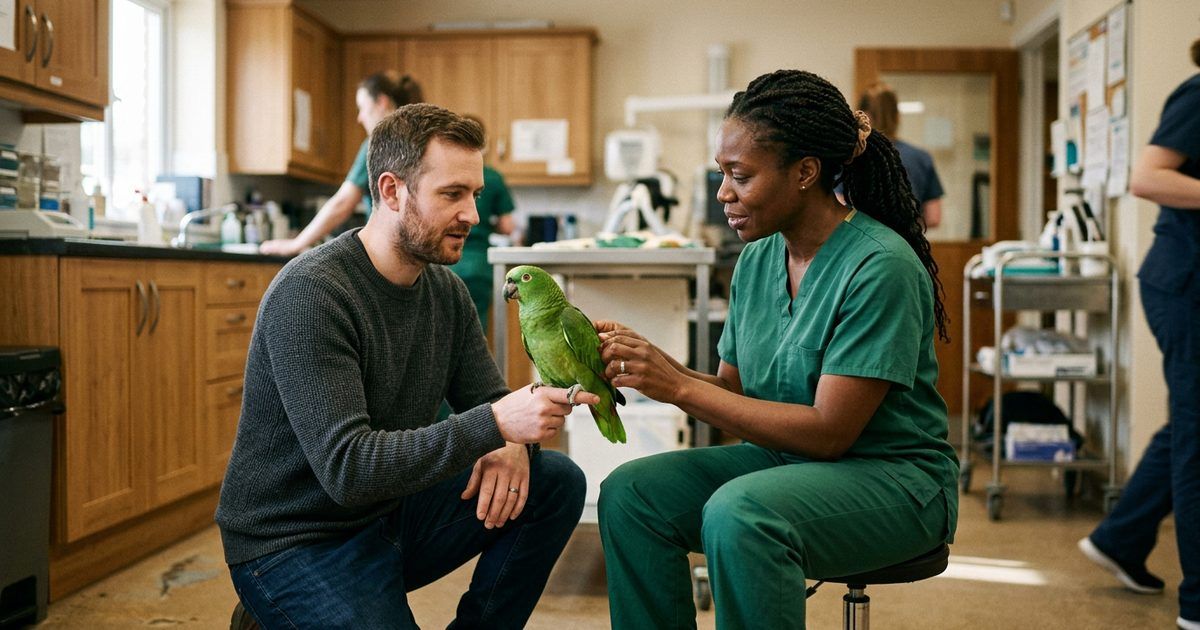
How to find an exotic vet?
Start with a vet finder run by a species group, such as the Find a vet search from the Association of Reptile and Amphibian Veterinarians, or ask a local rescue which vets it trusts. Then call and ask which doctor sees your species, how often, and where exotic patients go after hours. Do it before your pet is sick.
Keep reading ↓No droppings since dinner. You notice it at ten at night on the back porch of a Tower Grove South two-family, crouched by the litter box with your phone flashlight on, and the hay you stuffed into the rack at six is still standing in a neat green brick. The rabbit sits hunched in the corner, eyes half shut, not even flinching when you crinkle the treat bag. The house is so quiet you can hear the fridge.
That silence has a clock on it. The House Rabbit Society puts it plainly: if your bunny hasn’t eaten or pooped in 12 hours, it’s an emergency, and it’s time for a rabbit-savvy vet. Not a dog-and-cat clinic willing to take a look. A vet who sees rabbits every week.
And here is the part that stings. Most people who own a rabbit, a cockatiel, a bearded dragon or a ball python in St. Louis find out who treats exotics the same way: in that quiet kitchen, at that hour, scrolling a list somebody else made years ago. Some numbers ring a clinic that closed at six. Some ring a practice where the one doctor who liked birds moved away last spring, and nobody told the internet.
The owners who don’t panic aren’t braver. They just made three phone calls on a slow Tuesday afternoon, with the rabbit asleep in a sunbeam and nothing at stake. That’s the whole trick, and this page walks you through it. It also covers what a vet guide written for anywhere else would never tell you: inside the City of St. Louis, that rabbit counts toward the four-pet limit on your parcel, the same as a dog. And any constrictor snake over eight feet long is on the City’s prohibited list, so the baby Burmese python that fits in a tub today can outgrow its welcome.
How to find an exotic vet?
Start with a vet finder run by a species group, such as the Find a vet search from the Association of Reptile and Amphibian Veterinarians, or ask a local rescue which vets it trusts. Then call and ask which doctor sees your species, how often, and where exotic patients go after hours. Do it before your pet is sick.
In St. Louis, that list starts with two numbers you can save before you finish this paragraph. Both Veterinary Emergency Group hospitals on the Missouri side are open around the clock and say on their own pages that they see exotics: VEG Brentwood, at 2101 South Brentwood Boulevard, (314) 970-2545, and VEG St. Peters, at 250 Mid Rivers Mall Circle, (636) 206-4789. Brentwood is the nearer drive for most City and Mid County homes. St. Peters covers the St. Charles side. Neither replaces a daytime exotic vet. Both answer the 2 a.m. question, which is the one that sends people into a panic.
A finder list is a lead, not an answer. It tells you a vet cared enough about lizards or frogs to join a professional group. It doesn’t tell you that vet still works at that address, or still sees your animal on Thursdays. So treat every name as a phone call you owe yourself.
Rescues are the shortcut most owners miss. Bird people here have STAR, St. Louis Avian Rescue, a parrot rescue and adoption group. A rescue puts its own birds on exam tables over and over, and it learns fast which practices pick up on a Saturday and which ones send a cockatoo back out the door. Ask the volunteer who answers. They usually love the question.
Then make the call. A practice that really sees exotics names a doctor and tells you, without being asked twice, whether it sends a sick bird to Brentwood Boulevard or Mid Rivers Mall Circle after hours. A clinic that says “we can probably take a look” has told you something too.
The doctor’s name matters more for a cockatiel than it ever will for a Labrador. At many practices the exotic service is one person. When that person leaves, the service leaves with them, and the old listings keep pointing at the building. Ask for the doctor by name now, and ask again at every yearly visit. If you’re choosing a practice for the dog or cat in the same house, our guide on how to choose a vet in St. Louis covers the routine side.
Your rabbit counts toward the City’s four-pet limit
This one surprises people who just moved into a South City two-family with a dog, two cats and a bunny named Waffles. The City of St. Louis caps a residential-zoned parcel at four domestic animals unless the owner gets a permit, and the City’s Animal Care and Control page lists rabbits right alongside dogs and cats as pets that count toward the four. One potbellied pig per parcel is allowed inside that same four. So the fifth animal, the cute one from the Saturday adoption event, is the one that can turn a happy house into a code problem.
The same City page names exotic pets that are banned inside City limits outright: all bears, lions, tigers and other big cats, all non-human primates, foxes, wolves and coyotes and their hybrids, alligators, crocodiles and caimans, all venomous snakes, and any constrictor snake over eight feet long. Read that last one twice if you keep a young Burmese or a reticulated python. The snake that fits in a tub today can outgrow its legal status on your kitchen floor, and no vet visit fixes that.
Step across the City line and the rules change shape. Missouri law, RSMo 578.023, works by registration. It requires people who keep dangerous wild animals outside a zoo, lab or veterinary hospital to register them with the local law enforcement agency in the county where the animal is kept, and skipping that step is a class C misdemeanor. Towns inside the County can and do write stricter rules, so call your city hall before anything unusual comes home. Our guide to how many dogs you can have in St. Louis County covers the County side of the count.
Cross the river and the dangerous list turns into a ban. Illinois law bars keeping big cats, bears, wolves and primates, with an exception for a person who lawfully had a primate before January 1, 2011, and registered it with local animal control. Why does any of this belong on a vet page? Because the vet who will see your animal is only half the question. The other half is whether you can legally keep it at the address where the carrier sits.
The 2 a.m. drive, and the call you make before it
Call before you drive. Every time. The car keys are already in your hand, the carrier is on the passenger seat with a towel over it, and two minutes on the phone still matter more than two minutes on the road. The night team needs to know a bird is coming so the right person is ready.
VEG Brentwood says it is open 24 hours a day, 365 days a year, takes walk-ins with no appointments, and treats birds, rabbits and exotic animals such as reptiles, snakes and turtles. VEG St. Peters, near Mid Rivers Mall, says it handles emergency and urgent care for all kinds of pets, including avians and exotics. Save both in your phone tonight under a name you can find with shaking hands. “Exotic ER Brentwood” works.
What earns the drive? A rabbit that hasn’t eaten or pooped in 12 hours. Open-mouth breathing, or a clicking sound with every breath. Bleeding that won’t stop. A bird sitting fluffed up on the cage floor. A lizard that can’t hold its body up. Any tissue sticking out where it shouldn’t. When you’re torn, call. The phone call costs nothing.
On the way in, keep the animal in a secure carrier, warm and dark and away from the other pets. Snap three photos before you leave: the enclosure, the heat and light setup, and the food. Exotic vets ask about the habitat constantly, and at 2 a.m. you won’t remember the wattage of the basking bulb.
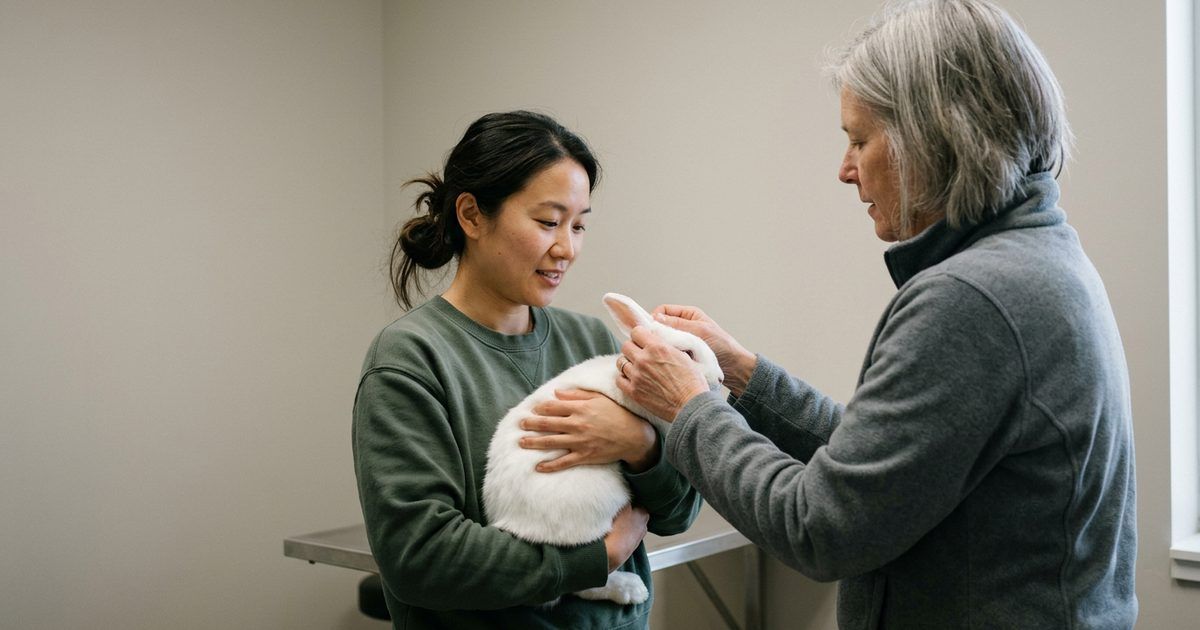
Five questions for the Tuesday phone call
Write the answers on a sticky note and put it inside the cabinet where the pellets live.
- How many animals of my species did you see last month? A practice that sees bearded dragons weekly answers fast.
- Which doctor sees them, and on which days?
- Can my pet stay overnight if it needs to be hospitalized, and who checks on it?
- Where do you send exotic patients when you’re closed?
- What’s the exam fee for my species, and what does a first visit usually add?
That last question matters because exotic exam prices are rarely posted. The fee is the floor. A first bird visit can add bloodwork or X-rays, a reptile visit often turns into a habitat review, and a hospitalized rabbit adds daily care on top. A clinic that won’t give you a number over the phone has answered a sixth question you didn’t ask.
Dog or cat emergency tonight? Start with the emergency vet in St. Louis guide.
Can you keep the box turtle from the backyard?
Your kid comes in from the yard in Lindenwood Park cupping something that smells like wet leaves, shell the color of a burnt pie crust, and asks if it can stay. In Missouri, often yes. The state Wildlife Code, 3 CSR 10-9.110, lets a Missouri resident take and keep alive, without a permit, a maximum of five specimens of native wildlife, with endangered species and a list of others left out. Those animals can’t be bought or sold. So the turtle can be a legal keep. Selling its babies isn’t.
A wild turtle still needs the same first exam as one from a store, and the reptile-savvy vet you found on that Tuesday call is the right first stop. If you’d rather buy than find, our guide to fish stores in St. Louis covers where local keepers shop.
Sick animals that act fine
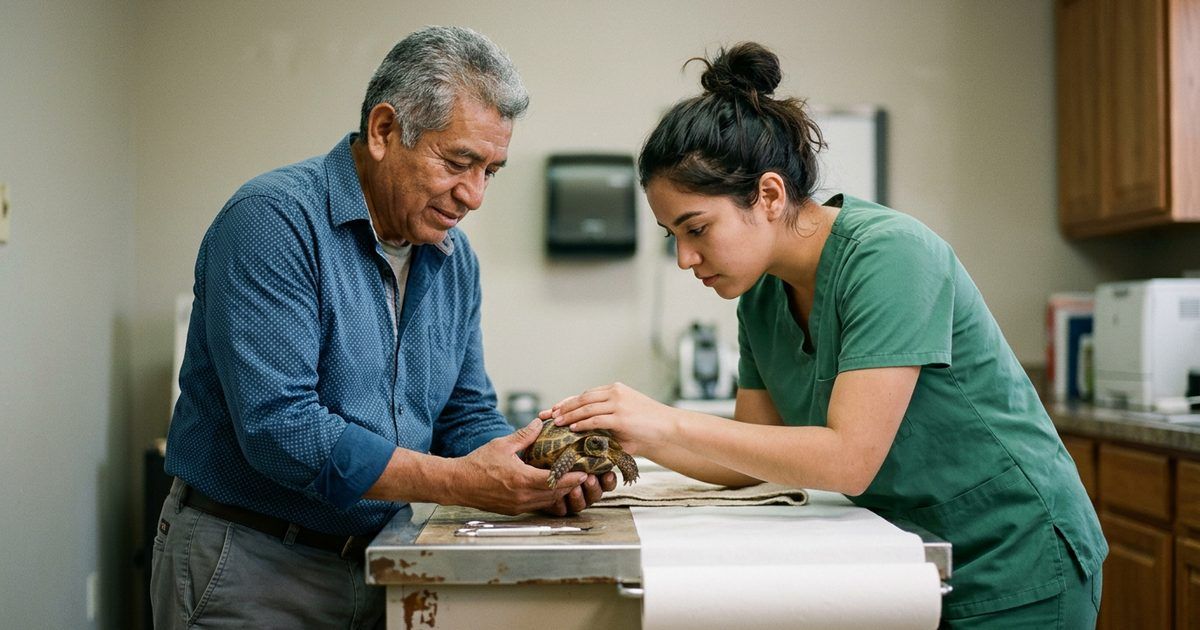
Many birds, rabbits and reptiles are prey animals, and prey animals hide weakness. By the time a parrot looks sick to you, it has often been sick for a while. That’s the whole case for the yearly exam.
So watch the boring things every day. Is the bowl as empty as yesterday? Are the droppings the usual size and number? Is the animal on its usual perch at its usual hour? Weigh it once a week on a kitchen gram scale and write the number on the fridge. A slow slide shows up on paper before your eyes catch it.
House calls can help a stressed bird or a nervous rabbit skip the car ride, and our guide to mobile vets in St. Louis covers what a home visit can and can’t do. X-rays, surgery and overnight care still mean a hospital.
Make your three calls this week, while everyone is healthy. Browse veterinarians around St. Louis on St Louis Near Me Directory, ask the five questions above, and save one ER number before you need it.
If you’re the bird vet, the rabbit-savvy clinic or the one-doctor exotic practice reading this, the owner on that kitchen floor at 10 p.m. is looking for exactly the line you could put on your listing. List your practice and say plainly which species you see, so more of those customers reach you first.
For the rest of the metro’s animal map, from patios to parks, start with our guide to pet-friendly St. Louis. Thinking about a bunny? Read up on rabbit adoption in St. Louis first.
Frequently asked questions
How much does a visit to an exotic vet cost?
It depends on the species and what the visit adds. Expect an exam fee, then possibly bloodwork, X-rays or a fecal test, and expect an overnight emergency hospital to charge more than a daytime clinic. Few exotic practices post prices, so call and ask for the exam fee for your animal plus what a first visit usually adds.
Are exotic pets legal in Missouri?
Many are. Missouri requires owners of animals such as big cats, bears, wolves, nonhuman primates and dangerous reptiles to register them with the county’s local law enforcement agency under RSMo 578.023. Cities can go further: the City of St. Louis bans primates, venomous snakes and constrictors over eight feet.
Are exotic pets legal in Illinois?
Common ones like rabbits, parakeets and bearded dragons are. Illinois bars keeping any primate or any animal on its dangerous list, which names the lion, tiger, bear, wolf and coyote, except a primate lawfully owned before January 1, 2011, and registered with local animal control.
What is the easiest exotic pet to own?
The one a vet near you already treats. Rabbits and guinea pigs are seen by many exotic-capable practices, while a hedgehog or chameleon narrows the field fast. None is low maintenance. Before you buy, check St. Louis pet rescues, since small animals land in shelters too.
Are exotic pets expensive?
The animal is often the cheap part. Heat lamps, UV lighting, enclosures and specialty food drive the setup cost, exotic exams can run longer than a dog visit, and parrots and tortoises can need care for decades.
What is the most exotic pet I can own?
In St. Louis it depends on your address more than your ambition. Missouri lets some dangerous animals be kept with county registration, the City of St. Louis bans primates, big cats, bears, venomous snakes and big constrictors, and Illinois bans the dangerous list. The most exotic pet worth owning is one a vet will see at 2 a.m.

Written by a dedicated team of St. Louis locals who live, work, and play right here in the St. Louis metro. Founder Lane Forman and team are committed to building the region’s most trusted directory by verifying listings and connecting local businesses with loyal customers across Missouri and Illinois.