Rabbit Adoption in St. Louis: $15 to $75 Fees, the 3-3-3 Rule, Why Bunnies Get Dumped in June
Revised November 18, 2026
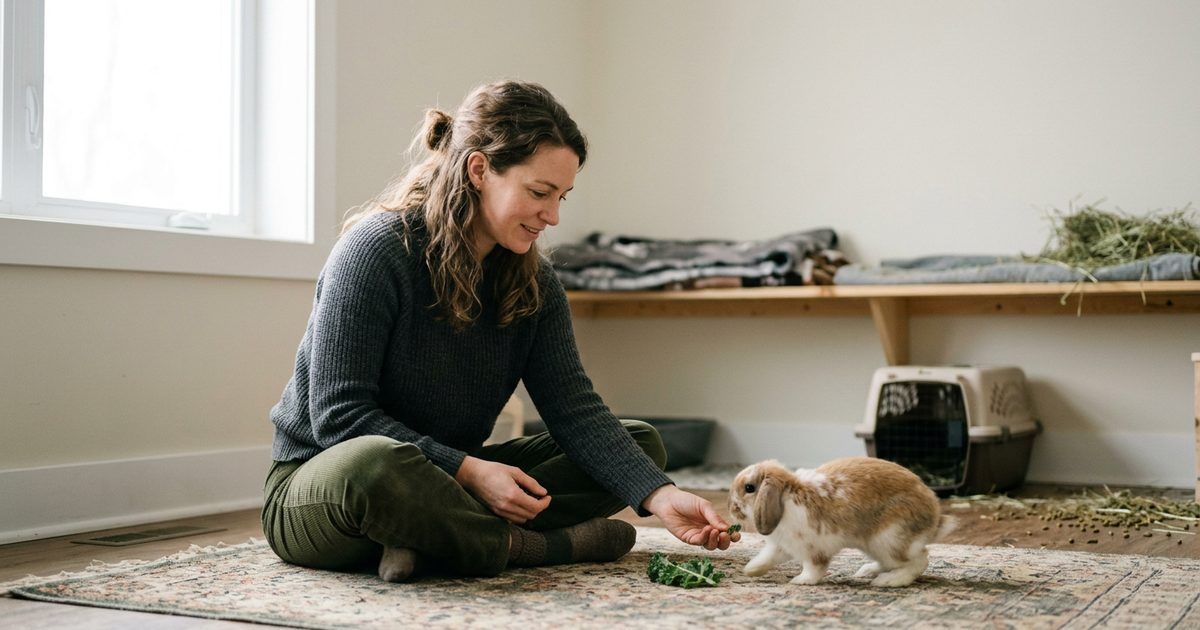
What is the 3-3-3 rule for rabbits?
It’s House Rabbit Society’s rough timeline for a newly adopted rabbit: about 3 days of hiding and stress, about 3 weeks before the rabbit settles in and shows its real personality, and about 3 months before it trusts you and feels at home. Some rabbits move faster, some slower, so treat it as a guide.
Keep reading ↓The $35 baby bunny is the expensive rabbit. It shows up every spring in a cardboard box on a farm-sale table or in a listing timed for Easter baskets, and it goes home unfixed, usually unvaccinated and too young for anybody to promise how big it’ll get, or even whether it’s a boy or a girl. The rescue rabbit across town costs $15 to $75 and arrives spayed or neutered, vet-checked and usually litter trained. Run the numbers on the first year and the cheap one loses.
Nobody selling the baby mentions the summer, either. Rabbits hit puberty somewhere between three and six months old, so the soft little thing from April is spraying, growling and boxing by June. That’s when they get dumped. In June 2022 a St. Louis rabbit rescue told St. Louis Public Radio it was fielding about 60 surrender requests a week and had run out of pellets. Four Junes later, KMOV reported the same rescue was getting about 150 a week.
So this guide runs in the order a good adoption does: how a new rabbit settles in, who adopts rabbits around St. Louis and for how much, the first year priced line by line, and the Easter-to-June pipeline that keeps every local rabbit rescue full. Rabbits barely register in most guides to pet-friendly St. Louis, and that’s part of how the problem stays out of sight. Every fee below comes from the group’s own published page as of October 2026. Fees change, so confirm before you go.
What is the 3-3-3 rule for rabbits?
It’s House Rabbit Society’s rough timeline for a newly adopted rabbit: about 3 days of hiding and stress, about 3 weeks before the rabbit settles in and shows its real personality, and about 3 months before it trusts you and feels at home. Some rabbits move faster, some slower, so treat it as a guide.
The rule comes from House Rabbit Society, the national rabbit welfare group founded in 1988. In the first three days, it says, expect a rabbit who’s overwhelmed: skittish, scared, not interested in you, and likely to leave a trail of territorial droppings as it works up the nerve to explore. Around three weeks, the real personality starts showing. By three months the rabbit should be used to your home and building a genuine bond with you.
Here’s why the timeline matters more for a rabbit than for a dog. Rabbits are prey animals. To a rabbit, being scooped up feels like being caught, which is why House Rabbit Society tells new owners to resist handling them early and why most rabbits never learn to love being held. A new owner who spends week one chasing the rabbit around the living room for a cuddle is teaching it exactly the wrong lesson. Then, on day eight, the rabbit gets called mean.
What works instead is boring. It also works. Sit on the floor. Read, scroll or watch TV down at rabbit level. Let the rabbit come to you, and when it does, hand over a few pellets or a leaf of romaine from your open palm. Talk so it learns your voice. If you plan to add a second rabbit later, House Rabbit Society suggests waiting a day or two before any introduction, and always on neutral ground.
St. Louis rescues build part of the 3-3-3 into the adoption itself. Missouri House Rabbit Rescue won’t let you meet its rabbits until you’ve sat through its free class on rabbit care and behavior, which runs two-plus hours. Dolly’s Dream Home Rabbit Rescue requires every adopter to take its free virtual course first. That means a family in Staunton can do the homework at the kitchen table on the Illinois side of the river before anybody gets in the car. And because Dolly’s rabbits live in foster homes, you can ask the foster how that rabbit handled its own first three days, three weeks and three months under a stranger’s roof.
Not sure your household is ready for a ten-year animal? House Rabbit Society suggests fostering as the trial run, and our guide to fostering pets in St. Louis explains how it works here.
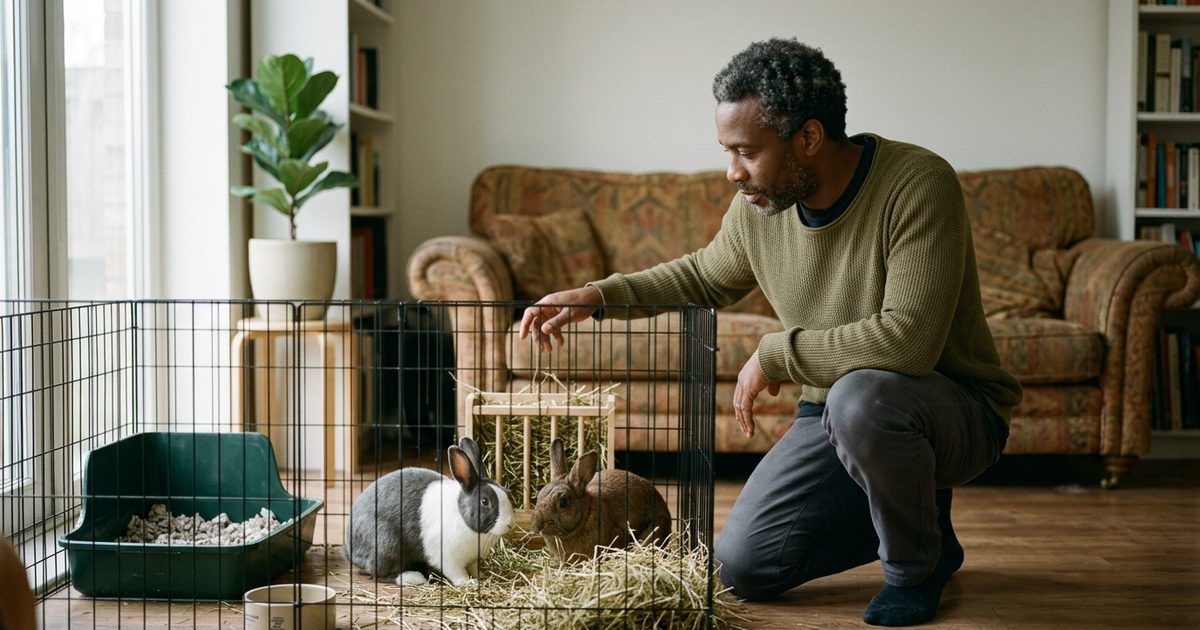
Where can you adopt a rabbit in St. Louis?
At two rabbit-only rescues and at the region’s big general shelters, which list rabbits alongside guinea pigs and hamsters. The rabbit rescues charge more and include more. The shelters charge less and can move faster.
Missouri House Rabbit Rescue. Its legal name is House Rabbit Society of Missouri, it’s been active in Missouri for more than 27 years, and it has rescued over 7,000 rabbits by its own count. It’s all volunteer and runs the Bunny House, a 6,600-square-foot shelter on four acres in southwest St. Louis County. There are no walk-ins. You attend the class, then book an appointment to meet rabbits, and you have to be 21 or older to apply. Anyone younger who lives at home needs a parent to fill out the application.
The fee is $75 for one rabbit and $125 for a bonded pair. The rescue spells out what that buys: a well-bunny check from a vet who specializes in rabbits, both shots of the RHDV2 vaccine, a 30-day health guarantee, the spay or neuter, parasite treatment, litter box training or a good start on it, and a year’s membership with free nail trims, access to bunny boarding and a members-only supply store. One line on its adoption process page deserves a highlight: don’t buy housing or supplies before the class. A pet-store cage is the classic first mistake, and the rescue would rather tell you before you spend the money.
Dolly’s Dream Home Rabbit Rescue. Started in late 2020 and a licensed nonprofit since 2021, Dolly’s is foster based, so its rabbits live in volunteers’ homes in and around St. Louis instead of a shelter building. It says it has taken in more than 2,000 rabbits, and every one is spayed or neutered, vetted, microchipped, socialized and litter trained before adoption. Every adopter takes the free virtual course, and since the rabbits live with fosters, the foster is the person who can tell you what that rabbit is really like at 10 p.m. Its site doesn’t post the adoption fee, so ask when you apply. Adopters get free nail trims at its supply store, where everyone else pays $10.
Humane Society of Missouri. The lowest published rabbit fee we found. HSMO’s adoption fee page lists rabbits at $15, guinea pigs at $10, and ferrets and chinchillas at $50, and the small-animal fee includes the spay or neuter plus a nail trim. Bring a real carrier. HSMO warns that rabbits chew through its temporary cardboard boxes, and it sells plastic carriers at its St. Louis City gift shop.
APA Adoption Center. The Animal Protective Association of Missouri, on South Hanley Road, lists small animals and birds at $30, with variable pricing, and its fees include spay or neuter surgery. Small pets have to leave in a secure carrier. Bring your own or buy one at the counter: $5 for cardboard, $30 for plastic.
Other shelters. General shelters across the metro take in rabbits as strays and owner surrenders, and they tend to file them under small animals or “other” next to the birds and reptiles, so they’re easy to miss. If you’re flexible on age and color, check those lists every week or two. Our roundup of St. Louis pet rescues covers the wider network.
Which one fits? For a first rabbit, the rabbit rescues. The class, the litter training and a year of support are worth far more than the $45 to $60 you’d save, and the volunteers you’ll call when something looks wrong have seen it before. If you’ve kept rabbits for years and know what you want, the shelters are a fine, cheaper route.
What does a pet rabbit cost in the first year?
Plan on roughly $800 to $1,000 for a rescue rabbit’s first year and $1,150 to $1,600 for a pet-store or backyard baby, using Missouri House Rabbit Rescue’s own cost sheet. The gap is almost entirely the spay or neuter. The rescue fee already covers it. The baby still needs it.
The rescue’s published breakdown, as of October 2026:
- Purchase price: $35 to $100
- Cage or pen: $80 to $200
- Food and water bowls: $15 to $20
- Litter box: $10 to $12
- Nail trimmers: $7 to $10
- Brush: $10 to $40
- Pellets, hay and greens: about $50 a month
- Vet visit: $45 to $60
- Spay or neuter: $150 to $500
Now build two first years. Adopt from the rescue at $75, add $122 to $282 for setup, $600 for twelve months of food and one checkup at $45 to $60, and you land around $840 to $1,020. HSMO’s $15 rabbit pulls that down to about $780 to $960, if the right rabbit is there when you are.
Now the spring baby. Picture a family in Alhambra that picks one up for $35 at a farm sale in March. Same setup, same hay, same checkup. Then the surgery. The rescue’s cost sheet puts a spay or neuter anywhere from $150 to $500, and its adoption page says rabbit-savvy vets routinely charge $350 to $550. Use that second range and the cheap bunny’s first year runs about $1,150 to $1,590, before the two-shot RHDV2 series the rescue rabbit already had. The $35 rabbit ends up costing several hundred dollars more than the $75 one.
Skipping the surgery isn’t the savings it looks like. House Rabbit Society says most rabbits with bad litter box habits aren’t fixed, that spaying or neutering curbs biting and scratching, and that studies put unspayed females at high risk of reproductive cancers as they age, somewhere between 40% and 80% depending on age. An unspayed female can also have a litter of one to 12 kits every 30 days if she meets an intact male. And sexing a rabbit at four to eight weeks old is hard enough that the local rescue warns adopters about it. Two “sisters” from the same box aren’t always two sisters.
Then budget for the bill nobody plans. The rescue’s health pages list what GI stasis, a gut slowdown and maybe the most common reason rabbits see a vet, tends to cost: $50 to $75 for the visit, about $90 per X-ray view, more than $200 for a procedure and more than $100 in medications. One bad night can pass $400 fast. A small monthly rabbit fund turns that night into an inconvenience instead of a decision.
Two more lines. A bonded pair from the rescue costs $125 instead of $150 for two singles, and two rabbits keep each other company while you’re at work, though they go through twice the hay. And if you travel, the rescue boards members’ rabbits for $14 to $27 a day, depending on crate or pen size and how many rabbits share it.
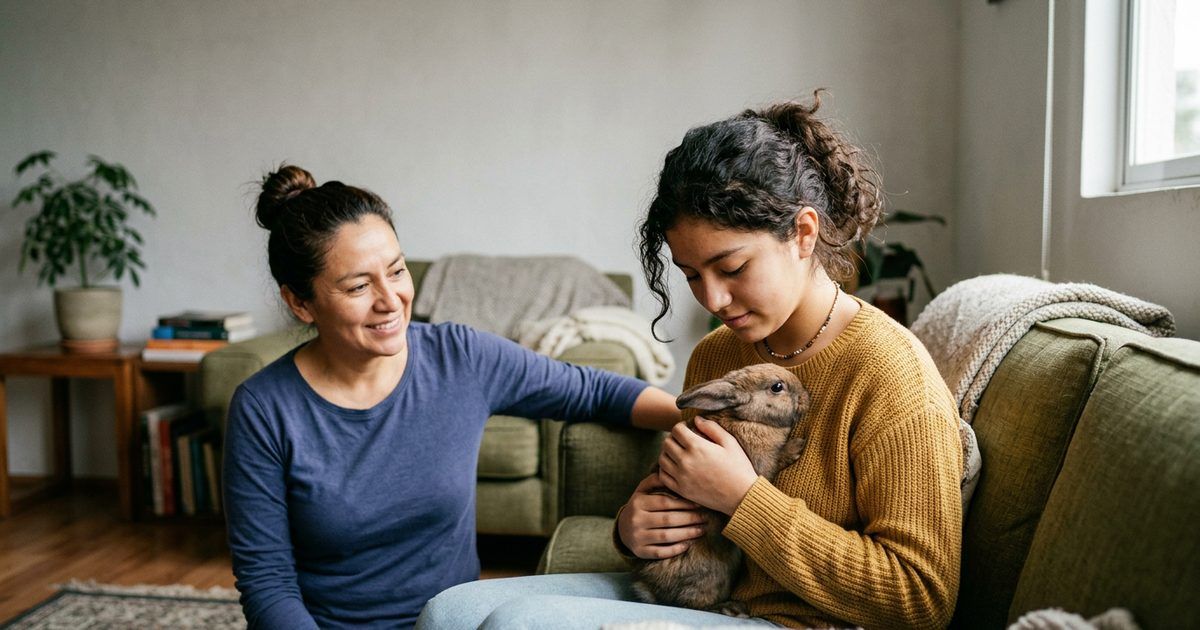
How do you set up a St. Louis home for a rabbit?
Indoors, in a roomy pen, with every cord covered and the thermostat under 75. That’s the short version. The long one starts with unlearning the hutch.
Hutches were designed for rabbits on meat farms, Missouri House Rabbit Rescue says, and a rabbit living in one is a lonely, frightened animal. Outdoors, a rabbit is exposed to predators, parasites and weather. House Rabbit Society puts a rabbit’s comfort zone at 60 to 75 degrees, with heat stroke a risk above 75, and a St. Louis July afternoon blows well past that. A rabbit in a backyard hutch in summer, or shut in a garage, is in real danger. KMOV’s June 2026 story on Dolly’s featured Cobbler, a rabbit rescuers found barely alive with heat stroke after being locked in a hot garage all day. He recovered. Now people fly in from other states to meet him.
Skip the pet-store cage, too. The rescue says most are too small and many have wire floors that hurt rabbits’ feet. Its suggestions are a large dog crate, a homemade cube setup or an exercise pen. House Rabbit Society’s shopping list starts with a foldable exercise pen, washable floor covering, a litter box in the pen plus one in the running space, heavy bowls, a hidey house, unlimited hay and a rabbit-safe litter. Paper pellets are on both its list and Dolly’s. No clumping or clay litter. The local rescue also wants rabbits out of the pen at least two to four hours a day.
Then get down on the floor and look at the room the way a rabbit does. Every charger, lamp cord and speaker wire at rabbit height is a chew toy. Baseboards, couch corners and the bottoms of door frames come next. House Rabbit Society’s list calls for wire covers, baseboard protectors, couch covers and baby gates.
Bunny chewed the charger? What to do with old electronics in St. Louis
If the rabbit is mostly for the kids, go in clear-eyed. The local rescue tells parents that the adult is expected to be the primary caregiver, House Rabbit Society notes that many young children lose interest within a few weeks, and both say bigger rabbits do better around small children. Missouri House Rabbit Rescue doesn’t recommend rabbits under four pounds for homes with small kids, because most dwarf rabbits hate being held and one badly placed hug can seriously hurt one.
Renters, one more check before the rabbit moves in. Ask your landlord, since many leases treat any animal as a pet. Inside the City of St. Louis, the Animal Care and Control laws page lists rabbits among the pets that may count toward the four-animal limit per residential parcel. Our guides to pet laws in St. Louis City and County and renting with pets in St. Louis cover the fine print.
Why do so many rabbits get surrendered after Easter?
Because the bunny bought for the basket grows up. Rabbits mature at roughly three to six months, and the cuddly baby from April turns territorial, sprays, nips and boxes by early summer. Owners told a rabbit is an easy starter pet decide they got a bad one, and the surrender calls start.
The Humane Society of the United States has called rabbits the third most popular pet in America and the third most abandoned, according to a National Geographic investigation. In the same report, a Georgia chapter of House Rabbit Society said its abandoned-rabbit calls jumped from one or two a week to three or four a day in the six weeks after Easter. Chapters in Illinois and Idaho saw their spike later, in summer, as the Easter bunnies hit puberty.
St. Louis runs on that summer clock. Look at the dates on the local reporting. St. Louis Public Radio’s story on rabbit rescues at capacity ran in June 2022, when Dolly’s was out of pellets, almost out of carriers and taking about 60 surrender requests a week, a surge its founder blamed on Easter gifts and quarantine impulse buys. KMOV’s profile of the same rescue ran in June 2026, at about 150 requests a week. Dolly’s own site says it typically gets 150 to 200 surrender and dumped-bunny requests a week and can’t keep up. Missouri House Rabbit Rescue says its rescue team most often captures rabbits released outside by former owners and breeders.
Released is the wrong word for what happens next. Pet rabbits are domesticated European rabbits, a different species from the cottontails in your yard, and both local rescues say flatly that they can’t survive outdoors. Picture a big lop-eared rabbit sitting in a yard in St. Jacob in July, barely bothering to move when people walk by. That’s probably somebody’s Easter rabbit. Dolly’s founder told St. Louis Public Radio that cottontails are smaller, with longer and thinner snouts, and run completely differently. She asked people to send photos and video to a rescue before trying to trap one.
It’s also against the law. Missouri’s animal neglect statute, RSMo 578.009, makes it an offense to knowingly abandon an animal anywhere without making provisions for its adequate care, a class C misdemeanor the first time. Rescues bring it up for a reason. A domestic rabbit left in a park has no provisions at all.
The fix starts before the purchase. Adopt instead of buying a baby. If someone you know wants an Easter rabbit, hand them a chocolate one and the rescue’s class schedule. And if a rabbit already isn’t working out, call a rescue before you give up. Dolly’s says it tries to keep bunnies in the homes where they’re loved, and plenty of “bad rabbit” problems turn out to be a neuter and a bigger pen away from solved.
Which vets see rabbits in St. Louis?
Fewer than you’d think. Missouri House Rabbit Rescue’s vet page says it plainly: most small-animal vets work only with cats and dogs, and rabbits are exotics that need someone trained in their physiology. Find that vet before you need one, not on the night your rabbit stops eating.
Start with the rescue’s own short list of St. Louis-area rabbit vets it knows and trusts. Then widen it with our guide to exotic vets in St. Louis, which maps which practices see rabbits during the day and which emergency hospitals take them after hours.
When you call a practice, ask four things. Does a specific doctor see rabbits, and on which days? Do you carry the RHDV2 vaccine? How many rabbit spays and neuters do you do in a month? And where do you send rabbits when you’re closed? The vaccine question isn’t a formality. Even the rescue’s own vet list flags one practice that doesn’t carry it.
RHDV2, rabbit hemorrhagic disease virus type 2, is a highly contagious and usually fatal rabbit virus that has been spreading across North America since 2020. It can ride into a house on shoes, clothing or insects, so an indoor rabbit isn’t automatically safe. The vaccine is two shots three weeks apart, then a yearly booster. Missouri House Rabbit Rescue vaccinated every rabbit in its shelter and foster system as soon as Missouri’s state veterinarian approved the vaccine, and it now requires proof of a current shot for boarding, nail trims and its events. Report any sudden, unexplained rabbit death to your vet.
Learn one emergency rule cold. Any rabbit that isn’t eating needs a vet right away, the rescue says. Rabbits can’t burp or vomit to relieve gas, and a stomach blockage can be life threatening. Teeth grinding, a hunched posture or an empty litter box are reasons to call that day, not next week.
The family that leaves the class with a supply list, a pen in the right corner and a rabbit vet already saved in their phone isn’t lucky. They skipped the Easter listing. Be the one who knew to, then give your new rabbit its three days, three weeks and three months.
Ready to start looking? Browse pet adoption services around St. Louis and ask each one whether it takes in rabbits, since many file them under small animals where you’d never spot them.
And if you run a rescue or adoption service that places rabbits, list it with us with your rabbit fee and your class schedule up front, because those are the first two things the families reading this will ask.
Frequently asked questions
What to do with a rabbit you can’t keep?
Call a rabbit rescue before you do anything else, and ask for help with the problem, not only for a surrender slot. Biting, spraying and missed litter boxes are often hormonal and fixable with a spay or neuter and a bigger setup. If money is the problem, Dolly’s runs a bunny food pantry for owners who take its free course. If you adopted from a rescue, your contract likely requires returning the rabbit there. Never turn it loose outside.
Where is the best place to rehome a rabbit?
The rescue you adopted from, first. Missouri House Rabbit Rescue’s adoption contract asks adopters to bring rabbits back, and Dolly’s Dream Home takes requests through a surrender form on its site. Both stay full, and Dolly’s alone fields 150 or more requests a week, so reach out early. Bring vet records and an honest description of the rabbit’s temperament.
What is the average lifespan of a bunny?
Eight to 12 years for an indoor house rabbit, according to Rabbit.org, and some reach 14 or even 16. Outdoor domestic rabbits live only about three to five years. That’s as long as many dogs and cats live.
What breed of bunny makes the best pet?
For most St. Louis households, the best one is an adult, spayed or neutered rabbit whose foster already knows its personality. Breed matters less than size and hormones. A pet-store baby can grow up to weigh 2 pounds or 10, Missouri House Rabbit Rescue warns, and nobody can promise which. With small children in the house, bigger rabbits usually handle noise and movement better.
What is the calmest breed of rabbit?
No breed guarantees calm, but size and age help. House Rabbit Society says big rabbits generally have a more confident, easygoing temperament, and the local rescue says larger rabbits are less skittish around sudden movement. One Dolly’s volunteer shares her house with Moose, a free-roaming Flemish Giant. A fixed adult with a known temperament is still the calmest bet.
Can I leave my rabbit home alone for 2 days?
Not without someone checking in at least once a day. A rabbit that stops eating needs a vet right away, and a tipped water bowl or a hot house can turn serious fast. Hire a sitter who knows rabbits, or board. Missouri House Rabbit Rescue boards members’ rabbits for $14 to $27 a day with 48 hours’ notice and proof of RHDV2 vaccination, and Dolly’s offers bunnysitting with its trained fosters.
Do pet rabbits poop all over the house?
In the first few days, some, yes. House Rabbit Society says new rabbits often leave territorial droppings while they explore. After that, spayed and neutered rabbits usually learn near-perfect litter box habits, and most rabbits with bad habits aren’t fixed. The droppings are dry, round and easy to sweep, and a box of paper litter can go straight into the compost.
Is it illegal to release a pet rabbit outside in Missouri?
Knowingly abandoning an animal without making provisions for its care counts as animal neglect under RSMo 578.009, a class C misdemeanor for a first offense. It’s also close to a death sentence for the rabbit, since pet rabbits are a different species from wild cottontails and can’t fend for themselves. A rescue’s surrender list is the legal route, and the kinder one.

Written by a dedicated team of St. Louis locals who live, work, and play right here in the St. Louis metro. Founder Lane Forman and team are committed to building the region’s most trusted directory by verifying listings and connecting local businesses with loyal customers across Missouri and Illinois.