The Free Kitten Costs More: Getting a Kitten in St. Louis
Revised November 10, 2026
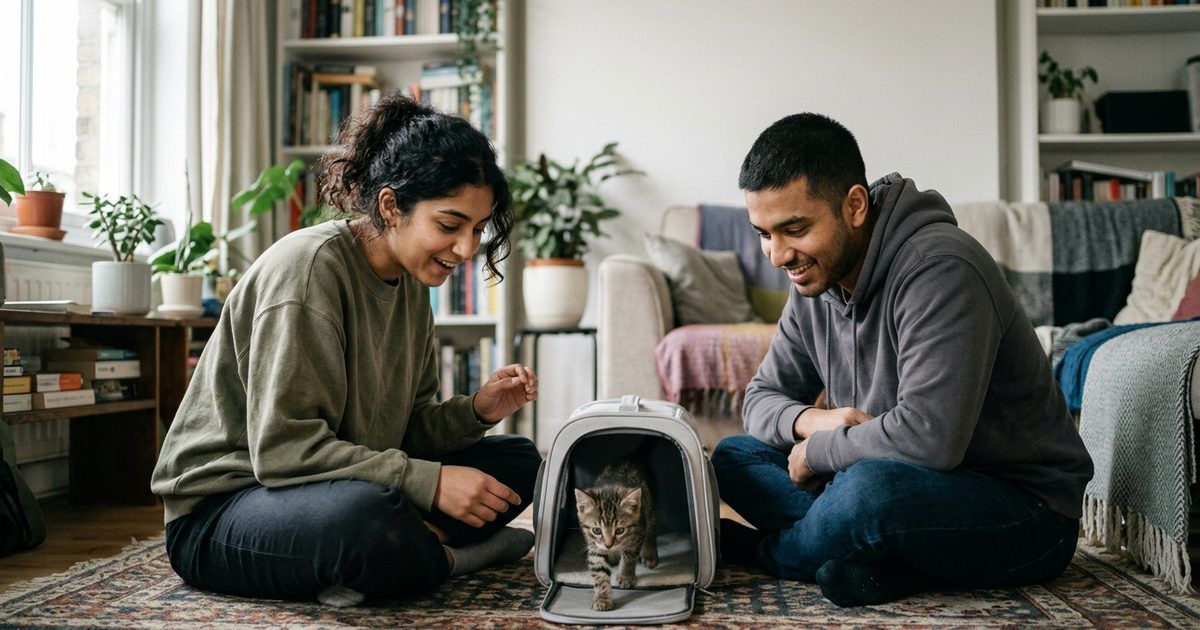
What age is best to get a kitten?
Between 8 and 12 weeks. Eight weeks is the floor: a kitten is weaned, eating on its own and about two pounds. Twelve weeks is often the easier start for a first-time owner, because the extra weeks with its mother and littermates build cat manners, like a softer bite. Earlier than eight weeks is too young.
Keep reading ↓A laundry basket on a porch step, lined with an old towel, and four kittens climbing over each other inside it, all ears and needle claws. A cardboard sign taped to the railing says FREE. You’ve seen some version of it in every St. Louis neighborhood group, every summer, and you’ve already picked the gray one in your head. She’s purring into your palm. Before you carry her to the car, do one piece of math, because in St. Louis the free kitten is usually the expensive one.
Here’s the math, and it all happens at one address. At 1201 Macklind Avenue, the Humane Society of Missouri’s city headquarters, a kitten younger than nine months goes home for $150, and its posted adoption fee already covers the spay or neuter surgery, the first FVRCP vaccine, a feline leukemia test, the first deworming, a first flea treatment, a microchip, rabies registration and a cardboard carrier. In the same building, the nonprofit Animal Medical Center of Mid-America lists its classic feline spay or neuter at $179.95 on its spay and neuter page. Read that twice. The surgery alone, at the regular price, costs more than the whole shelter kitten.
There is a cheaper door, and it’s worth knowing exactly how narrow it is. AMCMA’s subsidized SNIP program spays or neuters a cat for $49.95. It’s for Missouri residents, the pet must be at least four months old, and rabies and distemper shots have to come from a licensed vet at least two weeks before surgery. SNIP runs on donations and grants, and AMCMA says plainly that when that money runs out, appointments may not be available. So the free kitten still needs a vet visit or two for shots before the surgery, and a little luck on the calendar.
Then the City steps in. Inside the City of St. Louis, a kitten counts as a domestic animal once it’s more than six weeks old, and no more than four domestic animals may be kept on one residential parcel unless the owner gets a permit, according to the City’s animal laws page. A two-cat house whose unspayed cat has a litter of four is over the limit as soon as those kittens are more than six weeks old. The City registration tag runs $4 for a spayed or neutered pet and $50 for an intact one. And the ASPCA advises spaying a cat before she reaches five months, since that eliminates the chance of pregnancy. The clock on the free kitten starts the day you take her home.
None of this makes the porch-step kitten a bad choice. Plenty of great St. Louis cats started in a laundry basket. It just makes her a kitten with a bill attached, and it’s better to know that before she’s asleep on your chest.
What age is best to get a kitten?
Between 8 and 12 weeks. Eight weeks is the floor: a kitten is weaned, eating on its own and about two pounds. Twelve weeks is often the easier start for a first-time owner, because the extra weeks with its mother and littermates build cat manners, like a softer bite. Earlier than eight weeks is too young.
The ASPCA’s own rule of thumb lines up with that floor. At two months, it says, kittens eat on their own, weigh around two pounds and have good coordination walking, running and playing. Before that, a kitten still needs its mother, for milk and for lessons: how hard is too hard to bite, when to back off from a hiss, how to use a litter box by copying. A kitten pulled at five or six weeks hasn’t finished that course. You become the substitute teacher, and your hands become the chew toy.
If you’d rather skip the porch step altogether, CARE STL, the City’s shelter at 2700 Walnut Place, posts adoption hours of 11 a.m. to 6 p.m. every day of the week, and you can call 314-696-2444 before you drive over. The Humane Society’s Macklind Avenue adoption center is open noon to 6 p.m. on weekdays, 10 a.m. to 5 p.m. on Saturday and noon to 4 p.m. on Sunday. Walk in, sit on the floor of the cat room, and let the kittens decide who’s brave.
Found kittens outside?
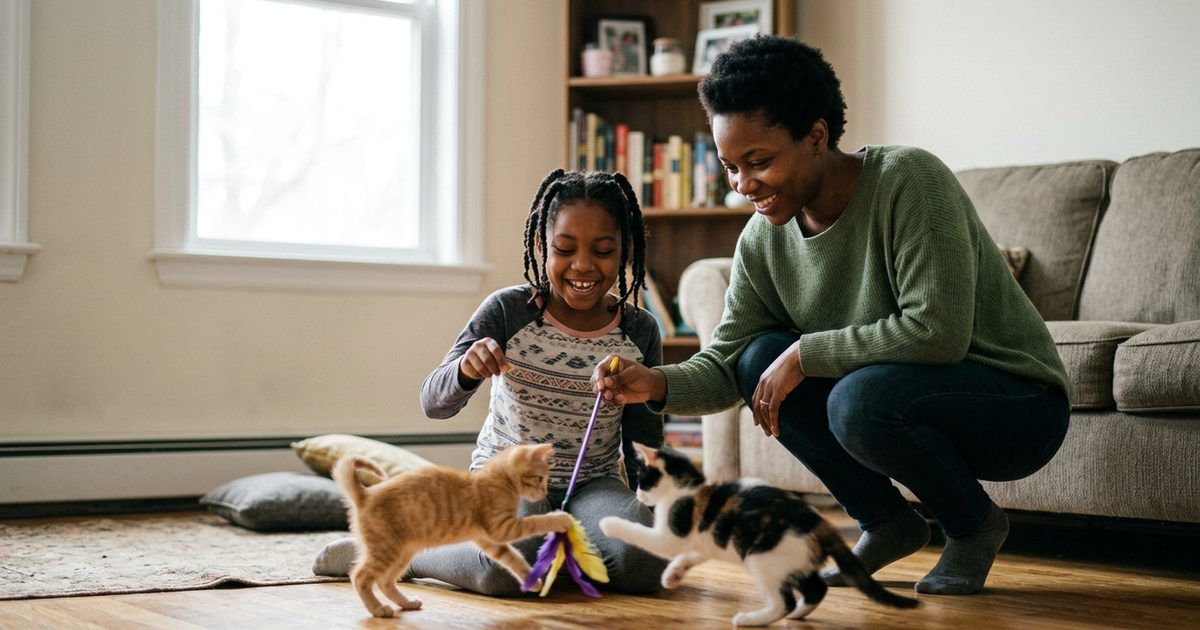
Usually, do nothing yet. Watch from a distance and wait. You hear mewing from behind the air-conditioner unit, find three tiny kittens with their eyes barely open and no mother in sight, and every instinct says scoop them into a box. Hold that thought. If you can see their mother around, the ASPCA’s advice is to provide food and shelter and monitor, because it’s likely she’s taking good care of them. She may be out getting food, the ASPCA notes, or close by, waiting for you to leave.
Kittens that look cold, dirty, thin or listless, or that cry for hours with no mother showing up, are a different story. Very young ones may need help that day. Call a vet clinic or a shelter before you try feeding anything. If you end up raising a litter for a few weeks, the Humane Society of Missouri’s City foster line is 314-802-5710, and our guide to fostering pets in St. Louis walks through the local programs that supply food and medical care.
What the free kitten still needs, line by line
Say a neighbor hands you a healthy ten-week-old kitten, free. To get her where a Humane Society kitten already is on the day she goes home, here’s the shopping list. Clinic prices vary, so call around, but the pieces don’t change:
- A wellness exam, so a vet can check her ears, eyes, belly and heart before anything else happens.
- FVRCP distemper shots, a series rather than one visit, with boosters until the vet says she’s done.
- A rabies shot, which SNIP wants up to date before surgery and the City requires along with registration.
- A feline leukemia test, especially if her mother was an outdoor cat.
- Deworming and a flea treatment. Porch-step kittens rarely arrive without passengers.
- A microchip, the one thing that gets a lost indoor cat back from a shelter scanner.
- Spay or neuter surgery: $49.95 through SNIP if you qualify and there’s funding, or $179.95 at AMCMA’s classic price.
Add it up at any clinic in town and you’ll see why the shelter fee looks different on the second read. Then there’s time: several separate trips over a couple of months, and a window where an unspayed female can get pregnant before you’ve finished. The shelter kitten skipped all of it. She may still need a booster after she comes home, but the surgery, the chip and the first shot are done.
If you do take the neighbor’s kitten, the kindest thank-you is helping get the mother cat spayed before the next litter. Our guide to low-cost vet care in St. Louis lists the clinics and the cheaper spay routes, and our rundown of pet laws in St. Louis City and County covers the County version of the pet limit and the permit route.
Shelter, rescue, cat cafe or neighbor?
Most St. Louis kittens move through a handful of shelters and foster-based rescues, and their fees typically fold the spay or neuter, a microchip and first shots into one price. The differences are price, hours and whether you can walk in and meet a kitten at all. Some rescues keep their youngest kittens in foster homes, so you apply first and the foster family contacts you.
Our guide to St. Louis pet rescues covers the bigger groups and their applications, and our roundup of cat cafes in St. Louis covers the lounges that double as adoption floors. One hour there shows you which kitten climbs into laps and which one lives behind the cat tree.
Renting changes the order of operations. Many rescues want written landlord approval before they move an application forward, so get that email first, then go shopping. Our guide to renting with pets in St. Louis covers the lease side, and our guide to pet-friendly St. Louis covers life outside the house.
She already shredded the couch? Start here: free furniture in St. Louis
What should a new kitten’s first week look like?
Small, quiet and a little boring, on purpose. Set up one room before she arrives, with food, water, a litter box, a scratching post, a bed and a couple of toys, and let her live there for the first several days. Open the rest of the house once she’s eating, using the box and coming to you on her own.
On day one, set the carrier on the floor with the door open and sit down next to it. Let her come out when she’s ready, and keep feeding whatever she ate before. Hiding for a day or two is normal. Keep play short and use a wand toy, never your fingers, because a kitten who learns hands are prey grows into a cat who bites them. Pick up cords, string, rubber bands and hair ties. Close the toilet lid. Check the recliner before you sit down.
Book the first vet visit in that first week and bring every piece of shelter paperwork, so the vet can plan her boosters and her rabies shot. Bringing home a puppy instead? Our checklist of what to buy for a new puppy covers the dog side.
The best kitten stories in St. Louis tend to start the same way. Somebody walks past the laundry-basket post, waits the extra two weeks, and drives to Walnut Place or Macklind Avenue for a kitten that’s already fixed and already chipped. Be that person. Then send this page to the next neighbor who posts “free kittens.”
Meet the kittens in person before you commit. Start with pet adoption services around St. Louis, and ask each one what its fee covers and which kittens are living in foster homes right now.
If you’re the rescue, the foster network or the one-woman kitten operation in a spare bedroom, the people reading this are comparing fees and what each one includes, and a listing here puts your program where those future adopters and customers can find the details. See what a listing does for an adoption program.
Frequently asked questions
Is 12 weeks too old to get a kitten?
No. Twelve weeks sits inside the 8-to-12-week window, and the extra weeks with a mother and littermates help. Kittens do get less flexible about new things as they grow, so start gentle handling, carrier practice and household noise right away. An older kitten from a St. Louis shelter is still a kitten, and usually already fixed.
What is the hardest age for a kitten?
For many households it’s the teenage stretch, when baby teeth give way to adult teeth, everything gets chewed and the energy peaks. It’s also when an unspayed female can get pregnant while still looking like a kitten, which is why the ASPCA advises spaying before five months. Daily play and a sturdy scratching post handle most of the rest.
Where can I find free kittens in St. Louis, Mo.?
At shelter fee-waived events, which tend to cluster when cat rooms are full in summer and fall. Watch each shelter’s site and social pages, because dates change every year. A free shelter kitten is the best kind of free: already spayed or neutered, microchipped and started on shots.
Where is the cheapest place to get a kitten?
Usually a shelter, once you count the vet work the fee already covers. If you can stretch the word kitten, the Humane Society of Missouri lets you pick your price, $35 minimum, for cats nine months and older. Check current fees before you go, since promotions change them often.
What disqualifies you from adopting a cat?
Usually the basics: age and ID requirements, and for renters, written landlord approval. Local limits count too. Inside the City of St. Louis, no more than four domestic animals may be kept on a residential parcel without a permit, and dogs, cats and rabbits all count toward it.
Can I leave my 4 month old kitten alone for 8 hours?
Not routinely, at least not without a midday check. Young kittens eat several small meals a day and get into trouble fast. For an eight-hour workday, set up a kitten-proofed room with water, litter and toys, and arrange a lunch-hour visit from you, a neighbor or a pet sitter.

Written by a dedicated team of St. Louis locals who live, work, and play right here in the St. Louis metro. Founder Lane Forman and team are committed to building the region’s most trusted directory by verifying listings and connecting local businesses with loyal customers across Missouri and Illinois.