Your Lost-Pet Report Skips the St. Louis City Shelter. Here Is How to Reach It
Revised November 11, 2026

What do I do with a lost pet?
Search your own block on foot right away, because most lost dogs and cats turn up close to home. Then file a lost report with STL Lost Pets, flag your microchip as lost, put up big flyers, and visit shelters in person on both sides of the City and County line, starting the same day.
Keep reading ↓The gate is open about a foot. The leash is still hanging on its hook by the back door, and you are standing in the alley in your socks, calling her name into the dark between the garages, listening for the jingle of her tags and hearing a car alarm two blocks over instead.
Here is the first thing to know, before you post a single photo. St. Louis has one shared lost-pet database, STL Lost Pets, and it is a collaboration of the APA, St. Louis County Animal Care and Control and the Humane Society of Missouri. The City’s own Animal Care Center on Clark Avenue is not one of the partners named on it. So send the City shelter its own email as well.
And the City shelter itself has changed the rules. CARE STL, the nonprofit that manages it, says it is the only open-admission shelter in the City of St. Louis, that it has been operating beyond capacity for over a year, and that it is unable to accept animals brought in by the public. It takes the animals City Animal Control Officers bring in every day. So the neighbor who finds your dog may be keeping her on a back porch three streets over, not dropping her at a shelter.
That changes the whole search. Your feet, your block and your neighbors matter more than any shelter kennel. Screenshot this before you start: email the City shelter separately, file with STL Lost Pets, then go door to door.
What do I do with a lost pet?
Search your own block on foot right away, because most lost dogs and cats turn up close to home. Then file a lost report with STL Lost Pets, flag your microchip as lost, put up big flyers, and visit shelters in person on both sides of the City and County line, starting the same day.
The first hour matters more than anything you type. CARE STL says most found pets are actually lost and found close to home. Grab a leash and some treats, as the APA puts it, call your pet’s name, and check the places a scared animal gets stuck: basements, crawl spaces, under porches. Then knock. CARE STL tells people who find a pet to talk with neighbors, postal carriers and yard crews, which means those same people are the ones most likely to have seen yours go by.
Leave a way home. CARE STL’s advice for a lost dog is plain: put out food, water and its bed or an article of your clothing, because there is a good chance the dog will return. Your worn sweatshirt on the back step. The bowl she knows, by the gate.
Then do the paperwork the same night. Call your microchip company, tell them the pet is lost and make sure your contact information is up to date; the City’s own lost-pet page gives that exact step. File a lost pet report with STL Lost Pets. Its reports are kept on file for 30 days, and if a matching pet comes into a partner location, you are notified. After 30 days, resubmit. Then email the City shelter at info@icarestl.org with your name and phone number, pictures of your pet’s face, body and identifiable marks, and the microchip information or vet records. CARE STL says shelter staff monitor that inbox.
Then print flyers. CARE STL says to post them where your pet was last seen, go door to door, and take them to vet clinics and the police department.
Which St. Louis shelters and pounds should you check first?
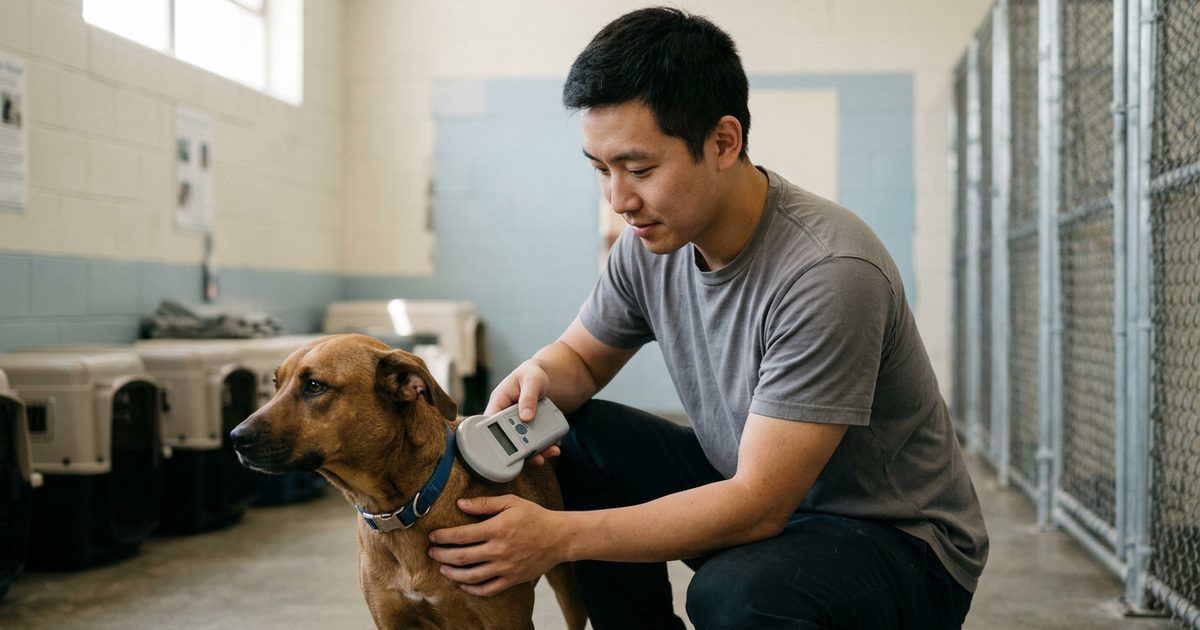
All of them, more than once. The City’s own lost-pet page says you may need to visit each shelter individually, and perhaps more than once, to walk through and see whether your pet was brought in. Animals cross the City and County line. So do the people who pick them up. Walk the rows slowly. The kennels are loud, and the dog you came for may be the quiet one curled at the back, too scared to bark at you.
The City shelter. The Animal Care Center, managed by CARE STL, is at 2801 Clark Ave., 314-612-5310. If an animal appears to be in immediate distress, the City says to call Animal Care and Control at 314-657-1500 during business hours. CARE STL posts found animals on its lost and found pets page and in a daily Facebook post about found pets.
The County shelter. Saint Louis County Animal Care and Control is at 10521 Baur Boulevard in Olivette, 314-615-0650. Its strays are listed on the County’s stray pets page.
Before the County shelter, try city hall. St. John, for one, tells residents who lose a pet to call City Hall at 314-427-8700, ext. 3, because it has no facilities to house pets overnight and takes unclaimed ones to the County Pet Adoption Center on Baur Blvd. If you live in one of the County’s smaller towns, call your city hall or police department and ask the blunt question: did anybody bring in a dog today?
Then the private shelters on the City’s list. The Humane Society of Missouri has a St. Louis City campus at 1201 Macklind Ave (314-951-1562) and a Maryland Heights campus at 11660 Administration Dr. (314-951-1588). The Animal Protective Association of Missouri is at 1705 South Hanley Road (314-645-4610). Stray Rescue of St. Louis is at 2320 Pine Street (314-771-6121).
Outside those, St. Charles County Animal Control is at 636-949-7387. If your dog was lost across the river, call the animal control for that Illinois county too. For the full split between the City and the County, our breakdown of St. Louis city animal control versus the County’s covers who answers which call.
Where do St. Louis lost-pet posts actually get seen?
Where the shelters themselves look. Use all of it.
STL Lost Pets keeps lists of found dogs and found cats, and the site says its databases are updated once per hour. It also says 90% of lost, stray and unwanted pets in the St. Louis area end up at one of its agencies. Read that line with the City shelter in mind.
Petco Love Lost and PawBoost fill the gaps. The APA partners with Petco Love Lost and calls it the largest free central database of lost and found pets in the country; one photo of your pet gets you alerts on possible matches. CARE STL tells owners to post on Petco Love Lost, PetFBI and PawBoost too.
The APA’s text line is the fastest checklist in town. Text JOIN to 844-752-3642 and it sends back step-by-step actions, a list of resources and a link to describe where your pet was lost. The line is not monitored, so don’t expect a person to text back.
Paper still wins on your own block. One photo, the words LOST DOG, a phone number. A driver stopped at a four-way can read that from the car. Nobody reads a Facebook post at a stop sign.
One warning that STL Lost Pets prints on its own homepage: no one will call you from a shelter and demand money up front to return your pet. Leave your home address off the flyer, and hold back one identifying mark so you can test a caller who says they have her.
How long do St. Louis shelters hold a stray?
Assume you have days, not weeks. CARE STL says a found pet fostered for it that stays unclaimed through the required five-day stray hold becomes eligible for adoption. Ask each agency for its current rule the first time you call.
Getting your pet back from the City shelter costs money, and the City publishes the fees. Impoundment is $20 for the first three days and housing is $10 a day after the third day, and there may be additional fees for other vaccinations and veterinary treatment. The same page says fees may be waived by the Commissioner of Health case by case with proof of low-income status or financial hardship, such as current award letters for TANF, SSI, SNAP, WIC, Disability or unemployment. If money is what stands between you and your dog, ask about the waiver at the desk.
Bring proof: photos of you with the pet, vet records, the microchip number. Then walk every row, because an online list is only as good as the person typing it, and your scruffy whatever-she-is may be wearing somebody else’s best guess at a breed.
Our look at what St. Louis animal shelters actually do explains intake, stray holds and why space runs tight.
Passports, PO boxes, shipping: what a St. Louis post office actually does
Does a microchip really bring a lost pet home?
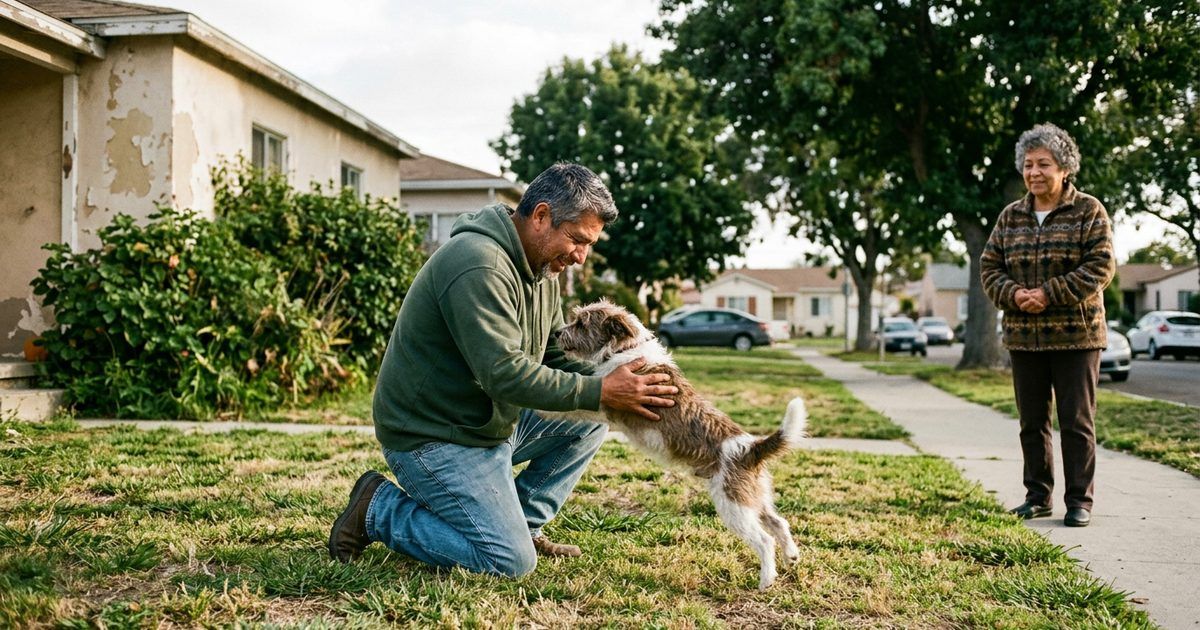
It more than doubles the odds, as long as the phone number behind it still rings. STL Lost Pets cites a study of more than 7,700 stray animals at shelters: dogs without microchips went back to their owners 21.9% of the time, and microchipped dogs 52.2% of the time. For cats the gap was enormous, 1.8% without a chip against 38.5% with one.
A chip is only a pointer, and a pointer to a phone number you gave up two moves ago leads nowhere. Don’t know your pet’s microchip number or company? The APA says to check your vet records or ask the facility that implanted it. Update your number there tonight, before you need it.
Keep a tag on the collar too. A neighbor can read a tag in a driveway; reading a chip takes a scanner and a trip. In the City, registration for a spayed or neutered pet is $4 on the City’s fee table. If your pet isn’t chipped yet, the City lists a $10 microchip among its shelter fees, and our guide to low-cost vet care in St. Louis covers the cheaper routes.
A lost cat needs a quieter search
A frightened indoor cat usually isn’t traveling. It’s hiding, silently, close by, and it won’t come trotting down the alley because you called. Search slowly, after dark, with a flashlight, because eyes shine back. Look under the porch, behind the AC unit, under the neighbor’s deck, in the window wells and gangways of a brick block. Ask the neighbors on both sides and behind you to open the garage and the shed and actually look. Report a missing cat to STL Lost Pets and the City shelter on day one, the same as a dog.
What if you find a lost dog in St. Louis?
Don’t rush it to a shelter. In the City, the shelter is unable to accept animals brought in by the public.
CARE STL asks finders to keep the dog for at least 48 hours, visit the nearest veterinary clinic to have it scanned for a microchip, hang signs near where it was found, and share its photo on Facebook lost pet groups and Nextdoor. If you’re willing to foster, CARE STL says it can provide veterinary care and supplies at no cost while you provide the home. The APA puts it this way: keeping the animal in your community improves the chances the pet will get home.
File a found report so the owner’s search leads to you. CARE STL has its own Found Pet Report, reviewed by shelter staff, and the APA points finders to Petco Love Lost, STL Lost Pets and PawBoost. If the animal is sick or injured, don’t handle it: STL Lost Pets tells City and County residents to call the Humane Society of Missouri at 314-647-4400, and an emergency vet in St. Louis can stabilize it.
Found one after hours in the City? CARE STL says to email info@icarestl.org, put the pet in an extra room or crate it overnight, and call the shelter the next day, or call the non-emergency line at 314-231-1212 to make a report. In the County, the St. Louis County Police non-emergency line is 636-529-8210.
Be careful who you hand the dog to. A real owner can show photos, vet records or a microchip number that matches. And if it’s a healthy-looking cat strolling your street, CARE STL says many outdoor cats belong to someone and are likely to return home on their own.
If nobody comes forward, surrendering the dog isn’t your only move. Our guide to St. Louis pet rescues covers who places dogs and how fostering works.
The people who get their dogs back in this city usually aren’t the ones with the most shares. They’re the ones at the Baur Boulevard counter with a flyer in hand, then on the phone to Clark Avenue, then back in their own alley before sunrise with a flashlight and a bag of treats. And once she’s home and asleep on your feet, our guide to dog-friendly places in St. Louis is where the two of you go next.
Want every place a stray might land in one list? The animal shelters around St. Louis on St Louis Near Me Directory let you call straight down the list this afternoon.
If you run a vet clinic, groomer or boarding kennel that will scan a found dog for a chip, the neighbor holding somebody’s terrier is searching for you right now. List your business with us and get more customers from the people already looking for an open door.
Frequently asked questions
What usually happens to missing dogs?
Many are found close to home. CARE STL says most lost dogs do not wander far, and that fostering a found dog and posting signs where it was found gives it a better chance of getting home than a shelter. A found dog fostered for CARE STL that stays unclaimed through the required five-day stray hold becomes eligible for adoption.
What is the best way to find a lost dog?
Search on foot right away, put up flyers where your dog was last seen, and contact shelters the same day. Around St. Louis, that means a report to STL Lost Pets, a separate email to CARE STL for the City shelter, and in-person visits on both sides of the City and County line, more than once.
How far will a lost dog wander?
Usually not far. CARE STL notes that most lost dogs do not wander far from home. Search in widening rings, and if sightings start coming from farther out, move your flyers and your food bowl to follow them.
Where do lost dogs hide during the day?
In tight, quiet places. The APA tells owners to check where a pet may have become trapped, such as basements, crawl spaces and under porches. Check sheds and open garages too, and go quietly; crashing through the brush can push a hiding dog farther away.
How to attract a lost dog back home?
Make home easy to find. CARE STL tells owners to put out food, water and the dog’s bed or an article of their clothing, because there is a good chance the dog will return. If you spot your dog, don’t chase. Sit down, look away and let the dog come to you.
How long do dogs usually stay missing?
There is no set answer, so plan for a long search and keep your reports alive. STL Lost Pets keeps a lost report on file for 30 days and asks you to resubmit after that if your pet has not been found. It also says to keep checking its found dogs and found cats lists, and not to give up hope.
Where is a lost dog most likely to go?
Somewhere close. CARE STL says pets tend to stay relatively close to their homes, so it is likely someone nearby has seen yours. That makes neighbors, postal carriers and yard crews your best scouts.

Written by a dedicated team of St. Louis locals who live, work, and play right here in the St. Louis metro. Founder Lane Forman and team are committed to building the region’s most trusted directory by verifying listings and connecting local businesses with loyal customers across Missouri and Illinois.