Small Business Digital Transformation in St. Louis: A Practical Roadmap
Revised August 29, 2026

What is digital transformation for a small business?
For a small business, digital transformation is adopting the digital tools that make you more findable, efficient, and easy to do business with — not one expensive project. In practice: a complete online presence, digital payments and online booking, cloud tools for scheduling and bookkeeping, and using AI to save time and stay visible in AI search. Do it in affordable phases — foundation, operations, relationships, growth.
Keep reading ↓“Digital transformation” is one of those phrases that sounds like it belongs in a corporate boardroom, not in a St. Louis auto shop, salon, or family restaurant. It conjures images of expensive software, IT consultants, and months of disruption — exactly the kind of thing a busy small-business owner files under “someday.” And that instinct is understandable, but it’s also costing local businesses real ground, because the version that actually matters for a small business is far simpler, cheaper, and more urgent than the buzzword suggests.
Strip away the jargon and digital transformation just means using digital tools to get found, run more efficiently, and serve customers better. This is a practical, no-hype roadmap for what it really means for a St. Louis small business in 2026 — the steps that matter, why so many attempts fail, and how to do it in affordable phases without betting the business on it.
What Is Digital Transformation for a Small Business?
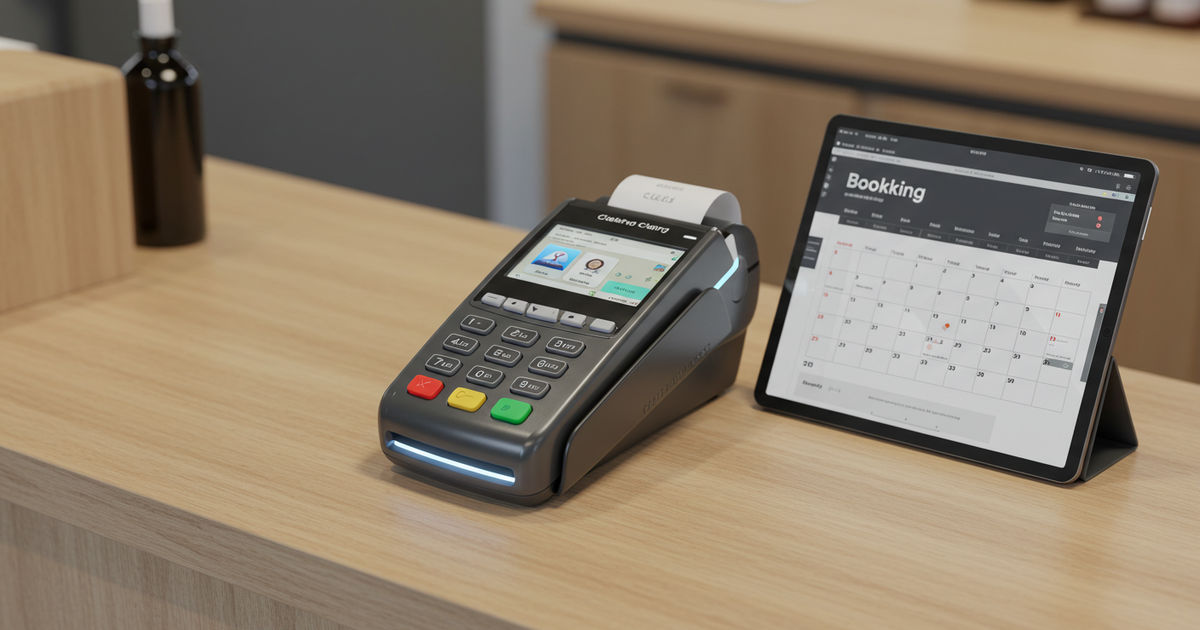
For a small business, digital transformation is the practical adoption of digital tools and processes that make you more findable, more efficient, and easier to do business with. It is not a single expensive software project. In real terms, it looks like this: being easy to find online (a complete Google Business Profile, consistent listings, a simple website), accepting digital payments and online booking, moving from paper and spreadsheets to simple cloud tools for scheduling and bookkeeping, keeping in touch with customers by email or text, and increasingly, using AI to save time and stay visible in AI-powered search.
The payoff is concrete, not theoretical: the vast majority of small businesses now operate with a website, and studies consistently tie digital adoption to meaningful efficiency and productivity gains. In other words, this isn’t about chasing shiny technology — it’s about not being the business that’s harder to find, slower to deal with, and quietly losing customers to a competitor who modernized. Done right, it makes your business both easier to run and easier to choose.
What’s an Example of Digital Transformation in a Small Business?
Concrete examples make it click. Picture a St. Louis home-services company that used to run on a paper appointment book and a voicemail box. Digitally transformed, the same business now shows up in the map pack because its Google Business Profile is complete, takes bookings through an online scheduler, sends automated appointment reminders by text (cutting no-shows), collects reviews with a follow-up link, accepts card and digital payments in the field, and uses an AI tool to draft its social posts and review replies. None of that required a big IT project — each piece was an affordable tool solving one real problem. The result is a business that’s easier to find, wastes less time on admin, and looks more professional to customers — without the owner working more hours. That’s digital transformation for a small business: not a moonshot, but a series of practical upgrades that compound.
What Are the Steps of Digital Transformation?
The smartest approach is phased, so you’re never overwhelmed or overspending. Think of it in four practical stages. Phase one is foundation — get found: claim and complete your Google Business Profile, fix inconsistent listings, and stand up a simple website. This is the highest-return, mostly-free starting point. Phase two is operations — save time: add digital payments, online booking or scheduling, and move bookkeeping and customer records to simple cloud tools. Phase three is relationships — keep customers: start collecting reviews systematically and stay in touch through email or text. Phase four is growth — work smarter: layer in AI to handle repetitive tasks and to keep you visible in AI-powered search, and use your data to see what’s working. Do them in order, one phase at a time, and each step funds and reinforces the next.
Signs Your Business Has Fallen Behind
Not sure whether this applies to you? A few honest tells. You’re probably overdue for a digital upgrade if: customers regularly say they “couldn’t find you online” or weren’t sure you were still open; you take bookings only by phone during business hours (and lose the after-hours ones); you can’t accept a card or a digital payment on the spot; your customer records live in a paper notebook or a single fragile spreadsheet; you have few or no online reviews; or you’ve never checked whether your business shows up when someone searches your service “near me.” None of these are failures — they’re just signals. Each one is a specific, fixable gap, and closing even one or two typically pays for itself quickly in recovered customers and reclaimed time.
Which Digital Tools Should You Adopt First?
Match the tool to your biggest pain, in roughly this order of impact. If customers can’t find you, start with your Google Business Profile and consistent listings — free and highest-return. If you’re losing after-hours business, add online booking or scheduling. If you’re chasing payments, add digital and card payments. If admin is eating your evenings, move scheduling and bookkeeping to simple cloud tools. If you’re drowning in repetitive writing — social posts, review replies, emails — add an AI assistant to draft them. The trap is buying tools you never fully adopt, so resist the urge to grab five at once. Pick the one aimed at your loudest problem, use it until it’s a habit, then add the next. A handful of well-used tools beats a subscription graveyard every time.
Why It Matters More in the St. Louis Metro
Digital visibility is especially decisive in a spread-out region like St. Louis. Customers here search by their own town — “near me,” “in Kirkwood,” “O’Fallon” — across the city, St. Louis County, St. Charles, Jefferson County, and the Illinois Metro East, and if you’re not clearly findable for the specific communities you serve, a modernized competitor a few towns over gets the call instead. The upside is that most local businesses have not fully modernized, so the bar to stand out is low: get genuinely findable, easy to book, and easy to pay, and you leapfrog a lot of competitors who are still running the way they did a decade ago. In a metro this competitive, being the easy-to-find, easy-to-deal-with option is a real and durable edge.
Unrelated, and we know it — Truesdale’s food scene, whenever hunger hits.
Why Do So Many Digital Transformations Fail?
It’s widely reported that a large majority of digital-transformation efforts fall short of their goals, and for small businesses the reasons are refreshingly avoidable — they’re rarely about the technology itself. The common traps: starting with a shiny tool instead of a real problem (buying software because it’s trendy, not because it solves a specific pain); trying to change everything at once instead of phasing it, which overwhelms a small team; skipping the people part — no training, so tools get used badly or abandoned; and expecting instant results instead of a steady, compounding improvement. The businesses that succeed do the opposite: they pick one real problem, apply one tool to it, make sure everyone actually learns to use it, and expand only once it’s clearly working. Start small, solve real problems, and “transformation” stops being scary and starts being a series of wins.
How Much Does It Cost — and Where Should St. Louis Businesses Start?
Less than the word implies. The highest-impact first phase — getting found — is largely free: your Google Business Profile costs nothing, consistent listings cost nothing, and a simple website is inexpensive. Operational tools (scheduling, payments, bookkeeping) are typically modest monthly subscriptions, and many now include AI features at no extra cost. The real investment is time and the willingness to change a habit, not a big check. For 99.4% of Missouri businesses, which are small businesses (SBA), that affordability is the whole point: you don’t need a transformation budget, you need to start with the free foundation and add one practical tool at a time. Begin where the payoff is biggest and the cost is lowest — making sure customers and AI can find you — and build outward from there as each phase proves itself.
The Bottom Line
Digital transformation for a St. Louis small business isn’t a scary, expensive megaproject — it’s a series of small, practical upgrades that make you easier to find, faster to deal with, and more efficient to run. The businesses that thrive over the next few years won’t be the ones that spent the most on technology; they’ll be the ones that quietly closed the gaps — got found online, took bookings and payments digitally, gathered reviews, and used a few smart tools to save time. Start with the free foundation, fix one real problem at a time, keep your people trained, and let each win fund the next. Do that, and “transformation” stops being a buzzword and becomes exactly what it should be: a more findable, more profitable, less stressful business.
Start with the highest-return phase — getting found. A complete listing on the St Louis Near Me Directory locks in consistent local data, adds a trusted citation, and helps AI assistants surface your business — the foundational, low-cost first step of any small-business digital upgrade.
Ready to modernize how customers find you? Listing your business puts you in front of the customers — and AI tools — already searching across the St. Louis metro.
More for St. Louis Businesses
- The 2026 St. Louis small-business marketing playbook
- How St. Louis businesses can actually use AI in 2026
- How to list your business online in St. Louis
More St. Louis Small-Business Guides
Done-for-you local visibility, Marketing a small business in Missouri, How customers find local businesses, St. Louis County business promotions, St. Louis County event promotion, Membership tiers explained, St. Louis County business digitization, Digital modernization in Bridgeton, Google Business Profile listing guide, Local SEO for St. Louis businesses, What is hyperlocal SEO?, The hyperlocal marketing ecosystem.
Frequently Asked Questions
What’s an example of digital transformation in a business?
A home-services company that swaps its paper appointment book and voicemail for a complete Google Business Profile, online booking, automated text reminders, a review-collection habit, in-field card payments, and AI-drafted social posts. Each piece is an affordable tool solving one real problem; together they make the business easier to find, faster to deal with, and more professional — without the owner working more hours.
What are the steps of digital transformation?
Work in four practical phases: (1) foundation — get found with a complete Google Business Profile, consistent listings, and a simple website; (2) operations — add digital payments, online booking, and cloud bookkeeping; (3) relationships — collect reviews and stay in touch by email or text; (4) growth — use AI and your data to work smarter. Do them in order, one at a time.
Why do so many digital transformations fail?
Usually for avoidable, non-technical reasons: starting with a shiny tool instead of a real problem, trying to change everything at once, skipping training so tools get abandoned, and expecting instant results. Small businesses that succeed pick one real problem, apply one tool, make sure people actually learn it, and expand only once it’s working. Start small and solve real problems.
How much does digital transformation cost a small business?
Less than the term implies. The highest-impact first phase — getting found — is largely free: your Google Business Profile and consistent listings cost nothing, and a simple website is inexpensive. Operational tools like scheduling and payments are typically modest monthly subscriptions, many now with AI built in. The real investment is time and changing a habit, not a big budget.
Is digital transformation worth it for a very small business?
Yes — arguably more so, because the gains come cheap and the cost of falling behind is real. Being harder to find, slower to book, and unable to take digital payments quietly sends customers to modernized competitors. Since the first and most valuable phase is mostly free, even a one-person business can capture most of the benefit by getting found online and adding one practical tool at a time.
What is an example of digital transformation?
A shop that took paper appointment books, moved to online booking with automated reminders, and cut no-shows. That is the whole shape of it: one manual process replaced by one system, with a number that moves. It is not a platform purchase and it does not need a consultant.
What are the 5 pillars of digital transformation?
Usually listed as strategy, culture, process, technology and data. For a small business the honest ranking is process first, data second, technology last. Buying tools before fixing the process is why so many attempts stall — the software just makes the mess faster.
What are the four types of digital transformation?
Process, business model, domain and cultural. Small businesses almost always want the first — make an existing job faster and less error-prone. The other three are for companies changing what they sell or who they sell to, which is rarely the actual problem.
What are the top 10 digital transformation companies?
Those lists rank enterprise consultancies serving companies with budgets in the millions. For 99.4% of Missouri businesses, which are small businesses, none of them are relevant. The realistic help is a local IT contractor or the software vendor’s own onboarding, at a fraction of the cost.

Written by a dedicated team of St. Louis locals who live, work, and play right here in the St. Louis metro. Founder Lane Forman and team are committed to building the region’s most trusted directory by verifying listings and connecting local businesses with loyal customers across Missouri and Illinois.