Hyperlocal Marketing for St. Louis Businesses: The Guide
Revised August 29, 2026
What is hyperlocal marketing?
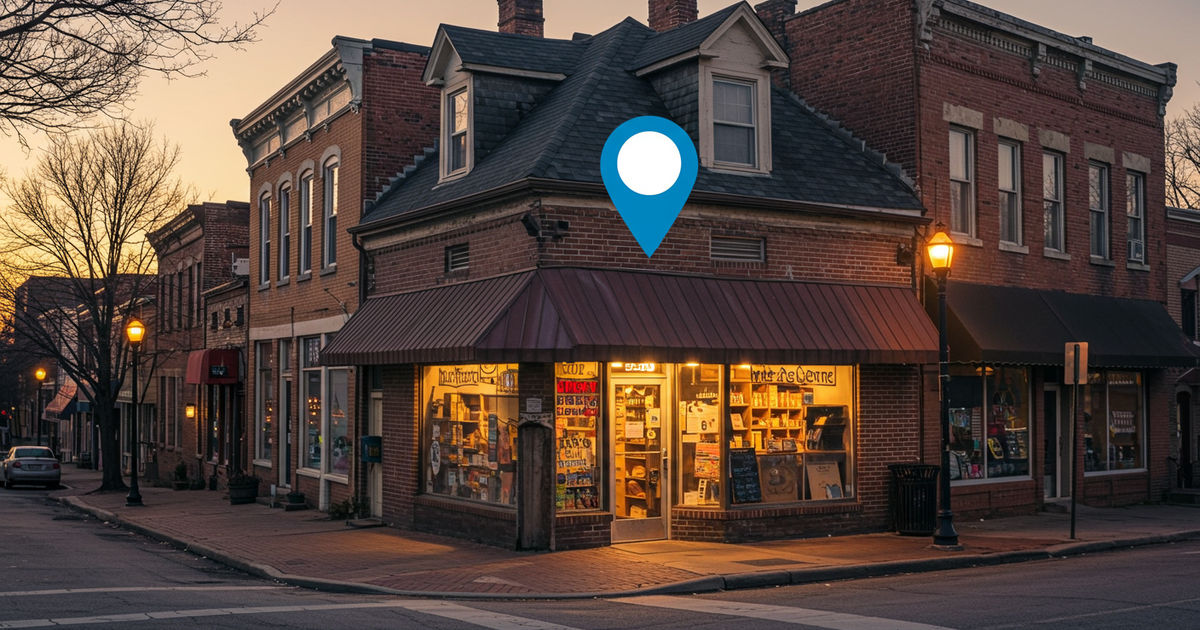
Hyperlocal marketing is marketing aimed at a very tight geographic area — a neighborhood, a few blocks, or the immediate radius around your business — rather than a whole city. It focuses your effort and message on the nearby people most likely to actually walk in or call, built around “near me” search intent. For a small local business, it’s the strategy where you can realistically out-compete much bigger players.
Keep reading ↓Picture two coffee shops in St. Louis. One markets itself to “St. Louis” — a city of nearly three million people across two states. The other quietly focuses on the fifteen blocks around its front door: the neighbors, the dog-walkers, the nearby office workers, the parents at the school two streets over. Which one do you think fills its tables? Almost always the second one, because the truth about local business is that your customers don’t come from “the metro” — they come from right around the corner.
That’s the whole idea behind hyperlocal marketing, and in 2026 it’s one of the most powerful and underused advantages a small St. Louis business has. This guide explains exactly what hyperlocal marketing is, shows a concrete example, spells out how it differs from broad or online marketing, and lays out how to actually do it in a metro built out of distinct neighborhoods.
What Is Hyperlocal Marketing?
Hyperlocal marketing is marketing aimed at a very tight geographic area — a neighborhood, a few blocks, or the immediate radius around your business — rather than a whole city or region. Instead of trying to reach everyone in St. Louis, you focus your effort, your keywords, and your message on the specific people most likely to actually walk in or call: the ones nearby. It’s built around the reality of “near me” search — when someone needs a plumber, a coffee, or a haircut, they’re looking for one close by, ready to act now.
For a small business, this is a gift, because it lets you compete on the terms where you actually win. You may not be able to out-spend a national chain, but you can absolutely be the most visible, most trusted option in your own neighborhood — and that’s exactly the customer who’s ready to buy today. Hyperlocal marketing is about owning your corner of the map instead of getting lost on the whole thing.
What’s an Example of Hyperlocal Marketing?
Concrete makes it click. Say you run a small hardware store in a St. Louis neighborhood. Hyperlocal marketing in action looks like this: your Google Business Profile is dialed in with your exact neighborhood named and your real service area set, so you show up in the map pack when someone a few blocks away searches “hardware store near me.” You’ve got a page on your site about serving that neighborhood by name. You post in the local Nextdoor and community Facebook groups, sponsor the nearby school’s fundraiser, and gather reviews from neighborhood customers who mention the area. When a homeowner two streets over needs a part on a Saturday morning, every one of those signals points to you — not the big-box store fifteen minutes away. That’s hyperlocal: a hundred small, neighborhood-specific touches that add up to being the obvious local choice.
How Is Hyperlocal Different From Regular Marketing?
The difference is focus and intent. Traditional or broad marketing casts a wide net — a whole city, a demographic, everyone — and accepts that most of the audience will never become customers. Hyperlocal deliberately narrows to the people close enough to actually buy, which makes every dollar and hour work harder. And it differs sharply from e-commerce marketing, which is location-independent by design — an online store wants customers anywhere, so it competes on price, shipping, and reach. A hyperlocal business competes on proximity, presence, and community trust: being near, being visible, and being known. For a business that serves people in person, hyperlocal isn’t just a cheaper version of big marketing — it’s the right strategy, because your customers are geographically limited and your competitors often aren’t paying attention at the neighborhood level.
How Do You Do Hyperlocal Marketing in St. Louis?
It comes down to a handful of neighborhood-level moves. Start with your Google Business Profile tuned to your exact area — name your neighborhood, set your true service area, and keep it complete and active, because it’s what powers “near me” results. Create neighborhood-specific content: a page or post that speaks to the specific community you serve, using the real place names locals use. Gather reviews from nearby customers, ideally ones that mention the neighborhood, since that reinforces your local relevance. Get listed in a strong local directory so both people and AI tools can find you for your specific area. And show up in the community itself — local Facebook groups, Nextdoor, neighborhood events, and partnerships with nearby businesses. None of this requires a big budget; it requires being genuinely, visibly present where you actually operate.
Common Hyperlocal Marketing Mistakes to Avoid
A few missteps quietly undercut otherwise good hyperlocal efforts. The biggest is being too broad — optimizing only for “St. Louis” when your customers search their own suburb or “near me,” so you’re invisible three neighborhoods over. Another is inconsistent information: a different address or phone number across your listings tells Google and AI tools you can’t be trusted, which is fatal when local relevance is the whole game. A third is treating community presence as advertising — spamming a neighborhood Facebook group with sales posts instead of being a genuine, helpful part of it, which locals see through instantly. And many businesses simply never ask nearby customers for reviews, leaving their single strongest neighborhood signal on the table. Avoid these, and you’re already ahead of most local competitors, who make at least one of them.
How to Know Your Hyperlocal Marketing Is Working
You don’t need fancy analytics to tell whether this is paying off — you need to watch the signals that map to real customers. Check the free insights on your Google Business Profile: are calls, direction requests, and messages from nearby searchers going up? Are you appearing in the map pack when you search your service plus “near me” from around your location? Is your review count from local customers climbing? And most tellingly, are new customers mentioning they “found you online” or “saw you were right in the neighborhood”? Those human signals are the real scoreboard. If the neighborhood-level numbers and the walk-in comments are both trending up, your hyperlocal strategy is doing exactly its job.
Unrelated, and we know it — University City’s food scene, mapped.
Where to Start This Week
If you want one concrete starting point, do this: open your Google Business Profile and make sure it names your actual neighborhood and sets your true service area, then write down every specific community you serve and start using those exact names everywhere — your listings, your website, your posts. This week, ask three recent nearby customers for a review, and join the main community Facebook group or Nextdoor for your area (to participate, not to advertise). Those few steps, done in an afternoon, plant the flag: they tell both your neighbors and the search tools they use that your business belongs to this specific corner of St. Louis. From there, hyperlocal marketing is just consistency — showing up, helpfully and visibly, in the place you actually serve.
Why Hyperlocal Works So Well in St. Louis
St. Louis is almost custom-built for this approach, because it’s a city of neighborhoods and a metro of distinct towns. The City of St. Louis alone has 79 official neighborhoods, each with its own identity, and the wider metro stretches across St. Louis County, St. Charles, Jefferson County, and the Illinois Metro East — each community with its own character and loyalties. St. Louisans famously identify with their neighborhood, and they prefer to support businesses that feel like part of it. That works in your favor: a business seen as “ours” in a given neighborhood has an edge no amount of generic city-wide advertising can buy. Match your marketing to the specific communities you serve — naming them, showing up in them, earning their reviews — and you turn St. Louis’s neighborhood pride into your most durable competitive advantage.
What Makes a Business Feel Genuinely Local
The tactics above only work if the business behind them actually feels like part of the neighborhood — and that’s something you earn, not fake. The businesses St. Louisans champion are the ones that show up as neighbors: they know the regulars by name, they sponsor the little-league team and the block party, they hire locally, and they treat a bad review as a chance to make something right rather than an insult. Hyperlocal marketing amplifies that authenticity; it can’t manufacture it. So as you tune your profile and your listings, remember that the strongest neighborhood signal of all is a genuinely good local reputation — the kind that gets you recommended in the community Facebook group without you ever asking. Do right by your neighbors, then make sure the digital signals point clearly to your door, and hyperlocal marketing becomes less a campaign than a natural extension of simply being a good local business.
Want to be the obvious choice in your specific St. Louis neighborhood? A complete listing on the St Louis Near Me Directory is built for exactly this — connecting nearby customers with nearby businesses across the whole metro, Missouri and Illinois alike, so you get found for the communities you actually serve.
Own your corner of the map. Listing your business feeds the local and AI search that neighbors use to find businesses like yours.
More for St. Louis Businesses
- The 2026 St. Louis small-business marketing playbook
- How to list your business online in St. Louis
- Why typical SEO & Google Ads fail
More St. Louis Small-Business Guides
Done-for-you local visibility, Marketing a small business in Missouri, How customers find local businesses, St. Louis County business promotions, St. Louis County event promotion, Membership tiers explained, St. Louis County business digitization, Digital modernization in Bridgeton, Google Business Profile listing guide, Local SEO for St. Louis businesses, What is hyperlocal SEO?, Small-business digital transformation.
Where the money goes matters more than how it looks. The old 40-40-20 rule in marketing puts 40% of the result on who you reach and 40% on the offer, leaving only 20% for the creative — which is where most owners spend their time. Strip the main marketing strategies back and that is what remains: audience, offer, message, channel and follow-up.
Frequently Asked Questions
What’s an example of hyperlocal marketing?
A neighborhood hardware store whose Google Business Profile names its exact area, that has a web page about serving that neighborhood, posts in the local Nextdoor and Facebook groups, sponsors the nearby school fundraiser, and gathers reviews from neighborhood customers. When someone a few blocks away searches “hardware store near me,” all those signals make it the obvious choice over a big-box store miles away.
What does hyperlocal marketing mean for a small business?
It means competing on proximity, presence, and community trust instead of trying to out-spend bigger companies. You focus on being the most visible, most trusted option in your immediate area — the customer who’s ready to buy today. For a business that serves people in person, that focus makes every marketing dollar and hour work far harder than broad, city-wide advertising.
What is the difference between hyperlocal and e-commerce marketing?
Hyperlocal marketing targets nearby customers who buy in person, competing on proximity, presence, and community trust. E-commerce marketing is location-independent — an online store wants customers anywhere and competes on price, shipping, and reach. A business that serves a physical area should lean hyperlocal, because its customers are geographically limited and its neighborhood competitors often aren’t marketing at that level.
How do I do hyperlocal marketing in St. Louis?
Tune your Google Business Profile to your exact neighborhood and service area, create content that names the specific communities you serve, gather reviews from nearby customers, get listed in a strong local directory, and show up in the community itself — local Facebook groups, Nextdoor, neighborhood events, and nearby-business partnerships. It takes presence and consistency, not a big budget.
Why does hyperlocal marketing work so well in St. Louis?
Because St. Louis is a city of neighborhoods and a metro of distinct towns — the city alone has 79 official neighborhoods, and residents strongly identify with theirs and prefer to support businesses that feel like part of the community. A business seen as “ours” in a neighborhood has an edge no generic city-wide advertising can buy, which makes neighborhood-level marketing especially powerful here.
What does hyperlocal mean?
Smaller than a city — a neighborhood, a few blocks, a single commute. St. Louis alone has 79 official neighborhoods, each with its own identity, so “St. Louis” is often too broad a target to be useful. Hyperlocal means talking to Tower Grove rather than the metro.
Can you give me an example of hyperlocal marketing?
A coffee shop posting about the street festival two blocks away, not about coffee. A plumber writing about the clay soil in a specific set of neighborhoods. Both are aimed at people who recognize the detail — recognition is what separates hyperlocal from ordinary local advertising.
What are the 5 main marketing strategies?
Usually framed as the five Ps: product, price, place, promotion and people. For a local business the one that moves fastest is place — being present and accurate where the search happens — because the others cost money or time you may not have yet.
What are the four main types of marketing?
Broadly: content, paid, earned and direct. Local businesses over-invest in paid and under-invest in earned, which is reviews, referrals and being cited by other local sources. Earned is slower and it is the one AI tools actually read when they answer a question about you.

Written by a dedicated team of St. Louis locals who live, work, and play right here in the St. Louis metro. Founder Lane Forman and team are committed to building the region’s most trusted directory by verifying listings and connecting local businesses with loyal customers across Missouri and Illinois.