Camp Free Tonight: Things to Do in Troy, MO's Wild Side
Revised November 10, 2026

What is Troy, MO known for?
Troy, MO is home to Cuivre River State Park, in the Lincoln Hills northwest of St. Louis. The state calls it one of its largest and most rugged parks, with limestone bluffs, sinkholes, springs, glacier-carried boulders, two wild areas and four free backcountry campsites that need registration.
Keep reading ↓Zero dollars a night. That’s the price of the four backcountry campsites at Cuivre River State Park, just outside Troy, and you can carry your whole weekend in on your back. The park’s own registration page says it in one flat line: “Camping is free, but registration is required.” Free, a short form, and an Ozark-style wild area northwest of St. Louis. That’s the line worth passing to whoever in your group keeps saying they need a real weekend away.
The steps fit in one breath. Fill in the park’s backcountry registration form before you start the trip, and read the notices on that page, since closures post there. Pick one of the four sites on Lone Spring Trail, Big Sugar Creek Trail or the North Loop of Cuivre River Trail. Questions go to the park office at 636-528-7247. And carry all your drinking water, because the state says much of Big Sugar Creek is intermittent. The creek you pictured filtering from can be a bed of warm, dry stones.
Here’s what that zero buys. You shrug the pack off at dusk and the first thing you notice is what’s missing. No generator humming two pads over. No car door. No campground radio. Just oak leaves moving overhead, your own breathing slowing down, and, when the creek is running, water sliding over gravel somewhere below the tent. In the morning the ground is cold through the sleeping pad and the coffee tastes better than it has any right to.
And you didn’t drive half a day to get it. Missouri State Parks sells this place with a question, “Looking for the Ozarks in northern Missouri?”, and the state’s natural features page backs the pitch up: in many ways the Lincoln Hills resemble the Ozarks of southern Missouri, with limestone bluffs, sinkholes, caves and springs. The rugged weekend you keep promising yourself, minus the long haul south.
Here’s the bit almost nobody mentions, and the one worth saying out loud at the campfire. This wasn’t born a state park. From 1934 to 1946 it was a Recreational Demonstration Area under the National Park Service, and Company 3771 of the Civilian Conservation Corps built many of its facilities by hand. On Nov. 8, 1946, President Harry S Truman signed the letter that handed it to Missouri. So the stone under your fingers at the old shelters was cut by young men in a federal work camp, and a president from Missouri signed the paperwork that lets you sleep out here for free.
If you’ve done the Arch, the Zoo and the riverfront enough times to give the tour yourself, Troy belongs at the top of your list of small towns outside St. Louis, because it’s the one where the night itself is the attraction.
What is Troy, MO known for?
Troy, MO is home to Cuivre River State Park, in the Lincoln Hills northwest of St. Louis. The state calls it one of its largest and most rugged parks, with limestone bluffs, sinkholes, springs and glacier-carried boulders, two designated wild areas and four free backcountry campsites that need registration.
Ask anyone in Troy what to do and you’ll hear about the park before they finish the sentence. Fair enough. The park’s office sits at 678 State Route 147, on the road out of town, and most visitors plan the day around a trail rather than a dinner reservation.
One mix-up to clear up before you put an address in your phone. Troy, Missouri isn’t the Troy on the Illinois side of the metro. That’s Troy, Illinois, a different town altogether. This page is about the Lincoln County one, ZIP 63379.
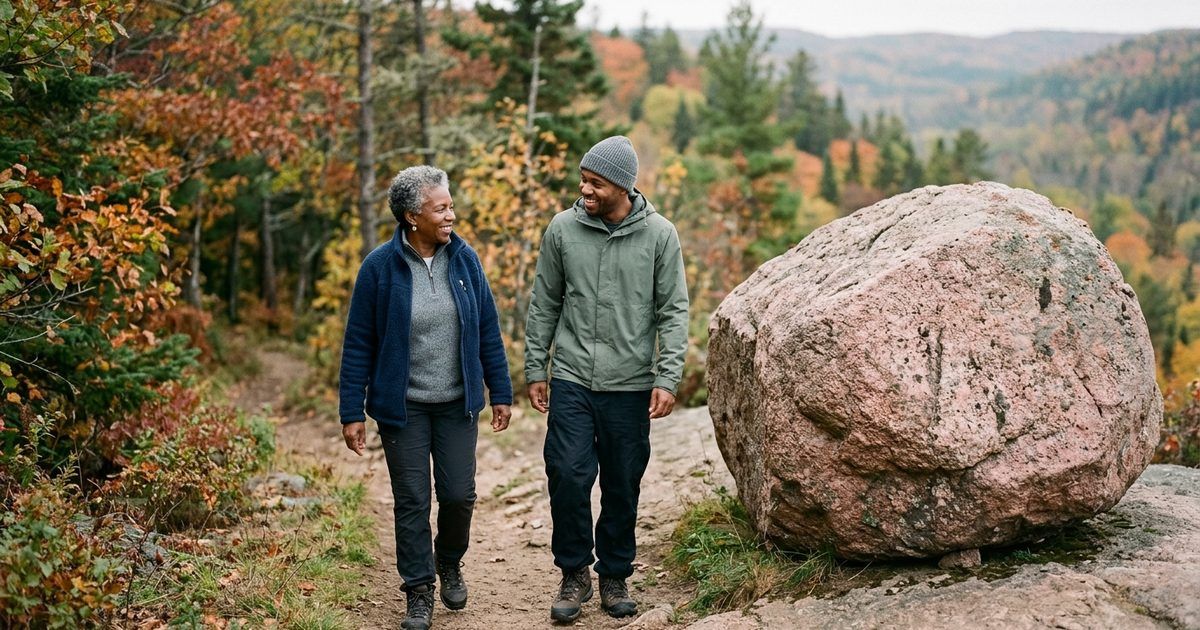
The ground itself is the reason people come. The state says the Lincoln Hills were once covered by glaciers, and glacial erratics, boulders the ice carried in and dropped, are scattered throughout the park. You’ll be walking a ridge through ordinary-looking woods and come around a bend to a rock that has no business being there. Kids put a hand on it. Adults do too, if they’re honest.
Four free campsites, and the way to claim one
The park limits backcountry camping to four designated sites along three trails: Lone Spring Trail, Big Sugar Creek Trail and the North Loop of Cuivre River Trail. You register before you start the trip. Horses can’t camp on the trail, so this is a boots-only night.
Those trails cross the park’s two wild areas, and the state’s definition of a wild area is the best sales pitch the place has: large undeveloped areas “managed as wilderness for solitude and primitive recreation.” Northwoods Wild Area covers 1,102 acres on the north side of Highway KK, mostly mature oak woodland. Big Sugar Creek Wild Area takes up 1,675 acres in the middle of the park, where several bluffs line the creek.
For backcountry site 1, the park tells you to leave the car overnight at the Lone Spring trailhead. Read the registration page the week you go, not the month before, because closures and rules get posted there first.
Now the thing people get wrong. Water. Big Sugar Creek is a scenic, gravel-bottom stream, the stream the park says shaped and defines the whole place, but the state also says much of the creek is intermittent. So the rule bears repeating: carry what you’ll drink, plus enough to cook with. The ache in your shoulders from the extra liters is nothing next to the dry, sticky mouth of a night without it.
Not a backpacker? The drive-in campground is right there, and our guide on how to book a campsite near St. Louis walks through how the state system works. Reservations can also be made by phone at 877-422-6766.
Where the river shows up
Most of the park is woods and creek, so the Cuivre River itself is a surprise when you finally see it. The state says it borders the park’s southwest boundary below Frenchman’s Bluff for about a mile. Stand up top on a fall afternoon and the valley opens out below you, and the wind smells like dry leaves and limestone dust. Watch your feet near the edge. Loose rock is loose rock.
Spring is the other season to come. The state notes some sizable springs feed Big Sugar Creek part of the year, and banded sculpin in the creek add to the Ozark likeness. Kneel at the bank and you can hear the water before you see it.
Off the bluff and starving? Where to eat in Troy, MO
Paddle a lake that stays quiet
Lake Lincoln is the park’s lake, and its best feature is a rule. Motor use is restricted to electric trolling motors only, though a gas motor doesn’t have to come off the boat. There are no launch fees at the concrete launch. So a sunrise paddle here sounds like paddle drips and birds, not outboards. Bring your own kayak, strapped to the roof before you leave home.
We cover the lake’s fishing in our guide to things to do in Wentzville, so we won’t repeat it here.
Who else is out there in the dark?
Lie still in the tent long enough and you start to understand why the state guards this ground. Thousands of species are known in Cuivre River State Park, according to Missouri State Parks, and many of them are of conservation concern. The park names the cerulean warbler among its rare species. You may never see one. You’ll still hear a lot of somebody up in the canopy at first light, and it’s a better alarm than your phone.
The state has set aside three natural areas inside the park, covering 1,968 acres. The one backpackers walk through is Big Sugar Creek Natural Area, a corridor along 2.3 miles of the creek at the north end of the park, and Lone Spring itself, along Lone Spring Trail, is part of it. If you only have a couple of hours and a tired kid, there’s a smaller one: George A. Hamilton Forest Natural Area, a 40-acre wooded valley just north of the visitor center. Big trees, cool shade, the kind of quiet that makes a seven-year-old whisper without being told.
One more thing you might smell before you understand it. The prairie, savanna, limestone glades and oak woodlands here depend on fire, the state says, so staff use prescribed burns to keep them healthy. A drift of woodsmoke on a spring morning, a blackened strip of ground beside the trail a week later, new green pushing up through it a week after that. That’s the park doing its job, not something gone wrong.
Your first night, start to finish
Here’s how a first backcountry trip goes when it goes right. A few days out, you fill in the park’s registration form and read every notice on that page. The night before, you pack, then take one thing out, then add a liter of water back in. You leave St. Louis after lunch on Saturday so you hit the trailhead with hours of daylight to spare, because setting up a tent by headlamp in unfamiliar woods is a story you tell later, not one you enjoy at the time.
You park where the park tells you to park. You walk in slower than you planned, because the ground here rolls, and you stop at the first boulder that looks out of place. At the site, you pitch the tent, hang the food, and sit down on a log with nothing to do. That last part is the point. The phone goes in the pack. The light goes orange, then gray, then gone, and the woods get louder instead of quieter.
In the morning you pack out everything you carried in, leave the site cleaner than you found it, and walk back to a car that feels strangely loud when the door shuts. By the time you’re back on the highway you’re already working out which of the other three sites you want next.

Bringing a horse, or wishing you had one
Riders trailer in for the multi-use trail network, and you’ll smell the horse camp before you see it. Trail conditions change fast after heavy rain, so call the park office at 636-528-7247 before you hitch the trailer. Don’t own a horse? Start with our guide to horseback riding lessons in St. Louis for beginners.
Register for a backcountry site the week you go, pack more water than seems sensible, and leave the car at the trailhead the park names. When you hike out hungry, our guide to where to eat in Troy, MO picks up where this one stops.
If you’re the bait shop, the outfitter or the Main Street diner campers pass on the way home, those are your customers driving by with muddy boots and an appetite. Put your business in front of them and get more customers from every weekend the park fills up.
Making a weekend of it
If rain cancels the hike, go to jail. The Lincoln County Historical Society keeps the Old Jail Museum at 211 W. Collier Street in Troy, built in 1870 by P.J. Pauley & Bro., with original cells still inside. Picture the iron and the cold brick on a gray afternoon, then picture the people who slept there without a choice. It opens by appointment only, so call the Historical Society at 636-528-7562 before you drive over.
Holiday trips change the plan. For a drive-through light show, see our guide to the O’Fallon Christmas lights, and our guide to Christmas lights in St. Charles covers neighborhood displays a little farther on. Farther north near Elsberry, our guide covers what to do at Ted Shanks Conservation Area.
Next time someone tells you there’s nothing north of the city but corn, you’re the one who knows where the free campsites are. Register. Pack water. Go.
Frequently asked questions
Where can I go backcountry camping in Missouri?
Northwest of St. Louis, Cuivre River State Park outside Troy, MO has four designated backcountry sites along Lone Spring Trail, Big Sugar Creek Trail and the North Loop of Cuivre River Trail. Camping there is free, but you register before starting your trip.
Do I need a camping permit to camp in Missouri?
At Cuivre River State Park, backpackers must register before starting the trip, using the park’s backcountry camping permit form. Campground reservations can be made online or by calling 877-422-6766.
Can I rent a kayak on the Cuivre River?
We couldn’t confirm a public kayak rental near Troy, MO, so bring your own. Lake Lincoln in the state park has a concrete launch with no launch fees, and only electric trolling motors may run on the water.
What are some things to do at Cuivre River State Park?
Backpack to a free wild-area campsite, look for glacier-carried boulders along the trails, stand above the Cuivre River valley at Frenchman’s Bluff, paddle your own boat on quiet Lake Lincoln, or trailer a horse in for the multi-use trails after calling the office at 636-528-7247.
Is there a dog park in Troy, MO?
Not one we could find in Troy itself. If your dog is coming on the camping trip, check the state park’s pet rules before you go. For fenced off-leash space, see our roundup of dog parks around St. Louis.

Written by a dedicated team of St. Louis locals who live, work, and play right here in the St. Louis metro. Founder Lane Forman and team are committed to building the region’s most trusted directory by verifying listings and connecting local businesses with loyal customers across Missouri and Illinois.