Why St. Louis Real Estate Is So Affordable
Revised August 10, 2026
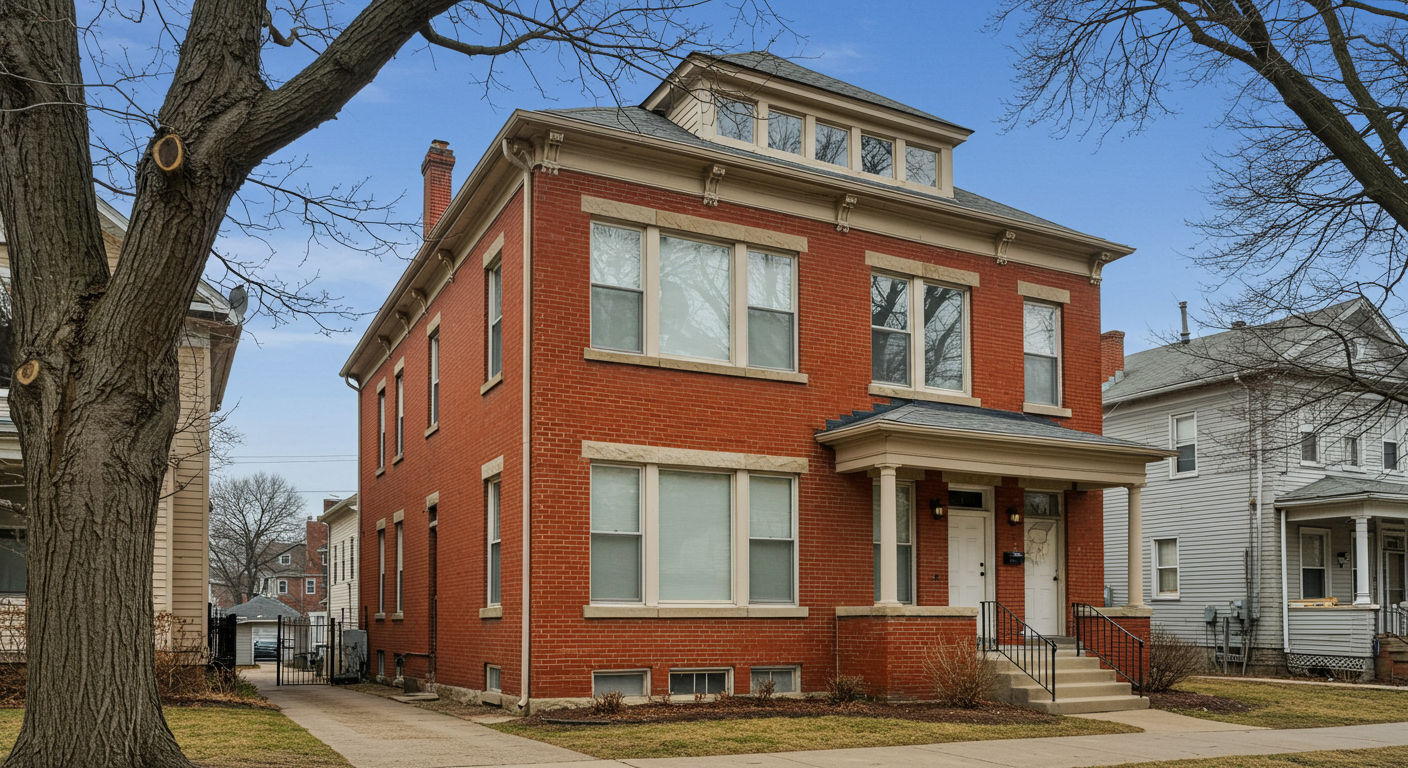
Why is St. Louis real estate so affordable?
St. Louis is one of America’s most affordable major metros: the median home runs about $285,000 versus roughly $404,000 nationally, and cost of living is about 16% below average. It’s cheap mainly because decades of population loss left more housing than buyers — undervalued rather than unwanted — in a metro that’s now quietly growing again.
Keep reading ↓Here’s a number that stops coastal transplants in their tracks: the typical home in the St. Louis metro costs around $285,000. The national figure is roughly $404,000. In San Jose, it’s about $1.5 million. Your housing dollar goes about twice as far here as the U.S. average, and many times further than on either coast.
St. Louis is, quietly, one of the most affordable major metros in America — and one of the most undervalued. That combination is unusual, and it’s the reason investors, remote workers, and priced-out families are starting to give the region a second look. This is the affordability-and-opportunity companion to our broader case that downtown St. Louis is ripe for development. Here we’ll answer the honest questions head-on: why is it so cheap, is that a red flag or an opportunity, and who actually wins by paying attention now?
Bookmark this — market data shifts, and we keep it current. Verify current prices before you buy.
Cheap housing is only part of the picture — here is what the rest of living here actually costs, using the state’s own numbers.
Just how affordable is St. Louis?
Let’s put real numbers on it. The St. Louis metro’s median home sale price sits around $285,000, versus a U.S. metro median closer to $404,000. Overall cost of living runs about 16% below the national average — a score of roughly 84 on an index where 100 is average — with housing the biggest driver of the gap.
The clearest way to feel it is the share of income a typical buyer spends on a home. In St. Louis, the estimated mortgage payment on a typical home eats up around 21% of the median household income; nationally, that figure is closer to 36%. That’s the difference between comfortably affording a house and being house-poor — and it’s why U.S. News has ranked St. Louis among the country’s most undervalued housing markets. Here’s the comparison at a glance:
| Market | Median home price |
|---|---|
| St. Louis metro | ~$285,000 |
| U.S. metro median | ~$404,000 |
| San Jose, CA | ~$1,490,000 |
So why is St. Louis so cheap? (The honest answer)
This is the question that trips people up, because “cheap” can mean “bargain” or it can mean “nobody wants it.” The honest answer for St. Louis is mostly the former, for a few concrete reasons:
- Decades of population loss left a surplus of housing. The City of St. Louis was once among the largest cities in America; as manufacturing declined and people moved to the suburbs and Sun Belt, the housing supply stayed while demand fell. More supply than demand means lower prices — basic economics, not a verdict on quality.
- No geographic squeeze. Coastal cities are hemmed in by oceans and mountains, so land is scarce and expensive. St. Louis sits on open Midwestern land with room to build, which keeps prices grounded.
- Midwestern wages and cost structure. Incomes here are lower than on the coasts, and so is nearly everything else — a trade most people who’ve done the math find very favorable.
- An old, deep housing stock. A 262-year-old city has a vast inventory of solid, century-old brick homes — the kind of construction that costs a fortune to replicate today — available for a fraction of new-build prices.
In other words, St. Louis isn’t cheap because it’s worthless. It’s cheap because supply outran demand for a generation, and demand is only now beginning to turn. That’s the textbook definition of undervalued.
“But aren’t people moving away?” Let’s be straight
It’s the most common pushback, and it deserves a straight answer. Yes: the City of St. Louis proper is still slowly losing population — that’s real and we won’t spin it. But two things complicate the “everyone’s leaving” story. First, the broader metro area of 2.8 million has held roughly steady, even growing slightly on international migration. Second, downtown itself has been a bright spot, adding residents over the past decade even as the wider city shrank.
The honest picture isn’t “a dying city” — it’s a metro that stopped growing, with a downtown core that’s quietly reversing. And that’s precisely the moment when prices are lowest and the upside is highest. You don’t buy in after everyone’s already arrived; you buy in when the fundamentals are turning but the crowd hasn’t noticed. St. Louis is closer to that point than its reputation suggests.
The commercial opportunity: pennies on the dollar
If residential affordability is striking, commercial real estate is jaw-dropping. The clearest example: the former AT&T Tower at 909 Chestnut, the tallest office building in Missouri, was worth about $205 million in 2006. In 2025 it sold for roughly $3.6 million — under two cents on the dollar. Downtown office vacancy hit 31.7%, the highest since 1999, which means grand historic buildings across the core are trading for a tiny fraction of what they’d cost to build.
For an investor, that’s the setup: buy an irreplaceable building cheap, and use the deep incentive stack — 25% state plus 20% federal historic tax credits, Opportunity Zones, and abatement — to cover close to half the cost of converting it into apartments the market actually wants. St. Louis multifamily also cash-flows: rents have been rising, apartment cap rates sit in the mid-6% range (a capitalization rate is the annual return a property throws off relative to its price — higher means more income per dollar invested), and price-to-rent ratios favor buyers. Cheap to acquire, subsidized to renovate, and cash-flowing when leased is a rare trifecta.
And it isn’t only investors who benefit. As those empty towers convert to apartments, downtown living itself becomes an option at prices that would be unthinkable in a coastal core — a loft in a restored historic building, walkable to a ballpark and a soccer stadium, for a fraction of comparable space in Chicago or Denver. The same cheap-buildings-plus-incentives math that draws developers ends up handing residents an affordable, characterful place to live.
This isn’t just cheap — it’s quietly rising
“Affordable” only becomes “opportunity” if the fundamentals are improving, and here they are. The signals worth knowing:
- The St. Louis metro’s GDP grew 7.1% over a recent two-year stretch, and the region ranked #3 in the nation for job growth.
- The $1.7 billion National Geospatial-Intelligence Agency campus opened in 2025 — the largest single federal investment in the region’s history — anchoring a growing geospatial-technology cluster.
- St. Louis is a national leader in agtech and plant science, with one of the world’s densest concentrations of plant-science researchers, plus a rising biotech and medtech scene around Washington University. (See our guide to the top St. Louis businesses to watch.)
- Redfin flagged St. Louis as a market poised to heat up, citing affordability and low natural-disaster risk.
Cheap and declining is a trap. Cheap and quietly growing is a bargain. The data increasingly points to the second — and the window where a market is still cheap but no longer declining is exactly the moment the informed money tends to move in.
Wildly off-topic — how Wentzville businesses show up on Google.
Who wins by paying attention now
Different people benefit for different reasons:
- Homebuyers and first-time owners — the dream of an affordable house on a normal income still exists here, including solid century-old homes that would be luxury stock elsewhere.
- Remote workers and coastal transplants — a coastal salary paired with St. Louis costs is a genuinely different quality of life; the money that buys a condo in San Jose buys a house with a yard here, with cash left over.
- Real estate investors — cheap acquisition, deep rehab incentives, and mid-6% cap rates make the math work in ways pricier markets can’t.
- Entrepreneurs and businesses — low commercial rents, a lower cost of doing business, and a metro adding jobs make it a cost-effective place to build a company.
What your money actually buys
Numbers are abstract, so make it concrete. The roughly $1.5 million a median home costs in San Jose could buy five typical St. Louis houses. The price of a small coastal condo buys a full brick house here — often with a yard, a basement, and original 1920s craftsmanship — with money left over. Renters feel it too: average apartment rents in the metro run well below big-city levels, so the same budget buys more space or frees up hundreds of dollars a month for everything else. For anyone who’s felt priced out of ever owning a home, St. Louis is one of the few major metros where a normal income and a real house still fit in the same sentence.
Cheap — but what do you actually get?
Affordability only matters if the city is worth living in, and this is where St. Louis quietly overdelivers. It punches far above its cost of living on amenities:
- Forest Park — at about 1,300 acres, it’s roughly 50% larger than New York’s Central Park, and it’s free.
- Inside and around it, a cluster of free world-class attractions: the Saint Louis Zoo (consistently ranked among the nation’s best), the Saint Louis Art Museum, the Missouri History Museum, and the Saint Louis Science Center — all free admission.
- Three major-league teams: baseball’s Cardinals, hockey’s Blues (2019 Stanley Cup champions), and MLS soccer’s St. Louis City SC, whose sold-out downtown stadium has become a phenomenon.
- A genuinely deep food and culture scene — from the Italian institutions of The Hill to a nationally recognized restaurant class — plus the Gateway Arch and a walkable, architecturally rich core.
In most cities, that menu of parks, free museums, and pro sports comes with a big-city price tag. In St. Louis it comes with a cost of living 16% below average. That’s the part the “cheap city” framing misses: it’s not cheap because there’s nothing here — there’s a lot here, priced like there isn’t.
The remote-work arbitrage
The single biggest shift in St. Louis’s favor is remote work. For anyone earning a coastal or national salary while living wherever they choose, St. Louis is close to an ideal landing spot: keep the paycheck, drop the cost of living by a third or more, and trade a cramped apartment for a real house. That gap — high income, low expenses — is pure arbitrage, and it compounds fast into savings, investments, or simply a less stressful life. Add a central time zone that overlaps comfortably with both coasts, a major airport, and short flights to most of the country, and the practical case for basing a remote career here is strong. It’s one reason the “undervalued” label may not last — markets like this tend to get discovered.
Why St. Louis over Nashville or Austin?
A decade ago, the smart affordable-city bets were places like Nashville, Austin, and Denver. The problem now is that those bets already paid off — prices there have surged, and the bargain is gone. St. Louis offers a similar package (big-city amenities, pro sports, culture, a growing economy) at a fraction of what those cities now cost, precisely because it hasn’t been “discovered” yet. The value investor’s move isn’t to chase the city everyone already knows is hot; it’s to find the one with the same ingredients before the crowd arrives. On the numbers, St. Louis looks a lot like those cities did before their run — cheap, amenity-rich, and starting to turn.
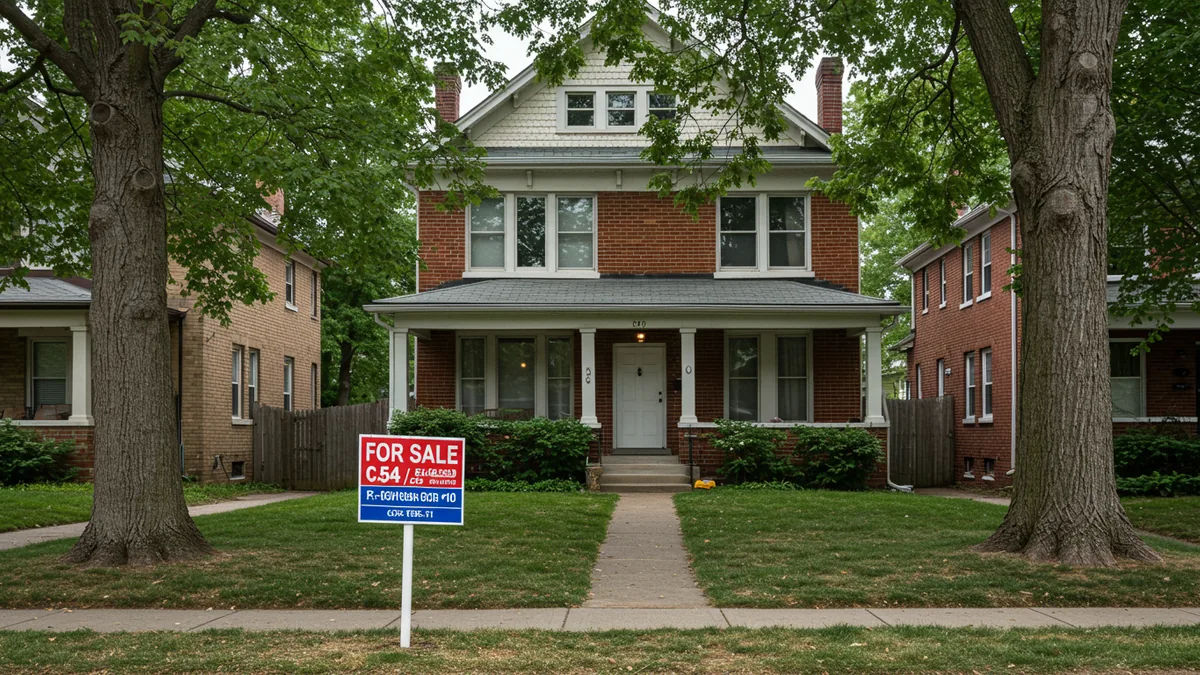
The century-old brick advantage
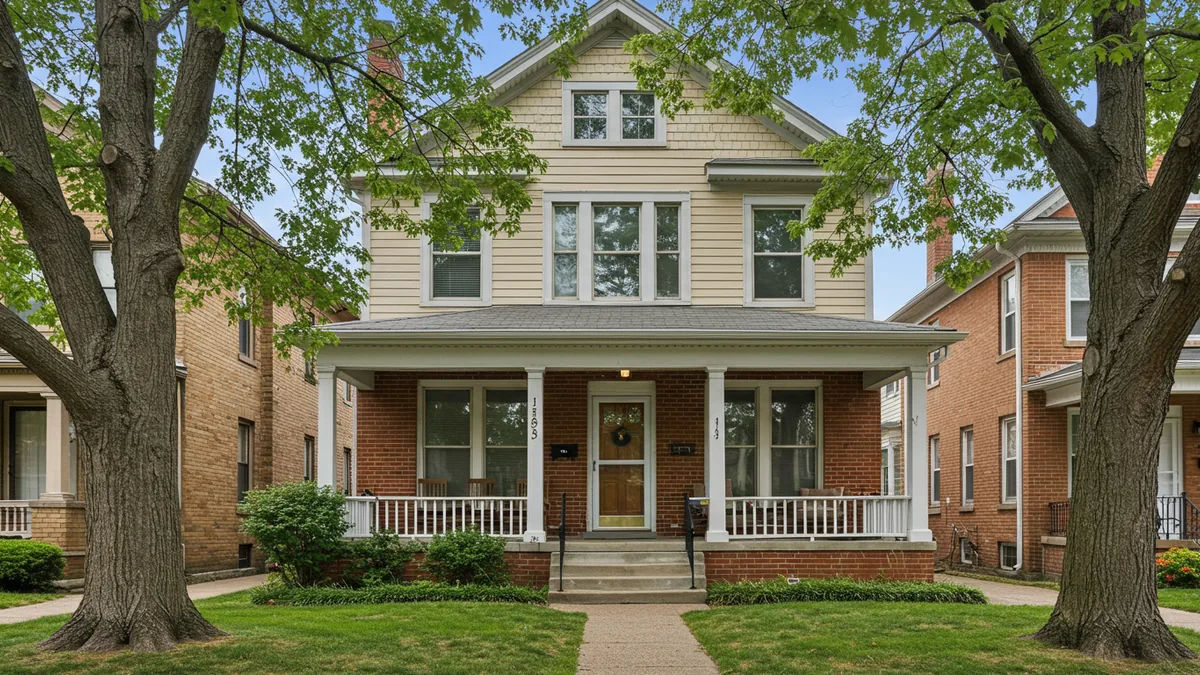
One underrated piece of the value story is what you’re actually buying. St. Louis’s classic housing — brick two-family flats, gabled bungalows, and stone-fronted rowhouses — was built a century ago with materials and craftsmanship that are wildly expensive to replicate today. Solid-brick construction, plaster walls, hardwood floors, and detailed millwork are ordinary features in homes that sell here for well under $300,000. In a newer Sun Belt market, that same money buys thin-walled new construction on a small lot. St. Louis buyers get more house, better built, for less — and because so much of the stock is historically designated, some of these homes even qualify for the same rehabilitation tax credits that power the big downtown conversions. It’s real quality hiding inside a low price, which is exactly what a value market is supposed to look like.
Put the whole picture together — a metro median home around $285,000, a cost of living 16% below average, free world-class parks and museums, three pro sports teams, a growing economy, and buildings selling for pennies on the dollar — and “why is St. Louis so cheap?” starts to sound less like a warning and more like an opportunity that hasn’t been priced in yet.
The honest trade-offs
Affordability always comes with trade-offs, and pretending otherwise would undercut everything else we’ve said. The real ones:
- Wages are lower here too. The cost of living is below average, but so are typical local salaries — the affordability advantage is biggest for people bringing outside income (remote work, coastal savings, retirement) or in higher-paying fields.
- Crime and city services vary by neighborhood. St. Louis’s crime rate is falling — homicides hit a 12-year low in 2025 — but it’s still above the national average, and quality of schools and services differs sharply block to block. Research the specific neighborhood, not the metro average.
- It’s a turnaround, not a sure thing. Downtown’s comeback is early. The upside is real but so is the patience required; this is a buy-and-hold value play, not a quick flip.
- Midwest weather. Hot, humid summers and cold winters are part of the deal — a genuine consideration if you’re coming from a milder climate.
Weigh all of it, and for a lot of people the calculus still lands firmly in St. Louis’s favor: more house, more building, and more room to build a business or a life, for far less money, in a metro that’s finally trending up. For the fuller picture of the downtown turnaround, read why downtown St. Louis is ripe for development.
Exploring a move or an investment in St. Louis? Find local businesses, services, and neighborhoods on the St Louis Near Me Directory.
Run a St. Louis business? Listing it is how newcomers and investors find you.
Frequently Asked Questions
Why is St. Louis so cheap?
Mainly supply and demand: decades of population loss left more housing than buyers, and open Midwestern land means no coastal geographic squeeze on prices. It’s cheap because supply outran demand for a generation, not because the city lacks value — which is why it’s widely considered undervalued rather than simply cheap.
Is St. Louis an affordable city to live in?
Yes, notably so. The overall cost of living runs about 16% below the U.S. average, driven largely by housing: the metro’s median home price is around $285,000 versus roughly $404,000 nationally. A typical mortgage takes about 21% of median income here, versus about 36% nationally — one of the better affordability ratios among major metros.
What is the median home price in St. Louis?
The St. Louis metro median home sale price is around $285,000, well below the national metro median of roughly $404,000. Prices vary widely by neighborhood — the city proper is often cheaper and the suburbs pricier — and solid century-old brick homes are frequently available for a fraction of new-construction costs.
Is St. Louis cheaper than Texas?
Generally, yes on housing. St. Louis’s median home price (~$285,000) is below fast-growing Texas metros like Austin and Dallas, and its overall cost of living runs below the national average. Texas has no state income tax, which shifts the total picture, but on pure housing affordability St. Louis usually comes out ahead of the big Texas cities.
Why are people moving away from St. Louis?
The City of St. Louis proper has slowly lost population for decades, tied to manufacturing decline and suburban migration. But the broader 2.8-million metro has held roughly steady, and downtown has actually gained residents over the past decade. The “everyone’s leaving” story is more about the narrow city limits than the region as a whole.
Is St. Louis a good place to invest in real estate?
For value investors, it’s among the most compelling U.S. markets: cheap acquisition prices, historic tax credits covering up to 45% of a rehab, Opportunity Zones, and apartment cap rates in the mid-6% range that cash-flow. The catch is that the turnaround is early-stage, so it rewards patient, buy-and-hold capital over quick flips.
What salary do you need to live comfortably in St. Louis?
Because costs run about 16% below the national average, a comfortable income in St. Louis is meaningfully lower than in most big metros — many estimates put a comfortable single-person budget in the rough range of $60,000–$75,000, with a family needing more. Your housing dollar goes about twice as far as the U.S. average, which is the biggest driver of that lower bar.
Is St. Louis a good place to move to?
If affordability and space matter, strongly consider it: your housing dollar stretches about twice as far as the U.S. average, the metro ranks among the nation’s most undervalued and fastest job-growing, and it’s a national hub for agtech and geospatial tech. Trade-offs include lower local wages and a crime rate that’s falling but still above average, so research neighborhoods.
Is living in St. Louis worth it?
For many people, yes — especially anyone bringing outside income or working remotely. You get a real house, big historic building stock, major-league sports and culture, and a metro trending up, all for far less than comparable cities. The honest counterweight is that wages are lower locally and quality of life varies by neighborhood, so the value is greatest when you can uncouple your income from the local market.
Is St. Louis a rising real estate market?
The signals point that way. Redfin flagged St. Louis as a market poised to heat up on affordability and low disaster risk, U.S. News lists it among the most undervalued, and the metro posted 7.1% GDP growth and top-three national job growth. Prices remain low today, which is what makes an improving-but-still-cheap market attractive to early movers.

Written by a dedicated team of St. Louis locals who live, work, and play right here in the St. Louis metro. Founder Lane Forman and team are committed to building the region’s most trusted directory by verifying listings and connecting local businesses with loyal customers across Missouri and Illinois.