Why Your St. Louis Trees Need a Regular Arborist Checkup
Revised August 29, 2026
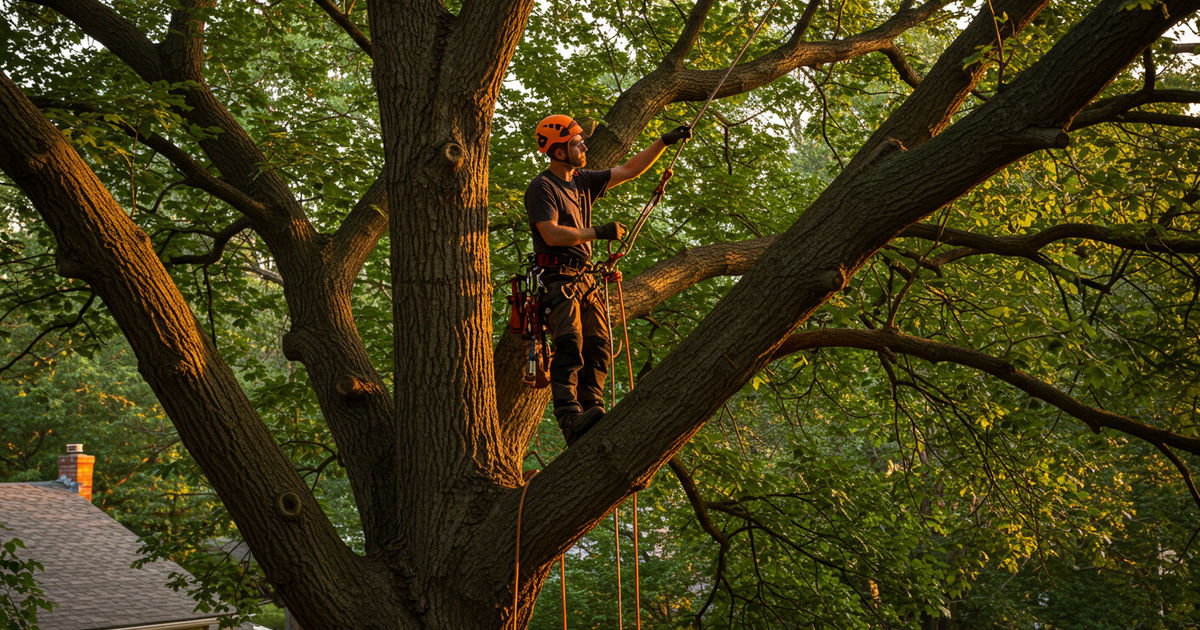
What’s the difference between an arborist and a certified arborist?
Anyone can call themselves an arborist — the word implies no verified skill. A Certified Arborist has earned an International Society of Arboriculture (ISA) credential requiring at least three years of experience, a comprehensive exam, and ongoing education. One is just a title; the other is a tested, verifiable standard — which matters when a tree’s safety, or your roof, is on the line.
Keep reading ↓Think about the last time you had a checkup at the doctor. You didn’t wait until something was clearly broken — the whole point was to catch the small stuff before it became the big stuff. Your trees deserve the same logic, and in St. Louis, most people never think about it until a limb is already on the roof.
Trees are living things, and the big mature ones that make a St. Louis yard beautiful are also the ones that do the most damage when they fail. A regular checkup from a certified arborist is the tree version of preventive care — it catches the weak unions, the hidden decay, and the early pest damage that a storm or a beetle will happily finish off. Here’s what an arborist actually does, the local threats worth knowing about, and how to hire the real thing instead of a guy with a chainsaw and a business card — because in tree care, the difference between the two can be your roof.
What a Certified Arborist Actually Does
An arborist isn’t just someone who cuts trees — the good ones are more like a doctor for your landscape. A certified arborist can:
- Assess risk and health — evaluate root stability, branch structure, and overall condition to flag hazards before they fail.
- Prune for structure — make the specific cuts that improve a tree’s form, reduce wind resistance, and remove weak or dead limbs (without ever topping it).
- Cable and brace — support a weak branch union with hardware so a valuable tree can be saved instead of removed.
- Diagnose pests and disease — identify what’s attacking a tree and whether it can be treated, plus advise on soil, planting, and species selection.
That last one matters more than most homeowners realize, because St. Louis trees are under real pressure from a handful of specific threats right now. A trained eye catches things a homeowner simply can’t — the early bark-blonding of an ash under attack, the subtle crack in a major limb, the fungus that signals hidden root decay — while there’s still time and options. By the time a problem is obvious from the porch, the cheap fixes are often gone. That early-catch advantage is the real value of a regular relationship with an arborist: rather than calling someone only after a limb has already dropped on the garage, you have a professional who knows your specific trees, checks them on a schedule, and flags the small issues while they’re still a pruning cut instead of a full removal. Over the life of a mature tree, that steady, preventive attention almost always costs less than a single emergency — and it’s the difference between keeping a decades-old shade tree and losing it to a problem that could have been caught a season or two earlier.
The St. Louis Threats an Arborist Watches For
Missouri trees face a few named enemies, and knowing which are real (and which are hype) is exactly the kind of thing a professional brings to the table:
- Emerald ash borer (EAB) — the big one. This invasive beetle was first found in Missouri in 2008 and is now widespread across the state, and it kills untreated ash trees. If you have an ash, an arborist can tell you whether it’s worth treating or should come down before it dies and gets brittle.
- Oak wilt — a lethal fungal disease that can kill an oak fast. A crucial local rule an arborist follows: don’t prune oaks in the spring and early summer (roughly April through June), when the beetles that spread it are active.
- Bagworms — they defoliate evergreens like junipers, arborvitae, and red cedar, and because conifer foliage doesn’t grow back, they can kill a shrub or young tree if ignored.
- Spotted lanternfly — you’ve probably heard the alarm, but here’s the honest status: the Missouri Department of Conservation says there are no known established populations in Missouri yet. It’s approaching, not here — worth watching, not panicking over.
Why “Certified” Matters
Here’s the thing most people don’t know: anyone can call themselves an “arborist.” There’s no skill implied in the word. A Certified Arborist, though, has earned a credential from the International Society of Arboriculture (ISA) — which means at least three years of experience, passing a rigorous exam covering tree biology, diagnosis, pruning, cabling, and safety, and keeping the credential current with ongoing education every three years. For questions specifically about whether a tree is safe, there’s an even more specialized credential, the Tree Risk Assessment Qualification (TRAQ).
The difference is night and day. An uncertified crew might top your tree, over-prune it, or talk you into removing a healthy one — because they don’t know better or because removal pays. A certified arborist is accountable to a standard and a testable body of knowledge. As one arborist group nicely put it, certified arborists are “healthcare providers for trees.”
What Actually Happens During a Checkup
A tree checkup is less mysterious than it sounds. A certified arborist walks your property and looks at each significant tree from the roots up: the soil and root flare for heaving or decay, the trunk for cracks and cavities, the branch unions for weak, included-bark attachments, and the canopy for deadwood, imbalance, and signs of pest or disease pressure. They’ll tell you which trees are sound, which need pruning, which need watching, and which — honestly — should come down before they fail. A good arborist is as willing to tell you a tree is fine as to sell you work; that’s part of how you know they’re the real thing.
You come away with a plan instead of a worry: prune this one this winter, treat that ash, keep an eye on the leaner by the driveway, no action needed on the rest. For the price of a nice dinner out, you trade a vague anxiety about “the big tree” for a clear, professional read on it.
When to Schedule a Checkup
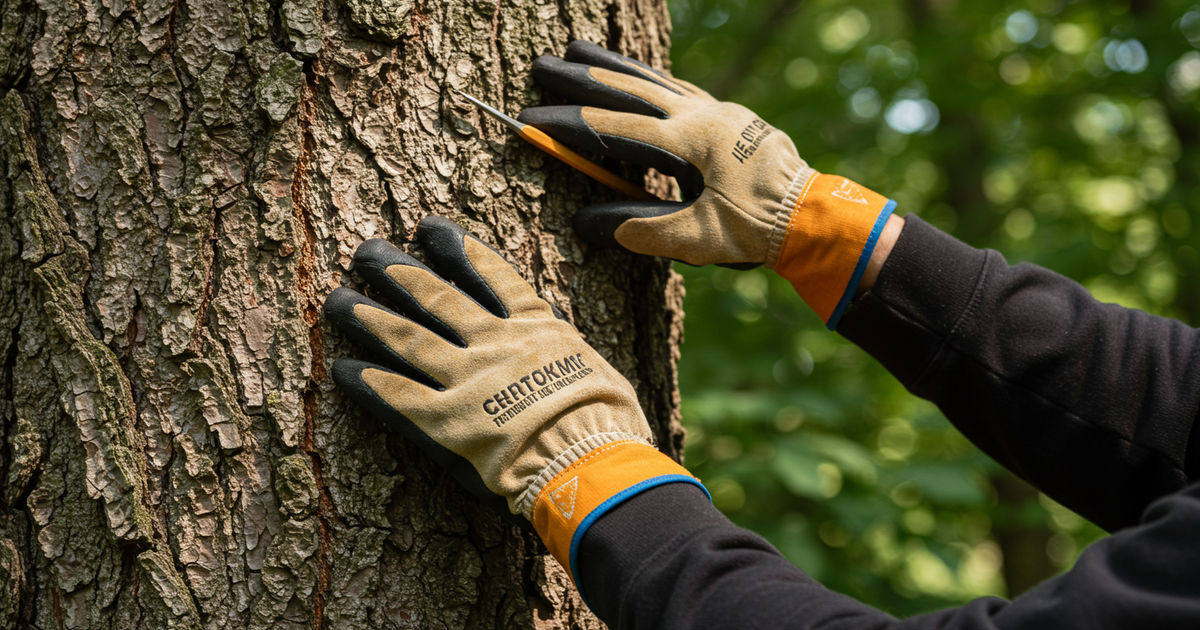
You don’t need an arborist on retainer, but a few moments call for one. Have your mature trees looked at every few years as a baseline, and always after a major storm, a drought, or nearby construction that may have damaged roots. Call sooner if you notice any of the warning signs a homeowner can spot: a new lean, cracks or cavities, mushrooms at the base, lots of dead limbs, or soil heaving around the roots. And if you have ash trees or aging oaks, get on a professional’s radar now rather than after the damage is visible. The best time to find a problem is while it’s still cheap to fix.
How to Hire the Real Thing (and Spot the Fakes)
Vetting an arborist is straightforward once you know what to check:
- Verify the credential. You can confirm any ISA Certified Arborist’s status online at treesaregood.org — ask for their certification number.
- Require insurance. Ask for current proof of liability insurance and workers’ compensation, and don’t be shy about verifying it. Tree work is dangerous; an uninsured injury on your property can become your problem.
- Get it in writing. A detailed written estimate (get two or three), a clear scope, and local references.
Red flags to walk away from: anyone who knocks on your door after a storm claiming to be “working in the neighborhood”; anyone who recommends topping (a certified arborist never will); anyone pushing you to remove a healthy tree; cash-only lowball bids; and pressure to sign or pay a big deposit today. The good ones don’t rush you.
Total tangent — here’s how O’Fallon businesses get found online.
It Pays You Back
A checkup feels like an optional expense until you price the alternative. An emergency removal after a tree fails — often at night, in a storm, onto a structure — costs far more than the proactive pruning or treatment that would have prevented it, and that’s before the roof repair. Healthy, well-kept trees also add real curb appeal and value to a home. Spending a little to keep a big tree sound is one of the better returns in home maintenance, and it’s a lot less stressful than the 2 a.m. version.
There’s an environmental payback, too. A mature shade tree cools your house in a St. Louis summer, soaks up stormwater, and takes decades to replace. Losing one to a preventable pest or an avoidable split isn’t just a repair bill — it’s losing something that made the whole yard better and can’t be bought back at any price. Keeping your big trees alive and sound is the rare home project that pays you in comfort, curb appeal, and cash all at once.
Find an Arborist (and a note for the owners)
Want a certified arborist on speed dial? The hard part is finding a trustworthy pro before you urgently need one. Search St Louis Near Me Directory for local tree services and arborists across the metro, so you already know who to call when a storm rolls through.
Run a tree-care or arborist business in the metro? The homeowners who value doing it right are looking for you. Listing your business is how careful St. Louis and Illinois neighbors find you — instead of the door-knocking crew.
More St. Louis homeowner guides
- Storm-proofing your trees before the next big one
- A seasonal home-maintenance checklist for St. Louis
- Basement waterproofing in St. Louis
Two things are worth knowing before you call anyone: what's the difference between an arborist and a certified arborist, because only one of those words carries a credential you can check, and what questions should I ask an arborist once one is standing in the yard.
Frequently Asked Questions
Is hiring an arborist worth it?
Yes. A checkup feels optional until you price the alternative: an emergency removal after a tree fails onto a structure costs far more than the pruning or treatment that would have prevented it. Healthy, well-kept trees also add curb appeal and value, making proactive tree care one of the better returns in home maintenance.
What is the difference between an arborist and a tree service?
An arborist is trained to diagnose tree health, assess risk, and prune for structure — more like a doctor for your landscape. A tree service focuses on the physical work of cutting and removal. The strongest providers combine both, but only a Certified Arborist carries a tested credential in tree biology and care.
What does an arborist charge per hour?
Pricing varies by arborist and scope, and most price by the job or consultation rather than a fixed hourly rate. A basic consultation or tree assessment typically runs a modest few-hundred-dollar range, and some companies waive that fee if you hire them for the work. Detailed written or insurance-grade reports cost more.
Is the emerald ash borer in St. Louis?
Yes. The emerald ash borer, an invasive beetle that kills untreated ash trees, was first found in Missouri in 2008 and is now widespread across the state, including the St. Louis area. If you have ash trees, a certified arborist can advise whether treatment makes sense or the tree should come down before it turns brittle.
Can I prune my oak trees any time of year?
No — timing matters for oaks in Missouri because of oak wilt, a lethal fungal disease. Avoid pruning oaks in spring and early summer, roughly April through June, when the beetles that spread it are active. The dormant season is the safer window. After storm damage in that period, an arborist can advise on protective steps.
How do I verify an arborist is certified?
Ask for the arborist’s ISA certification number and verify it online at treesaregood.org, the ISA’s public site. Also require current proof of liability insurance and workers’ compensation, get a written estimate, and check local references. Walk away from anyone who solicits door-to-door after a storm, recommends topping, or demands a large deposit up front.
What's the difference between an arborist and a tree service?
An arborist diagnoses; a tree service removes. Plenty of good crews do both, but the incentive differs — if the only service offered is cutting, the recommendation will tend toward cutting. Get the assessment from someone who is not bidding on the removal when the tree is worth saving.
What questions should I ask an arborist?
Ask what specifically they are seeing and where, what happens if you do nothing for a year, whether the work can be staged, and who carries the insurance if a limb goes through the roof. A good one will answer the do-nothing question honestly instead of treating it as a trick.
How much does an arborist charge to inspect a tree?
An inspection is usually billed as a modest flat visit fee, and many will credit it against work you go on to book. That fee is the cheapest part of the whole business — it is what tells you whether you are looking at a pruning job or a removal.
Can seniors get trees cut down for free?
Sometimes, but it varies by municipality rather than being a statewide program. Some cities and non-profits run assistance for hazardous trees on owner-occupied property, usually means-tested and limited to trees that threaten a structure. Call your city forestry office before paying for a removal you might qualify for help with.

Written by a dedicated team of St. Louis locals who live, work, and play right here in the St. Louis metro. Founder Lane Forman and team are committed to building the region’s most trusted directory by verifying listings and connecting local businesses with loyal customers across Missouri and Illinois.