7 Up Was Born in St. Louis, and Its Famous First Name Never Existed
Revised October 11, 2026

Is St. Louis a foodie city?
Yes. 7 Up was born here, filed as SEVEN UP by the Howdy Co. of St. Louis, and bottle historians found no evidence its famous “Bib-Label Lithiated Lemon-Lime Soda” name was ever used. Crown Candy Kitchen still gives five malts free to anyone who finishes them in 30 minutes, and whole immigrant food districts line South Grand, Cherokee Street and Bevo Mill.
Keep reading ↓Crack open a cold 7 Up and the fizz prickles your nose before the lemon-lime lands on your tongue. That soda was born here: a St. Louis firm, the Howdy Co., applied for the SEVEN UP trademark on Oct. 4, 1928.
Now the part your trivia friend gets wrong. More than 150 websites say its first name was “Bib-Label Lithiated Lemon-Lime Soda.” Bottle historians Bob Brown and Bill Lockhart dug through the trademarks, the ads and the old paper labels looking for it. They found bib-labels, all right: paper cards hung on a string over the bottles like bibs, one of them bright orange and promising to take the ‘ouch’ out of grouch. The long name, never. Their verdict, in their study of the company and its bottles: “The obvious answer is that it never existed.” The name was Seven-Up from the start; “Lithiated Lemon Soda” was only a descriptive second line on labels from about 1931 to 1935.
So the soda story everyone repeats is a myth. The best dare in town is real, and it’s printed on the menu. The line under the malts on Crown Candy Kitchen’s own menu calls it “our policy since 1913”: five malts lined up in front of you, cold enough to ache in your teeth, a 30-minute clock, and if every one is gone in time, they’re free. The house rules read like a referee wrote them: all five ordered at once, nobody helps, no bathroom trips, no stepping outside, and no attempts during the lunch rush or whenever the staff decide it’s too busy. At $5.75 a regular malt, that’s $28.75 of ice cream riding on a policy dated seven years before Prohibition began. Send this to the friend who still quotes the Bib-Label name.
Make a Saturday of it, four stops in this order.
11 a.m.: Balkan Treat Box, 8103 Big Bend in Webster Groves, open 11 to 8 every day, (314) 733-5700. Get the pide. It comes out of the wood-fired oven blistered at the edges, slicked with red-pepper ajvar and cool, tangy kajmak, and you’ll burn your fingers on the first piece because you can’t wait. The chef, Loryn Nalić, won the James Beard Award for Best Chef: Midwest cooking there.
12:30 p.m.: Berix, 2201 Lemay Ferry Road, open 9 to 7 on Saturdays, (314) 845-3711. Bosnian coffee, dark and unfiltered, the grounds settling at the bottom of the cup.
2:30 p.m.: Crown Candy Kitchen, 1401 St. Louis Ave. in Old North, open 10:30 to 5 Monday through Saturday, (314) 621-9650. Call ahead and ask whether it’s a good hour for the dare. Two friends from Greece, Harry Karandzieff and Pete Jugaloff, opened the counter in 1913, and Harry’s grandsons Andy, Tommy and Mike run it now, the shop’s own history says.
5 p.m.: Charlie Gitto’s On the Hill, 5226 Shaw Ave., opens at 5 on Saturdays, (314) 772-8898. Order the toasted ravioli the house calls its signature, if the malts left you any room, and listen for the breading to crackle.
Does St. Louis have a dining scene?
Yes, and the awards are the least of it. Nalić’s win was only the third Best Chef: Midwest for a St. Louis chef, after Gerard Craft of Niche and Kevin Nashan of Sidney Street Cafe, as FOX 2 reported, and it came on her fifth nomination, years after she started out running catering at Pappy’s Smokehouse.
Under the trophies sit the plates nobody else makes: toasted ravioli with the breading still crackling, Provel turning glossy on a cracker-thin crust cut into squares, pork steaks going sticky with sauce on a backyard grill. Then whole neighborhoods built by immigrant cooks: pho steam and torn injera on South Grand, a flat-top hissing on Cherokee Street, Bosnian coffee poured thick around Bevo Mill. A town that gave the world 7 Up, and still hands out free malts under a rule from 1913, doesn’t need a critic to settle the question. Is St. Louis a foodie city? Esquire once found a line down the block on Big Bend at 11 in the morning. That’s your answer.
From meat-and-potatoes town to a Beard winner on Big Bend
St. Louis spent decades as a meat-and-potatoes town, and plenty of those plates are still worth ordering. What changed is the range. At Vicia, a James Beard finalist for Outstanding Restaurant, the menu turns with whatever the farms are pulling out of the ground that week. At Balkan Treat Box, the ćevapi come on wood-fired somun that soaks up the sausages’ peppery juices, and the restaurant now ships its pide across the country.
Taquerias on Cherokee, Bosnian coffee near Bevo Mill
Walk Cherokee Street and the taquerias set the soundtrack: a flat-top hissing, a radio in Spanish, a stack of warm tortillas on every table. Head south to the Bevo Mill area, home to one of the largest Bosnian communities outside Bosnia, and the coffee at Berix Coffeehouse on Lemay Ferry Road comes thick and strong, the Bosnian way. Nearby, a Bosnian refugee family, the Grbićs, turned an old Gravois dive into Lemmons by Grbic, where the ćevapi come hot off the grill.
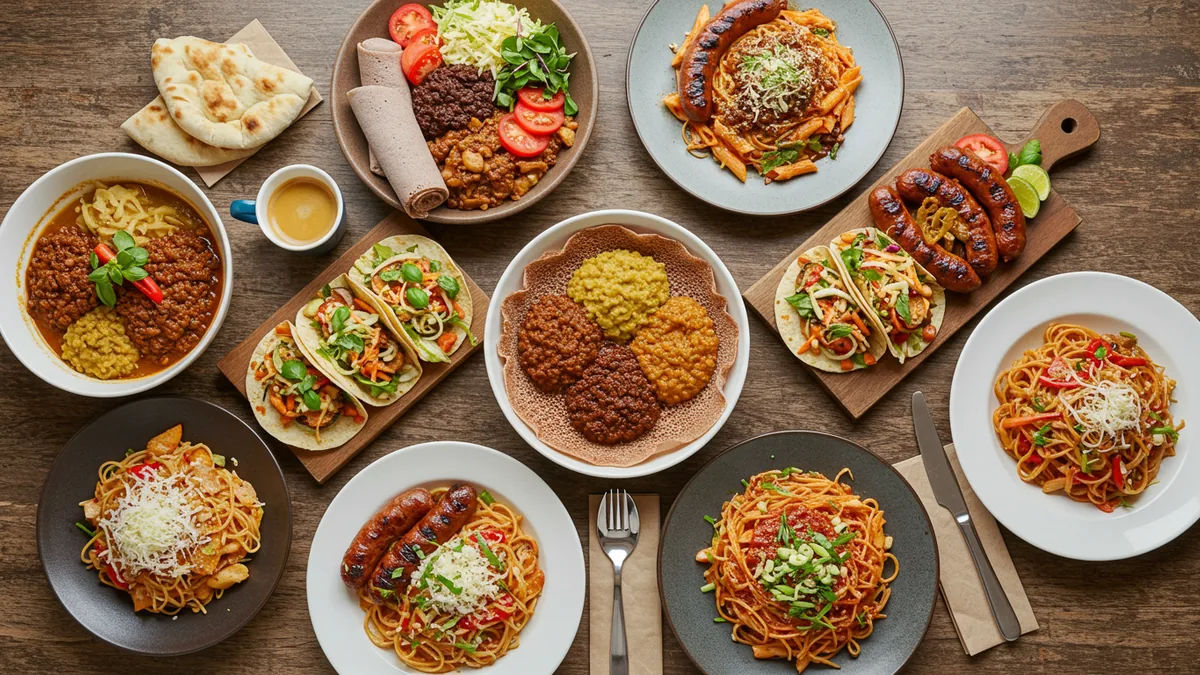
At Meskerem Restaurant on South Grand, you tear the injera with your fingers, sour and spongy, and scoop up the stews with it. Seoul Taco folds Korean barbecue into tortillas, and on The Hill, Zia’s still sends out the Italian-American plates the neighborhood was built on.
Slow pour-overs and a cocktail called In A Pickle
At Sump Coffee and Blueprint Coffee, the pour-over drips slowly enough that you smell it long before the first sip, and the conversation at the next table is usually about the Cardinals. After dark, Planter’s House in Lafayette Square pours from a list of 350-plus spirits, 39 of them bottled just for the bar, and its house cocktail In A Pickle is exactly the conversation starter it sounds like.
Unrelated, and we know it - that hallway still needs a St. Louis painter.
Institutions and immigrant kitchens worth the trip
Some of the best St. Louis food stories aren’t trends at all - they’re institutions that have fed the city for generations. In Old North, Crown Candy Kitchen has run since 1913, founded by Macedonian immigrant Harry Karandzieff and still family-owned four generations later; its malts, sundaes, and BLT are a genuine piece of living history. Just as important are the kitchens that arrived with newer waves of immigrants. Mai Lee in Brentwood opened in 1985 as St. Louis’s first Vietnamese restaurant - a refugee family’s enterprise that now runs a menu of two hundred-plus dishes - and it helped introduce a whole city to pho. For barbecue, Pappy’s Smokehouse in Midtown carries the Memphis-style-rib torch that made St. Louis a serious smoke town. And at the fine-dining end, chef Nick Bognar’s Indo in Botanical Heights blends his Thai heritage with sushi craft - work that has earned repeated James Beard recognition. Together they trace the whole arc: a century-old soda fountain, a pioneering immigrant kitchen, a smokehouse, and a nationally acclaimed fusion room, all in one metro. What ties them together is the thing this whole city does best with food: it holds onto its history while constantly making room for the next wave of cooks and cultures, so the story on the plate keeps getting richer without ever forgetting where it started.
How restaurants helped bring South Grand back
The growth of the restaurant industry has a positive ripple effect on St. Louis’s economy. These establishments create jobs for chefs, servers, bartenders, and countless others, revitalizing the local workforce. The economic impact is substantial, with restaurants contributing significantly to the St Louis City GDP and tax revenue.
This growth also spurs ancillary industries, such as food suppliers, local farmers, and artisanal producers, creating a multiplier effect that benefits the entire regional economy. The continuous development and expansion of the culinary sector are crucial for St. Louis’s economic vitality, attracting investment and fostering a climate of entrepreneurship.
Additionally, successful restaurants often act as anchors for community renewal. Take, for example, the burgeoning South Grand district, where innovative restaurants have attracted residents and tourists, breathing new life into a previously neglected area.
The industry’s resilience during the COVID-19 pandemic further exemplifies the city’s spirit of innovation. Faced with unprecedented challenges, St. Louis restaurants embraced creative solutions like delivery and outdoor dining, ensuring the survival of their businesses and the continuation of their culinary stories.
Many pivoted to offering meal kits, virtual cooking classes, and expanded take-out services, demonstrating an adaptability that has become a hallmark of the St. Louis culinary community. This period highlighted the deep connection between residents and their local eateries, with many patrons actively supporting restaurants through various means, underscoring the integral role these establishments play in the city’s social fabric.
Farmers markets, CSAs and the Soulard stalls
The future of St. Louis’s restaurant scene is brimming with promise. A focus on sustainability, community, and culinary exploration ensures a constant evolution. Chefs are increasingly partnering with local farmers, minimizing their environmental impact and highlighting the region’s fresh produce.
The farm-to-table movement is a fundamental shift towards a more responsible, ethical food system rather than a passing trend, and it benefits both the environment and the local economy. The emphasis on seasonality and local sourcing results in fresher, more flavorful dishes and supports the livelihoods of regional agricultural producers.
Community Supported Agriculture (CSA) programs and farmer’s markets are thriving, fostering a deep connection between diners and the source of their food. These initiatives provide consumers with direct access to high-quality, seasonal produce while offering farmers a stable market for their goods.
The transparency and traceability offered by these programs build trust and encourage a greater appreciation for the effort and dedication involved in food production. Whether you’re a seasoned gourmand with a discerning palate or a curious first-timer eager to embark on a global culinary adventure, St. Louis offers a unique and unforgettable dining experience that is constantly being redefined by its passionate culinary community.
Hungry to explore it yourself? Browse the Food & Dining listings in the St Louis Near Me directory to find independent restaurants across the metro.
If you’re the kitchen, the corner diner or the family-run restaurant that belongs in this story, the Gold plan puts your plates, hours and photos in front of more customers deciding where this city eats tonight.
Pork steaks, pho and the plate as history
The best St. Louis restaurants carry the city’s history on the plate: its cultural mix, its restless invention, its warm hospitality. Each dish is a story waiting to be devoured. From the smoky char of St. Louis barbecue - think the local pork steak and the distinctive St. Louis-cut rib, tied to the region’s deep German-heritage pork tradition - to the delicate flavors of Vietnamese pho, a nod to the city’s flourishing Asian community,
St. Louis’s plates are canvases painted with the vibrant history and diverse communities that make the city unique. The ongoing narrative of St. Louis’s culinary evolution is one of resilience, creativity, and a deep-seated passion for food that brings people together.
As the city continues to grow and attract new residents and visitors, its food scene will undoubtedly continue to flourish, offering an ever-expanding array of flavors and experiences that reflect its dynamic spirit and rich heritage. The commitment to culinary excellence, coupled with a strong sense of community, ensures that St. Louis will remain a must-visit destination for food lovers for years to come.
Frequently Asked Questions
What food is St. Louis known for?
Its own hyper-local specialties: toasted ravioli, gooey butter cake, the pork steaks and St. Louis-cut ribs of its German-rooted barbecue, Provel-topped St. Louis-style pizza and the frozen custard concrete. Beyond those, the city is known for a deep immigrant food scene, from Bosnian to Vietnamese to Ethiopian, and a growing list of James Beard-recognized chefs.
What is the signature dish of St. Louis, Missouri?
Toasted ravioli is the usual answer: breaded, deep-fried ravioli born on The Hill and served with marinara for dipping. Gooey butter cake and cracker-thin St. Louis-style pizza with Provel are close behind. Our guide to the dishes this city actually invented tells each origin story.
What are some unique and unusual foods from St. Louis?
The slinger, a late-night pile of hash browns, eggs and a burger patty under chili; snoots, crisp-fried pig snouts from the city’s barbecue joints; the St. Paul sandwich, an egg foo young patty on white bread; Provel, the processed cheese blend on local pizza; and Red Hot Riplets, the spicy chips locals put on everything.
Is St. Louis known for its barbecue?
Yes, for a specific style. St. Louis gave its name to the trimmed St. Louis-cut spare rib, and backyard cooks here grill and sauce pork steaks, a habit tied to the region’s German pork tradition. Smokehouses like Pappy’s in Midtown carry the rib torch. Our local’s guide to St. Louis barbecue covers the rest.
Where do locals eat in St. Louis?
In the neighborhoods, where they can park once and graze. South Grand for Vietnamese, Ethiopian and Thai; Cherokee Street for Mexican; the Bevo Mill area for Bosnian; The Hill for Italian; and walkable suburbs like Maplewood for chef-driven independents. Old institutions such as Crown Candy Kitchen and Mai Lee still draw regulars who have been going for decades.
Where can I find international food in St. Louis?
Several neighborhoods each tell a culinary story: South Grand for Vietnamese, Ethiopian, and Thai; The Hill for Italian; Cherokee Street for Mexican and Latino food; and the Bevo Mill area (“Little Bosnia”) for Balkan cooking. It’s genuinely possible to take a world tour of flavors without leaving the city.
For one walkable neighborhood that captures all of this at once, see our guide to where to eat in Maplewood.

Written by a dedicated team of St. Louis locals who live, work, and play right here in the St. Louis metro. Founder Lane Forman and team are committed to building the region’s most trusted directory by verifying listings and connecting local businesses with loyal customers across Missouri and Illinois.